

The Language of Violent Jihad
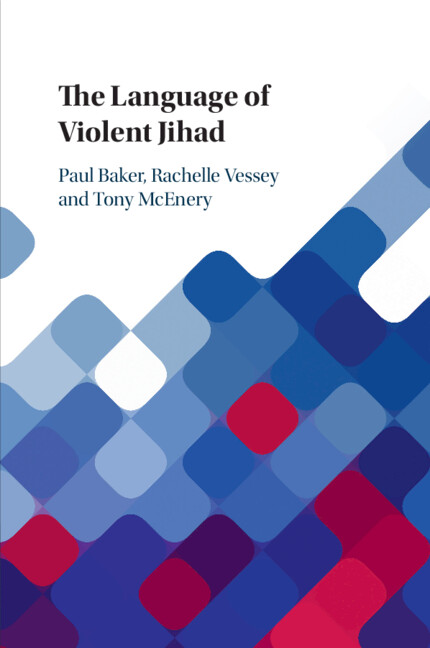
The Language of Violent Jihad
Looking for an examination copy?
If you are interested in the title for your course we can consider offering an examination copy. To register your interest please contact collegesales@cambridge.org providing details of the course you are teaching.
How do violent jihadists use language to try to persuade people to carry out violent acts? This book analyses over two million words of texts produced by violent jihadists to identify and examine the linguistic strategies employed. Taking a mixed methods approach, the authors combine quantitative methods from corpus linguistics, which allows the identification of frequent words and phrases, alongside close reading of texts via discourse analysis. The analysis compares language use across three sets of texts: those which advocate violence, those which take a hostile but non-violent standpoint, and those which take a moderate perspective, identifying the different uses of language associated with different stages of radicalization. The book also discusses how strategies including use of Arabic, romanisation, formal English, quotation, metaphor, dehumanisation and collectivisation are used to create in- and out-groups and justify violence.
- The only book which uses corpus linguistics to examine a wide range of texts written by violent jihadists, allowing us to identify the most important linguistic patterns in the texts
- Carries out a comparison of texts categorized as Moderate, Fringe and Extreme, to show different uses of language associated with different stages of radicalization
- Uses both quantitative and qualitative techniques, combining statistical tests and frequency tables with detailed linguistic examination of texts
Product details
- Published: January 2024
- Format: Paperback
- ISBN: 9781108431378
- Length: 244 pages
- Dimensions: 228 × 152 × 13 mm
- Weight: 0.37kg
- Contains: 40 b/w illus. 52 tables
- Availability: Available





Table of Contents
- 1. Introduction
- 2. Terrorism and Language
- 3. Collecting and Analysing Extremist Texts
- 4. The In-Group
- 5. The Out-group
- 6. The Path of Jihad
- 7. Linguistic Strategies
- 8. Conclusion.
- Show more



