2022

(345) rss icon
‘I’m unlikeable, boring, weird, foolish, inferior, inadequate’: How To Address The Persistent Negative Self-evaluations That Are Central To Social Anxiety Disorder With Cognitive Therapy

The December BABCP Article of the Month is from the Cognitive Behaviour Therapist (tCBT) and is entitled “‘I’m unlikeable, boring, weird, foolish, inferior, inadequate’: how to address the persistent negative self-evaluations that are central to social anxiety disorder with cognitive therapy” by Emma Warnock-Parkes, Jennifer Wild, Graham Thew, Alice Kerr, Nick Grey and David M.

Read more

Cultivating new paradigms in mental health

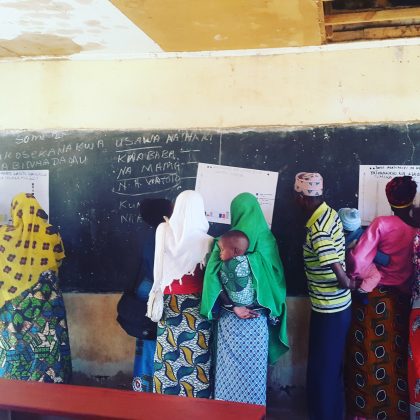
On a global basis, mental health is an issue almost unimaginable in its scale. The World Health Organisation (WHO) recently estimated that some 300 million people suffer from depression worldwide, and that every 40 seconds someone commits suicide with causes including mental health afflictions, such as depression. Indeed, the WHO says that, among those aged 15 to 29, suicide is a ‘leading cause of death’ – and that the majority of these are in low- or middle-income countries.

Read more

Forest birds and plantations

Tropical forests harbour a very high proportion of the planet’s terrestrial biodiversity, supporting wildlife communities that are more diverse and more species-rich than any other habitat.

Read more

Expanding the use of a revolutionary therapy in childhood wasting

The development of ready-to-use therapeutic food (RUTF) and the advent of the community-based management of acute malnutrition (CMAM) model of care revolutionized the management of severe acute malnutrition in children living in low- and middle-income countries. In addition to improved recovery rates and decreased mortality rates, the CMAM model democratized care for children in remote settings by bringing care to the village and household level. This approach has been further expanded to include children with moderate acute malnutrition as well. Scaling up coverage of care and optimizing treatment protocols remain high on the global nutrition agenda.

Read more

A new space for Brazil? Prospects under a Lula Presidency

The blog analyses Brazil´s role in the business and human rights agenda after 2014, when two processes came together: the UN Intergovernmental Working Group on a Business and Human Rights Treaty and the Working Group on Business and Human Rights known by its efforts to have the National Action Plans based on the UN Guiding Principles approved.…

Read more

The real meaning of participation: Conflict in the Las Bambas mega-mining copper project in Peru

Peru is highly dependent on the mining sector (mining accounts for 10% of its GDP and 60% of exports). The Peruvian legal framework promotes mining investments and, at the same time, incorporates business and human rights standards, such as citizen participation in environmental impact assessments (EIA) and prior consultation of indigenous communities before the commencement of operations.…

Read more

Navigating an R&R

On a first invitation to revise and resubmit, you will have at least three reviews and a letter from us that may suggest how to work with the reviews or provide you with additional advice. But how do you work through this advice, particularly when it is contradictory or advice that you disagree with? And what should you include in the detailed memo we request that you include with your resubmission?

Read more

Contextual Legal Pedagogy

Why is teaching law contextually important, and how might it be done? Such questions have had an important role in legal study since at least 1970, when the Law in Context series was launched with the aim of broadening the study of law.

Read more

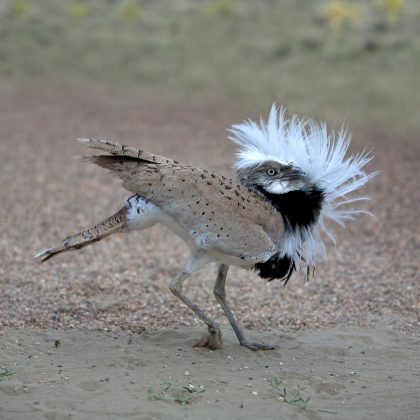
Bustard Conservation

Bustards are deeply challenging birds to conserve. Their grassland habitats are in irresistible demand for food production—both agriculture and livestock—throughout their ranges in the Eastern Hemisphere.

Read more

How can the CBT community better meet the needs of older people?

The November BABCP Article of the Month is from the Cognitive Behaviour Therapist (tCBT) and is entitled “Embedding the silver thread in all-age psychological services: training and supervising younger therapists to deliver CBT for anxiety or depression to older people with multi-morbidity” by Georgina Charlesworth Older people respond better to psychological therapy than working age adults – a consistent evidence-based conclusion from analyses of large datasets and national surveys.…

Read more

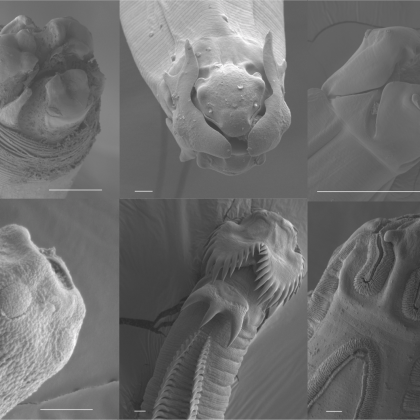
Parasitology celebrates World Fisheries Day with Special Issue on fish parasites

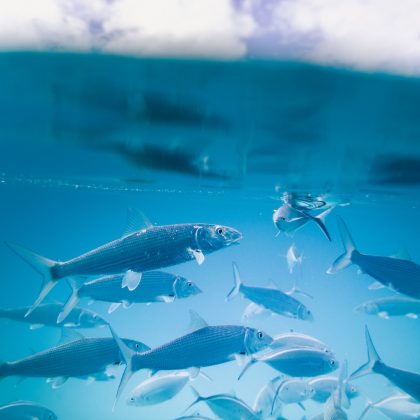
Over the past 18 months, several authors and two Guest Editors have worked together on a Special Issue (SI) on Fish Parasites for the Cambridge University Press journal, Parasitology, the longest-running journal among periodicals in the field. Our SI contains 13 articles, including reviews and original research articles, co-authored by world-leading experts in individual research fields of fish parasitology.

Read more

Exploring interdisciplinarity in Cambridge Prisms: Plastics

We are in the midst of a biodiversity, climate, and pollution crisis for which solutions are urgently needed. As the drivers of this crisis span all aspects of society, science and technology, a shift in the evidence base used to find solutions is required. We need to move beyond traditional mono-disciplinary paths if we are to achieve the scale and urgency of change needed.  Yet how we define these new approaches is fraught with difficulty. As researchers, we are increasingly asked to work in transdisciplinary, interdisciplinary, multi-disciplinary, cross-cutting, cross-disciplinary or cross-curricular ways. These terms are often used synonymously and without much reference to their origins, meaning or the methodological or philosophical differences they imply. Despite these challenges, the adoption of research approaches that examine global challenges more holistically is critical.

Read more

The PageRank algorithm analysed by EJAM

The PageRank algorithm was developed by Google co-founder Larry Page, and first introduced in 1998. It is based on the idea that a website’s importance can be measured by the number of other websites that link to it. Here, EJAM researchers study the PageRank algorithm.

Read more

Genocide or Natiocide?

On February 24, 2022, the Russian Federation launched an open armed aggression against Ukraine. The main purpose of this so-called “special military operation” is the “denazification” of Ukraine contrived by the Russian leadership.…

Read more

Editorial for Bristol 75 Anniversary Issue

This online collection commemorates 75 years of aerospace engineering teaching and research at the University of Bristol.  However, interactions with the aircraft industry started long before the Department was formed in 1946 1, for instance when in 1918 the University began teaching a class in Aircraft Manufacturing . 

Read more

John Ockendon Prize 2022 winner announced

The John Ockendon Prize launched in 2016 and is named after the founding editor of the European Journal of Applied Mathematics. This award recognises researchers for their contribution to applied mathematical research. In this article, Journal Editor Martin Burger discusses the 2022 winning paper.

Read more

Cover Artwork: ‘Medusa’ by Sarah Kogan

In the November edition of Muses – the arts blog from BJPsych International – Dr Tim McInerny, Pictures Editor, BJPsych International introduces Sarah Kogan, the artist whose portrait is on the cover of the November edition of BJPsych International. 

Read more

What is the reluctance! (“It couldn’t possibly be ADHD”) (Is it ADHD?)

We know that the prevalence rates of physical and mental disorders are higher in people with intellectual disabilities than in the general population. ADHD is one of those neurodevelopmental disorders where clinicians appear reluctant to make the diagnosis in people with ID. Of course, diagnosing ADHD-ID can be difficult for many reasons such as other diagnoses overshadowing the core signs of ADHD. Despite clearly observing and documenting symptoms of ADHD (without calling it ADHD), we are slow to consider the diagnosis. We always wonder why health professionals are very reluctant to consider the diagnosis of ADHD in people with ID that has led us to write the article.

Read more

Structural racism impacts African Americans’ ability to eat a healthy diet. What can we do as nutrition researchers and practitioners?

Nutrition researchers and public health practitioners have become increasingly focused on structural racism following protests against racial injustice in 2020 and the disparities in covid-19 mortality experienced by marginalized groups. Structural racism consists of overlapping systems of discrimination in society such as in policing, housing, and employment. These systems also affect marginalized groups’ ability to access healthful food. For example, African Americans are more likely to live in areas with higher densities of fast-food restaurants and may not have access to full-service grocery stores. Differences in financial resources may also impact their ability to pay for healthy food. Providing nutrition education alone can be insensitive in the face of these obstacles.

Read more

Looking Forward to the End of ‘Digital Archaeology’

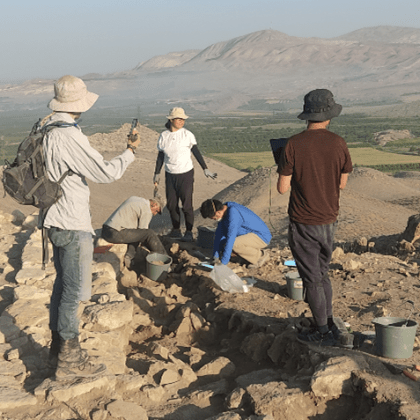
Part of a series of blog posts celebrating the 10th anniversary of the journal Advances in Archaeological Practice. It may come as somewhat of a surprise that the Digital Reviews Editor for Advances in Archaeological Practice is calling for an end to the concept of ‘Digital Archaeology’.…

Read more

GOOD ART IS (NOT) PRETTY ART

The October edition of Muses – the arts blog from BJPsych International – features a short blog by Motswana visual artist, Sedireng Mothibatsela, who writes about a crucial moment in her artistic development which coincides with her parent’s separation. It is a moving piece about how visual arts intersects with trauma and healing. I can recall the afternoon that changed how I create. I was 12 years old and in my last year of primary school and the looming high school years ahead presented many questions about how I wanted to proceed with my art. I had painted a watercolour still life and I was bored with it. Although my art received praise from my family and peers, my handling of watercolour was juvenile at best. I needed more; technically and conceptually. It was then that I began to question the art making process. Like most young artists in primary school we were simply taught that “good art is pretty art.”

Read more

ASIANSIL Voices Blog Series

We are delighted to launch ASIANSIL Voices, the blog of the Asian Society of International Law (ASIANSIL). The blog seeks to pursue the same broad goals that underpin the Asian Society and its journal, the Asian Journal of International Law (ASIANJIL), namely, to promote international law in Asia and foster the development and articulation of Asian perspectives on international law. …

Read more

Monico Origins, a Bayesian Story

The acknowledgments section of the Monico Bayesian paper expresses gratitude to “Deb Nichols, John Watanabe, Sophie Nichols-Watanabe, Robert (Bob) L. Kelly, and the Dartmouth Coach for inspiring and facilitating the development of some concepts in this paper.”

Read more

Watch: Impaled Droplets

The Lutetium Project film a water droplet impacting on a superhydrophobic cone-shaped surface and the results are breathtaking. Research by Pierre Chantelot at the University of Twente.

Read more

10 PW peak power femtosecond laser pulses at ELI-NP

The first 1PW laser was commissioned in the USA in the late 1990s with many systems globally coming on-line throughout the 2000s opening up new and exciting areas of science. In the following years many laboratories strived to increase the power, and hence the focussed intensity, to the 10PW regime, to realise new theoretical thresholds of fundamental science. Several lasers throughout the world, are in the process of construction/commissioning to achieve this goal in China, Romania, Czech Republic, and France with others planned in Japan, USA, Russia and the UK. The first of these systems, ELI-NP in Romania, has recently been the first to demonstrate this landmark achievement.

Read more

Breaching the Boundaries of Law and Anthropology

With the new academic year either already underway or just around the corner, we truly hope you had a relaxing and inspiring summer break, with plenty of opportunities to turn towards your summer reading list and finish the stack of books and papers you wanted to devour for a long time.…

Read more

South Asian vultures and diclofenac

Vultures are keystone species that perform a vital ecosystem service by disposing of carrion. Veterinary use of the painkilling drug diclofenac to treat livestock has caused the collapse of vulture populations throughout South Asia, with dramatic ecological and socio-economic consequences.

Read more

Peer review reports; what’s helpful and what’s not

A selection of Cambridge authors tell us what they like and what they don’t like about peer review reports. Author 1: Most helpful are comments on concrete issues attached to what is on paper in the manuscript, from spelling errors to formats of quotation to ambivalent expressions; unclear reasoning; missing or faulty references; suggestions for shortening; avoidance of redundancies; necessary/suggested expansion of reasoning; addition of illustrative examples etc.,…

Read more

Mitigation of nitrogen pollution in rivers using aerobic biological denitrification

The paper “Aerobic ammonia removal with heterotrophic nitrification and denitrification of Alcaligenes faecalis strain No.4 to mitigate nitrogenous pollution caused by piggery wastewater: a feasibility study”, published in The Journal of Agricultural Science, has been chosen as the latest Editorial Highlight and is freely available to download for one month.…

Read more