Refine listing
Actions for selected content:
228 results in 11Pxx
Sums of three cubes over a function field
- Part of
-
- Journal:
- Forum of Mathematics, Sigma / Volume 14 / 2026
- Published online by Cambridge University Press:
- 22 July 2026, e112
-
- Article
-
- You have access
- Open access
- HTML
- Export citation
-
We use a function field version of the circle method to prove that a positive proportion of elements in $\mathbb {F}_q[t]$
 are representable as a sum of three cubes of minimal degree from $\mathbb {F}_q[t]$
 , assuming a suitable form of the Ratios Conjecture and that $\operatorname {\mathrm {char}}(\mathbb {F}_q)>3$
 . The analogue of this conjecture for quadratic Dirichlet L-functions is known for large fixed q, via recent developments in homological stability.


ELEMENTARY SYMMETRIC POLYNOMIALS AND A POTENTIALLY INJECTIVE FAMILY OF MAPS ON PARTITIONS
- Part of
-
- Journal:
- Bulletin of the Australian Mathematical Society , First View
- Published online by Cambridge University Press:
- 21 July 2026, pp. 1-8
-
- Article
- Export citation
-
Ballantine et al. [‘Partitions and elementary symmetric polynomials: an experimental approach’, Ramanujan J. 66(2) (2025), Article no. 34] proposed two conjectures on the injectivity of a class of maps ${pre}_k$
 defined on integer partitions. These maps arise from applying the sequence of elementary symmetric polynomials to integer partitions. We provide an infinite family of examples to disprove the conjecture for $k\ge 3$
 and state a modified version of it. Throwing fresh light on this class of maps, we study the inter-relationships between them, deviating from the approaches so far, which study these maps one at a time. While the conjecture for $k=2$
 has now been settled, we provide alternate proofs of three subcases. We also discuss lower bounds for the number of partitions of n that are in the image of the map $pre_2$
 .
.


SUBCONVEX $L^p$
 -SETS, WEYL’S INEQUALITY AND EQUIDISTRIBUTION
- Part of
-
- Journal:
- Journal of the Institute of Mathematics of Jussieu , First View
- Published online by Cambridge University Press:
- 15 July 2026, pp. 1-41
-
- Article
-
- You have access
- Open access
- HTML
- Export citation
-
We examine sets $\mathscr A$
 of natural numbers having the property that for some real number $p\in (0,2)$
 , one has the subconvex bound $$\begin{align*}\int_0^1 \Big| \sum_{n\in \mathscr A\cap [1,N]}e(n\alpha)\Big|^p{\,\mathrm{d}} \alpha \ll N^{-1}|\mathscr A\cap [1,N]|^p. \end{align*}$$
We show that exponential sums over such sets satisfy inequalities analogous to Weyl’s inequality, and in many circumstances of the same strength as classical versions of Weyl’s bound. We also examine equidistribution of polynomials modulo $1$
 in which the summands are restricted to these subconvex $L^p$
 -sets. In addition, we describe applications to problems involving character sums and averages of arithmetic functions.


FURTHER ANALOGUES OF ANDREWS’ SPT-FUNCTION IDENTITY
- Part of
-
- Journal:
- Bulletin of the Australian Mathematical Society , First View
- Published online by Cambridge University Press:
- 16 June 2026, pp. 1-10
-
- Article
-
- You have access
- Open access
- HTML
- Export citation
Distributions associated with small quadratic non-residues and their partitions
- Part of
-
- Journal:
- Canadian Journal of Mathematics , First View
- Published online by Cambridge University Press:
- 02 June 2026, pp. 1-41
-
- Article
-
- You have access
- Open access
- HTML
- Export citation
-
Assuming the Generalized Riemann Hypothesis, it is known that the least quadratic non-residue modulo a prime p is less than or equal to $(\log p)^2$
 . In the present article, we establish unconditional results on the distribution of partitions associated with quadratic non-residues in even smaller intervals of size $(\log p)^A$
 with $A> 0$
 , for almost all primes p.


Cooper–Hirschhorn type identities for three or more squares. III
- Part of
-
- Journal:
- Proceedings of the Edinburgh Mathematical Society , First View
- Published online by Cambridge University Press:
- 22 May 2026, pp. 1-22
-
- Article
- Export citation
-
Let $r_s(n)$ denote the number of representations of $n$ as a sum of $s$ squares. Hurwitz established eleven identities expressing the generating function of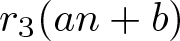 $r_3(an+b)$ as a simple infinite product. Cooper and Hirschhorn (Discrete Math 274 (1-3):9–24, 2004) proved that for any $k\geq0$, the generating functions $\sum_{n=0}^\infty r_3\big(3^{2k}n\big)q^n$ and $\sum_{n=0}^\infty r_3\big(3^{2k+1}n\big)q^n$ can be written as linear combinations of two specified generalized eta-quotients. In this paper, we substantially extend these results to high dimensions. Specifically, we prove that for any $k\geq0$ and $3\leq s\leq 100$, the generating functions $\sum_{n=0}^\infty r_s\big(3^{2k+1}n\big)q^n$ and $\sum_{n=0}^\infty r_s\big(3^{2k+2}n\big)q^n$ can also be expressed as linear combinations of certain generalized eta-quotients. Motivated by these results, we conjecture that this phenomenon holds for $r_s(n)$ for all $s\geq3$, and further that $r_s(n)$ satisfies an infinite family of internal congruences modulo high powers of $3$.
$3$.


Strict log-concavity of k-coloured partitions
- Part of
-
- Journal:
- Proceedings of the Royal Society of Edinburgh. Section A: Mathematics , First View
- Published online by Cambridge University Press:
- 18 May 2026, pp. 1-15
-
- Article
-
- You have access
- Open access
- HTML
- Export citation
-
In recent years, there has been extensive work on inequalities among partition functions. In particular, Nicolas, and independently DeSalvo–Pak, proved that the partition function $p(n)$ is eventually log-concave. Inspired by this and other results, Chern–Fu–Tang first conjectured the log-concavity of $k$-coloured partitions. Three of the authors and Tripp later proved this conjecture by introducing recursive sequences and a strict inequality for fractional partition functions, giving explicit errors. In this paper, we show that the log-concavity is, in fact, strict for $k\geq 2$. We shed further light on this phenomenon by utilizing Hardy–Littlewood–Pólya’s notion of majorizing. We prove that for partitions $\boldsymbol{a},\boldsymbol{b}$ of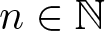 $n\in{\mathbb N}$, if $\boldsymbol b$ majorizes $\boldsymbol a$, then $p_k(\boldsymbol{a}) \gt p_k(\boldsymbol{b})$. Numerical calculations indicate that our result is sharp.


INTERSECTIONS OF SUMSETS IN ADDITIVE NUMBER THEORY
- Part of
-
- Journal:
- Bulletin of the Australian Mathematical Society , First View
- Published online by Cambridge University Press:
- 14 May 2026, pp. 1-9
-
- Article
- Export citation
-
Let A be a subset of an additive abelian semigroup S and let $hA$ be the h-fold sumset of A. The following question is considered. Let $(A_q)_{q=1}^{\infty }$ be a strictly decreasing sequence of sets in S and let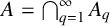 $A = \bigcap _{q=1}^{\infty } A_q$. When does one have
  $$ \begin{align*} hA = \bigcap_{q=1}^{\infty} hA_q \end{align*} $$
for some or all $h \geq 2$?


Hyperbinary partitions and q-deformed rationals
- Part of
-
- Journal:
- Forum of Mathematics, Sigma / Volume 14 / 2026
- Published online by Cambridge University Press:
- 26 February 2026, e30
-
- Article
-
- You have access
- Open access
- HTML
- Export citation
-
A hyperbinary partition of the nonnegative integer n is a partition where every part is a power of $2$ and every power of $2$ appears at most twice. We give three applications of the length generating function for such partitions, denoted by $h_q(n)$. Morier-Genoud and Ovsienko defined the q-analogue of a rational number $[r/s]_q$ in various ways, most of which depend directly or indirectly on the continued fraction expansion of $r/s$. As our first application we show that $[r/s]_q=q\,h_q(n-1)/h_q(n)$ where $r/s$ occurs as the nth entry in the Calkin-Wilf enumeration of the non-negative rationals. Next we consider fence posets which are those which can be obtained from a sequence of chains by alternately pasting together maxima and minima. For every n we show there is a fence poset ${\cal F}(n)$ whose lattice of order ideals is isomorphic to the poset of hyperbinary partitions of n ordered by refinement. For our last application, Morier-Genoud and Ovsienko also showed that $[r/s]_q$ can be computed by taking products of certain matrices which are q-analogues of the standard generators for the special linear group $\operatorname {\mathrm {SL}}(2,{\mathbb Z})$. We express the entries of these products in terms of the polynomials $h_q(n)$.


Graphical sequences and plane trees
- Part of
-
- Journal:
- Combinatorics, Probability and Computing / Volume 35 / Issue 3 / May 2026
- Published online by Cambridge University Press:
- 05 February 2026, pp. 316-328
-
- Article
-
- You have access
- Open access
- HTML
- Export citation
-
Balister, the second author, Groenland, Johnston, and Scott recently showed that there are asymptotically $C4^n/n^{3/4}$ many unordered sequences that occur as degree sequences of graphs with $n$ vertices. Combining limit theory for infinitely divisible distributions with a new connection between a class of random walk trajectories and a subset counting formula from additive number theory, we describe $C$ in terms of Walkup’s number of rooted plane trees. The bijection is related to an instance of the Lévy–Khintchine formula. Our main result complements a result of Stanley, that ordered graphical sequences are related to quasi-forests.


Proof of a conjecture of Garvan and Jennings-Shaffer on nonnegativity of MC1(m, n) and MC5(m, n)
- Part of
-
- Journal:
- Canadian Journal of Mathematics , First View
- Published online by Cambridge University Press:
- 04 February 2026, pp. 1-21
-
- Article
- Export citation
-
In their 2016 paper on exotic Bailey–Slater SPT-functions, Garvan and Jennings-Shaffer introduced many new spt-crank-type functions and proposed a conjecture that the spt-crank-type functions $M_{C1}(m,n)$ and $M_{C5}(m,n)$ are both nonnegative for all $m\in \mathbb {Z}$ and $n\in \mathbb {N}.$ Applying Wright’s circle method, Jang and Kim showed that $M_{C1}(m,n)$ and $M_{C5}(m,n)$ are both positive for a fixed integer m and large enough integers $n.$ Up to now, no complete proof of this conjecture has been given. In this article, we provide a complete proof for this conjecture by using the theory of lattice points. Our proof is quite different from that of Jang and Kim.


NEW EXPLICIT AND ASYMPTOTIC RESULTS IN SIEVE THEORY
- Part of
-
- Journal:
- Bulletin of the Australian Mathematical Society / Volume 113 / Issue 2 / April 2026
- Published online by Cambridge University Press:
- 30 January 2026, pp. 372-374
- Print publication:
- April 2026
-
- Article
-
- You have access
- HTML
- Export citation
COMBINATORIAL PROOFS OF CERTAIN RESULTS OF CHEN AND ZOU ON TWO-COLOUR PARTITIONS
- Part of
-
- Journal:
- Bulletin of the Australian Mathematical Society / Volume 113 / Issue 3 / June 2026
- Published online by Cambridge University Press:
- 12 January 2026, pp. 417-423
- Print publication:
- June 2026
-
- Article
- Export citation
The finite forms of MacMahon’s q-series
- Part of
-
- Journal:
- Proceedings of the Edinburgh Mathematical Society , First View
- Published online by Cambridge University Press:
- 02 January 2026, pp. 1-28
-
- Article
- Export citation
-
In his seminal work on partitions and divisor functions, MacMahon introduced the following two q-series:
 \begin{align*}A_k(q):= \sum_{0 \lt s_1 \lt s_2 \lt \cdots \lt s_k} \frac{q^{s_1+s_2+\cdots+s_k}}{(1-q^{s_1})^2(1-q^{s_2})^2\cdots(1-q^{s_k})^2},\qquad\quad\quad\quad\\[6pt]C_k(q):= \sum_{0 \lt s_1 \lt s_2 \lt \cdots \lt s_k}\frac{q^{2(s_1+s_2+\cdots+s_k)-k}}{(1-q^{2s_1-1})^2(1-q^{2s_2-1})^2\cdots(1-q^{2s_k-1})^2}.\end{align*}
In 2013, Andrews and Rose proved that $A_k(q)$ and $C_k(q)$ are quasimodular forms of weight $\leq 2k$. Recently, Ono and Singh proved two interesting identities involving $A_k(q)$ and $C_k(q)$ and showed that the generating functions for the three-coloured partition function $p_3(n)$ and the overpartition function $\overline{p}(n)$ have infinitely many closed formulas in terms of MacMahon’s quasimodular forms $A_k(q)$ and $C_k(q)$. In this paper, we introduce the finite forms $A_{k,n}(q)$ and $C_{k,n}(q)$ of MacMahon’s q-series $A_k(q)$ and $C_k(q)$ and prove two identities which generalize Ono–Singh’s identities. We also prove some new identities involving $A_{k,n}(q)$, $C_{k,n}(q)$ and certain infinite products based on two Bailey pairs. Those identities are analogous to Ono–Singh’s identities.


Totally positive elements with m partitions exist in almost all real quadratic fields
- Part of
-
- Journal:
- Proceedings of the Edinburgh Mathematical Society / Volume 69 / Issue 2 / May 2026
- Published online by Cambridge University Press:
- 21 November 2025, pp. 701-734
-
- Article
-
- You have access
- Open access
- HTML
- Export citation
-
In this paper, we study partitions of totally positive integral elements $ \alpha $ in a real quadratic field $ K $. We prove that for a fixed integer $ m \geq 1 $, an element with $ m $ partition exists in almost all $ K $. We also obtain an upper bound for the norm of $\alpha$ that can be represented as a sum of indecomposables in at most $m$ ways, completely characterize the $\alpha$’s represented in exactly $2$ ways, and subsequently apply this result to complete the search for fields containing an element with $ m $ partitions for $ 1 \leq m \leq 7 $.


Inequalities for the sequences with unified form
- Part of
-
- Journal:
- Canadian Journal of Mathematics , First View
- Published online by Cambridge University Press:
- 20 November 2025, pp. 1-20
-
- Article
- Export citation
-
We consider a class of sequence $c(n)$ with the following asymptotic form: We give criteria for the Turán inequality of any order, the double Turán inequality, and the Laguerre inequality of any order of
 $$ \begin{align*}c(n) \sim \frac C{n^\kappa} \exp\left(\sum_{\lambda\in\mathcal S}A_\lambda n^\lambda \right) \sum_{\mu\in\mathcal T} \frac{\beta_\mu}{n^\mu} \qquad (n \to \infty).\end{align*} $$ $c(n)$ for sufficiently large n. We also give the companion inequalities for the Turán inequality and the Laguerre inequality of any order for $c(n)$. As applications, we will show that the numbers of commuting $\ell $-tuples in $S_n$, the partition without sequence, the plane partition, the partition into k-gonal numbers, the finite-dimensional representations of groups $\mathfrak {su}(3)$ and $\mathfrak {so}(5),$ and the coefficients of infinite product generating functions asymptotically satisfy these inequalities. Some of them settle open problems proposed by Bringmann, Franke, and Heim.


ON ADDITIVE COMPLEMENTS IN THE COMPLEMENT OF A SET OF NATURAL NUMBERS
- Part of
-
- Journal:
- Bulletin of the Australian Mathematical Society / Volume 113 / Issue 2 / April 2026
- Published online by Cambridge University Press:
- 07 November 2025, pp. 203-215
- Print publication:
- April 2026
-
- Article
- Export citation
-
Let A be a set of natural numbers. A set B of natural numbers is an additive complement of the set A if all sufficiently large natural numbers can be represented in the form $x+y$, where $x\in A$ and $y\in B$. We establish that if $A=\{a_i: i\in \mathbb {N}\}$ is a set of natural numbers such that $a_i<a_{i+1} $ for $i \in \mathbb {N}$ and $\liminf _{n\rightarrow \infty } (a_{n+1}/a_{n})>1$, then there exists a set $B\subset \mathbb {N}$ such that $B\cap A = \varnothing $ and B is a sparse additive complement of the set A.


Inequality arising from the iterated Laguerre operator for various partitions
- Part of
-
- Journal:
- Proceedings of the Edinburgh Mathematical Society / Volume 69 / Issue 2 / May 2026
- Published online by Cambridge University Press:
- 23 October 2025, pp. 522-543
-
- Article
- Export citation
-
In this paper, we will investigate the following inequality
 \begin{equation*}(a_{n+1}a_{n+2} - a_{n}a_{n+3})^2 -(a_{n+1}^2 -a_{n}a_{n+2})(a_{n+2}^2 - a_{n}a_{n+4}) \gt 0,\end{equation*}
which arises from the iterated Laguerre operator on functions. We will prove the sequence $\{a_n\}$ of a unified form given by Griffin, Ono, Rolen and Zagier asymptotically satisfies this inequality while the Maclaurin coefficients of the functions in Laguerre-Pólya class have not to possess this inequality. We also prove the companion version of this inequality. As a consequence, we show the Maclaurin coefficients of the Riemann Ξ-function asymptotically satisfy this property. Moreover, we make this approach effective and give the exact thresholds for the positivity of this inequalityfor the partition function, the overpartition function and the smallest part function.


THE NUMBER OF PARTS IN A RANDOM t-REGULAR PARTITION
- Part of
-
- Journal:
- Bulletin of the Australian Mathematical Society / Volume 113 / Issue 2 / April 2026
- Published online by Cambridge University Press:
- 16 October 2025, pp. 265-279
- Print publication:
- April 2026
-
- Article
-
- You have access
- Open access
- HTML
- Export citation
-
For any integer $t \geq 2$, we prove a local limit theorem (LLT) with an explicit convergence rate for the number of parts in a uniformly chosen t-regular partition. When $t = 2$, this recovers the LLT for partitions into distinct parts, as previously established in the work of Szekeres [‘Asymptotic distributions of the number and size of parts in unequal partitions’, Bull. Aust. Math. Soc. 36 (1987), 89–97].


On the existence of reflecting n-queens configurations
- Part of
-
- Journal:
- Forum of Mathematics, Sigma / Volume 13 / 2025
- Published online by Cambridge University Press:
- 08 October 2025, e169
-
- Article
-
- You have access
- Open access
- HTML
- Export citation
-
In 1967, Klarner proposed a problem concerning the existence of reflecting n-queens configurations. The problem considers the feasibility of placing n mutually nonattacking queens on the reflecting chessboard, an $n\times n$ chessboard with a $1\times n$ “reflecting strip” of squares added along one side of the board. A queen placed on the reflecting chessboard can attack the squares in the same row, column, and diagonal, with the additional feature that its diagonal path can be reflected via the reflecting strip. Klarner noted the equivalence of this problem to a number theory problem proposed by Slater, which asks: for which n is it possible to pair up the integers 1 through n with the integers $n+1$ through $2n$ such that no two of the sums or differences of the n pairs of integers are the same. We prove the existence of reflecting n-queens configurations for all sufficiently large n, thereby resolving both Slater’s and Klarner’s questions for all but a finite number of integers.