Refine listing
Actions for selected content:
363 results in 35Qxx
Normalized solutions of L2-supercritical NLS equations on non-compact metric graphs
- Part of
-
- Journal:
- Proceedings of the Royal Society of Edinburgh. Section A: Mathematics , First View
- Published online by Cambridge University Press:
- 11 December 2025, pp. 1-34
-
- Article
- Export citation
Linear damping estimates for periodic roll wave solutions of the inviscid Saint-Venant equations and related systems of hyperbolic balance laws
- Part of
-
- Journal:
- Journal of Nonlinear Waves / Volume 1 / 2025
- Published online by Cambridge University Press:
- 05 December 2025, e21
-
- Article
-
- You have access
- Open access
- HTML
- Export citation
-
Substantially extending previous results of the authors for smooth solutions in the viscous case, we develop linear damping estimates for periodic roll-wave solutions of the inviscid Saint-Venant equations and related systems of hyperbolic balance laws. Such damping estimates, consisting of $H^s$ energy estimates yielding exponential slaving of high-derivative to low-derivative norms, have served as crucial ingredients in nonlinear stability analyses of traveling waves in hyperbolic or partially parabolic systems, both in obtaining high-frequency resolvent estimates and in closing a nonlinear iteration for which available linearized stability estimates apparently lose regularity. Here, we establish for systems of size $n\leq 6$ a Lyapunov-type theorem stating that such energy estimates are available whenever strict high-frequency spectral stability holds; for dimensions $7$ and higher, there may be in general a gap between high-frequency spectral stability and existence of the type of energy estimate that we develop here. A key ingredient is a dimension-dependent linear algebraic lemma reminiscent of Lyapunov’s Lemma for ODE that is to our knowledge new.


Opinion dynamics with continuous age structure
- Part of
-
- Journal:
- European Journal of Applied Mathematics , First View
- Published online by Cambridge University Press:
- 04 December 2025, pp. 1-36
-
- Article
-
- You have access
- Open access
- HTML
- Export citation
General rogue waves of infinite order: exact properties, asymptotic behaviour, and effective numerical computation
- Part of
-
- Journal:
- Journal of Nonlinear Waves / Volume 1 / 2025
- Published online by Cambridge University Press:
- 13 November 2025, e19
-
- Article
-
- You have access
- Open access
- HTML
- Export citation
-
This paper is devoted to a comprehensive analysis of a family of solutions of the focusing nonlinear Schrödinger equation called general rogue waves of infinite order. These solutions have recently been shown to describe various limit processes involving large-amplitude waves, and they have also appeared in some physical models not directly connected with nonlinear Schrödinger equations. We establish the following key property of these solutions: they are all in $L^2(\mathbb{R})$ with respect to the spatial variable but they exhibit anomalously slow temporal decay. In this paper, we define general rogue waves of infinite order, establish their basic exact and asymptotic properties, and provide computational tools for calculating them accurately.

On a Cahn–Hilliard equation for the growth and division of chemically active droplets modelling protocells
- Part of
-
- Journal:
- European Journal of Applied Mathematics , First View
- Published online by Cambridge University Press:
- 06 November 2025, pp. 1-31
-
- Article
-
- You have access
- Open access
- HTML
- Export citation
Global solutions to 3D quadratic nonlinear Schrödinger-type equation
- Part of
-
- Journal:
- Forum of Mathematics, Sigma / Volume 13 / 2025
- Published online by Cambridge University Press:
- 05 November 2025, e183
-
- Article
-
- You have access
- Open access
- HTML
- Export citation
-
We consider the Cauchy problem to the 3D fractional Schrödinger equation with quadratic interaction of $u\bar u$ type. We prove the global existence of solutions and scattering properties for small initial data. For the proof, one novelty is that we combine the normal form methods and the space-time resonance methods. Using the normal form transform enables us to have more flexibility in designing the resolution spaces so that we can control various interactions. It is also convenient for the final data problem.

Pensive Billiards, Point Vortices, And The Silver Ratio
- Part of
-
- Journal:
- Forum of Mathematics, Sigma / Volume 13 / 2025
- Published online by Cambridge University Press:
- 13 October 2025, e171
-
- Article
-
- You have access
- Open access
- HTML
- Export citation
Quantitative quasi-invariance of Gaussian measures below the energy level for the 1D generalized nonlinear Schrödinger equation and application to global well-posedness
- Part of
-
- Journal:
- Proceedings of the Royal Society of Edinburgh. Section A: Mathematics , First View
- Published online by Cambridge University Press:
- 08 October 2025, pp. 1-33
-
- Article
- Export citation
-
We consider the Schrödinger equation on the one dimensional torus with a general odd-power nonlinearity $p \geq 5$, which is known to be globally well-posed in the Sobolev space $H^\sigma(\mathbb{T})$, for every $\sigma \geq 1$, thanks to the conservation and finiteness of the energy. For regularities σ < 1, where this energy is infinite, we explore a globalization argument adapted to random initial data distributed according to the Gaussian measures µs, with covariance operator $(1-\Delta)^s$, for s in a range $(s_p,\frac{3}{2}]$. We combine a deterministic local Cauchy theory with the quasi-invariance of Gaussian measures µs, with additional Lq-bounds on the Radon-Nikodym derivatives, to prove that the Gaussian initial data generate almost surely global solutions. These Lq-bounds are obtained with respect to Gaussian measures accompanied by a cutoff on a renormalization of the energy; the main tools to prove them are the Boué-Dupuis variational formula and a Poincaré-Dulac normal form reduction. This approach is similar in spirit to Bourgain’s invariant argument [7] and to arecent work by Forlano-Tolomeo in [18].


Global smooth solutions and singularity formation for the relativistic Euler equations with radial symmetry
- Part of
-
- Journal:
- Canadian Journal of Mathematics , First View
- Published online by Cambridge University Press:
- 03 October 2025, pp. 1-32
-
- Article
- Export citation
An extension theorem for weak solutions of the 3d incompressible Euler equations and applications to singular flows
- Part of
-
- Journal:
- Forum of Mathematics, Pi / Volume 13 / 2025
- Published online by Cambridge University Press:
- 29 September 2025, e21
-
- Article
-
- You have access
- Open access
- HTML
- Export citation
-
We prove an extension theorem for local solutions of the 3d incompressible Euler equations. More precisely, we show that if a smooth vector field satisfies the Euler equations in a spacetime region $\Omega \times (0,T)$, one can choose an admissible weak solution on $\mathbb R^3\times (0,T)$ of class $C^\beta $ for any $\beta <1/3$ such that both fields coincide on $\Omega \times (0,T)$. Moreover, one controls the spatial support of the global solution. Our proof makes use of a new extension theorem for local subsolutions of the incompressible Euler equations and a $C^{1/3}$ convex integration scheme implemented in the context of weak solutions with compact support in space. We present two nontrivial applications of these ideas. First, we construct infinitely many admissible weak solutions of class $C^\beta _{\text {loc}}$ with the same vortex sheet initial data, which coincide with it at each time t outside a turbulent region of width $O(t)$. Second, given any smooth solution v of the Euler equation on $\mathbb {T}^3\times (0,T)$ and any open set $U\subset \mathbb {T}^3$, we construct admissible weak solutions which coincide with v outside U and are uniformly close to it everywhere at time $0$, yet blow up dramatically on a subset of $U\times (0,T)$ of full Hausdorff dimension. These solutions are of class $C^\beta $ outside their singular set.


Travelling breather solutions in waveguides for cubic nonlinear Maxwell equations with retarded material laws
- Part of
-
- Journal:
- Journal of Nonlinear Waves / Volume 1 / 2025
- Published online by Cambridge University Press:
- 18 September 2025, e11
-
- Article
-
- You have access
- Open access
- HTML
- Export citation
-
For Maxwell’s equations with nonlinear polarization we prove the existence of time-periodic breather solutions travelling along slab or cylindrical waveguides. The solutions are TE-modes which are localized in one (slab case) or both (cylindrical case) space directions orthogonal to the direction of propagation. We assume a magnetically inactive and electrically nonlinear material law with a linear $\chi^{(1)}$- and a cubic $\chi^{(3)}$-contribution to the polarization. The $\chi^{(1)}$-contribution may be retarded in time or instantaneous whereas the $\chi^{(3)}$-contribution is always assumed to be retarded in time. We consider two different cubic nonlinearities which provide a variational structure under suitable assumptions on the retardation kernels, in particular we require that for time-periodic solutions Maxwell’s equations are invariant under time-inversion. By choosing a sufficiently small propagation speed along the waveguide the second order formulation of the Maxwell system becomes essentially elliptic for the E-field so that solutions can be constructed by the mountain pass theorem. The compactness issues arising in the variational method are overcome by either the cylindrical geometry itself or by extra assumptions on the linear and nonlinear parts of the polarization in case of the slab geometry. Our approach to breather solutions in the presence of time-retardation is systematic in the sense that we look for general conditions on the Fourier-coefficients in time of the retardation kernels. Our main existence result is complemented by concrete examples of coefficient functions and retardation kernels.


Optimization of the principal eigenvalue of the Neumann Laplacian with indefinite weight and monotonicity of minimizers in cylinders
- Part of
-
- Journal:
- Proceedings of the Royal Society of Edinburgh. Section A: Mathematics , First View
- Published online by Cambridge University Press:
- 15 September 2025, pp. 1-35
-
- Article
-
- You have access
- Open access
- HTML
- Export citation
-
Let $\Omega\subset\mathbb{R}^N$, $N\geq 1$, be an open bounded connected set. We consider the indefinite weighted eigenvalue problem $-\Delta u =\lambda m u$ in Ω with $\lambda \in \mathbb{R}$, $m\in L^\infty(\Omega)$ and with homogeneous Neumann boundary conditions. We study weak* continuity, convexity and Gâteaux differentiability of the map $m\mapsto1/\lambda_1(m)$, where $\lambda_1(m)$ is the principal eigenvalue. Then, denoting by $\mathcal{G}(m_0)$ the class of rearrangements of a fixed weight m0, under the assumptions that m0 is positive on a set of positive Lebesgue measure and $\int_\Omega m_0\,dx \lt 0$, we prove the existence and a characterization of minimizers of $\lambda_1(m)$ and the non-existence of maximizers. Finally, we show that, if Ω is a cylinder, then every minimizer is monotone with respect to the direction of the generatrix. In the context of the population dynamics, this kind of problems arise from the question of determining the optimal spatial location of favourable and unfavourable habitats for a population to survive.


Well-posedness and averaging principle for non-Gaussian McKean–Vlasov stochastic differential equations with locally Lipschitz coefficients
- Part of
-
- Journal:
- Advances in Applied Probability , First View
- Published online by Cambridge University Press:
- 09 September 2025, pp. 1-44
-
- Article
- Export citation
Ill-posedness issue on the Oldroyd-B model in the critical Besov spaces
- Part of
-
- Journal:
- Proceedings of the Royal Society of Edinburgh. Section A: Mathematics , First View
- Published online by Cambridge University Press:
- 29 August 2025, pp. 1-20
-
- Article
- Export citation
-
It was proved in [11, J. Funct. Anal., 2020] that the Cauchy problem for some Oldroyd-B model is well-posed in $\dot{B}^{d/p-1}_{p,1}(\mathbb{R}^d) \times \dot{B}^{d/p}_{p,1}(\mathbb{R}^d)$ with $1\leq p \lt 2d$. In this paper, we prove that the Cauchy problem for the same Oldroyd-B model is ill-posed in $\dot{B}^{d/p-1}_{p,r}(\mathbb{R}^d) \times \dot{B}^{d/p}_{p,r}(\mathbb{R}^d)$ with $1\leq p\leq \infty$ and $1 \lt r\leq\infty$ due to the lack of continuous dependence of the solution.


Well-posedness of Naiver–Stokes equations in logarithmic Q spaces covering $BMO^{-1}$ and its fractional counterpart
- Part of
-
- Journal:
- Canadian Journal of Mathematics , First View
- Published online by Cambridge University Press:
- 11 August 2025, pp. 1-64
-
- Article
-
- You have access
- Open access
- HTML
- Export citation
-
In this article, we introduce a new logarithmic Q-type space $Q_{\ln ,\lambda }^{p,l,k}(\mathbb R^{n})$ to study the well-posedness of the classical/fractional Naiver–Stokes equations. We show that $\nabla \cdot (Q_{\ln ,\lambda }^{p,l,k}(\mathbb R^{n}))^{n}$ covers the well-known critical spaces $BMO^{-1}(\mathbb R^{n}), Q_{\alpha }^{-1}(\mathbb R^{n})$ and $\mathcal {Q}_{0}^{-1}(\mathbb R^{n})$ for the classical Naiver–Stokes equations. Moreover, it covers the fractional counterparts $BMO^{-(2\beta -1)}(\mathbb R^{n}), Q_{\alpha }^{\beta ,-1}(\mathbb R^{n})$ and even the largest critical space $\dot {B}^{-(2\beta -1)}_{\infty ,\infty }(\mathbb R^{n}).$ In doing so, we first establish some basic properties of $Q_{\ln ,\lambda }^{p,l,k}(\mathbb {R}^{n}).$ Then, via the fractional heat semigroups, we characterize the extension of $Q_{\ln ,\lambda }^{p,l,k}(\mathbb R^{n})$ to $\mathscr H_{K_{\ln }^{(l,k)}}^{p,\lambda }(\mathbb R_+^{n+1})$ which is a function space related to the weight function $K_{\ln }^{(l,k)}(\cdot )$. This extension provides a semigroup characterization of $Q_{\ln ,\lambda }^{p,l,k}(\mathbb R^{n})$. With this in hand, we establish the well-posedness of mild solutions to fractional Naiver–Stokes equations and fractional magneto-hydrodynamic equations, respectively, with small data in $\nabla \cdot \left (Q_{\ln ,\frac {4(1-\beta )}{n}}^{2,k,l+2(1-\beta )}(\mathbb {R}^{n})\right )^{n}$ for $k\in \mathbb {N}$ and $l>n+2\beta -4.$


The inverse scattering theory of Kadomtsev–Petviashvili II equations
- Part of
-
- Journal:
- Journal of Nonlinear Waves / Volume 1 / 2025
- Published online by Cambridge University Press:
- 04 August 2025, e4
-
- Article
-
- You have access
- Open access
- HTML
- Export citation
Keller–Segel type approximation for nonlocal Fokker–Planck equations in one-dimensional bounded domain
- Part of
-
- Journal:
- European Journal of Applied Mathematics , First View
- Published online by Cambridge University Press:
- 01 August 2025, pp. 1-37
-
- Article
-
- You have access
- Open access
- HTML
- Export citation
Ground state solution for weakly coupled time-harmonic Maxwell’s equations with critical exponent
- Part of
-
- Journal:
- Proceedings of the Royal Society of Edinburgh. Section A: Mathematics , First View
- Published online by Cambridge University Press:
- 18 July 2025, pp. 1-31
-
- Article
- Export citation
-
In this paper, we deal with the following nonlinear time-harmonic Maxwell’s equations
where \begin{equation*}\nonumber\begin{cases} \nabla \times(\nabla \times u_1)=\mu_1|u_1|^4u_1+\beta|u_1||u_2|^3u_1 & \text {in } \mathbb{R}^3, \\ \nabla \times(\nabla \times u_2)=\mu_2|u_2|^4u_2+\beta|u_1|^3|u_2|u_2 & \text {in } \mathbb{R}^3, \end{cases}\end{equation*} $\nabla\times$ denotes the usual curl operator in $\mathbb{R}^3$,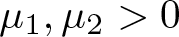 $\mu_1,\mu_2 \gt 0$, and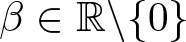 $\beta\in\mathbb{R}\backslash\{0\}$. We show that this critical system admits a non-trivial ground state solution when the parameter β is positive and small. For general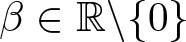 $\beta\in\mathbb{R}\backslash\{0\}$, we prove that this system admits a non-trivial cylindrically symmetric solution with the least positive energy. We also study the existence of the curl-free solution and the synchronized solution due to the special structure of this system. These seem to be the first results on the critically coupled system containing the curl-curl operator.


Local well-posedness and blow-up in the energy space for the 2D NLS with point interaction
- Part of
-
- Journal:
- Proceedings of the Royal Society of Edinburgh. Section A: Mathematics , First View
- Published online by Cambridge University Press:
- 11 July 2025, pp. 1-20
-
- Article
- Export citation
Regular solutions to the dissipative Aw–Rascle system
- Part of
-
- Journal:
- Proceedings of the Royal Society of Edinburgh. Section A: Mathematics , First View
- Published online by Cambridge University Press:
- 10 July 2025, pp. 1-33
-
- Article
-
- You have access
- Open access
- HTML
- Export citation
-
In this article, we prove the local-in-time existence of regular solutions to dissipative Aw–Rascle system with the offset equal to gradient of some increasing and regular function of density. It is a mixed degenerate parabolic-hyperbolic hydrodynamic model, and we extend the techniques previously developed for compressible Navier–Stokes equations to show the well-posedness of the system in the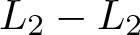 $L_2-L_2$ setting. We also discuss relevant existence results for offset involving singular or non-local functions of density.