


Persistent mental health problems among local inhabitants and people entering the affected area after nuclear disasters has been repeatedly reported. 1–Reference Loganovsky, Havenaar, Tintle, Guey, Kotov and Bromet11 It has been suggested that non-radiological factors such as traumatic fear, secondary distress, fear of invisible or latent radiological harm, social turmoil or isolation might be responsible. 3,4,Reference Havenaar, de Wilde, van den Bout, Drottz-Sjoberg and van den Brink9,Reference Tonnessen, Mardberg and Weisaeth12 This view accords with current knowledge of radiology, as postnatal radiation effects on the brain have been documented after radiation therapy for a brain tumour in which fractionated doses above a total of 40 Gy were received, 4 whereas the estimated LD50/60 for survivors of the atomic bomb has been reported not to have exceeded 3 Gy, as calculated in Hiroshima. Reference Fujita, Kato and Schull13 Although the participants in previous studies conducted after the nuclear events at Hiroshima, Nagasaki and Chernobyl had mostly experienced some degree of radiation exposure, it has not been demonstrated whether, or to what extent, certain types of non-radiological factors cause persistent mental health deterioration through comparison with adequate controls. Studies of non-exposed but psycho-sociologically involved residents were conducted after the accident at the Three Mile Island nuclear plant, Reference Houts, Cleary and Hu14 but the last observation was made only a few years after the event and was based on a small, non-randomised group, Reference Baum, Gatchel and Schaeffer15 thus providing somewhat insubstantial information. Our intention in this study, therefore, was specifically to delineate the persistent mental effects of a nuclear disaster in the absence of substantial radiological health effects. To our knowledge no such study has been reported previously.
Method
Participants
The sample group was recruited from among individuals who had lived in the peripheral areas of Nagasaki since the atomic bomb explosion in 1945 until the time of the study; these districts were Mogi, Himi, Higashi-Nagasaki, Shikimi, Mie, Fukabori, Ioujima, Tokitsu, Kinkai, Tarami and Iimori, all adjacent to the inner contaminated zone. Although these individuals had been in the vicinity of the explosion the areas in question had been officially recognised as uncontaminated, and in 1994 it was confirmed by a government research team that the lifetime radiation exposure there would have been 10 mGy on average, thus posing no significant risk to health.
Potential participants were identified using the data-set of a previous open questionnaire study conducted by the local governments of Nagasaki City and Nagasaki Prefecture in 2000, 16 which investigated health complaints among people who had lived in the relevant areas at the time of the atomic bomb attack. From among 9115 eligible inhabitants, 1614 did not respond, and we excluded 431 individuals over 80 years old owing to predicted difficulty of recruitment. The remaining sample (n = 7070) was stratified for gender, age group (0–10 years, 11–20 years and 21–25 years at the time of the bombing) and five grades of intensity of the atomic flash, heat rays and blast winds, calculated from the previous data-set, and also according to whether the person lived inside or outside the city area, reflecting the corresponding difference in the administrative and welfare systems. The number of individuals to be randomly selected from each cell was determined to reflect the overall distribution across all the cells, which necessitated extracting at least 406 candidates.
The control group was selected from a population who had migrated into the specified areas from outside Nagasaki City and Nagasaki Prefecture between 1950 and 1960, and thus had not experienced the explosion or had been influenced by it only negligibly. Migrants to the area during the 5 years immediately following the atomic bombing were excluded, as most of them were people returning from overseas battlefields or collapsed former Japanese colonies, who would have been severely distressed. The controls were matched with the sample group for age group, gender and current residential district, so that they would have shared subsequent life events in the community.
Study design
This was a non-blind, comparative observational study with stratified randomised sampling from the affected population with matched controls. Interviews took place during the period 12–30 March 2001. The recruitment was assisted by the Nagasaki local governments. To minimise any rater bias due to personal sympathy for atomic bomb victims, 42 psychiatrists, psychologists and social workers assisting in the study were brought in from areas of Japan other than Kyushu Island (where Nagasaki is located), with the exception of one psychiatrist who lived in Fukuoka, a prefecture in Kyushu distant from Nagasaki. None of these specialists was related to atomic bomb survivors in either Nagasaki or Hiroshima, and none of them originated from those prefectures. During the study all the raters stayed at a single hotel in Nagasaki City and were prohibited from making personal contact with the local people. They were trained in the semi-structured interview procedure, and every interview was audio-recorded and randomly audited by the supervisor (Y.K.) to detect any biased interview. The local media cooperated by not interviewing any of the study participants or research staff nor issuing intermediate reports about the study, except for a simple announcement of its commencement, to prevent any of the participants receiving biased information.
The ethics committee of Kohnodai district of the National Centre of Neurology and Psychiatry, Japan, approved this study in 2001. Written informed consent was obtained from all participants. We set up a counselling hotline for those who became upset by recalling the atomic bombing, but few calls were received.
Assessments
The primary outcome measure for the group comparison was the proportion of those at high risk of mental disorder according to the 28-item version of the General Health Questionnaire (GHQ-28), using a cut-off point of 5/6; this scale assesses current mental health conditions, and its international validity has been confirmed across 15 cities in various parts of the world, fortunately including Nagasaki. Reference Goldberg, Gater, Sartorius, Ustun, Piccinelli and Gureje17 Its cut-off point of 5/6 yields 79.7% sensitivity and 79.2% specificity, being uninfluenced by age, gender or education, for any current diagnosis of depression, dysthymia, agoraphobia, panic disorder, generalised anxiety disorder, somatisation disorder, chronic fatigue or hypochondriasis. Because the participants were aged up to 80 years, raters applying this measure were permitted to read the questions aloud and to explain the meaning of words, but not to rephrase the sentences.
The other part of the interview was semi-structured, and included questions related to demographic features, life habits, past traumatic events other than the atomic bombing, general health status, harm attributable to radioactivity among relatives and general knowledge about radioactivity. We also asked the sample group about their perception of the explosion and radioactivity, and their subsequent psychological response.
Raters were allowed to exclude any participant judged to be incapable of undergoing the interview from the assessment, based on the result of the digit span test that measures short-term memory, our own checklist of current health conditions and overall clinical impression.
Statistical analysis
The data were analysed using SPSS version 16.0 for Windows. Logistic regression was used to examine the effects on mental health of having been located in the area around the atomic bomb explosion and other factors that were significantly correlated with mental health risk using t or χ2 tests. Logistic regression was also applied to the sample group data to examine factors that influenced current distress.
Results
For the sample group, 406 persons were invited to participate; 13 could not be traced, 12 refused and 34 could not complete the interview. For the control group, 571 persons were invited to participate; 61 could not be traced, 90 refused and 90 could not complete the interview. Also, 42 members of the control group were found to have visited the polluted area of Nagasaki City at the time of the atomic bombing. Data for 347 persons in the sample group and 288 in the control group were therefore included in the analysis.
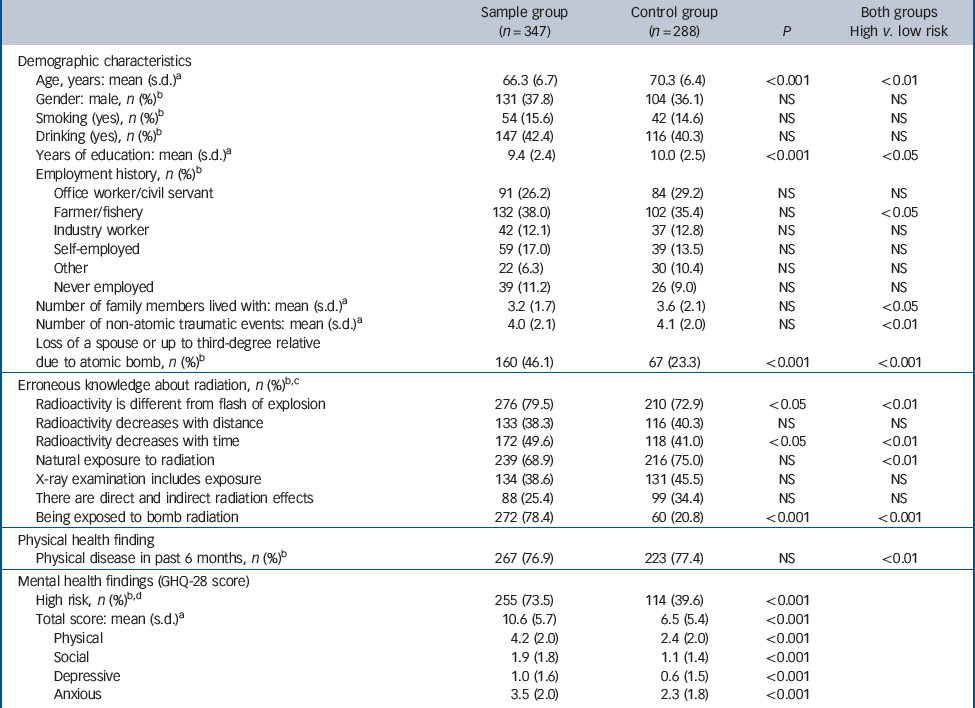
Little difference in demographic features existed between the two groups, except for the loss of close relatives through the atomic bomb, which was more frequent in the sample group (Table 1). Poor knowledge of radioactivity was evident in both groups, especially with regard to the distinction between the atomic flash and radiation, as well as the existence of natural exposure, for which only 20.5% and 31.1% of the sample group and 27.1% and 25% of the control group respectively gave correct answers. Knowledge about radioactivity was no better in the sample group than in the controls, and was even worse for some items: 78.4% believed that they had been in the contaminated zone at the time of the explosion, thus contradicting the government’s official survey. Among the controls, 20.8% believed the same, reflecting the fact that they had lived in neighbouring prefectures at the time of the explosion – other people in the control group lived in more distant areas.
Although we intended that participants should be matched for gender and age, there was actually a significant difference in age between the sample and control groups due to the uneven response rate. Significant intergroup differences were also observed for years of education, loss of a spouse or close relatives due to the atomic bomb, and some misconceptions about radioactivity.
Health findings
A significant difference across groups was observed for mental health status, in terms both of those assessed as high risk (score >5) and of GHQ-28 total score. There was no significant difference with regard to the presence of physical disease diagnosed during the previous 6 months.
Characteristics of the groups
| Sample group (n = 347) | Control group (n = 288) | P | Both groups High v. low risk | |
|---|---|---|---|---|
| Demographic characteristics | ||||
| Age, years: mean (s.d.) a | 66.3 (6.7) | 70.3 (6.4) | <0.001 | <0.01 |
| Gender: male, n (%) b | 131 (37.8) | 104 (36.1) | NS | NS |
| Smoking (yes), n (%) b | 54 (15.6) | 42 (14.6) | NS | NS |
| Drinking (yes), n (%) b | 147 (42.4) | 116 (40.3) | NS | NS |
| Years of education: mean (s.d.) a | 9.4 (2.4) | 10.0 (2.5) | <0.001 | <0.05 |
| Employment history, n (%) b | ||||
| Office worker/civil servant | 91 (26.2) | 84 (29.2) | NS | NS |
| Farmer/fishery | 132 (38.0) | 102 (35.4) | NS | <0.05 |
| Industry worker | 42 (12.1) | 37 (12.8) | NS | NS |
| Self-employed | 59 (17.0) | 39 (13.5) | NS | NS |
| Other | 22 (6.3) | 30 (10.4) | NS | NS |
| Never employed | 39 (11.2) | 26 (9.0) | NS | NS |
| Number of family members lived with: mean (s.d.) a | 3.2 (1.7) | 3.6 (2.1) | NS | <0.05 |
| Number of non-atomic traumatic events: mean (s.d.) a | 4.0 (2.1) | 4.1 (2.0) | NS | <0.01 |
| Loss of a spouse or up to third-degree relative due to atomic bomb, n (%) b | 160 (46.1) | 67 (23.3) | <0.001 | <0.001 |
| Erroneous knowledge about radiation, n (%) b,c | ||||
| Radioactivity is different from flash of explosion | 276 (79.5) | 210 (72.9) | <0.05 | <0.01 |
| Radioactivity decreases with distance | 133 (38.3) | 116 (40.3) | NS | NS |
| Radioactivity decreases with time | 172 (49.6) | 118 (41.0) | <0.05 | <0.01 |
| Natural exposure to radiation | 239 (68.9) | 216 (75.0) | NS | <0.01 |
| X-ray examination includes exposure | 134 (38.6) | 131 (45.5) | NS | NS |
| There are direct and indirect radiation effects | 88 (25.4) | 99 (34.4) | NS | NS |
| Being exposed to bomb radiation | 272 (78.4) | 60 (20.8) | <0.001 | <0.001 |
| Physical health finding | ||||
| Physical disease in past 6 months, n (%) b | 267 (76.9) | 223 (77.4) | NS | <0.01 |
| Mental health findings (GHQ-28 score) | ||||
| High risk, n (%) b,d | 255 (73.5) | 114 (39.6) | <0.001 | |
| Total score: mean (s.d.) a | 10.6 (5.7) | 6.5 (5.4) | <0.001 | |
| Physical | 4.2 (2.0) | 2.4 (2.0) | <0.001 | |
| Social | 1.9 (1.8) | 1.1 (1.4) | <0.001 | |
| Depressive | 1.0 (1.6) | 0.6 (1.5) | <0.001 | |
| Anxious | 3.5 (2.0) | 2.3 (1.8) | <0.001 | |
GHQ-28, 28-item General Health Questionnaire; NS, not significant.
a t-test.
b χ2 analysis.
c Erroneous 1, correct 0.
d Cut-off score 5/6.
Correlations
As shown in Table 1, t-test and χ2 analysis revealed that poor mental health (GHQ-28 score >5) was correlated with certain variables among participants in both groups. Presence of physical illness, increased age, fewer years of education, fewer family members living together and number of traumatic life events were common stress-related factors, whereas loss of a spouse or of third-degree or closer relatives, erroneous knowledge about radiation and conviction of being contaminated by the atomic bomb explosion were specific to this research topic. Being involved in farming or fisheries was correlated with poorer mental health, presumably because of fear over soil or seawater contamination.
Regression analysis
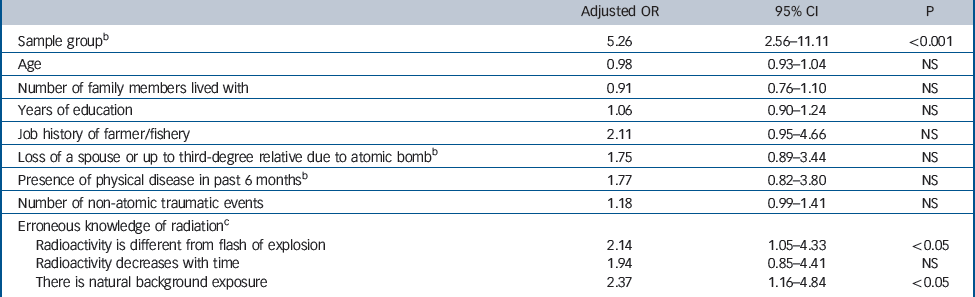
Regression analysis was performed for both groups to clarify whether belonging to the sample group contributed to poorer mental health (Table 2). We subjected variables that contributed significantly to poorer mental health to t-test or χ2 analysis and found that group membership showed the largest contribution (OR = 5.26, 95% CI 2.56–11.11), whereas erroneous conceptions about radiation issues such as disagreeing with the statements ‘radioactivity is not synonymous with the atomic flash’ (OR = 2.14, 95% CI 1.05–4.33) and ‘natural background radiation is a normal phenomenon’ (OR = 2.37, 95% CI 1.16–4.84) also showed a modest contribution. We then performed logistic regression analysis for the sample group alone to determine which aspects of the atomic bomb experience were related to current poor mental health (Table 3); these included extent of the perceived intensity of the explosion, anxiety immediately after the explosion and anxiety on discovery of the possibility of exposure to radiological hazard. We also subjected variables that contributed significantly to poorer mental health to t-test or χ2 analysis: this revealed that only anxiety on discovery of possible radiological hazard made a significant modest contribution (OR = 2.62, 95% CI 1.07–6.41).
Discussion
Compared with a control group that was more rigorously selected than others used in previous studies of the effects of radiation on health, significant mental health deterioration in the absence of any proven radiation was observed in the sample group in comparison with controls who had moved to the same area 5–10 years after the explosion. This effect was modestly associated with erroneous knowledge of radiological issues, such as the mistaken belief that the atomic flash was synonymous with radiation, but was not affected by life events unrelated to radiation
Contribution of variables to poorer mental health a
| Adjusted OR | 95% CI | P | |
|---|---|---|---|
| Sample group b | 5.26 | 2.56–11.11 | <0.001 |
| Age | 0.98 | 0.93–1.04 | NS |
| Number of family members lived with | 0.91 | 0.76–1.10 | NS |
| Years of education | 1.06 | 0.90–1.24 | NS |
| Job history of farmer/fishery | 2.11 | 0.95–4.66 | NS |
| Loss of a spouse or up to third-degree relative due to atomic bomb b | 1.75 | 0.89–3.44 | NS |
| Presence of physical disease in past 6 months b | 1.77 | 0.82–3.80 | NS |
| Number of non-atomic traumatic events | 1.18 | 0.99–1.41 | NS |
| Erroneous knowledge of radiation c | |||
| Radioactivity is different from flash of explosion | 2.14 | 1.05–4.33 | <0.05 |
| Radioactivity decreases with time | 1.94 | 0.85–4.41 | NS |
| There is natural background exposure | 2.37 | 1.16–4.84 | <0.05 |
Model fitness (χ2 = 65.06, f = 11, P < 0.001), R 2 = 0.36, variance inflation factor 1.101.24.
a High risk score on the 28-item General Health Questionnaire, cut-off point set at 5/6.
b Yes 1, no 0.
c Erroneous 1, correct 0.
issues, life habits or demographic variables. Among those in the sample group, current poorer mental health was modestly associated with anxiety on learning of possible radiological harm, but not with the perceived intensity of the explosion or the subsequent anxiety it caused.
Limitations
As most measurements were based upon interview, inherent biases should be considered. A bias toward overreporting symptoms among the sample group cannot be excluded, although its effect was negligible; no significant intergroup difference in physical symptoms was observed, despite concern among the sample group about exposure to radiation and subsequent physical harm; their education, job history and life habits do not signify escapism, which was mentioned in a report from Chernobyl as a tendency for overreporting mental symptoms. 1 Rater bias based on sympathy for the sample group may have led to overestimation of their sorrow and distress, as the atomic bombing is a widely recognised national tragedy and the interview was not masked; its effects were minimised by recruiting interviewers from among those who had no familial or geographical association with the
Contribution of variables to poorer mental health in the sample group a

| Adjusted OR | 95% CI | P | |
|---|---|---|---|
| Intensity of the the explosion perception | 1.08 | 0.82–1.42 | NS |
| Anxiety after the explosion | 0.77 | 0.36–1.64 | NS |
| Anxiety at knowing of radiological hazard | 2.62 | 1.07–6.41 | <0.05 |
| Age | 0.89 | 0.65–1.23 | NS |
| Number of family members lived with | 0.81 | 0.33–2.03 | NS |
| Years of education | 0.58 | 0.23–1.44 | NS |
| Loss of a spouse or up to third-degree relative due to atomic bomb b | 3.34 | 0.53–21.07 | NS |
| Presence of physical disease in past 6 months b | 0.87 | 0.09–8.41 | NS |
| Number of non-atomic traumatic experiences | 1.38 | 0.85–2.24 | NS |
| Erroneous knowledge of radiation c | |||
| Radioactivity is different from flash of explosion | 0.01 | 0.00–1.70 | NS |
| Radioactivity decreases with distance | 0.20 | 0.01–2.96 | NS |
| Natural exposure to radiation | 0.17 | 0.01–2.65 | NS |
Model fitness P < 0.01, R 2 = 0.604, variance inflation factor 1.101.24.
NS, not significant.
a High risk on the 28-item General Health Questionnaire, cut-off score 5/6.
b Yes 1, no 0.
c Erroneous 1, correct 0.
atomic bomb explosion or its victims, using a semi-structured interview and randomly auditing one in ten interviews for biased questioning, although none was detected. Recall bias is inevitable in any study based on past events in that ideas about the past may be a consequence of current distress, but it would not have affected the major finding of this study, in which the primary outcome measure was current distress regarded as a variable dependent upon the group division determined by geographical location at the time of the atomic bombing.
The study design also had limitations. As it was cross-sectional, it was uncertain whether the level of distress had remained the same throughout the decades since the atomic bombing, or whether it had been affected by various forms of post hoc information or social events that we did not assess. It is unlikely, however, that the association between current distress and the experience of having been located in the vicinity of the explosion, as well as learning about the potential radiological hazard, could be disproved, given the sizeable odds ratio. Furthermore, survivor bias, resulting from earlier death of more highly distressed individuals, could not be excluded. The controls would have experienced fear of soil contamination and thus might have been in poorer mental health than the general Japanese population, for whom normative data for age group are not available. However, all these factors would have reduced the extent of any intergroup difference in mental health status and would not have undermined our findings.
Within the context of these limitations, it seems reasonable to maintain the validity of the major finding that having been located within the vicinity of the atomic bomb explosion was related to prolonged mental health problems.
Implications
To our knowledge, this is the first study to have focused upon the mental health effects of psychological exposure to nuclear disaster, without radiological exposure. This issue has been touched on in earlier studies, but the findings were contaminated by the effects of radiological exposure or obscured by poorly designed controls. The observation period we employed is far longer than that of any previous studies, including those conducted after the Chernobyl nuclear accident in 1986.
Among the sample group, current poorer mental health was modestly related to anxiety upon learning about the possible risk of radiological harm, but not to the perceived intensity of the explosion or the subsequent anxiety it caused. This illustrates the importance of the adverse role of post hoc negative information, which accords with a previous report on the Three Mile Island accident in which perception of the potential harm, rather than the event itself, was related to increased distress. Reference Goldsteen, Schorr and Goldsteen18 The term ‘psychological fallout’ could be referred to in a similar context. Reference Stiehm19 It should be noted that over half a century after the atomic bombing, three-quarters of the sample group still possessed an erroneous belief that the flash of the atomic explosion was synonymous with radioactivity. As the degree of misconception was not correlated with current mental health, the true extent and ramifications of the effect of such ignorance on persistent distress are unknown. It seems not unreasonable to speculate that many people in the sample group had failed to gain adequate access to official or medical sources of information or education, as they had not been officially registered as being exposed to radiation, despite efforts by the Nagasaki local governments to support such unregistered inhabitants.
The invisible and penetrating nature of radiation makes it difficult to define a border of safety, especially in terms of long-term harm to health, which shows a stochastic tendency; Reference Mays20 it is manifested only through an increased prevalence of malignancy or other diseases without any known threshold or unusual symptoms. A prevailing opinion such as that reflected in the recommendation from the International Commission on Radiological Protection in 1990 ‘to take every possible protective measure on the assumption that a very low dose of radiation can cause harm’ would be best interpreted as a warning of future harm, 21 but care should be taken to avoid causing excessive anxiety about insidious harm from past nuclear disasters, especially when associated with ambiguity or doubt about what constitutes a substantial degree of exposure.
Our study highlights a dimension of anxiety that is independent of radiological exposure, and which requires appropriate attention and treatment, or could otherwise persist over decades. An effective countermeasure might be to convert invisible harm or contamination into more tangible parameters, preferably in the acute phase, and to indicate their precise meaning. Public health promotion based on adequate information provision and psychoeducation beyond the boundary of contamination would also be important. Services based upon categorical distinction between those who are severely distressed and those who are not would create a new artificial boundary, beyond which anxiety also tends to accumulate. It is highly probable that distress of this type can affect exposed individuals as well, suggesting an explanation for the conditions known as ‘atomic bomb neurosis’ or ‘Chernobyl syndrome’, both characterised by fatigue, anxiety, depression and medically unexplained physical symptoms. Reference Havenaar, de Wilde, van den Bout, Drottz-Sjoberg and van den Brink9,Reference Lifton22,Reference Bromet, Gluzman, Schwartz and Goldgaber23 It is noteworthy overall that sustained false apprehension about radiological harm was also related to long-term mental health deterioration. More precise details of the pathway leading from negative appraisal to poorer mental health should be clarified.
In response to our findings the Japanese government has made available financial aid for individual mental healthcare and begun a campaign of public mental health promotion for individuals who were located in the unregistered area at the time of the atomic bomb explosion. This scheme for care provision has already undergone several audits and corrections with reference to our study data, and was finally approved in 2008.
The study will also provide some insight into the nature of the distress related to the nuclear power plant accident that occurred on 11 March 2011 in Fukushima, Japan, as a result of the great eastern Japan earthquake and subsequent tsunami. Beyond the officially recognised contaminated areas, to which entrance was still prohibited at the time of writing, low-level radioactive substances were released over a wide area. Although experts agree that the effects of this low-level radiation pose only negligible risks to health, considerable distress and anticipatory anxiety has occurred among residents in the affected areas. This situation resembles that investigated in the study reported here, and the authors (including Y.K. acting as a governmental supervisor for provision of post-disaster mental healthcare) anticipate that its findings will be useful for helping devise effective countermeasures.
Funding
The study was funded by the Ministry of Health, Labour and Welfare, Japan.
Acknowledgements
We appreciate the kind cooperation of the study participants and the local governments of Nagasaki. We also thank Dr Assen Jablenski, Dr Noriyuki Takei and Dr Sarb Johal for their kind advice, and Dr David Douglas and Maiko Fukasawa for their dedicated assistance.




eLetters
No eLetters have been published for this article.