

1. Introduction
The global expansion of judicial power and the rise of litigation as a vehicle for social transformation are two conspicuous social phenomena that social scientists study intensively. One of the most hotly debated questions in this regard relates to the potential value of law in general, and litigation in particular, as a strategy for social change. Some scholars view litigation as an effective vehicle for social reform in the hands of disadvantaged groups or, at the very least, as a source for self-empowerment in the hands of such groups,Footnote 1 or as a vehicle for reconceptualising their claims and agendas.Footnote 2 Many others, however, tend to doubt the social benefits that groups are able to obtain by adopting litigation as a key strategy for social transformation.Footnote 3 These scholars point to the severe institutional limitations of courts when faced with complicated questions of social policy.Footnote 4 They suggest that, in most cases, there are significant gaps between court victories, celebrated through the elevated rhetoric of judges, and the social realities outside the courtroom.Footnote 5 They argue that, at the very least, the use of litigation diverts a movement's energies away from more effective options for social transformation. Further, they argue that resorting to litigation may have the adverse effect of reinforcing the social status quo, rather than effectively challenging it.Footnote 6
In the present article I seek to join this line of scepticism by indicating the limitations of litigation as a vehicle for social change, and its potentially harmful implications for groups that focus on litigation as a key strategy for social reform. I do so by comparing the struggle for social equality in Israel waged by two groups: women and the LGBT community.Footnote 7
The struggle for social equality of both women and gays has been the subject of substantial research by social scientists. Central questions such as abortion rights, equal pay for women and gay marriage have been intensively researched with regard to the social role of law and litigation.Footnote 8 Central arguments over the efficacy of law and litigation as vehicles for social change have been structured through research in respect of these two groups. The rights of women and lesbian, gay, bisexual and transgender (LGBT) people are interrelated in the sense that societies which acknowledge equality for women are often more tolerant of and receptive to issues affecting LGBT rights.Footnote 9 The link between the statuses of these groups is relevant for Israel no less than for any other state, since the social forces that oppose women's equality (in particular, the militarist macho-type culture in Israel and the ultra-orthodox religious establishment) are also highly hostile towards the idea of LGBT rights.Footnote 10 While the interests of these two groups seem closely related, and the conditions under which each group conducted its struggle were quite similar, the strategies for social transformation that each has adopted over the past three decades seem to have been quite different. Women's advocacy groups concentrated on legislation and transformative higher court litigation as their principal strategy of social action. Gay rights groups, on the other hand, invested in a much wider range of strategies, in which litigation (mostly, though not exclusively, in lower courts) and other legal-oriented activities served as only one, and not necessarily the central, vehicle for social transformation. The outcome, I argue, is that there seems to be a notable difference between the success of each group in its struggle for equality and social empowerment. Despite various reforms in the formal legal status of women in Israel during the research period, Israeli women have largely failed to achieve many of the central goals of their struggle for equality. In the absence of an effective political mechanism and grassroots social movement, many of the celebrated court victories and successful legislative initiatives in the field of women's rights remain no more than dead letters of the law. The gay rights movement in Israel, on the other hand, has succeeded in bringing about a dramatic, even revolutionary, change in the social status of gay people in Israel within the short period from 1990 to 2000. This success, I suggest, results primarily from the fact that the LGBT rights movement did not focus its efforts solely on legal channels. Rather, it prudently used litigation as an effective tool within its wider political struggle, which focused on grassroots organisations, demonstrations, market-oriented strategies and various other political tactics.
Studying the social impact of litigation is a messy task. How can one define, let alone accurately measure, the ‘success’ of a certain group's struggle for equality? And how can one measure the exact impact of certain court victories on the social status of a given group? It is undoubtedly extremely difficult to isolate the impact of litigation from various other factors and events that influence the struggle of groups for social reforms. In the present study, this task is particularly demanding since I aim to make a comparison between changes in the social status of two different groups: women and the LGBT community. Arguably, despite the apparent similarities between these two groups, it is very difficult to make a reliable comparison between processes related to them since the points of origin in the status of each group are very different, as are our expectations and our criteria for evaluating their ‘success’. I seek to overcome these difficulties by using various longitudinal and cross-country comparative measurements.Footnote 11Admittedly, however, the methodological tools I use in order to deal with these enormous difficulties are not devoid of limitations (which are further discussed below). Accordingly, I suggest that the reader should view my findings not as a basis for reaching definite conclusions but rather as yet another reason to develop healthy scepticism with regard to the ‘allures’ of litigation as a mechanism for social change.Footnote 12
The order of the argument is as follows. First, I provide a background for the rise of judicial activism in Israel and also describe the use of legislation and litigation by women's and LGBT groups (Section 2). I then review the non-legal activities of these two groups in the course of their social struggle (Section 3), and in Section 4 I evaluate the relative success of each group in its social struggle for equality. In Section 5, I provide an analysis to examine the relationship between the tactics adopted by each group and their success in their social struggle, and conclude with some general observations regarding the pros and cons of litigation as a strategy for social change.
2. Litigation for the Rights of Women and LGBT People in Israel
2.1. Judicial Review in Israel – Background
Israel has no formal constitution, and the only basis for judicial review of legislation are some of the Basic Laws enacted by the Knesset (the Israeli parliament) on which the Supreme Court has conferred constitutional status.Footnote 13 The most important of these is Basic Law: Human Dignity and Liberty, adopted in 1992. This Law, however, comprises only a partial bill of rights and does not contain any equality provisions (let alone any reference to women's or LGBT rights).Footnote 14 Accordingly, Israeli public law is almost entirely judge made, created and shaped by decisions of the Supreme Court. The principal forum for judicial review is the Supreme Court itself, sitting as the High Court of Justice (HCJ).Footnote 15
During the 1960s and 1970s, the HCJ tended to impose strict limitations on the ability of litigants to raise political issues in court. To meet the requirement of standing, the petitioner had to show direct and genuine personal interest in the state action in question. Furthermore, the petitioner's standing was likely to be jeopardised if the same action caused similar harm to a large group of people, or to an entire sector of which it formed a part. This narrow concept allowed the Court to refrain from interfering in sensitive issues such as law enforcement with respect to high-ranking political figuresFootnote 16 and controversies related to religion and state.Footnote 17
Another concept with a similar limiting effect on the accessibility of courts by interest groups was that of justiciability. Until the late 1970s, the Supreme Court adopted a narrow conception of justiciability in deciding that petitions involving issues of foreign policy, military actions or other questions concerning sensitive political issues were ‘unsuitable’ for judicial determination and were therefore non-justiciable.Footnote 18 The Court also adhered to a narrow concept of judicial review.
The 1980s saw a major shift in almost all aspects of judicial review mentioned above. There was a dramatic change in the principles concerning access to the courts. In its landmark decision in Ressler v Minister of Defence Footnote 19 the Court revised its standing doctrine to allow any person to petition the Court in cases involving major constitutional questions or gross violations of the rule of law. Accordingly, the Court ruled that the political sensitivity of a given case does not negate the Court's duty to deal with the legal questions involved, thus effectively disposing of the previously accepted doctrine of justiciability.
The reform of the rules concerning access to court was followed by a similar revision of the rules of judicial review. During the 1980s and 1990s, the courts showed a growing tendency to broaden the scope of judicial review. They developed new tools for judicial review and imposed new requirements on administrative authorities, such as the duties of reasonableness,Footnote 20 rationality of the decision-making processFootnote 21 and proportionality.Footnote 22 The courts also displayed a willingness to review the actions of institutions that had previously been held to be partly or wholly immune from judicial supervision, such as the military and the security services.Footnote 23
The result of all of these developments was that Israeli courts became quite a tempting option for all kinds of political and social groups, trying to further their agenda through litigation, as well as for other players in the public arena, such as public interest groups.Footnote 24 As we shall see, both women's action groups and LGBT rights groups (among many other groups representing a diversity of interests) were quick to pick up on the willingness of the court system to become a key player in Israel's public arena.
2.2. Litigation by Women's Groups
The founding of Israel appeared to carry great promise for Israeli women. The dominance of the socialist ideology espoused by the main political forces of the time, combined with the European background of some prominent elite groups, seemed to create a policy that would favour equal rights for women.Footnote 25 Indeed, Israel's Declaration of Independence specifically denounces gender-based discrimination and, shortly after statehood, the Knesset passed the Women's Equal Rights Law in 1951, which provides for ‘one law for men and women’. Prohibitions against gender-based discrimination were also included in many pieces of legislation relating to labour issues.Footnote 26
Nevertheless, despite the seemingly egalitarian aspirations of the founders, two strong social forces constantly worked against equality for women in Israeli society. First, there were security pressures which made military service a central part of Israeli society, culture and politics. Officially, military service was open to both sexes;Footnote 27 in practice, however, all combat positions were closed to women.Footnote 28 This had wide-ranging effects on career options available for women within and outside the military, and on their social status in general.Footnote 29 The second force that worked against equality for women was the Jewish religious establishment. Under Israeli law (as shaped during the 1950s), matrimonial issues are subject to the ultimate jurisdiction of religious tribunals. Since the legal codes under which the rabbinical (as well as the Muslim) tribunals function are ancient, the idea of gender-based equality is wholly absent from them. As a result, Israeli family law reflected gross discrimination against women. The application of religious law to matrimonial issues was also exempt from any influence of egalitarian legislation (such as the above-mentioned Women's Equal Rights Law) by specific order of the legislature.Footnote 30 Moreover, the strong foothold of the religious parties in Israeli politics precluded any possibility of a significant reform in the fields of family law and matrimonial status.Footnote 31
Since the early days of the state, the Israeli judiciary has reflected a tendency to minimise – to the extent possible under statutory limitations – the non-egalitarian impact of the religious establishment on family law. During the 1960s and 1970s, the Supreme Court delivered some prominent decisions with the aim of narrowing the jurisdiction of religious tribunals. These decisions were intended to enable some groups to evade religious prohibitions against various kinds of marriage that would otherwise have been strictly enforced by the religious tribunals.Footnote 32 The Supreme Court also developed a doctrine of strict scrutiny of the practices of religious tribunals in order to ensure their compliance with fundamental principles of procedural justice.Footnote 33
The rise of judicial activism that began in the early 1980s, however, marked a new era for litigation over women's rights. Several organisations were advocating women's rights, including the Association for Civil Rights in Israel (ACRI) and the Israel Women's Network (IWN). The latter organisation was founded in 1987 and soon after adopted litigation as a central strategy for achieving social reform. Both ACRI and the IWN brought before the Supreme Court several cases relating to the equality of women, most of which were decided in favour of women's rights. In this manner, the Court ordered the government to ensure reasonably sufficient representation for women on boards of government corporations and other public institutions.Footnote 34 Similarly, the Court has struck down retirement practices that were held to be flawed by gender-based discrimination.Footnote 35
No less impressive, however, was the record of the Supreme Court in intervening and striking down gender-based discriminatory practices based upon or related to religious institutions or religious practices. In 1988 the Supreme Court intervened twice to strike down practices that prohibited women's representation in religious municipal councils.Footnote 36 In a 1994 landmark decision, the Court ruled that the right of women to an equal share in property applies to any matrimonial litigation, regardless of the forum in which it took place. This meant that religious tribunals were thereafter subject to a secular norm of equality that overruled any contradicting religious norm. The Court went on to proclaim that, in general, religious tribunals should abide by the state's constitutional and legal principles, both statutory and based on precedent. In so ruling, the Court confined to a minimum the implications of the autonomy of religious tribunals provided by the relevant legislation.Footnote 37 The Court subsequently ordered the religious authorities in charge of the Jewish holy places in Jerusalem to allow a group of women (Women of the Wall) to conduct prayers within the main prayer location near the Western Wall, which until then had been restricted to men.Footnote 38
Another important aspect of judicial intervention with regard to women's equality is that referring to the status of women in the Israeli Army (IDF). In a landmark decision in 1995, the Court quashed the Israeli Air Force's practice that barred women from admission to the IAF's Flight School and becoming combat pilots.Footnote 39 Its decision thus put an end to male monopoly in one of the most prestigious fields of military activity, and opened the way for women's access to most military posts and security careers.Footnote 40
2.3. Gay Rights Litigation in Israel
Unlike the case of women, at the time of the founding of the State of Israel the legal and social status of gays was very low. Homosexuality in Israel's early days was criminally outlawed and socially condemned.Footnote 41 During the 1990s, however, Israeli society underwent a significant, even revolutionary, social change. This revolution took place in various social spheres (see below), but for now we shall concentrate on its impact in the legal field.
In 1988 the Knesset repealed the criminal prohibition on homosexual relationships, and 12 years later it equalised the minimum age of consent for such relationships to the general age of consent in criminal law.Footnote 42 In 1992 the Employment (Equal Opportunities) Law was amended to prohibit any discrimination against workers in hiring, promotion and other aspects of labour relations on the basis of the worker's sexual orientation.
In its struggle for equality, the LGBT community has made ample use of higher court litigation. The landmark case in this field was El Al v Danilovitz in 1994 in which the Supreme Court ordered that homosexual partners are entitled to all the benefits enjoyed by spouses of aircrew in El Al Airlines under their collective employment agreement.Footnote 43 While this decision could have been subject to a narrow reading, based on interpretation of the specific employment agreement, it in fact paved the way for the recognition of various other spousal rights of homosexual partners, such as those relating to government benefits, pensions and inheritance law.Footnote 44
The judicial reform of the legal status of LGBTs in Israel has continued throughout the past decade via a series of decisions that have bestowed on same-sex partnerships the status of ‘common-law marriage’. In 2001, lower courts acknowledged the legal validity of cohabitation agreements by same-sex partners.Footnote 45 In 2006 the HCJ acknowledged the status of same-sex marriages performed abroad as legally valid for the purpose of registration at the Official Registry.Footnote 46 This ruling provided homosexual partners with most of the rights and benefits accruing to married people under Israeli law.Footnote 47 A year earlier, the Court had given a broad interpretation to the Adoption of Children Law of 1981 in order to acknowledge the right of lesbian partners to adopt each other's child under that Law,Footnote 48 and in 2008 the Attorney General gave his approval for the adoption of non-biological children by homosexuals.Footnote 49 The Yeros-Hakak decision was followed by the decision of a lower court in 2010 that affirmed the petition of a homosexual partner to adopt his spouse's son, who had been born to a surrogate mother.Footnote 50 In 2006 a civil court also acknowledged the validity of a divorce matrimonial agreement made by a lesbian couple,Footnote 51 and similar recognition has been granted to rights of LGBT couples for inheritance purposes.Footnote 52
All of these rulings by the courts were made despite the fact that, under the law, marriage and divorce of Jews in Israel are subject to the jurisdiction of religious tribunals that adjudicate on disputes according to the Jewish Halacha (under which homosexuality is a serious sin and same-sex marriage has no legal status).
Similarly, several statutes enacted during the last decade and court decisions have entrenched the prohibition on discrimination on the basis of sexual orientation in various fields, including consumer rights, state contracts and state subsidies.Footnote 53
3. Non-Litigation Related Activities and the Place of Litigation – Women's and LGBT Groups
3.1. Women's Groups
As we have seen, during the past three decades both women's groups and gay rights activists have used litigation extensively in order to promote their interests, rights and social status. There seem to be, however, some notable differences between these two groups with regard to the role of law in general, and higher court litigation in particular, within the overall range of their activities. The first, and perhaps the most conspicuous, difference refers to the centrality of litigation for each group.
The principal women's groups in Israel (most notably the IWN and Na'amat – a women's organisation affiliated to Israel's main labour union) regarded legal tactics and litigation as their paramount mode of social activity and largely stayed away from grassroots political activities. The centrality of the legal strategy is particularly evident when one looks at what women's groups in Israel did not do (or at the very least did not do intensively) during the research period – that is, if one looks at the overall picture of their political activities. Although females constitute over 50 per cent of the population, Israel has no women's parties at either the national level or the municipal level; nor was there any significant grass-roots organisation that aimed to mobilise women voters in politics during the research period.Footnote 54 The lack of effective political organisation is reflected also in the relative scarcity of grassroots political activities. Hardly any significant events during the research period spring to mind – for example, demonstrations and parades, or even picketing organised by women's groups or activists regarding the major issues on the agenda of women's equality rights, such as equal pay, political representation for women, equality within the family and violence against women. All of these are major issues that address significant disadvantages of women in Israeli society and yet, unlike many other countries, women's groups in Israel have failed to use them for mobilising meaningful grassroots activity.
It should be clarified at the outset that I am not suggesting that women remained completely uninvolved in politics during the research period. On the contrary, one can point to various social and political activities by women's groups and organisations. For example, since the early days of the State of Israel women's labour organisations (mostly Na'amat and WIZO) have established a network of day-care centres for young children, thus enabling mothers to work.Footnote 55 Most of the political activities by women's organisations, however, were either largely unrelated to women's rights or focused on women's issues in specific communities or with regard to issues that were peripheral to the main agenda of women's equality; for example, women's groups (such as Women in Black and Checkpoint Watch) conducted picketing, demonstrations and other grassroots activities with regard to Palestinian rights, while other organisations were active against discriminatory practices in the orthodox Jewish community (such as Kolech (Your Voice) and Women of the Wall),Footnote 56 or with regard to women's rights in the Jewish Mizrahi (oriental) population (such as Achoti (My Sister)).Footnote 57 Most of these activities, however, were not directed towards the main issues of the women's rights movement agenda (equality in political representation, equal pay for women and combating violence against women). Thus, in this respect, the magnitude and nature of women's political activities stand in sharp contrast to those of the LGBT rights movement during the research period (see below).Footnote 58
The centrality of legal and litigation-related strategies in the agenda of Israel's main women's rights organisations can be demonstrated by looking at reports provided by the organisations themselves. In a booklet published by the IWN in 2004, the organisation reviewed its main activities during the 20-year period between 1985 and 2004. The document refers to 34 major events and initiatives of the IWN since its foundation. Of these, almost two-thirds (21) were related to legal activities: 10 events involving litigation (of which eight were petitions to the Supreme Court) and another 11 legal activities (most of which were legislative initiatives). Only 13 events mentioned in the report were non-legal activities, and most of them involved education (such as classes given to high school students to develop female leadership) or polls related to women's issues. Only two of the 34 events mentioned were demonstrations or public picketing (of which one was related to higher court litigation) (see Figure 1).
Activities of the Israel Women's Network: 1975–2004

3.2. LGBT Activities
The above description of the activities of the women's lobby stands in sharp contrast to the nature of activities by LGBTs in Israel. The LGBT rights movement in Israel is composed of a large network of different organisations which collaborate effectively with each other.Footnote 59 Over the past two decades, these organisations have proved to be extremely successful in combining political lobby and grassroots activities with litigation to bring about social mobilisation. Unlike the case of women, LGBT grassroots political activity is commonplace in Israeli politics. These activities encompass every known aspect of politics, including a political lobby in the Knesset and at the level of local municipalities, party organisation and voter mobilisation, grassroots protest (via press articles, letters to politicians and so on), mass parades and demonstrations, as well as small-scale (but effective) picketing. I now review some of these activities in more detail.
Although LGBTs are a relatively tiny fraction of the general population (this is certainly true with regard to those members of the community who are willing to profess their sexual orientation in public),Footnote 60 the LGBT community has organised itself successfully and is effective at the party level. The community has managed to do this by concentrating its activities in those few political constituencies in which LGBTs have greater numerical significance, mainly in the Tel Aviv branches of the leftist parties of Meretz and Shinui.Footnote 61 This stronghold of the community in key branches of these parties has allowed them good access and influence at the national level (as well as in the Knesset), where they have effectively applied political lobbying.Footnote 62 No less impressive is the LGBT movement's ability to mobilise grassroots activities in the streets. The annual Gay Pride Parade in Tel Aviv is not only a large and colourful cultural event, but also a significant demonstration of political power. The success of this event in the social mobilisation of LGBTs' interests is reflected in the fact that (in addition to public financing) major utility companies and other national corporations sponsor the event (for significant sums of money in return for advertising, which presumably creates economic leverage for the movement).Footnote 63 The movement's presence at street level, however, does not end with this annual event. Gay activists have proved to be determined to picket any public figure in Israel (whether a politician, an intellectual or an artist) who publicly indulges in homophobic speech.Footnote 64 Gay activists are quick to insistently react to and condemn any infringement of LGBT rights or social status by letters to the press and other media channels and picketing, as well as by threats of litigation.Footnote 65 The movement is very active in negotiating issues relating to LGBT rights with the authorities (such as prison managements regarding prisoners' rights and health authorities regarding AIDs).Footnote 66 It also systematically detects and responds to violations of LGBT rights on the ground. Thus, for example, the movement acts to educate and train police officers to deal with assaults on homosexual youth in a park that serves the community for social interaction.Footnote 67
A good illustration of the movement's activities can be extracted from a 2001 comprehensive report issued by the Political Council for Gay Rights in Israel. Footnote 68 The report, containing over a hundred pages, is divided into 14 chapters. Just one of these is entitled ‘The Legal Chapter’, although other chapters focus on legal issues (such as a chapter which addresses civil marriage, and one which relates to the rabbinical courts).Footnote 69 All in all, however, this comprehensive report deals with the activities of the LGBT rights movement in various fields, including health, education, politics, army service, prisoner rights and even LGBT tourism.Footnote 70 It is clear from this report that the LGBT movement in Israel regards litigation as just one strategy among many others for achieving its political goals, and that the legal strategy is intertwined with other aspects of the movement's activities.
The differences between the LGBT movement and the women's movement are discernible not only with regard to the relative centrality of litigation as a tool for social mobilisation, but also in terms of the nature and tactics of litigation that each movement has adopted. The IWN, as well as other women's activists, have concentrated on higher court litigation (mainly before the HCJ).Footnote 71 LGBT organisations, on the other hand, while using petitions to the HCJ in some high-profile cases, have provided effective legal assistance to members of their communities in numerous ‘ordinary’ cases in lower courts on various legal issues: recognition of family rights and rights of same-sex partners, discrimination against homosexuals by property owners, and other issues that require litigation.Footnote 72 The fact that the LGBT movement regarded higher court litigation as just one aspect, and not necessarily the most central, of their political activities is also reflected by the mechanism adopted by the movement for such litigation. Almost all of the higher court litigation on women's issues was conducted by the women's organisations themselves (most commonly by the IWN or Na'amat) and occasionally in conjunction with ACRI.Footnote 73 LGBT organisations, on the other hand, seldom petitioned the HCJ themselves. In almost all high-profile cases they relied on the well organised and professional mechanism of ACRI to represent them in court. This fact indicates two points:
• LGBT organisations, while certainly aware of the importance of higher court litigation, did not seek to invest too much of their organisational and financial resources in conducting litigation since they knew that another organisation (that is, ACRI, which specialises in higher court litigation) could do the job for them.Footnote 74
• Presumably the one real benefit that LGBT organisations lost in allowing a general civil rights organisation to litigate on their behalf is the prestige related to being the ‘leader’ in this litigation. However, it seems that unlike the IWN, which placed the credentials derived from conducting high-profile cases high on its agenda,Footnote 75 this seems to have been a small price to pay for the LGBT rights organisations.
To sum up this section, one can say that the important difference between the women's movement and the LGBT movement does not rest on the question of which movement has used higher court litigation to promote its goals. Both movements have frequently engaged in such litigation, and both have benefited from victories in the HCJ. The real difference between these movements is related to the question of what else did the movement do apart from higher court litigation? In this respect, the previous section demonstrates significant differences. For the women's rights movement in Israel, legal activity – particularly higher court litigation – seems to have been its most prominent and almost exclusive strategy for social mobilisation. For the LGBT rights movement, the use of law in general and higher court litigation in particular was simply one tool within the versatile array of political measures adopted by the movement to promote its social platform. The ‘gay voyage into the heart of the public sphere’ was based on legal tactics combined with a wide range of grassroots and political activities.Footnote 76
4. The Social Impact of the Struggle by Women and LGBT Groups for Equality
4.1. Methodology
In the earlier sections I reviewed the activities of women's and LGBT groups in Israel, through litigation and other means, in the course of their struggle for equality and social mobilisation. What was the social impact of these activities? To what extent were those activities successful in promoting each community's interests and goals? I have already remarked that measuring the social impact of litigation (or any other legal means) is a demanding task, which raises several methodological and empirical difficulties. Besides the general difficulties involved in identifying and measuring the impact of litigation and the need to substantiate a causal link, in the present study I wish to compare the social achievements of two different groups. Despite some common characteristics (described above), women and the LGBT community differ in many respects, which include their social and political status, the objects of their struggle for equality and the strategies that are relevant for that struggle. How, then, is it possible to make a meaningful comparison of the social impact of litigation for two such distinct groups? It may be no more than a futile effort to compare apples and oranges.
I seek to overcome these difficulties by using comparative, cross-country longitude measurements for the social achievement of each of these two groups. Rather than asking ‘how did women in Israel succeed, in comparison with LGBTs?’ I ask two questions: (i) how did women in Israel succeed in improving their social status in comparison with women in other countries, and then (ii) how did the LGBT community in Israel succeed in comparison with LGBT groups in other countries? Assuming that, in general, there is a link between the social status of each group, one would expect that this should also be the case for Israel. To use the above metaphor, I am not comparing how apples and oranges grow in Israel. Rather, I seek to study how apples grow in Israel, as compared with how they grow in other countries, and how oranges grow in Israel in that respect. Assuming that where apples normally grow well, so do oranges (and vice versa), one would expect that this should also be the case for Israel. If it is not, then it will enable us to offer some tentative explanations for such an aberration.Footnote 77
It should be noted that this methodology seems to be appropriate for settling possible objections as to the differences between Israeli women and Israeli LGBT groups. For example, one may argue that women as a group are far larger in numbers and far less cohesive than LGBTs, and so it is much more difficult for them to become organised for effective political action. It may similarly be argued that considerable differences exist between Israeli women and LGBT groups with regard to their political causes, and therefore the starting point of their struggle for equality. Thus, the argument goes, it is impossible to compare the struggle between the two groups. The methodology used here, however, accounts for such objections, since I am not comparing the relative status of Israeli women vis-à-vis LGBTs in Israel, but vis-à-vis women in other countries. Thus, assuming that it is more difficult for Israeli women to become politically organised, this should also account for women in Germany, Italy and all other countries included in my comparative analysis; the same goes for the case of Israeli LGBTs, whose social status is compared with LGBTs in those countries, but not directly with Israeli women.
Similarly, one may argue that there are special cultural or social circumstances that inhibit the ability of women to promote their social goals, but such circumstances do not apply to the LGBT community. Once again, I argue that the comparative methodology used here accounts for such an objection. If, for example, the objection refers to women in general, one should assume that it should apply not only for Israeli women but also for women in other countries; accordingly our comparative analysis accounts for it. If, on the other hand, the objection refers to some peculiarities of Israeli society, it should presumably apply to the Israeli LGBT community as much as it applies to Israeli women.Footnote 78
Accordingly, the following quantitative analysis refers to the comparative assessment of the social achievements of Israeli women and of LGBT groups. For each group, the quantitative analysis is supplemented by a qualitative assessment.
4.2. Women in Israel
4.2.1. Qualitative Analysis
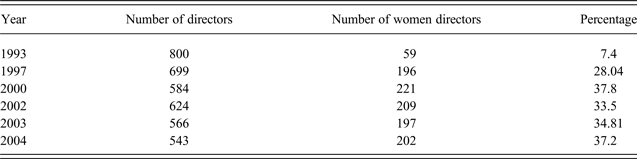
A review of the struggle by women's groups in Israel for gender equality during the research period suggests that this resulted in rather limited achievements. This is not to say that interest group litigation failed completely to mobilise women's interests. Some court cases did indeed bring about significant changes in the status of women within the relevant social field. The most prominent example of this is the litigation concerning the right of women to serve in IDF combat units. The Supreme Court decision in the Miller caseFootnote 79 seems to have had a profound impact on the practices of women's service in the IDF. Until then, almost all combat professions in the IDF were completely closed to women. Shortly after the decision, the IDF reformed its practices and began to admit women not only as combat pilots but also to most other combat military professions, and the reform has had an impact on women's service across the board. Female service following Miller is completely different from its position beforehand.Footnote 80 Litigation on behalf of women's groups has had an impact on other issues: for example, the struggle of women's groups and activists led to the enactment of the Prevention of Sexual Harassment Law (in 1998) and thereby in this respect brought about significant changes in the status of women in the workplace and in society at large.Footnote 81 In addition, one of the main targets of the IWN's litigation during the 1990s was to increase women's representation on the boards of government corporations.Footnote 82 These efforts seem to have been fruitful: shortly after the HCJ decision in the first major case in this field,Footnote 83 the presence of women on boards jumped from 7.4 per cent (in 1993) to 28 per cent (in 1997) and continued to rise to 37 per cent in 2004 (see Table 1).Footnote 84
Representation of Women on the Boards of Governmental Corporations in Israel
Source: Women's Lobby in Israel, Women in Israel: Information and Data (Agate Krauss ed., Ramat Gan 2004).
4.2.2. Quantitative Comparative Analysis
Notwithstanding these achievements, an evaluation of the overall success of Israeli women in their struggle to achieve social equality elicits a rather gloomy picture. Such an assessment can be made by using some of the major accepted indicators for the status of women in society, such as political representation and relative pay. These indicators suggest that the quest for gender equality in Israel is far from being fulfilled. Political representation of women in Israel is still much lower than it is in most Western (and, in fact, also many non-Western) countries. For example, in 1987 Israel was ranked 63 of 135 states in a comparative study on the relative representation of women in national parliaments. In 2001 Israel was ranked 57 out of 170 statesFootnote 85 and fares no better in the global ranking of representation of women in cabinets.Footnote 86 In the 2009 elections for the Knesset, the number of women elected scored a record high of 21 representatives (17.5 per cent of all seats), which still leaves Israel far behind most Western democracies (63 out of 134 countries ranked for political representation, in a major cross-national indicator).Footnote 87 This low score for female representation is particularly troubling because many parties have special provisions in their constitutions that guarantee quotas for women on their candidate lists.Footnote 88
Similarly the struggle for gender equality has had little impact on the gaps in terms of salaries and only 20 per cent in terms of payment per hour for work),Footnote 89 despite a law passed by the Knesset in 1996.Footnote 90 The gap between men and women persists, even for state employees who are presumably subject to a strictly regulated regime of gender equality.Footnote 91
For an overall quantitative picture of the relative social status of Israeli women, one may look to the international indicators published by the United Nations Development Programme. These indicators, published annually since 1990, provide comparative illustrations of the human development status of various nations worldwide.Footnote 92 One such indicator, the Gender-related Development Index (GDI), tests the status of the gender gap in various countries and ranks them accordingly. The ranking is based on indicators such as life expectancy, literacy rate, education and income, and for each indicator it tests the gap between men and women in each country. We have examined the ranking for the years 1995, 1998, 2002 and 2005.Footnote 93 According to these indicators, between 1990 and 2010 Israel has been constantly ranked 22–23, behind most Western democracies and without any apparent change in the social status of women compared with women in other countries.Footnote 94
4.3. LGBT Rights in Israel
4.3.1. Qualitative Analysis
Turning now to the evaluation of the success of the LGBT rights movement in Israel in creating social mobilisation, the picture seems to be very different. In fact, the Pink Revolution of the 1990s in Israeli society is arguably the most successful of all group struggles for social equality in Israel, and perhaps one of the most prominent examples across the world of a successful social struggle for equality.Footnote 95 Although the homosexual community comprises a small fraction of the population with an extremely low social and legal status until the 1980s, despite the military-macho nature of Israeli society, and even though the LGBT community had and still has powerful political enemies within the Israeli religious establishment, the movement has succeeded in producing comprehensive reforms in the status of LGBT people in Israeli society in almost every field and at all levels. I mentioned above the major legal reforms that repealed the criminal prohibitions on homosexuality and the Supreme Court decisions that opened the gate for the de facto recognition of the homosexual partnership as ‘common law marriage’ for most legal and administrative purposes.Footnote 96 Yet the Pink Revolution's achievements go well beyond the legal arena. They are reflected by numerous indicators: the popularity (and size) of gay pride parades (see 3.2 above); a dramatic change in the way in which gay life and gay people are covered by the media;Footnote 97 and the proliferation of ‘pride’ sections in mainstream newspapers and major internet portals. Significant changes were also effected in the field of education and in the education system's attitude towards LGBT students and the LGBT way of life in general.Footnote 98 The change in the social status of gays and lesbians in Israel is reflected in the popular media. Until the late 1980s, the media dealt with homosexuality only in a criminal context, and interviews with gays or programmes referring to homosexual relationships were often banned by media managements.Footnote 99 In the late 1980s, and particularly after homosexuality was decriminalised in 1988, this began to change. During the 1990s the media started to cover LGBT political activities and a dramatic change in the depiction of LGBTs in popular culture occurred.Footnote 100
To this one may add the reform in the policies of the IDF and the Israeli police. Until 1973 homosexuality was defined as a mental illness in IDF regulations, but even after these regulations were repealed the general practice to send all gay soldiers for a psychiatric examination persisted until 1993. Homosexuals were discriminated against on the ground that their sexual orientation constituted a ‘security risk’. In 1998, however, the IDF repealed all limitations on the drafting and service of gay soldiers.Footnote 101
To demonstrate the magnitude of the achievements of the LGBT rights movement one can refer to the fact that in 2010 the Israeli Ministry of Tourism launched a campaign to promote LGBT tourism to Israel. The campaign – which included a special governmental website, a Twitter account and a smartphone application – presented Tel Aviv as one of the most LGBT-friendly cities in the world. While this campaign was criticised by some as an attempt to ‘pinkwash’ Israel's violations of human rights in other areas (particularly towards Palestinians in the Territories),Footnote 102 this official attempt to ‘brand’ Israel as a LGBT-friendly stateFootnote 103 seems to reflect the long way that the LGBT rights movement in Israel has come during the last decades.Footnote 104
4.3.2. Quantitative Analysis
Conducting a quantitative comparative analysis of the social achievements of LGBTs in Israel has proved to be more difficult than performing the same task for women. This is because I am not aware of any formal international comparative ranking of the social status of LGBTs (similar to the GDI indicators published by the UN). An international comparison of the status of LGBT rights does appear in the Wikipedia 2011 entry for ‘LGBT Rights by Country or Territory’. This entry examines the social status of LGBT rights in several countries with reference to the following seven indicators:
(a) gay relationship under criminal law;
(b) recognition of same-sex relationship;
(c) marital status;
(d) family rights (the right to adopt children);
(e) gay status in the military;
(f) anti-discrimination laws (in the employment field, consumer rights and so on); and
(g) laws concerning gay expression and identity.
Using these measurements, I developed a comparative index of the status of LGBT rights in 40 countries ranked at the top of the GDI ranking (described above in respect of women's equality rights).Footnote 105Admittedly, as in the case of cross-country comparisons of women's achievements,Footnote 106 any choice regarding the various indicators in such an analysis is doomed to be somewhat arbitrary. One could think of other indicators that could have been included in such an analysis (such as the relative number of members in LGBT organisations, public opinion polls regarding gay status and the number and size of gay parades in different countries). The choice of the indicators that I made, however, can be justified by the fact that our analysis is based on a large-scale comparison of indicators from 40 countries over 40 years. It is inevitable that the only indicators that such an analysis can use are the most prominent formal indicators regarding gay rights; in other words, there is simply no available data regarding, for example, the size of gay parades in Ireland or Brazil during the 1980s or the number of members in LGBT organisations in Greece or Belgium during the 1970s. The indicators included in our analysis refer to prominent issues that are at the centre of the gay rights movement's struggles across the globe and, as such, are included in the international indexes that deal with such cross-country comparisons.Footnote 107
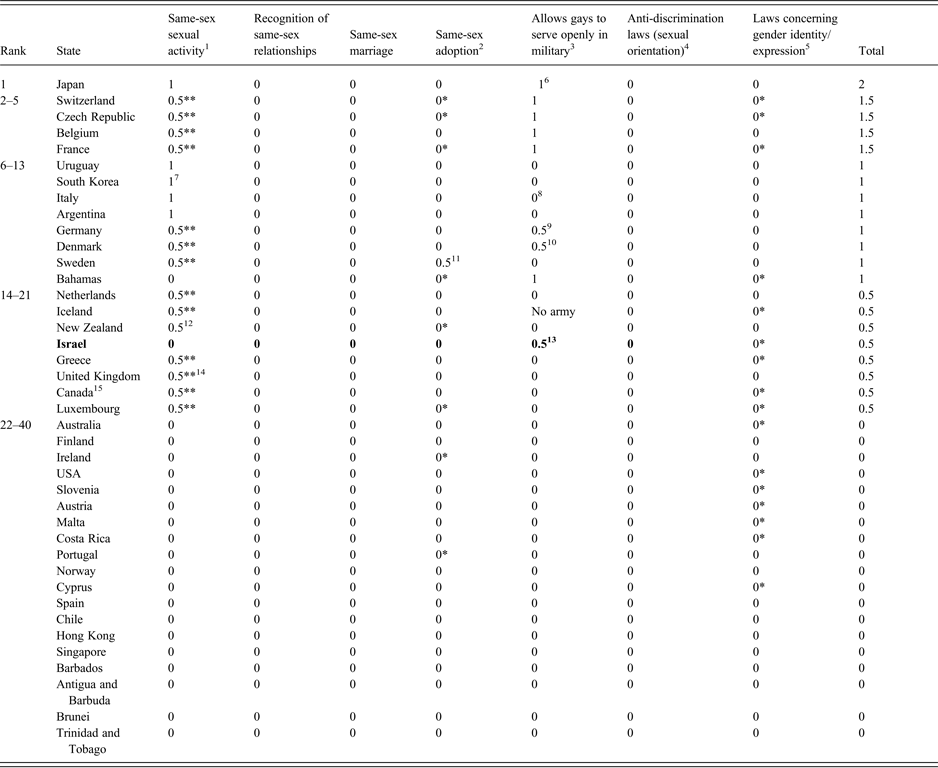
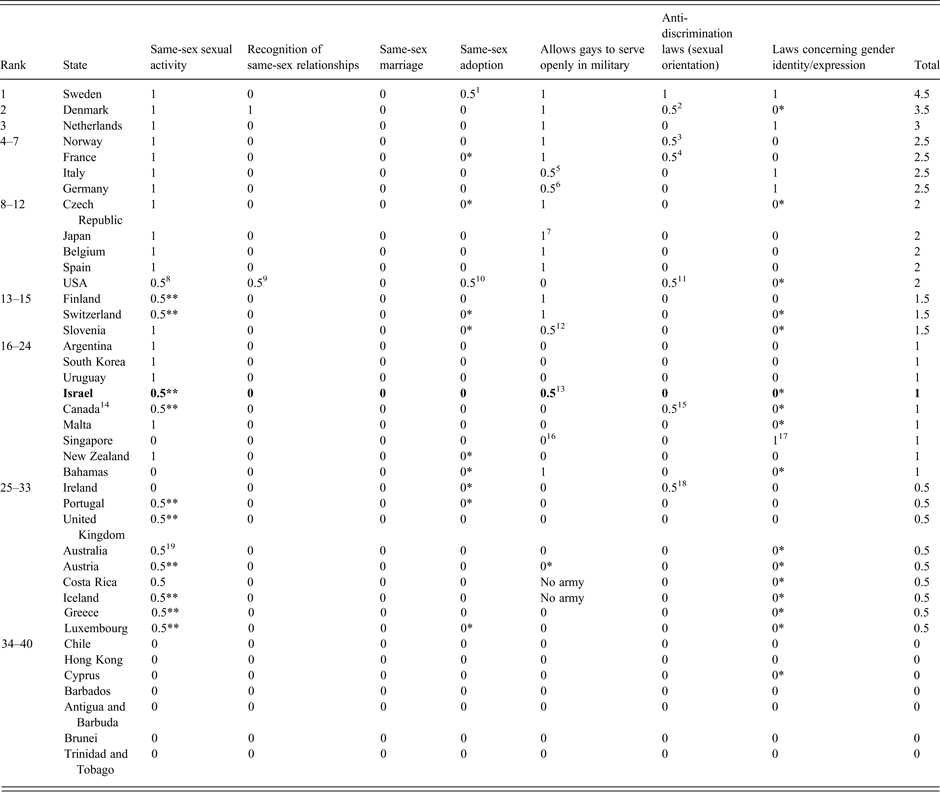
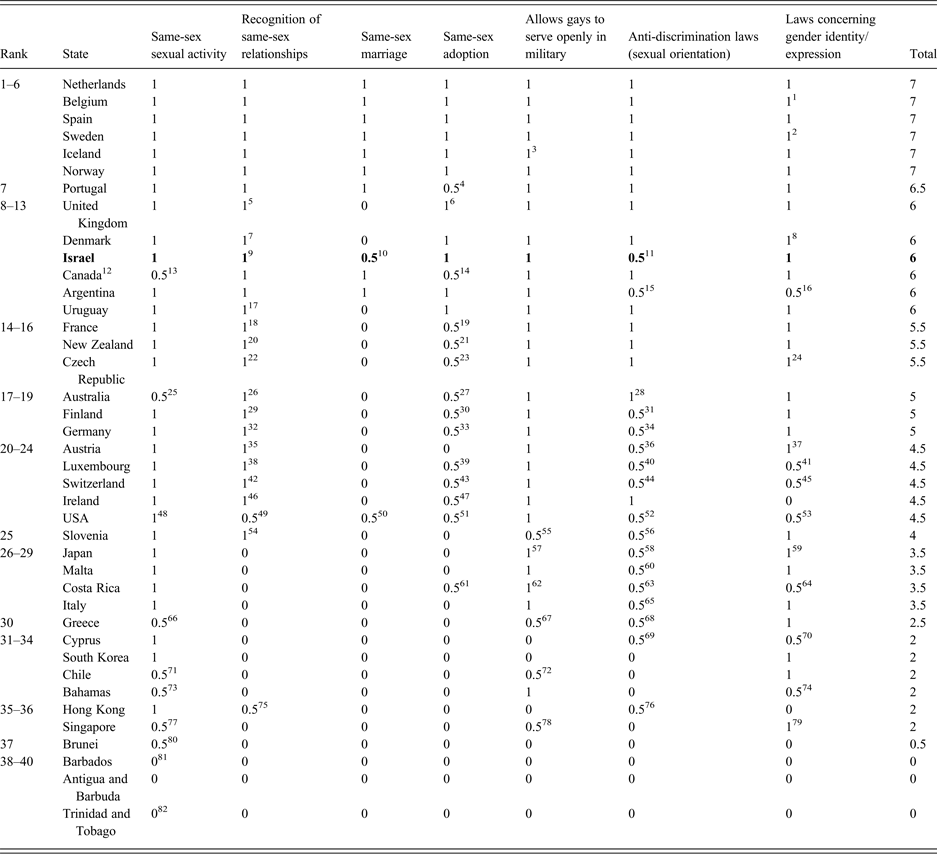
Accordingly, for each country the status of LGBTs in 1970, 1990 and 2010 was examined (see Tables 2.1, 2.2 and 2.3 respectively in the Appendix at the end of this article).
As Table 2.1 demonstrates, in 1970 the status of LGBTs in Israel was very low both in absolute terms and in comparison with many Western democracies. While this hardly changed until 1990 (Table 2.2), by 2010 Israel's ranking had improved significantly. Israel today is ranked higher than many Western democracies, including the United States, Germany, France and various other countries that are constantly ranked higher than Israel in the UN major indicators for gender equality (Table 2.3). These measurements seem to corroborate my claim that the social status of gays and lesbians in Israel has improved sharply over the past two decades, not only in absolute terms (that is, in comparison with their status before 1990) but also in comparison with the social status of LGBTs in other Western democracies (see Figure 2).
The Status of LGBTs in Israel in Comparison with Other Nations: 1970–2010
The achievements of Israel's LGBT community seem to be particularly impressive since, according to comparative public opinion polls, the general Israeli public still seems to be less supportive of LGBT rights in comparison with the citizens of most Western European countries.Footnote 108 The relative progress of the social status of LGBTs in Israel in comparison with that of women, as reflected in international comparative rankings, is summarised in Figure 3.
The Status of LGBT and Women's Rights in Israel from a Comparative Perspective
5. Analysis and Conclusion
Before I embark on a discussion of the conclusions, a word of caution is required with regard to the degree of decisiveness in my claims. Throughout the discussion I have pointed out the apparent difficulties associated with the analysis of the ‘success’ of social groups in their struggle for equality, let alone with regard to any attempt to quantify and accurately measure such ‘progress’ or success. Social processes are complex, and social developments are usually the product of a variety of reasons and factors which are far from easy to isolate scientifically (as is usually performed under laboratory conditions). The cross-country comparative and longitudinal methods I have used in this study are no exception to these inherent difficulties. The main argument developed here is that the relative success or otherwise of LGBTs and women in their struggle for equality during the research period is likely to be associated with the different strategies adopted by each group to promote its goals. Accordingly, I invite the reader to look at my arguments more as illuminating an interesting correlation, rather than a straight claim of direct causation between the different choices that women and LGBTs have made among strategies for social change, and their relative success in promoting their social goals.
With that caveat in mind, the present study may serve as a good illustration of the many dangers involved in social movements' over-reliance on litigation. Our findings suggest that women's rights groups relied heavily on litigation (and legal advocacy) while neglecting other avenues for political and social mobilisation. As critics have suggested, adopting such a strategy may bring the movement to frame its vision and goals in legalistic terms and concentrate on elite-group strategies, while neglecting the opportunity to develop a genuine grassroots base.Footnote 109 It may also encourage the movement's leaders to invest all their resources in litigation and to embrace the false belief that court victories are easily turned into genuine social reforms.Footnote 110 These dangers seem to have materialised in the case of the struggle of women in Israel for social equality. Despite a substantial body of legislation and higher court decisions, the struggle for true gender equality in Israeli society seemed as far from a true victory in 2010 as it was 40 years ago. In international comparative terms, the relative social status of Israeli women seems (if anything) to have deteriorated, rather than improved, during the last decade.
The failure of the women's equality movement to significantly change the political and economic status of women in Israel is not surprising. Bringing about such comprehensive changes requires major social reforms that can hardly be achieved through litigation, or even by legislation that is not supported by a strong political apparatus which ensures its acceptance and enforcement.Footnote 111 The victories of women's organisations in court, even when effectively enforced, could not significantly influence such fundamental issues. Thus, one may conclude by arguing that the failure of the women's equality movement to achieve its major goals was not the result of its failure to win the battles it chose to fight – in court – but because it failed to choose the right arenas in which to fight the battles that were truly important for the success of its overall mission.
The case of the gay and lesbian rights movement in Israel, on the other hand, suggests that litigation can certainly serve as an effective means for social mobilisation, provided that it is combined and coordinated with other political strategies and that the leaders of the movement are aware of the advantages and limitations of litigation as a political tool.Footnote 112
In fact, over-reliance on litigation had some additional consequences which seem to have been particularly harmful for women's struggle for equality. Among the typical stereotypes that women's groups combat in their struggle for gender equality is the view of women as weak and dependent individuals, who always need external forces (stronger than themselves) to promote their causes. Paradoxically, over-reliance on litigation not only fails to refute these stereotypes, but in fact works to bolster such chauvinistic beliefs. In litigation (and, to some extent, in legal advocacy) it is usually the weak and dependent party who seeks the help of an authoritative third-party intervener to solve his or her difficulties vis-à-vis the opponents. Even a victory in court is a victory for the weak. In a political struggle, on the other hand, the opposing parties are required to exert power. Political victories are thus a manifestation of social power. Sadly, it seems that even in those cases where women's groups have succeeded in court, their victories to some extent have acted to reinforce their image as weak and dependent, particularly in cases where the group's only victories were achieved through litigation.
The most striking point raised by the comparison between women's and LGBT groups in Israel is that there is nothing inherent in the structure of these two groups or in the substance of their causes that can explain the difference in their chosen strategies. Admittedly, women form a much larger social group than gays and lesbians, and are therefore far less cohesive in their social organisation and harder to mobilise politically. However, this difference can hardly explain the incredibly low profile of grassroots activity by Israeli women. In any case, if one aims to put forward such an explanation for the above difference between Israeli women and gays, one is also obliged to explain why such constraints on political activity did not apply to women's groups in other Western democracies which served as the basis for our comparative analysis.
The differences between the patterns of the social struggle for equality by women and the LGBT community seem to have been purely the result of choices made by the leaders of these groups. If anything, one might have expected that the choices would be the other way around. LGBTs are smaller in numbers than women. Resistance and hostility towards their causes in the general public (particularly in conservative and religious circles) go much deeper than in the case of the claim for gender equality. Litigation is commonly regarded as the weapon of the weak and socially alienated.Footnote 113 One might easily have anticipated that LGBTs would rely on litigation to a far greater degree than women. As this study demonstrates, the reality has been quite different. The leaders of the LGBT movement in Israel seem to have been far more sceptical (or realistic) about the prospects of social mobilisation through law than their female leader counterparts. It has proved to be a very healthy choice on their part. As our study suggests, even a ‘discrete and insular’ minorityFootnote 114 (as, one could argue, was the case of homosexuals in Israel in 1970) must make every effort not to be swayed by the ‘myth of rights’ and try to include litigation in its tactics of political mobilisation. Arguably, if this has proved to work in the case of Israel's LGBT movement, it should have worked in the case of some other groups, women among them.
Appendix
LGBT Rights – 1970
LGBT Rights – 1990
LGBT Rights – 2010