



Increasing evidence supports the thesis that industrial food processing is now the main shaping force of what has now become a global food system, and is a key determinant of dietary patterns and related states of health and well-being( Reference Monteiro 1 – Reference Moodie, Stuckler and Monteiro 4 ). To investigate this thesis, a food classification system based on the extent and purpose of food processing has been developed. This system, identified as NOVA, includes one group of food products mostly formulated from refined substances derived from foods together with additives. These are identified as ultra-processed foods( Reference Monteiro 1 , Reference Moubarac, Parra and Cannon 5 – Reference Monteiro, Cannon and Moubarac 7 )
Analyses of data collected in several countries from national food budget surveys show that ultra-processed foods overall have an obesogenic nutrient profile and, when compared with minimally processed foods and freshly prepared dishes and meals, have higher energy density, more free sugars, more total, saturated and trans fats, and less dietary fibre( Reference Monteiro, Levy and Claro 8 – Reference Crovetto, Uauy and Martins 10 ). Analyses of data collected by dietary surveys have confirmed these findings( Reference Louzada, Martins and Canella 11 – Reference Steele, Baraldi and Louzada 13 ).
Many studies that have assessed the impact of consumption of ultra-processed foods on the nutritional quality of diets to date have focused on the dietary content of individual nutrients only (one at a time). This approach needs to be supported by evaluation of the impact of ultra-processed foods on the overall quality of diets. People do not eat isolated nutrients, there are interactions among them, and the adequacy of one nutrient does not necessarily reflect an overall healthy dietary pattern( Reference Cespedes and Hu 14 ). Also, individual analyses even on a large number of nutrients may produce statistically significant associations simply by chance( Reference Farchi, Mariotti and Menotti 15 , Reference Hu 16 ). This limitation can be overcome by focusing on nutrient dietary patterns, aggregating the individual nutrient content on the basis of the degree to which they are correlated with one another in the data set( Reference Hu 16 ).
In Brazil and other middle-income countries, and also in low-income countries, rates of obesity, diabetes and other diet-related chronic non-communicable diseases have increased, while micronutrient deficiencies have persisted( Reference Abdullah 17 , Reference Barquera, Pedroza-Tobias and Medina 18 ). Concomitantly, studies based on representative samples of the Brazilian adolescent, adult and elderly populations have documented high consumption of trans, saturated and total fats and free sugars, and low consumption of dietary fibre and several vitamins and minerals( Reference Araujo, Bezerra and Barbosa 19 – Reference Veiga, Costa and Araújo 21 ). Identification of determinants of overall diet quality, including the content of key micronutrients, may therefore be of special importance.
The objective of the present study was to estimate consumption of ultra-processed foods in the Brazilian population and to examine its relationship with the overall nutritional quality of the Brazilian diet.
Methods
We performed a cross-sectional analysis on individual-level dietary intake data from 34 003 individuals aged ≥10 years in Brazil, collected as part of the 2008–2009 National Household Budget Survey( 22 ). These people were a randomly selected sub-sample of 24·3 % of the 55 970 total households (n 13 569). All individuals aged ≥10 years in the selected households were included in the survey. For the present study, analyses were conducted with the 96·8 % of people who filled out records of two days of food consumption (n 32 898).
The survey used a complex clustered sampling procedure, first selecting census areas and then selecting households within those areas. The selection of census areas was preceded by an examination of the areas of the Master Sample of Household Surveys or Common Sample, which contains the pool of 12 800 areas of the country, to obtain strata of households with high geographic and socio-economic homogeneity. The geographic locations of areas (region, state, capital city or other, urban or rural) and the years of schooling of the heads of households were considered, and 550 geographically and socio-economically homogeneous households were selected( 22 ).
The people interviewed completed two non-consecutive 24 h food records on predetermined days spanning one week( 22 ) and food consumption was estimated through the average of the two food records. They were asked to record all foods and drinks consumed and to include information on amount and place of consumption (inside or outside the home). Details on validation and quality control procedures have been published elsewhere( 22 ). Information on age (calculated from the day, month and year of birth), gender (man/woman), race (white, black, brown, Asian-descendant or indigenous), years of education (the sum of the duration of all courses completed throughout life) and family income (the sum of the monthly monetary and non-monetary income of all residents of the household) were obtained via standardized interviews carried out during home visits.
Reported food amounts were converted into grams or millilitres based on a food portion table( 23 ). Dietary energy and nutrient intakes were estimated based on the Brazilian food composition table( 24 ). The following nutrients were included in the analyses: protein, carbohydrate, free sugars, total, saturated and trans fats (each expressed as a percentage of total energy intake), dietary fibre, vitamins A, B6, B12, C, D and E, niacin, riboflavin, thiamin, K, Ca, Cu, Fe, P, Mg, Mn, Se and Zn (each expressed in mg or μg per 4184 kJ (1000 kcal)). Most of these nutrients and dietary constituents are related to the risk of obesity and various chronic non-communicable diseases( 25 ) or else are nutrients inadequately consumed by the Brazilian population( 22 ).
All 1120 food items were classified according to NOVA, the food classification that groups foods according to the extent and purpose of the processing they undergo. Food processing as identified by NOVA involves physical, biological and chemical processes that occur after foods are separated from nature and before they are acquired and consumed( Reference Moubarac, Parra and Cannon 5 , Reference Monteiro, Cannon and Moubarac 7 ).
NOVA classifies all foods into four groups. The first NOVA group is of unprocessed or minimally processed foods. This includes fresh, chilled, frozen or dried fruits and leafy and root vegetables; grains such as brown, parboiled or white rice, corn cob or kernel, wheat berry or grain; legumes such as beans of all types, lentils, chickpeas; starchy roots and tubers such as potatoes and cassava, loose or packaged; fungi such as fresh or dried mushrooms; meat, poultry, fish and seafood, whole or in the form of steaks, fillets and other cuts, or chilled or frozen; eggs; milk, pasteurized or powdered; plain yoghurt with no added sugar or artificial sweeteners added; fresh or pasteurized fruit or vegetable juices without added sugar, sweeteners or flavours; grits, flakes or flour made from corn, wheat, oats or cassava; pasta, couscous and polenta made with flours, flakes or grits and water; tree and ground nuts and other oil seeds without added salt or sugar; spices such as pepper, cloves and cinnamon, and herbs such as thyme and mint, fresh or dried; tea, coffee and drinking-water.
The second NOVA group is of processed culinary ingredients. This includes salt, plant oils, butter, lard, starches, sugar, molasses, honey, and other substances extracted from foods or nature and used in home and restaurant kitchens to prepare, season and cook unprocessed or minimally processed foods and to make with them hand-made culinary preparations.
The third NOVA group is of processed foods. This includes canned or bottled vegetables, fruits and legumes; salted or sugared nuts and seeds; salted, cured or smoked meats; canned fish; fruits in syrup; sugar-coated dry fruits; cheeses; unpackaged freshly made breads; and other relatively simple food products manufactured with the addition of sugar, oil, salt or other substances of common culinary use to unprocessed or minimally processed foods.
The fourth NOVA group, of special interest in the present study, is of ultra-processed foods. This includes carbonated drinks; sweet or savoury packaged snacks; ice cream, chocolate, candies (confectionery); mass-produced packaged breads and buns; cookies (biscuits), pastries, cakes and cake mixes; sweetened breakfast ‘cereals’, ‘cereal’ and ‘energy’ bars; ‘energy’ drinks; margarines and spreads; sweetened milk drinks, ‘fruit’ yoghurts and ‘fruit’ drinks; cocoa drinks; meat and chicken extracts and ‘instant’ sauces; infant formulas, follow-on milks, other baby products; ‘health’ and ‘slimming’ products such as powdered or ‘fortified’ meal and dish substitutes; and many ready-to-heat products including pre-prepared pies and pasta and pizza dishes; poultry and fish ‘nuggets’ and ‘sticks’, sausages, burgers, hot dogs, and other reconstituted meat products; powdered and packaged ‘instant’ soups, noodles and desserts. Besides sugar, oils, fats and salt, ingredients of ultra-processed foods include food substances not normally or never used in culinary preparations, such as hydrolysed protein, modified starches and hydrogenated oils. They also are formulated with additives some of which imitate or enhance the sensory qualities of unprocessed or minimally processed foods and their culinary preparations or disguise undesirable qualities of the final product, such as colours, flavours and non-sugar sweeteners. Other additives used include emulsifiers, humectants, sequestrants, and firming, bulking, de-foaming, anti-caking and glazing agents. Ultra-processed products typically contain little or even no unprocessed or minimally processed foods.
Food items were sorted into food subgroups within the four NOVA food groups. Most of the freshly prepared culinary preparations that included items from different food groups were disaggregated into their ingredients. A small number of freshly prepared mixed dishes that were mainly based on unprocessed and minimally processed foods, mainly typically Brazilian dishes, were not decomposed and were classified in Group 1. The dietary share of each of the food groups (and subgroups within them) to the total energy intake was calculated.
We then calculated the average dietary content of each specified nutrient for the whole population and across quintiles of dietary energy share of ultra-processed foods. Crude and adjusted linear regression analyses were used to assess the direction and the statistical significance of the association between these quintiles and the dietary content of each nutrient. Adjustment took account of age, sex, ethnicity, region, urban/rural status, quintiles of years of education (calculated separately for men and women and age groups) and per capita household income (natural logarithm). Standardized crude and adjusted regression coefficients were reported. These are regression coefficients obtained by first standardizing all variables to have a mean of 0 and an sd of 1; thus, making comparable the coefficients obtained for each explanatory variable.
Next, we identified four nutrient-based dietary patterns. Exploratory factor analysis is one of the methods that can be used empirically to derive dietary patterns. This is a multivariate statistical technique, which uses information from dietary records to identify common underlying dimensions of food consumption. It aggregates specific consumption items (foods or nutrients, for example) on the basis of the degree to which they are correlated with one another in the data set. A summary score for each pattern is then derived for each individual and can be used in regression analysis( Reference Hu 16 , Reference Martinez, Marshall and Sechrest 26 ). Using exploratory factor analysis, through the correlation matrix applied to the dietary content of nutrients, we identified the nutrient-based dietary patterns in the sample. Varimax rotation was applied for greater interpretability. The number of factors selected was chosen based on the scree plot assessment and interpretability. Nutrients with a factor loading greater than 0·25 or less than −0·25 were considered in the identification of each pattern (see below for the patterns chosen)( Reference Castro, Baltar and Selem 27 ). Factorial analysis assumptions were tested through the Kaiser–Meyer–Olkin (KMO) index and Bartlett’s sphericity test. KMO values may range from 0 to 1. Values below 0·5 are considered unacceptable because they indicate that the variables have low correlation which does not justify factorial analysis. Bartlett test values with significance levels of P<0·05 indicate that the matrix is factorable. In the present study, we obtained a KMO=0·66 and Bartlett’s test with P value<0·00.
Crude and adjusted linear regression analyses were performed to evaluate the association of quintiles of dietary energy share of ultra-processed foods and each of the four nutrient-based dietary patterns’ scores. Adjustment took into account the same socio-economic and demographic characteristics considered in the analyses of individual nutrients.
Linear trends were assessed through a continuous variable with the median value of each quintile of consumption of ultra-processed foods expressed as a percentage of total dietary energy.
Analyses were performed with the statistical software package Stata 14.0, with two-tailed α=0·05. All analyses other than the exploratory factor analysis accounted for sample weights and the design effect of the survey.
Results
The mean per capita daily dietary energy intake was 7933 (se 27) kJ (1896 (se 6·4) kcal). Table 1 shows that 58·1 % of dietary energy intake came from unprocessed or minimally processed foods. These, in descending order of contribution to dietary energy, were meat and poultry, rice and other cereals, beans and other pulses, pasta, roots and tubers, milk and plain yoghurt, fruits and 100 % fruit juice. Processed culinary ingredients contributed 10·9 % of total dietary energy, processed foods 10·6 %, and ultra-processed foods the remaining 20·4 %. The processed culinary ingredients that contributed most dietary energy were sugar (7·1 %) and plant oils (2·5 %). Fresh bread was by far the most consumed processed food. The most commonly consumed ultra-processed foods were biscuits, cakes and other sweet baked goods; pizzas, hamburgers and sandwiches; soft drinks; confectionery; and salty snacks.
Distribution of total energy intake by NOVA food processing groups. Brazilian population aged ≥10 years (2008–2009)

† Nuts and seeds, coffee and tea, yeast.
‡ Including honey.
§ Starches, milk cream, vinegar.
║ Salted or sugared nuts and seeds, beer and wine.
¶ Including candies, chocolates, gelatine, flan, ice pops, ice cream and other industrialized desserts.
†† Including crackers and chips.
‡‡ Including instant or canned soups or pasta dishes.
§§ Margarine, ready-to-eat sauces, soya products and distilled alcoholic drinks.
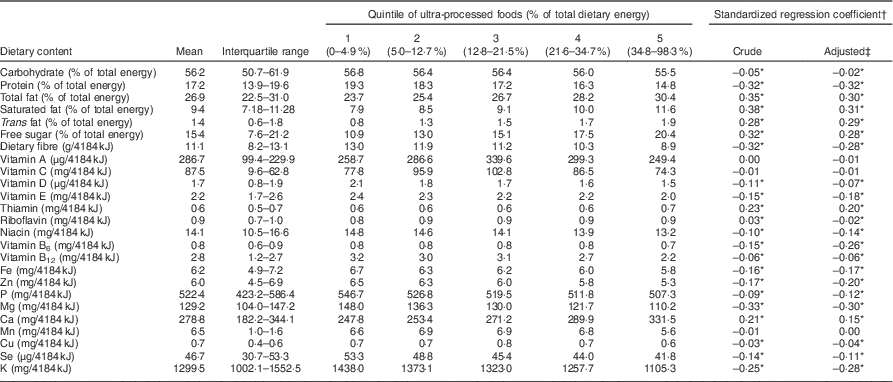
Table 2 shows the average dietary content of the individual nutrients across quintiles of the dietary share of ultra-processed foods. The dietary content of free sugars and of total, saturated and trans fats increased significantly with the increase in consumption of ultra-processed foods, whereas carbohydrate, protein and dietary fibre all decreased significantly. With vitamins and minerals, there was a significant negative association between the contribution of ultra-processed foods and the dietary content of vitamin D, vitamin E, niacin, vitamin B6, vitamin B12, Fe, Zn, P, Mg, Cu, Se and K. The dietary content of vitamin A, vitamin C and Mn was not related to the share of ultra-processed foods, and contents of Ca, thiamin and riboflavin increased with the share of ultra-processed foods (marginally for thiamin and riboflavin). Adjustment for potential confounders did not change the associations. Higher positive standardized regression coefficients between quintiles of the dietary share of ultra-processed foods and dietary content of nutrients (>0·25) were found for free sugars and total, saturated and trans fats, and higher negative coefficients (<−0·25) for protein, dietary fibre, Mg and K.
Mean dietary content of nutrients in the diet according to the dietary share of ultra-processed foods. Brazilian population aged ≥10 years (2008–2009)
4184 kJ=1000 kcal.
*Statistically significant P≤0·001.
† The standardized coefficients are the regression coefficients obtained by first standardizing all variables to have a mean of 0 and an sd of 1; thus, making the coefficients obtained from different explanatory variables comparable among each other.
‡ Adjusted for age (natural logarithm), sex (man/woman), race (categorical variable: white/brown or black/other), region (categorical variable: North/Northeast/South/Southeast/Midwest), urban status (yes/no), quintiles of years of education (calculated separately for adolescents, adults, elderly, men and women) and per capita household income (natural logarithm).
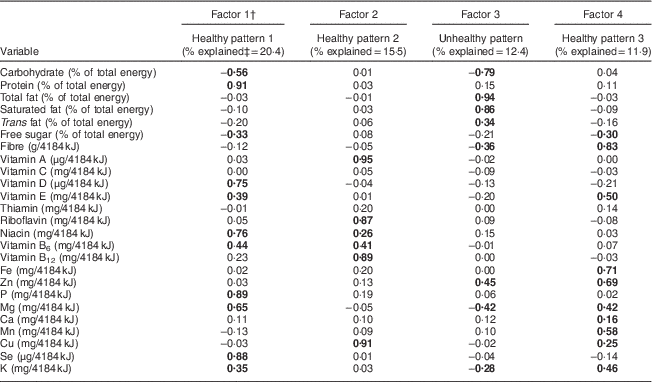
Based on exploratory factor analysis, we devised four nutrient-based dietary patterns. These are shown in Table 3. According to the proportion of the variance explained by each factor after orthogonal varimax rotation, the first pattern, hereafter called ‘healthy pattern 1’, carried more protein, niacin, vitamins B6, D and E, Se, P, Mg and K, and less carbohydrate and free sugars. The second pattern (‘healthy pattern 2’) carried more vitamin A, riboflavin, niacin, vitamin B6, vitamin B12 and Cu. The third pattern (‘unhealthy pattern’) carried more total, saturated and trans fats and Zn, and less carbohydrate, dietary fibre, Mg and K. The fourth pattern (‘healthy pattern 3’), carried more dietary fibre, Mn, Cu, Fe, Zn, Mg, K and vitamin E, and less free sugars.
Indicators of the dietary content and factor loadings for macronutrients and micronutrients. Brazilian population aged ≥10 years (2008–2009)
4184 kJ=1000 kcal.
† Items with a factor loading above 0·25 or below −0·25 are indicated in bold font.
‡ Proportion of the variance explained by each factor after orthogonal varimax rotation.
Table 4 shows how the average score corresponding to each of the four nutrient-based dietary patterns varies according to the dietary share of ultra-processed foods. The scores of ‘healthy pattern 1’ and of ‘healthy pattern 3’ decreased significantly across quintiles of the dietary share of ultra-processed foods, while the scores of ‘healthy pattern 2’ and of ‘unhealthy pattern’ increased, also significantly. The adjustment for socio-economic and demographic variables eliminated the association between the scores of ‘healthy pattern 2’ and the dietary share of ultra-processed foods. The most influential confounder in this association was household income (data not shown).
Nutrient dietary patterns’ scoresFootnote † according to quintiles of dietary share of ultra-processed foods. Brazilian population aged ≥10 years (2008–2009)

Coef., coefficient.
*Statistically significant P≤0·001.
† The score is the measure of ‘adherence’ to each pattern derived for each individual.
‡ Obtained through linear regression models.
§ Obtained through linear regression models adjusted for age (natural logarithm), sex (man/woman), race (categorical variable: white/brown or black/other), region (categorical variable: North/Northeast/South/Southeast/Midwest), urban status (yes/no), quintiles of years of education (calculated separately for adolescents, adults, elderly, men and women) and per capita household income (natural logarithm).
║ More protein, niacin, vitamin B6, vitamin D, vitamin E, Se, P and Mg, and less carbohydrate and free sugars.
¶ More vitamin A, riboflavin, niacin, vitamin B6, vitamin B12 and Cu.
†† More total, saturated and trans fats and Zn, and less carbohydrate, dietary fibre, Mg and K.
‡‡ More dietary fibre, Mn, Cu, Fe, Zn, Mg, Ca, K and vitamin E, and less free sugars.
Discussion
Our results show, in a nationally representative sample of Brazilian adolescents and adults surveyed in 2008–2009, that the share of ultra-processed foods strongly affects the nutritional quality of diets. Higher consumption of ultra-processed foods was associated with relatively high consumption of free sugars, and of total, saturated and trans fats, and with low consumption of protein, dietary fibre, and most of the vitamins and minerals included in the study. Analyses of four nutrient-based dietary patterns confirmed the negative effect of ultra-processed foods on the overall nutrition quality of diets in Brazil: scores for two out of three healthy patterns decreased significantly with the dietary share of ultra-processed foods while scores of the unhealthy pattern increased significantly.
Excessive total, saturated and trans fat content in the diet increases the risk of obesity and of dyslipidaemia and CHD, and perhaps also diabetes and metabolic syndrome( Reference Mozaffarian, Aro and Willett 28 , 29 ). Inadequate dietary fibre intake increases the risk of obesity, diabetes, CVD and colorectal cancer( 25 , Reference McKeown, Meigs and Liu 30 , Reference Pereira, O’Reilly and Augustsson 31 ). In addition, there is now mounting evidence that low consumption of free sugars protects against obesity and thus diabetes, and also against dyslipidaemia, hypertension, stroke, CHD and some common cancers, as well as dental caries( Reference Johnson, Appel and Brands 32 – 35 ). Adequate protein is necessary for the maintenance of body mass; and during infancy, childhood and pregnancy, for growth, maturation and milk formation( 36 ). Also, inadequate protein may provoke constant appetite and thus general overconsumption, overweight and obesity( Reference Gosby, Conigrave and Raubenheimer 37 , Reference Raubenheimer, Machovsky-Capuska and Gosby 38 ). Adequate consumption of various vitamins and minerals is essential for child growth and development, and for bone health, cognitive function and protection against infectious diseases, as well as for general good health and protection against deficiencies( 39 ).
The findings of the present study corroborate previous research done in several countries that have focused on the dietary content of individual nutrients( Reference Monteiro, Levy and Claro 8 – Reference Steele, Baraldi and Louzada 13 , Reference Barcelos, Rauber and Vitolo 40 – Reference Luiten, Steenhuis and Eyles 42 ). Further, they also support the proposal of the UN and other authoritative organizations that the dietary share of ultra-processed foods can be used as a summary indicator of the quality of diets( Reference Vandevijvere, Monteiro and Krebs-Smith 43 , 44 ). Other ecological, cross-sectional and cohort studies have shown associations between high levels of consumption of ultra-processed foods and obesity( Reference Canella, Levy and Martins 45 – Reference Mendonca, Pimenta and Gea 48 ), hypertension( Reference Mendonça, Lopes and Pimenta 49 ), metabolic syndrome( Reference Tavares, Fonseca and Garcia Rosa 50 ) and dyslipidaemias( Reference Rauber, Campagnolo and Hoffman 51 ).
Documenting the impact of ultra-processed foods on the quality of dietary patterns is particularly important, because their consumption is growing worldwide. Household budget surveys in Brazil, Canada, Chile and Sweden have shown marked increases in purchases of all types of these products and reductions in purchases of fresh foods and culinary ingredients( Reference Juul and Hemmingsson 47 , Reference Crovetto and Uauy 52 – Reference Moubarac, Batal and Martins 54 ). Time-series food sales statistics in seventy-nine countries also show that ultra-processed foods consumption is increasing rapidly, especially in middle-income countries( Reference Monteiro, Moubarac and Cannon 55 ).
Our study has several strengths. We studied a probabilistic nationally representative sample of the Brazilian population from urban and rural areas and from all regions of the country. Our research was based on individual-level consumption data, rather than household acquisition data, with information on two food records for more than 30 000 people. Availability of socio-economic and demographic variables allowed adjustment for many important covariates. Finally, evaluation of nutrient-based dietary patterns provides a strong measure of the overall nutritional quality of diets.
The study has some limitations. These relate to the inherent potential biases when using food records. These include underestimating food consumption, modifying habitual consumption during the study, differences between actual and standardized recipes, and between the actual nutritional composition and that shown in food composition table used.
To minimize these biases, the collection instrument was pre-tested and validated, quality control procedures were performed during data collection, and inconsistent records were deleted and replaced with imputed values. Also, the food composition table used was specifically built for the present study, and consistent with the culinary habits of Brazilian people( 24 ).
The instrument used to record food consumption was not designed to evaluate the food according to industrial processing, so some items may have been misclassified. When the records lacked information such as details of the recipe or the product’s brand, the most common alternative was chosen.
The exploratory factor analysis method has some limitations including the number of extracted factors, the method of rotation and the labelling of the patterns. Also, dietary patterns cannot be automatically generalized to other populations( Reference Hu 16 , Reference Martinez, Marshall and Sechrest 26 ).
Conclusion
Our study provides more evidence that the dietary share of ultra-processed foods determines the overall nutritional quality of diets. This has universal significance, especially for countries where rates of obesity, diabetes and other diet-related chronic non-communicable diseases continue to increase rapidly while prevalence of micronutrient deficiencies has persisted.
Acknowledgements
Financial support: This work was supported by the Fundação de Amparo à Pesquisa do Estado de São Paulo (FAPESP; grant numbers 2015/14900-9 and 2015/25168-7). FAPESP had no role in the design, analysis or writing of this article. Conflict of interest: None declared. Authorship: C.A.M., M.L.d.C.L., R.B.L. and E.M.S. participated in in formulating the research question, designing the study, analysing the data and writing the article. C.Z.R. participated in analysing the data and writing the article. G.C. participated in writing the article. Ethics of human subject participation: Consent was formally recorded by the Instituto Brasileiro de Geografia e Estatística.



