

Retirement expectations and experiences have been the focus of considerable research dating back to the 1970s. Recently, there has been a resurgence of interest related to population aging, increased life expectancies that push for longer working trajectories, alterations to the nature of employment, and policy modifications to mandatory retirement and pension access (Beehr, Reference Beehr2014; Cooke, Reference Cooke2006; Damman, Henkens, & Kalmijn, Reference Damman, Henkens and Kalmijn2013; Ekerdt, Reference Ekerdt2010; Feldman & Beehr, Reference Feldman and Beehr2011; Kooij, de Lange, Jansen, & Dikkers, Reference Kooij, de Lange, Jansen and Dikkers2008; Nilsson, Hydbom, & Rylander, Reference Nilsson, Hydbom and Rylander2011; Oakman & Wells, Reference Oakman and Wells2013; Wang & Shultz, Reference Wang and Shultz2010). One factor consistently associated with early retirement is the presence of a chronic disabling condition (Au, Crossley, & Schellhorn, Reference Au, Crossley and Schellhorn2005; Christensen & Kallestrup-Lamb, Reference Christensen and Kallestrup-Lamb2012; De Wind et al., Reference De Wind, Geuskens, Ybema, Blatter, Burdorf and Bongers2014; McPhedran, Reference McPhedran2011; Mein et al., Reference Mein, Martikainen, Stansfeld, Brunner, Fuhrer and Marmot2000; Pagán, Reference Pagán2012; Polvinen, Gould, Lahelma, & Martikainen, Reference Polvinen, Gould, Lahelma and Martikainen2013; Robroek, Schuring, Croezen, Stattin, & Burdorf, Reference Robroek, Schuring, Croezen, Stattin and Burdorf2013; Wang & Shultz, Reference Wang and Shultz2010). Yet, the impact of many chronic diseases on work may be shifting. Treatment and self-management have improved, with emerging research showing that individuals with chronic diseases are often able to sustain employment longer or return to work after absences (Burton, Morrison, Maclean, & Ruderman, Reference Burton, Morrison, Maclean and Ruderman2006; Gignac, Cao, Lacaille, Anis, & Badley, Reference Gignac, Cao, Lacaille, Anis and Badley2008; Sokka et al., Reference Sokka, Kautiainen, Pincus, Verstappen, Aggarwal and Alten2010; Yelin et al., Reference Yelin, Tonner, Trupin, Panopalis, Yazdany and Julian2009). This makes work–life and retirement expectations and experiences of increasing interest and relevance. Currently, we lack information on the retirement expectations of older workers, as well as information about personal, health, and work context factors that may be associated with retirement plans among those with chronic disabling conditions compared with their counterparts with no chronic disabling diseases. This information is important to help workplaces plan and manage worker changes and to meet potential needs among older workers with disabilities for increased work flexibility or accommodations (Gignac, Cao, & McAlpine, Reference Gignac, Cao and McAlpine2015).
Normative Expectations of Retirement, Approach-Avoidance Theory, and Work Functioning Models
Several theoretical approaches have been applied to retirement decision making, including theories on normative role behaviour. Norms are social in nature and are often reinforced widely, including through public policies (Elder, Johnson, & Crosnoe, Reference Elder, Johnson and Crosnoe2003; Hendricks, Reference Hendricks2012; Liefbroer & Billari, Reference Liefbroer and Billari2010; Radl, Reference Radl2012). Theory on normative behaviour has examined hiring and retention of older workers and retirement timing (Karpinska, Henkens, & Schippers, Reference Karpinska, Henkens and Schippers2013; Liefbroer & Billari, Reference Liefbroer and Billari2010; Oude Mulders, Henkens, & Schippers, 2016; Radl, Reference Radl2012). For example, in many developed countries, organizational and public policies foster retirement at 65 years of age. As pension policies change to favour longer work trajectories, new norms may be emerging. During this period of transition, some studies have found that workers are more likely to report uncertainty about their retirement plans (Ekerdt, Hackney, Kosloski, & DeViney, Reference Ekerdt, Hackney, Kosloski and DeViney2001). Data are currently lacking, but the unpredictable and variable nature of symptoms associated with many chronic disabling health conditions may mean that a large percentage of workers with chronic conditions will report retirement uncertainty compared with workers without chronic health problems. Despite this, normative theory would suggest that individuals will continue to align their planning with current policies that emphasize age as one of the primary determinants of retirement decisions.
Approach-avoidance theory also has been drawn upon to understand factors associated with retirement expectations. Older workers are thought to weigh the pros and cons of continuing working versus retiring and are hypothesized to be frequently ambivalent about their decisions, being both drawn towards and resistant to retirement (Feldman & Beehr, Reference Feldman and Beehr2011; Shultz, Morton, & Weckerle, Reference Shultz, Morton and Weckerle1998). In resolving retirement decision conflicts, workers are expected to evaluate positive and negative aspects of their job context, health, personal preferences, finances, and social environment. Studies support that a wide range of factors are associated with retirement expectations and decisions, including age, gender, whether one’s partner or social network are retired, health, work scheduling, job demands, job stress, and workplace support (Benjamin, Pransky, & Savageau, Reference Benjamin, Pransky and Savageau2008; Brougham & Walsh, Reference Brougham and Walsh2009; De Preter, Van Looy, & Mortelmans, Reference De Preter, Van Looy and Mortelmans2013; Ekerdt, Reference Ekerdt2010; Ekerdt et al., Reference Ekerdt, Hackney, Kosloski and DeViney2001; Oakman & Wells, Reference Oakman and Wells2013; Wang, Zhan, Liu, & Shultz, Reference Wang, Zhan, Liu and Shultz2008). Research also finds that many older workers manage ambivalence towards leaving work by taking advantage of bridged retirement opportunities through which they can work part-time, in contract jobs, or with less demanding schedules or duties that provide greater flexibility to meet work and personal demands (Beehr, Reference Beehr2014; Damman et al., Reference Damman, Henkens and Kalmijn2013; Ekerdt, Reference Ekerdt2010; Oakman & Wells, Reference Oakman and Wells2013; Park, Reference Park2011; Siegenthaler & Brenner, Reference Siegenthaler and Brenner2000; Wang et al., Reference Wang, Zhan, Liu and Shultz2008). This suggests that a worker’s retirement history is important to understand. To date, however, bridged retirement experiences and factors other than health largely have not been examined among older workers with chronic disabling diseases, to enable understanding of retirement expectations.
A third theoretical framework has sometimes been used to understand the work participation of adults with disabilities (Sandqvist & Henriksson, Reference Sandqvist and Henriksson2004). Work functioning theory has not been applied to retirement, but may be particularly relevant in understanding bridged retirement choices among older workers with a disabling chronic condition. The framework highlights that health factors alone are unlikely to illuminate work participation. Instead, working will be explained by the fit between a person’s individual capacity, including that person’s health, and aspects of the work context and environment that can facilitate or act as a barrier to employment. Applied to bridged retirement, the theory would suggest that maximizing person–job fit will be particularly important to workers with a chronic disabling condition. It may mean that workers will be more likely to work in jobs that can accommodate their health in terms of work scheduling, jobs that provide greater control over daily job activities, or jobs that provide access to policies and practices that can be used to modify work.
Although the theories were not developed to specifically address retirement issues or intended to be alternatives to one another, they can potentially illuminate nuances in retirement and they suggest different hypotheses related to retirement expectations, retirement uncertainty, and bridged retirement experiences among older workers with and without chronic disabling conditions. Normative theory suggests that expectations will be largely driven by age, which has often guided retirement policies. Approach-avoidance theory highlights that, in addition to age, a range of demographic, health, work context, and work perception factors will be relevant to retirement expectations. Work functioning theory suggests that although age and health will be important, work context factors that can enable older workers to maximize their person–job fit will be essential, including work scheduling and workplace accommodations.
Working with Arthritis and Diabetes
To examine these issues, this article focused on a sample of Canadian workers 50–67 years (born 1946–1964), often labeled the “baby boomer” generation. Participants either had no chronic disabling health conditions or were living with arthritis or diabetes. Arthritis and diabetes are of growing importance not only because they are among the most common age-related conditions causing disability, but also because they are linked to population increases in obesity and decreases in physical activity, which can mean earlier disease onset and more years spent living with a disability (Leveille, Wee, & Iezzoni, Reference Leveille, Wee and Iezzoni2005; Lipscombe & Hux, Reference Lipscombe and Hux2007; Perruccio, Power, & Badley, Reference Perruccio, Power and Badley2007; Public Health Agency of Canada, 2010; Public Health Agency of Canada, 2011). Both diseases can result in absenteeism, presenteeism, and early retirement (Burton et al., Reference Burton, Morrison, Maclean and Ruderman2006; Herquelot, Guéguen, Bonenfant, & Dray-Spira, Reference Herquelot, Guéguen, Bonenfant and Dray-Spira2011; Latif, Reference Latif2009; Ng, Jacobs, & Johnson, Reference Ng, Jacobs and Johnson2001; Sokka, et al., Reference Sokka, Kautiainen, Pincus, Verstappen, Aggarwal and Alten2010; Vijan, Hayward, & Langa, Reference Vijan, Hayward and Langa2004). We compared older workers with no chronic, disabling conditions and similarly aged individuals living with arthritis and diabetes on four retirement issues: (1) the age at which workers expected to retire from their current job; (2) the age at which they expected to completely leave the workforce, including uncertainty about a retirement age; (3) whether individuals thought they might have to retire sooner than planned because of their health; and (4) whether participants reported having previously retired and then returned to work (i.e., bridged retirement). Drawing on previous research, we examined demographic, health, work context, and work perception factors and whether they were differentially associated with retirement expectations.
Although research finds that older workers with arthritis and diabetes are more likely to give up work, evidence also shows that many individuals remain employed despite poorer health (Au et al., Reference Au, Crossley and Schellhorn2005; Burton et al., Reference Burton, Morrison, Maclean and Ruderman2006; Christensen & Kallestrup-Lamb, Reference Christensen and Kallestrup-Lamb2012; De Wind et al., Reference De Wind, Geuskens, Ybema, Blatter, Burdorf and Bongers2014; Gignac et al., Reference Gignac, Cao, Lacaille, Anis and Badley2008; McPhedran, Reference McPhedran2011; Mein, et al., Reference Mein, Martikainen, Stansfeld, Brunner, Fuhrer and Marmot2000; Pagán, Reference Pagán2012; Polvinen et al., Reference Polvinen, Gould, Lahelma and Martikainen2013; Robroek et al., Reference Robroek, Schuring, Croezen, Stattin and Burdorf2013; Sokka et al., Reference Sokka, Kautiainen, Pincus, Verstappen, Aggarwal and Alten2010; Wang & Shultz, Reference Wang and Shultz2010; Yelin et al., Reference Yelin, Tonner, Trupin, Panopalis, Yazdany and Julian2009). Given previous research, we expect that older workers with arthritis or diabetes will report more pain, fatigue, health variability, and workplace activity limitations and that their jobs will be reported as being more physically demanding than those of healthy controls. Despite this, normative theory would speculate that all groups will report similar plans for their retirement age: approximately 65 years of age. In keeping with changes to many retirement policies that now provide incentives for prolonging work, we also hypothesize that a considerable percentage of individuals with and without health problems will report being unsure of the age at which they will completely leave the workforce. This uncertainty is expected to be heightened among those with arthritis and diabetes, and a greater percentage of these individuals are anticipated to report that they may have to retire sooner than planned.
Hypothesis 1a: Older workers with arthritis and diabetes will report more pain, fatigue, health variability, workplace activity limitations and that their jobs are more physically demanding than older workers with no chronic disabling health conditions.
Hypothesis 1b: Despite differences in health, participants across all health conditions will report a similar retirement age, consistent with current normative retirement policies.
Hypothesis 1c: A greater percentage of participants with arthritis and diabetes will report being uncertain about the age at which they will completely leave the workforce and will report that they may have to retire sooner than planned compared with participants with no chronic disabling health conditions.
Because all participants in the study were employed, we can compare percentages of respondents who reported having previously retired and returned to work. Healthy older workers ultimately may be more able to take advantage of bridged retirement opportunities across their working life course and optimize the positive aspects of continuing to work with other personal life demands. Yet, previous studies suggest that workers with chronic diseases are more likely to retire early (Au et al., Reference Au, Crossley and Schellhorn2005; Christensen & Kallestrup-Lamb, Reference Christensen and Kallestrup-Lamb2012; De Wind et al., Reference De Wind, Geuskens, Ybema, Blatter, Burdorf and Bongers2014; Koolhaas et al., Reference Koolhaas, van der Klink, Vervoort, de Boer, Brouwer and Groothoff2013; McPhedran, Reference McPhedran2011; Mein et al., Reference Mein, Martikainen, Stansfeld, Brunner, Fuhrer and Marmot2000; Pagán, Reference Pagán2012; Polvinen et al., Reference Polvinen, Gould, Lahelma and Martikainen2013; Robroek et al., Reference Robroek, Schuring, Croezen, Stattin and Burdorf2013; Van den Berg, Schuring, Avendano, Mackenback, & Burdorf, 2010; Wang & Shultz, Reference Wang and Shultz2010; Yen, McRae, Jeon, Essue, & Herath, Reference Yen, McRae, Jeon, Essue and Herath2011). This may mean that a greater percentage of individuals with arthritis or diabetes will have retired and returned to work.
Hypothesis 2: Older workers with arthritis or diabetes will be more likely to report having retired previously and returned to work than older workers with no chronic disabling health conditions.
The socially constructed nature of retirement suggests that a variety of personal and interpersonal factors that go beyond age and normative expectations will relate to retirement expectations (Benjamin et al., Reference Benjamin, Pransky and Savageau2008; Brougham & Walsh, Reference Brougham and Walsh2009; De Preter et al., Reference De Preter, Van Looy and Mortelmans2013; Ekerdt, Reference Ekerdt2010; Ekerdt et al., Reference Ekerdt, Hackney, Kosloski and DeViney2001; Oakman & Wells, Reference Oakman and Wells2013; Wang et al., Reference Wang, Zhan, Liu and Shultz2008). Approach-avoidance theory highlights that these factors may be appraised as pros or cons and that they can explain expectations of retiring earlier or later. Drawing on previous research, we expect that women and individuals with a spouse/partner who is already retired will expect to retire at a younger age. Approach-avoidance theory would suggest that symptoms such as pain and fatigue, comorbidity, activity limitations at work, irregular work schedules, and needing and using workplace accommodations are factors that will be appraised negatively and should be associated with a younger planned retirement age. Poorer health is hypothesized to be particularly relevant to perceiving that one may have to retire sooner than planned. Positive work context and perceptions of work such as greater job control, less job stress, greater perceived value in working, and greater career satisfaction are hypothesized to be associated with an older age of planned retirement and being less likely to report that one might have to retire sooner than planned.
Hypothesis 3a: A younger expected retirement age will be associated with gender and marital status, poorer health, difficulty with work or its scheduling, and negative perceptions of work.
Hypothesis 3b: Retiring sooner than planned will be associated with poorer health and negative perceptions of work such as less job control, more job stress, and less career satisfaction.
There are fewer data examining factors associated with retirement uncertainty (Ekerdt et al., Reference Ekerdt, Hackney, Kosloski and DeViney2001). We expect that a younger age and poorer health will be related to greater retirement uncertainty in keeping with approach-avoidance theory. Finally, factors associated with having retired previously and returned to work (bridged retirement) are expected to highlight a different picture of employment that emphasizes work functioning theory and the potential for continued work participation if the fit between a worker’s needs and that worker’s job demands is maximized (Sandqvist & Henriksson, Reference Sandqvist and Henriksson2004). We expect that older age and the presence of a chronic health condition will be associated with being more likely to have retired and returned to work. We also hypothesize that those working in bridged retirement positions will be more likely to work part time, work in less physically demanding jobs, and have jobs with a regular daytime schedule, and will report using job accommodations. Because bridged retirement may offer older workers the opportunity to stay engaged in work or in jobs that meet their needs, we expect that greater career satisfaction and perceived value of working and less job stress will be associated with bridged retirement jobs.
Hypothesis 4a: Retirement uncertainty will be related to a younger respondent age and poorer health.
Hypothesis 4b: Retiring and returning to work will be associated with older age, having arthritis or diabetes, work context such as part-time work, less physically demanding work, less shift work, and using workplace accommodations, as well as positive perceptions of work.
Methods
Study Design and Participants
Data were collected using a cross-sectional survey. Eligible participants were born from 1946 to 1964 (considered the “baby boomer” generation) and were employed 15 or more hours/week. Participants without any chronic disabling conditions (labeled “healthy controls”) had not: (1) been diagnosed with any chronic physically or mentally disabling health conditions lasting 6 months or more; or (2) experienced a disabling injury or been recovering from surgery within the past 6 months. Arthritis participants had a self-reported: (1) physician diagnosis of arthritis (e.g., osteoarthritis [OA]; inflammatory arthritis [IA] such as rheumatoid arthritis); and (2) an arthritis duration of greater than or equal to 1 year (to ensure time working with arthritis). Diabetes participants had a self-reported: (1) physician diagnosis of type 1 or 2 diabetes; and (2) a diabetes duration of greater than or equal to 1 year. Participants were excluded if they: (1) reported being diagnosed with other chronic physically or mentally disabling health conditions (e.g., stroke, depression) prior to their arthritis or diabetes diagnosis; or (2) had experienced an injury or were recovering from surgery (past 6 months). The occurrence of co-morbid conditions after diagnosis of arthritis/diabetes is challenging for establishing inclusion/exclusion criteria, as both diseases result in increased risks for other conditions (Public Health Agency of Canada, 2010; Public Health Agency of Canada, 2011). Hence, individuals diagnosed with other conditions after their arthritis/diabetes diagnosis were included.
Recruitment and Procedure
Participants were recruited from an existing national panel of approximately 80,000 Canadians, which was compiled using probability sampling. Potential respondents were invited by e-mail to participate in a study aimed at better understanding the working experiences and retirement expectations of individuals 50 years of age or older. We aimed for a quota of 500 respondents in each health condition to ensure variability in disease severity, job sector, and retirement expectations and to ensure statistical power in analyses related to factors associated with retirement across the different health groups. Respondents had a choice of a telephone- or online-administered questionnaires in English or French. Prior to completing the survey, respondents were screened for eligibility. Recruitment continued until eligible, consenting participants were found. Questionnaires took 25–30 minutes to complete and were administered from September to October 2014. Ethics approval was received from The University of Toronto. Informed oral/written consent was obtained from participants.
Measures
Demographics
Information on age, sex, education, marital status, and spouse/partner employment (Y/N) was collected.
Chronic Health Condition
Type of arthritis was coded as OA, IA (e.g., rheumatoid arthritis), or both OA and IA. Type of diabetes was coded as type 1 or type 2. For the purposes of the current study OA, IA, and both OA/IA were combined into the category “arthritis” and type 1 and type 2 diabetes were combined into the category “diabetes.”
Pain
A visual analogue scale assessed pain in the last month (range 0–10; 0 = no pain; 10 = worst possible pain).
Fatigue
The five-item Profile of Mood States (POMS) fatigue subscale asked the extent to which participants had felt worn out, fatigued, exhausted, sluggish, and weary in the previous month (0 = not at all; 4 = extremely) (McNair, Douglas, Lorr, & Droppleman, Reference McNair, Douglas, Lorr and Droppleman1971). Three additional items were added to balance the scale with more positive mood states and make it relevant to all respondents: full of energy, vigorous, and lively. Scores were summed with higher scores indicating greater fatigue. Cronbach’s α, a measure of internal consistency, was .89 for the modified scale.
Health Variability and Co-morbidity
Variability in health symptoms was assessed by asking the extent to which respondents had “variable health problems (times of good and bad health) over the past 3 months” (1 = not at all; 5 = a great deal). Respondents with arthritis and diabetes were asked about the presence of common co-morbidities associated with the conditions: hypertension, depression/anxiety, foot problems (Y/N).
Workplace Activity Limitations
The 12-item Workplace Activity Limitations Scale (WALS) measured activity limitations at work (Beaton et al., Reference Beaton, Tang, Gignac, Lacaille, Badley and Anis2010; Gignac, Reference Gignac2005; Gignac, et al., Reference Gignac, Cao, Lacaille, Anis and Badley2008). Items assess getting to/from/around the workplace, upper and lower mobility difficulties, concentration, scheduling, and pace of work (0 = no difficulty, 3 = unable to do) (Cronbach’s α = .83). Scores were summed.
Job Sector
A list of 21 job sectors was provided and collapsed into six categories: (1) banking/insurance/business/technology; (2) education/health/sciences/arts; (3) construction/utilities; (4) sales/retail; (5) manufacturing/agriculture; and (6) government.
Physically Demanding Work
Respondents were asked about the extent to which their jobs involved physical activity or movement (e.g., bending, lifting) (1 = not at all; 5 = a great deal).
Hours of Work
Respondents were asked about the number of hours that they worked in a typical week. For analyses, these were collapsed into part-time work (fewer than 35 hours per week) or full-time work (more than 35 hours per week).
Work Schedule
A single item asked about work schedules. Categories were: (1) a regular daytime schedule; (2) a regular evening shift; (3) a regular night or graveyard shift; (4) a rotating shift (changes from days to evenings to nights); (5) a split shift (two distinct periods every day); (6) on call; or (7) an irregular schedule. Responses were collapsed into: irregular schedule/shift work and regular schedule.
Self-Employment and Size of Organization
Respondents were asked whether they worked for others or were self-employed. They were also asked for the size of organization. Responses were collapsed into: fewer than 100 people; 100 or more people.
Workplace Accommodations Needed and Used
Respondents were asked about the availability of, need for (Y/N), and use of (Y/N) seven workplace practices or accommodations over the previous 12 months: (1) flexible hours; (2) special equipment/adaptations (e.g., built-up keyboard); (3) modified job duties (e.g., reduced lifting); (4) altered work schedules (e.g., more breaks); (5) work-at-home arrangements; (6) extended health benefits (paid for by employers and not covered by provincial health insurance; e.g., some medications, physical therapy, dental); and (7) wellness programs (e.g., nutritional information). Responses were summed: accommodations needed (0; 1–2; 3 or more) and accommodations used (0; 1–2; 3 or more).
Job Control
Nine items asked about job control over work tasks, pace, and scheduling (1 = not at all; 5 = a great deal) (Dwyer & Ganster, Reference Dwyer and Ganster1991). Scores were summed. Internal consistency of the measure was excellent (Cronbach’s α = .91).
Job Stress
A single item asked about the extent to which work had been stressful in the past 3 months (1 = not at all; 5 = extremely).
Positive Value of Work
Five items assessed perceptions of the positive value of work (e.g., “work keeps me active which is good for my health”; “work allows me to do something I really enjoy”) (1 = strongly disagree; 5 = strongly agree) (Gignac et al., Reference Gignac, Lacaille, Beaton, Backman, Cao and Badley2014). Scores were summed. Cronbach’s α was .86.
Career Satisfaction
Career satisfaction relative to expectations was measured with five items (1 = very dissatisfied; 5 = very satisfied). Items assessed satisfaction in one’s current job compared with others in the organization; the progress made in reaching work goals and expectations; and the opportunities provided by the job to excel (Bacharach, Bamberger, & Conley, Reference Bacharach, Bamberger and Conley1991). Scores were summed and internal reliability was excellent (Cronbach’s α = .93).
Retirement
Retirement perceptions and experiences were measured with five items. Participants were asked: (1) “At what age do you plan to retire from your current job?” (2) “At that time, do you plan to: (a) retire completely; (b) remain in the workforce full time; (c) remain in the workforce part time?” (3) “At what age do you plan to completely leave the paid workforce?” Responses asked for age in years and permitted respondents to select, “never” or “don’t know”(4) “Thinking about your health, do you think you will permanently leave the workforce... (a) sooner than planned; (b) later than planned; (c) as planned”; and (5) “Have you ever retired and returned to the workforce?” (Y/N). The items were adapted from Statistics Canada’s 2008 Survey of Older Workers (Statistics Canada, 2008). Respondents who reported that they had previously retired and returned to work were asked to check their reasons for returning (all that apply): (a) financial need; (b) family-related reasons; (c) always planned to return; (d) social interactions; (e) want to remain productive; (f) want workplace benefits to continue; and (g) other.
Statistical Analyses
Means, standard deviations (SDs), and percentages described the sample, workplace variables, and retirement expectations. Continuous outcomes were checked for normality using skewness and kurtosis. Multicollinearity was checked using the variance inflation factor (Cohen, Cohen, West, & Aiken, Reference Cohen, Cohen, West and Aiken2003). Differences in sample characteristics and retirement expectations were examined separately across health conditions using one-way analyses of variance (ANOVAs) or χ2 analyses (Hypotheses 1a–c and 2). Ordinary least-squared regression analysis examined the association of demographic, health, work context, and work perceptions factors with expected age of retirement from one’s current job, and logistic regression examined the association of factors with perceived uncertainty about retirement; expecting to retire sooner than planned; and having retired previously and returned to work (Hypotheses 3a and b, and 4a and b). Because we wanted to include health as one category of variables among others that may relate to retirement expectations, we did not conduct analyses separately for each condition. Instead, all participants were combined and health condition was included as a separate independent factor. Reference groups for gender, education, marital status, spouse employed, health condition, and work practices/accommodations needed/used were men, post-secondary education, married, no spouse/partner, healthy control, and no work practices/accommodations needed/used. For expected age of retirement, we used F statistics to measure goodness of fit of the model (O’Rourke, Hatcher, & Stepanski, Reference O’Rourke, Hatcher and Stepanski2005). The deviance χ2, Pearson χ2, and Hosmer–Lemeshow goodness of fit statistics (Hosmer, Lemeshow, & Sturdivant, Reference Hosmer, Lemeshow and Sturdivant2013) measured the fit of logistic models. Demographic, health, work context, and work perceptions variables were first examined in separate blocks to assess the percentage of variance accounted for with each block. The coefficient of determination (R 2) and the generalized R 2 and its rescaled value for binary outcomes were used to measure the predictive power of the explanatory variables for the overall continuous and binary models, respectively, and to compare models of each block of predictor variables for each outcome (Allison, Reference Allison2012; O’Rourke et al., Reference O’Rourke, Hatcher and Stepanski2005; Stokes, Davis, & Koch, Reference Stokes, Davis and Koch2000). Model assumptions were checked using residual analyses. Data were analyzed using the Statistical Analyses System (SAS) software (SAS/STAT User’s Guide, 2012).
Results
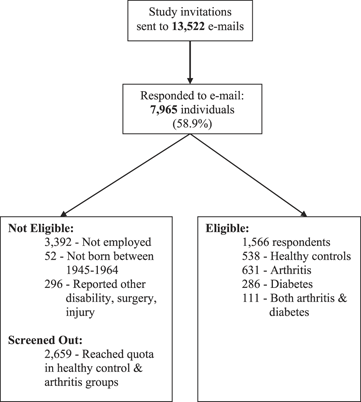
Survey invitations were sent by e-mail to 13,522 people born between 1945 and 1964, with 7,965 responses (58.9%) (see Figure 1). Of them, 3,740 individuals were ineligible mostly because participants were not employed (3,392; 53.6%) or because quotas for the healthy and arthritis groups were reached (2,659; 33.4%). The final sample consisted of 1,566 respondents of whom 73.4 per cent completed the online questionnaire. We did not reach a quota of 500 individuals with diabetes. However, a number of individuals had both arthritis and diabetes, and they were included as a distinct morbidity group in our analyses. Final sample numbers were: healthy controls = 538; arthritis = 631; diabetes = 286; both arthritis/diabetes = 111. Among those with arthritis, 57.1 per cent reported OA; 23.8 per cent reported IA or both OA and IA; and 19.1 per cent were unsure of their arthritis type. Among those with diabetes, 83.4 per cent reported type 2 diabetes.
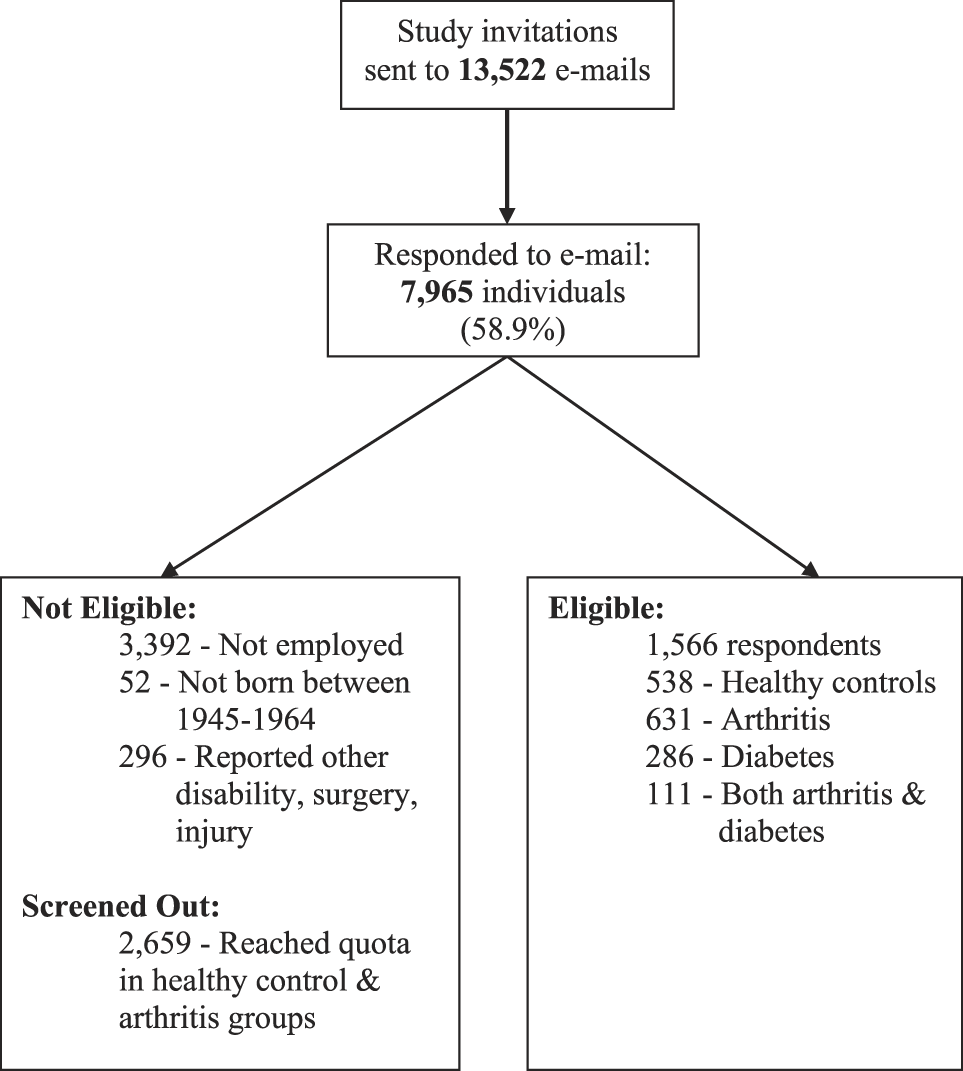
Figure 1: Summary of recruitment
Working with Arthritis and Diabetes
One-way ANOVAs and χ2 analyses compared the condition types in terms of sample characteristics and tested hypothesis 1a. Groups were similar in many demographic and work context factors (see Table 1). On average, participants were 59 years old. There was a greater proportion of respondents 60 years of age or older in the arthritis group and among those who had both arthritis and diabetes. Consistent with the established epidemiology of these conditions, there were more women with arthritis and more men with diabetes compared with controls. There were fewer respondents with post-secondary education in the group with both arthritis and diabetes. As expected in hypothesis 1a, respondents with arthritis or both arthritis and diabetes reported greater pain, fatigue, health variability, and workplace activity limitations than healthy controls (all ps < .01) and participants with diabetes reported more health variability than healthy controls (p < .05). In general, participants with arthritis or both arthritis and diabetes reported worse health than participants with only diabetes. Respondents with arthritis reported significantly greater pain, health variability, and workplace activity limitations than those with diabetes. Respondents with both arthritis and diabetes also reported more co-morbidity (hypertension, foot problems, and depression/anxiety) than did those with arthritis or diabetes alone. More participants with arthritis or both arthritis and diabetes were working part time and those with arthritis were more likely to report that their work was more physically demanding than healthy controls and those with diabetes. Respondents with diabetes and both arthritis and diabetes reported lower job control than healthy controls, and those with both arthritis and diabetes reported a greater positive value of work to their lives. The groups did not differ in other factors, including marital status, job sector, hours worked, work schedule, self-employment, size of organization, work practices/accommodations needed or used, job stress, or career satisfaction.
Table 1: Sample characteristics (n = 1,566)
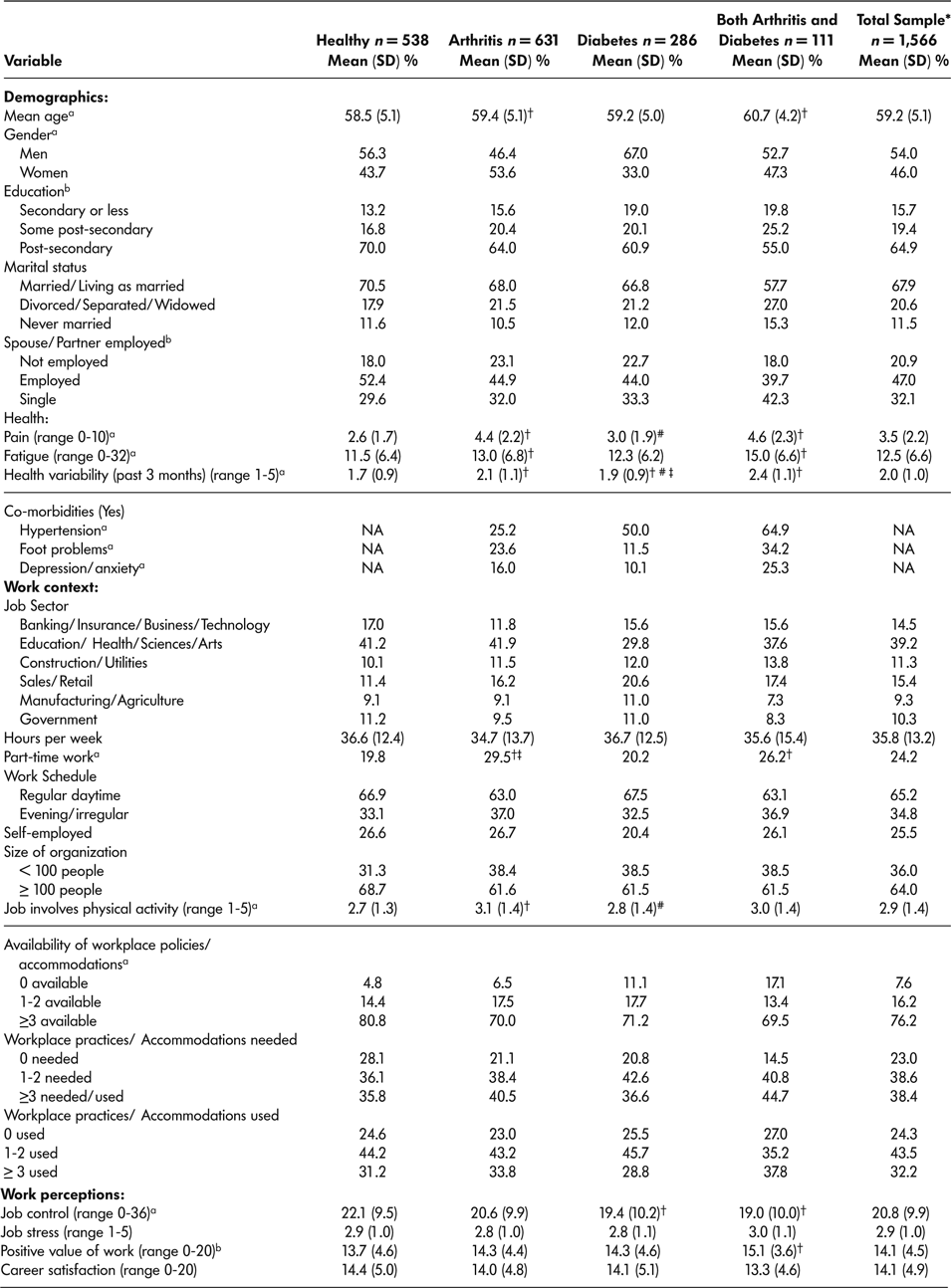
Note. Chi-square or one-way ANOVA significant difference, ap < .01; bp < .05. *ns vary because of missing data; NA = not applicable; Single = never married, divorced, separated, or widowed. †Group is significantly different from the “Healthy control” group, p < .05; ‡group is significantly different from the “Both Arthritis and Diabetes” group, p < .05; #group is significantly different from the “Arthritis” group, p < .05.
Retirement Expectations
One-way ANOVAs and χ2 analyses compared retirement expectations across health conditions and tested hypotheses 1b, 1c, and 2. As predicted by normative theory and hypothesis 1b, despite differences in health, participants across the health conditions had a similar age at which they expected to retire from their current job, although respondents with both arthritis and diabetes anticipated retiring slightly later (mean age 65.8 years) compared with healthy controls (mean age 64.2 years), p < .05 (see Table 2). No differences were found across health conditions in planning to retire completely or to continue working. Overall, 52.4 per cent of respondents planned to work part time after retiring from their current job, 7.1 per cent planned to work full time, and approximately 11 per cent said that they would never retire.
Table 2: Retirement plans and expectations (n = 1,566)
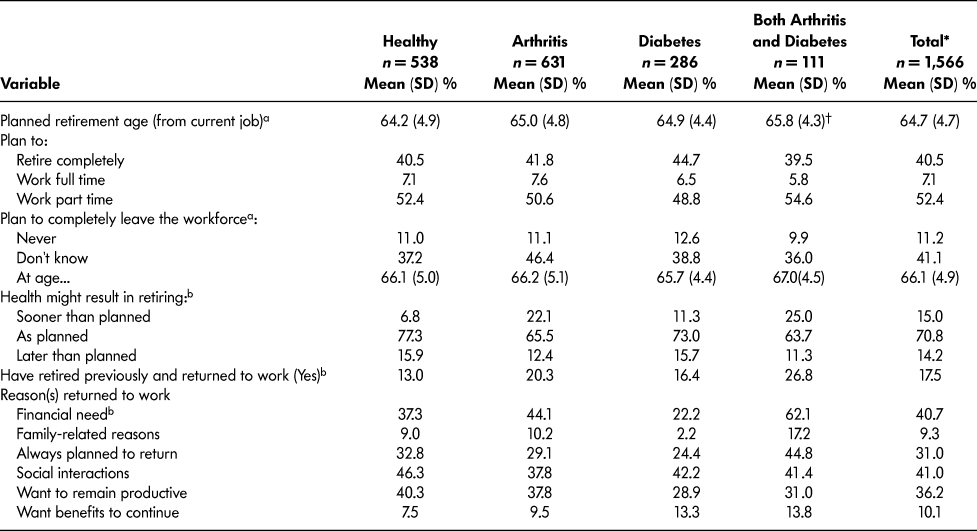
Note. Chi-square significant difference, ap < .05; bp < .01; *ns vary because of missing data; †group is significantly different (p <.05) from the healthy control group.
Partial support was found for hypothesis 1c, with a significantly greater percentage of respondents with arthritis (46.4%) reporting that they were uncertain at what age they would completely leave the workforce (p < .05). However, similar percentages of healthy controls and participants with diabetes or with both arthritis and diabetes expressed uncertainty (37.2%, 38.8%, and 36.0%, respectively). In keeping with hypothesis 1c, greater percentages of individuals with arthritis or both arthritis and diabetes reported that they might have to retire sooner than planned (22.1% and 25.0%, respectively) compared with healthy controls (6.8%) and those with diabetes (11.3%), p < .01.
Hypothesis 2 predicted that older workers with arthritis and/or diabetes would be more likely to report having retired and returned to work. Support for this was found, with a significantly greater percentage of respondents with arthritis and both arthritis and diabetes reporting that they had previously retired and returned to work (20.3% and 26.8%, respectively) compared with healthy controls (13%), p < .01. Reasons for returning to work varied and most commonly included financial need, maintaining social interactions, wanting to be productive, and having always planned to return to work. However, the only significant difference across health conditions was in financial need, which was reported most often by those with arthritis (44.1%) and both arthritis and diabetes (62.1%) compared with healthy controls (37.3%) and respondents with diabetes (22.2%).
Factors Associated with Retirement Expectations
To examine hypotheses 3a, 3b, 4a, and 4b, bivariate analyses first examined the association of demographic, health, work context, and work perceptions with the perceived expected age of retirement from one’s current job; perceptions of uncertainty as to when one will retire; believing that one may have to retire sooner than planned because of health issues; and having retired and returned to work (see Table 3). In general, a range of factors was associated with each of the retirement outcomes, although fewer variables were associated with perceived uncertainty related to retirement plans. Variables associated with the different retirement outcomes at p < .10 were further examined in multivariable analyses.
Table 3: Bivariate analyses examining the association of demographic, health, work context, and work perceptions with retirement plans and expectations
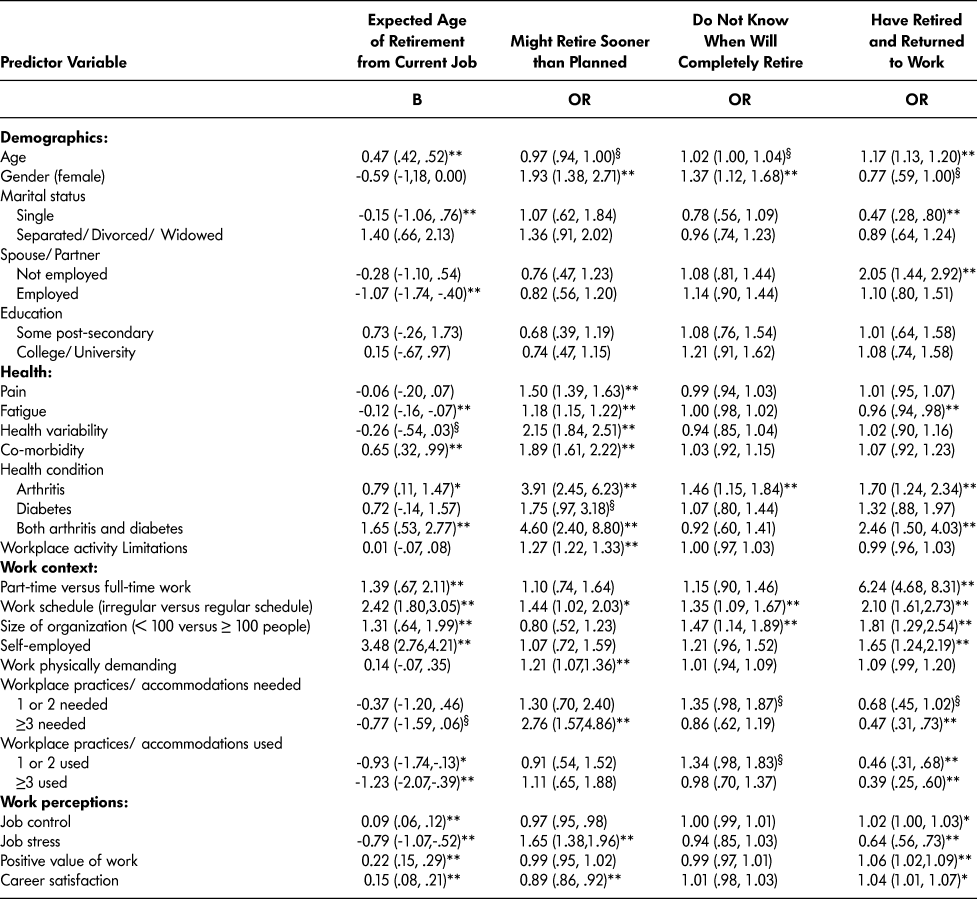
Note. B = Beta; OR = odds ratios. Sample sizes vary because of missing values. §p < 0.1; *p < .05; **p < .01. Reference groups: marital status = married; spouse employed = single (i.e., never married, divorced, separated, widowed); education = less than high school; health condition = healthy control; work practices/accommodations needed/used = none needed/used.
Expected Age of Retirement
Multivariable analyses yielded different constellations of demographic, health, work context, and work perceptions factors associated with the four retirement outcomes (see Table 4). As hypothesized (hypothesis 3a), expectations of retiring at a younger age were associated with being a younger respondent, having a partner/spouse who was not employed, working a regular job schedule, and perceiving less positive value from one’s current job. However contrary to our hypothesis, health variables and type of condition were not significantly related to the expected age of retirement of participants. The exception was that those who had greater co-morbidity expected to retire at an older, not a younger age, which was in the opposite direction than had been predicted. Overall, the abovementioned factors accounted for 30.6 per cent of the variance with the greatest percentage of the variance (26.5%) being accounted for by demographic factors (age, spouse/partner employed).
Table 4: Multivariable analyses examining the association of demographic, health, work context, and work perceptions with retirement plans and expectations
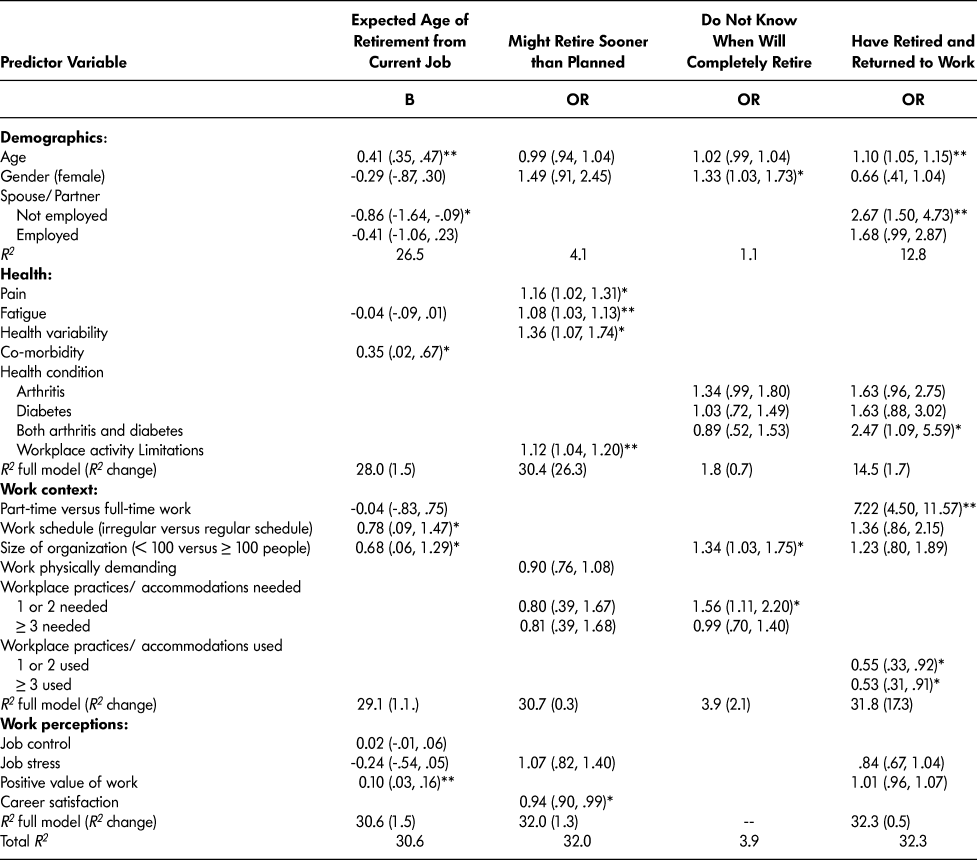
Note. B = Beta; OR = odds ratios. Sample sizes vary because of missing values. Blank cells denote factors not included in the multivariable analyses for an outcome (i.e., significance levels in bivariate analyses were p > .10. *p < .05; **p < .01. Reference groups: spouse/partner employed = single (i.e., never married, divorced, separated, widowed); health condition = healthy control; work practices/accommodations needed/used = none needed/used.
Retiring Sooner than Planned
As expected in hypothesis 3b, health variables played an important role in understanding factors associated with perceiving that one might have to retire sooner than planned. Greater pain, fatigue, health variability, and workplace activity limitations were significantly associated with perceiving that one might have to retire sooner and accounted for 26.3 per cent of the variance in the model (total R 2 = 32.0%). In addition to those with health factors, individuals who reported less career satisfaction were more likely to report that they might have to retire sooner than planned. Contrary to expectations, lower job control and greater job stress were not significantly associated with anticipating an earlier retirement.
Retirement Uncertainty
Few studies have examined factors associated with retirement uncertainty. We hypothesized that younger respondents and those with poorer health would be more likely to report uncertainty about their retirement age. However, neither of these factors was significant. Instead, women were significantly more likely to say that they did not know when they would retire as were respondents who worked for smaller organizations (fewer than 100 workers). Respondents who reported needing one or two accommodations were also more likely to be uncertain about their retirement age than were those not needing any accommodations or those needing three or more accommodations. However, only 3.9 per cent of the variance was accounted for by the total multivariable model.
Bridged Retirement
A different picture was expected to emerge in the factors associated with bridged retirement, which would draw on work functioning theory (hypothesis 4b). That is, bridged retirement was expected not only to relate to a respondent’s health condition, but also to work context and other personal factors. We found partial support for this hypothesis in that work context factors accounted for the greatest percentage of variance (17.3%) followed by demographic factors (12.8%). Among demographic variables, older workers were more likely to report having retired and returned to work as were those whose partner/spouse was not currently employed. Participants with both arthritis and diabetes were 2.47 times more likely to have retired and returned to work than were healthy respondents. Turning to work context factors, those who retired and returned to work were significantly more likely to be working in part-time jobs (odds ratio [OR] = 7.22) and were more likely to report using workplace accommodations. Contrary to expectations, work perceptions such as job control, job stress, positive perceptions of work, and career satisfaction were not associated with bridged retirement.
Discussion
This research examined the retirement expectations of older workers with arthritis and diabetes compared with those of workers with no chronic disabling diseases. Retirement expectations have the potential to impact workforce planning and costs and are important to understand given changing demographics and work contexts, as well as in light of new medical practices that have improved management of many common chronic conditions. We drew on several theories of retirement and disability, specifically normative, approach-avoidance, and work functioning theories. Overall, the findings highlighted that older workers with arthritis and diabetes experienced a range of health difficulties compared with healthy controls. Yet, retirement age expectations were often similar across health conditions and were consistent with normative expectations of wanting to work up to or beyond a traditional retirement age of 65 years (Karpinska et al., Reference Karpinska, Henkens and Schippers2013; Liefbroer & Billari, Reference Liefbroer and Billari2010; Oude Mulders et al., Reference Oude Mulders, Henkens and Schippers2016; Radl, Reference Radl2012;). In addition, a number of respondents with arthritis or diabetes had retired previously and returned to work, suggesting that some individuals with chronic health difficulties found ways to remain engaged in the labour market despite symptoms of their disease. Yet, the findings were not wholly optimistic, as respondents with arthritis or both arthritis and diabetes were more likely to perceive that they might have to retire sooner than planned because of their health. In keeping with approach-avoidance and work functioning theories, we found that demographic, work context, and work perceptions were variously associated with retirement expectations. Of interest was that health factors often accounted for less of the variance in retirement expectations than other types of factors. These findings point to the complexity surrounding retirement expectations and highlight the importance of biopsychosocial models of work and health that emphasize person–job fit rather than disease factors alone (De Rijk, Reference De Rijk2013; Loisel & Côté, Reference Loisel, Côté, Loisel and Anema2013; Sandqvist & Henriksson, Reference Sandqvist and Henriksson2004).
A challenge for researchers examining employment experiences among older workers with chronic diseases is potential sample bias in the form of a healthy worker effect in which those with chronic diseases may be more likely to leave the labour force than those without a chronic disease (Li & Sung, Reference Li and Sung1999). At the same time, a considerable body of evidence also indicates that many individuals with arthritis and diabetes remain employed despite health difficulties (Burton et al., Reference Burton, Morrison, Maclean and Ruderman2006; Herquelot et al., Reference Herquelot, Guéguen, Bonenfant and Dray-Spira2011; Latif, Reference Latif2009; Ng et al., Reference Ng, Jacobs and Johnson2001; Sokka et al., Reference Sokka, Kautiainen, Pincus, Verstappen, Aggarwal and Alten2010; Vijan et al., Reference Vijan, Hayward and Langa2004). As expected, the current study found that respondents with arthritis and diabetes reported greater pain, fatigue, comorbidities, and health variability and that they were significantly more likely to report workplace activity limitations and difficulty with physically demanding work. This was particularly true for respondents with arthritis or both arthritis and diabetes, and suggests that sample bias in the form of a healthy worker effect does not wholly account for similarities in retirement expectations across health conditions. However, more research is needed, especially using longitudinal designs, to examine health and retirement expectations over time, including changes in retirement expectations that arise with the onset of chronic diseases.
Respondents were asked several questions about their retirement. In keeping with normative theories, the mean planned retirement age across all health conditions was consistent with existing retirement policies, at approximately 65 years of age. Over half of all participants planned to work part time or even full time after they retired from their current job, regardless of their arthritis or diabetes. Emerging population research has found that many workers are delaying their retirement (Carrière & Galarneau, Reference Carrière and Galarneau2011; Pignal, Arrowsmith, & Ness, Reference Pignal, Arrowsmith and Ness2010). What is novel in this study is that these expectations largely did not differ among those with chronic health problems. However, additional research is needed examining the correspondence between expectations for retirement and actual retirement behaviours. As noted, past studies have found that older workers with chronic diseases are more likely to retire early (Au et al., Reference Au, Crossley and Schellhorn2005; Christensen & Kallestrup-Lamb, Reference Christensen and Kallestrup-Lamb2012; De Wind et al., Reference De Wind, Geuskens, Ybema, Blatter, Burdorf and Bongers2014; McPhedran, Reference McPhedran2011; Mein et al. Reference Mein, Martikainen, Stansfeld, Brunner, Fuhrer and Marmot2000; Pagán, Reference Pagán2012; Polvinen et al., Reference Polvinen, Gould, Lahelma and Martikainen2013; Robroek et al., Reference Robroek, Schuring, Croezen, Stattin and Burdorf2013; Wang & Shultz, Reference Wang and Shultz2010). The absence of research on retirement among those with chronic conditions makes it unclear whether normative retirement expectations will be found to correspond to retirement behaviours or whether individuals are overly optimistic about their ability to sustain work into older age.
Contrary to our hypotheses, respondents living with both arthritis and diabetes reported a significantly older age of expected retirement from their current job and an older age of retiring completely from the workforce than healthy controls. The differences were not large, but may be related to the work context of respondents with both arthritis and diabetes. Specifically, a greater percentage of these individuals were working part time, had retired previously and returned to work, and perceived that they needed to work longer for financial security. These findings deserve additional attention. They suggest that, although some older adults will remain in the workforce in relatively good health, others may perceive employment as less of a choice than a necessity, but be vulnerable because of health difficulties. At the same time, differences may also be related to sampling and may be unrepresentative of the population living with both arthritis and diabetes. Theoretical models that address work functioning and particularly the environmental barriers to work facing individuals with chronic diseases may be particularly important in informing ways to sustain employment through interventions that maximize person–job fit, and additional studies are needed to confirm the findings (Kristman et al., Reference Kristman, Shaw, Boot, Delclos, Sullivan and Ehrhart2016; Sandqvist & Henriksson, Reference Sandqvist and Henriksson2004).
As hypothesized, a significantly greater percentage of respondents living with arthritis or both arthritis and diabetes stated that they might retire sooner than planned, with those having arthritis expressing the greatest uncertainty. Previous research with age-related chronic conditions has highlighted that uncertainty arises not only from the severity of disease symptoms, but also is related to health variability and the intermittent or episodic nature of symptoms (Galarneau & Radulescu, Reference Galarneau and Radulescu2009; Gignac et al., Reference Gignac, Backman, Kaptein, Lacaille, Beaton and Hofstetter2012; Gignac, Cao, Tang, & Beaton, Reference Gignac, Cao, Tang and Beaton2011; Glasgow & Eakin, Reference Glasgow, Eakin, Sally, Schron, Ockene and McBee1998; Herquelot et al., Reference Herquelot, Guéguen, Bonenfant and Dray-Spira2011; Latif, Reference Latif2009; Vijan et al., Reference Vijan, Hayward and Langa2004; Weijman et al., Reference Weijman, Kant, Swaen, Ros, Rutten and Schaufeli2004). The findings in this study are in keeping with this and point to unique challenges in sustaining work that are not currently encompassed in theories of employment or work functioning. Specifically, existing theories focus on providing workers with accommodations, support, or control to overcome a difficulty and improve workplace productivity and functioning (Hurrell, Nelson, & Simmons, Reference Hurrell, Nelson and Simmons1998; Karasek & Theorell, Reference Karasek and Theorell1990; Ostry, Kelly, Demers, Mustard, & Hertzman, Reference Ostry, Kelly, Demers, Mustard and Hertzman2003; Sandqvist & Henriksson, Reference Sandqvist and Henriksson2004). Theories generally have not addressed challenges inherent in episodic health conditions in which variable and changing health needs can make identifying, accessing, and evaluating appropriate accommodations and support difficult, and may also impact worker or organizational perceptions. For example, longitudinal research with workers living with arthritis has found that many did not pursue accommodations to manage episodic disability at work until they had pronounced and consistent disability (Gignac et al., Reference Gignac, Cao, Tang and Beaton2011). Some research has also found considerable ageism in workplaces, with older workers being perceived negatively in terms of performance (Bal, Reiss, Rudolph, & Baltes, 2011; Henkens, Reference Henkens2005; Ng & Feldman, Reference Ng and Feldman2013). This raises concerns that older workers may delay managing their health condition at work to avoid being seen negatively by others, which may impact their ability to remain employed and hasten early retirement.
As hypothesized, a greater percentage of participants with arthritis or both arthritis and diabetes reported having retired and returned to work compared with healthy controls. There were no differences between healthy controls and respondents with diabetes in bridged retirement. Bridged retirement has gained increased attention as many older workers make changes to their primary career or seek new job opportunities (Beehr, Reference Beehr2014; Damman et al., Reference Damman, Henkens and Kalmijn2013; Ekerdt, Reference Ekerdt2010; Oakman & Wells, Reference Oakman and Wells2013; Park, Reference Park2011; Siegenthaler & Brenner, Reference Siegenthaler and Brenner2000; Wang et al., Reference Wang, Zhan, Liu and Shultz2008). What is less clear is whether bridged retirement among those with chronic diseases reflects a proactive decision to take advantage of positive elements of continued employment or is a response to health difficulties that have dictated an early departure from the workforce followed by a more limited engagement with employment. Some evidence for both was evident. Respondents with both arthritis and diabetes were most likely to report that financial reasons were important in returning to work after retirement. Yet, groups were similar in stating that bridged retirement was important to meet goals related to social interactions and remaining productive. Moreover, across all respondents, mean scores on the positive value of work and career satisfaction were relatively high, suggesting that work was valued by our participants. Given the potential vulnerability of older workers with arthritis and/or diabetes in giving up employment early, greater attention is needed drawing on work functioning theory to identify workplace adaptations that could help sustain employment and meet goals for social engagement. Considerable research in gerontology points to the benefits of this engagement (Berkman, Reference Berkman1995; Seeman, Reference Seeman1996; Seeman, Lusignolo, Albert, & Berman, Reference Seeman, Lusignolo, Albert and Berkman2001).
Diverse factors were associated with retirement expectations in multivariable analyses. These factors often corresponded to those expected using approach/avoidance theory. Similar to other research, they highlighted age, whether one’s partner was employed, shift work, organization size, and positive perceptions of work (Benjamin et al., Reference Benjamin, Pransky and Savageau2008; Brougham & Walsh, Reference Brougham and Walsh2009; De Preter et al., Reference De Preter, Van Looy and Mortelmans2013; Ekerdt, Reference Ekerdt2010; Ekerdt et al., Reference Ekerdt, Hackney, Kosloski and DeViney2001; Oakman & Wells, Reference Oakman and Wells2013; Wang et al., Reference Wang, Zhan, Liu and Shultz2008). Of interest, however, was that most health factors were not significantly associated with respondents’ planned retirement age, and health accounted for only a small proportion of the variance in multivariable analyses. Instead, health factors were primarily important in their association with perceptions that one might have to retire sooner than planned. Additional research is needed, but the findings appear to highlight the importance of normative personal and work context factors in retirement planning, with health acknowledged as potentially playing a role in disrupting plans.
Also of interest was that job control and work stress were not significantly associated with perceived retirement age or retiring sooner than planned, although they have been found to be associated with a range of other work outcomes (De Jonge, Van Breukelen, Landeweerd, & Nijhuis, Reference De Jonge, Van Breukelen, Landeweerd and Nijhuis1999; De Rijk, Reference De Rijk2013; Karasek & Theorell, Reference Karasek and Theorell1990; Kristman et al., Reference Kristman, Shaw, Boot, Delclos, Sullivan and Ehrhart2016; Shultz, Wang, Crimmins, & Fisher, Reference Shultz, Wang, Crimmins and Fisher2010). It may be that our sample included respondents with greater job control and less stress than other studies. It also may be that these factors were less relevant to older workers than perceptions of the positive value of work and career satisfaction, which were associated with retirement expectations. Socio-emotional and lifespan theories have highlighted positive changes in coping and adaptation that can occur with age (Baltes & Baltes, Reference Baltes, Baltes, Baltes and Baltes1990; Carstensen, Reference Carstensen1995; Kooij et al., Reference Kooij, de Lange, Jansen and Dikkers2008; Unson & Richardson, Reference Unson and Richardson2012). As older workers progress in their work life, they often report an increased importance of goals related to providing support and mentorship to others and greater work commitment, job involvement, and reward satisfaction than do younger workers (Baltes & Baltes, Reference Baltes, Baltes, Baltes and Baltes1990; Carstensen, Reference Carstensen1995; Kooij et al., Reference Kooij, de Lange, Jansen and Dikkers2008; Unson & Richardson, Reference Unson and Richardson2012). These positive perceptions may be associated with a desire to extend one’s work life and being less likely to expect early retirement.
Few factors were associated with being uncertain about when one would retire completely. Some research has suggested that “not knowing,” which is often treated as missing data or random, is meaningful in times of changing policies or uncertain health (Ekerdt et al., Reference Ekerdt, Hackney, Kosloski and DeViney2001). However, multivariable analyses found that few factors were associated with retirement uncertainty and that only approximately 4 per cent of the total variance was explained by these factors. Specifically, women and those working in smaller organizations were more likely to report uncertainty. Health factors were not significantly related to uncertainty, but respondents needing a small number of accommodations (1 or 2) were more uncertain than those not needing any accommodations or those needing three or more accommodations. Having no need for accommodations may signal that working to one’s planned retirement age is feasible. Needing a larger number of accommodations may signal considerable difficulties with working and may result in adjustments to one’s retirement age that, although not always welcome, reduce uncertainty. As a result, a small number of accommodations may be associated with the greatest uncertainty. However, additional research is needed, including whether uncertainty is meaningful and what precipitates it.
Bridged retirement was expected to be associated with a range of demographic, work context, and health factors that might reflect efforts by older workers with chronic diseases to achieve a better fit between their work and health needs. Some support for this was found in that a range of factors beyond health were associated with retiring and returning to work. In keeping with previous studies, older respondents and those whose spouse/partner was not working were more likely to return to work (Beehr, Reference Beehr2014). The latter finding may reflect greater financial need. Respondents reporting bridged retirement were also more likely to be working part time, which has been reported elsewhere and interpreted as an attempt to achieve goals related to job involvement and feeling productive while balancing other personal goals (Beehr, Reference Beehr2014). Finally, work functioning theory would predict that job accommodations can improve the person–job fit and should be associated with being more likely to return to work. We found some support for this hypothesis in that use of accommodations was significantly related to bridged retirement.
There are a number of study limitations that need to be acknowledged. As noted, data are cross-sectional. It is possible that reverse causation played a role in the findings, with demanding jobs being linked to the acquisition of arthritis or diabetes, which in turn, was associated with retirement expectations. Some research supports the link between work and the development of chronic conditions, including systematic reviews examining the relationship between physically demanding job activities (e.g., kneeling) with the onset of OA (Ezzat & Li, Reference Ezzat and Li2014; Jensen, Reference Jensen2008). Longitudinal research would improve the assessment of cause and effect, and improve understanding in the changes in health and work and their relationship not only to retirement plans, but also to retirement behaviours. To better understand the contributions of role theory and normative expectations, approach-avoidance theory, and work functioning theory, additional research asking respondents more directly about the reasons underlying their expectations and plans is also needed. Also useful would be greater information on the retirement, pension, and accommodation policies of respondents, as well as data on respondent appraisals of financial need to work. Finally, although respondents with arthritis and diabetes were often working with health difficulties, suggesting that our findings were not the result of a healthy worker effect, studies are needed to replicate the results with additional samples and to examine the retirement plans and decisions of individuals who are not working or who took early retirement.
Having noted these limitations, this study is among the first to examine diverse retirement expectations and experiences of older workers living and working with common, age-related health conditions. The findings highlight that many older workers with arthritis and diabetes have expectations of remaining employed, despite their health difficulties. They also underscore that, similar to those of their healthy counterparts, expectations of older workers with arthritis and diabetes were associated with a range of personal and work context factors that went beyond their disease, and were in keeping with health disability models that emphasize personal, social, and environment factors. Optimizing the fit among these factors may help older workers sustain their employment or return to work.


 Open access

