


The question whether there are differences in intelligence between singletons and twins is a long-running controversy in intelligence research (Deary, Reference Deary2012). Since the first data on this question appeared in the mid-1920s, a number of studies have indicated that twins have lower intelligence than singletons (Voracek & Haubner, Reference Voracek and Haubner2008). In a recent meta-analysis, this difference was estimated as 28% of a standard deviation (SD) — that is, about 4.2 IQ points (Voracek & Haubner, Reference Voracek and Haubner2008). However, limitations in earlier research make the interpretation of the results difficult. First, in the majority of the studies, the persons in the samples were born during the first 60 years of the 20th century (Voracek & Haubner, Reference Voracek and Haubner2008). Some authors argue that improvements in obstetric practice and pediatric care over the last decades have resulted in smaller intelligence differences between singletons and twins (Christensen et al., Reference Christensen, Petersen, Skytthe, Herskind, McGue and Bingley2006). Others have pointed out that the consequences of the medical improvements on the singleton–twin difference in intelligence are less clear, because the improvements may also have increased the survival of cognitively handicapped twin individuals (Calvin et al., Reference Calvin, Fernandes, Smith, Visscher and Deary2009; Deary, Reference Deary2006). Second, in the majority of the studies, the persons in the samples were examined during childhood (Voracek & Haubner, Reference Voracek and Haubner2008). Twin–singleton differences may perhaps not last into adulthood (Webbink et al., Reference Webbink, Posthuma, Boomsma, De Geus and Visscher2008). Third, adjustment for parental characteristics others than age, education levels, and the number of children they have, was made only in the three studies that included sibling comparisons (Posthuma et al., Reference Posthuma, De Geus, Bleichrodt and Boomsma2000; Ronalds et al., Reference Ronalds, De Stavola and Leon2005; Webbink et al., Reference Webbink, Posthuma, Boomsma, De Geus and Visscher2008). Maternal height, for example, is correlated both with maternal intelligence and the probability of conceiving twins (Hoekstra et al., Reference Hoekstra, Zhao, Lambalk, Willemsen, Martin, Boomsma and Montgomery2008; Sundet et al., Reference Sundet, Tambs, Harris, Magnus and Torjussen2005). So failing to control for maternal height is expected to bias downwards the estimated difference in intelligence between singletons and twins.
Comparing siblings is a powerful method to control for familial and parental background factors, as this method is assumed to adjust for all factors that are shared by the siblings. Comparing twins with singletons in the same families is a relatively new approach in the study of singleton–twin differences in intelligence, and has been used in only three studies (Posthuma et al., Reference Posthuma, De Geus, Bleichrodt and Boomsma2000; Ronalds et al., Reference Ronalds, De Stavola and Leon2005; Webbink et al., Reference Webbink, Posthuma, Boomsma, De Geus and Visscher2008).
The aim of this study was to determine the difference in intelligence between singletons and twins in young adulthood. To improve the control for the confounding of familial and parental characteristics, such as the confounding effect of maternal body height, we included analyses of siblings. Available data on Norwegian conscripts enabled us to do this for males.
Subjects and Methods
Study Design and Population
We conducted a historical birth cohort study. Data from the Medical Birth Register of Norway, which contains information on all newborn children in Norway from 1967 to the present, were linked with register data from the Norwegian National Conscript Service and the national statistics agency, Statistics Norway. In the period 1967–1984, there were 531,142 registered infant boys who were born alive in either single or twin births. Intelligence scores, as measured at the time of the military conscription, were available for 445,463 persons (83.9% of the original cohort). The loss to follow-up was 16.0% among the singletons (1.1% died during infancy and 14.9% were lost for other reasons) and 21.3% among the twins (5.8% died during infancy and 15.5% were lost for other reasons). Among this population of men with available intelligence score, which formed the total study base of the present study, there were 82,445 sibships of two or more men in which all men were full brothers. We selected for our sibling comparisons the sibships that included at least one man born in single birth and at least one man born in twin birth, altogether 1,653 sibships with 2 to 6 full brothers (4,307 persons, including 2,378 twins and 1,929 singletons).
The study is part of a large register-based project. Approval was given by the Norwegian Data Inspectorate before the project started.
Measuring Intelligence
In Norway, military service is compulsory for every able-bodied young man. Before entering, their suitability for service, including their intelligence, is assessed. The great majority are tested between their 18th and 21st birthday. The persons in the original birth cohort who had not had intelligence test may have been disabled, in prison, or abroad (sailors, emigrants), or had died.
The intelligence test data used in the present study comprised general ability scores in standard nine (stanine) scores, that is, single-digit scores with values 1–9. General ability is a composite score of three speeded subtests: an arithmetic test, a word similarities test, and a figure test. Details about the test and its validity and reliability were reported and discussed elsewhere (Eriksen et al., Reference Eriksen, Sundet and Tambs2010; Sundet et al., Reference Sundet, Eriksen and Tambs2008). The data on the general ability of Norwegian conscripts have been used in several studies (e.g., Eriksen et al., Reference Eriksen, Sundet and Tambs2010; Kristensen & Bjerkedal, Reference Kristensen and Bjerkedal2007; Sundet et al., Reference Sundet, Eriksen and Tambs2008).
Twin Status and Background Factors
Data on singleton or multiplet status and, for multiplets, the birth order within the birth pack were obtained from the Medical Birth Registry. Birth year, birth month, birth order (among all the mother's live-born children, giving the twins in a pair the same birth order), birth weight (in grams), gestational age at birth (completed weeks, based on the mothers’ recall of the last menstrual period), maternal age at delivery, and maternal marital status at delivery were also obtained from the Medical Birth Registry. Paternal age at birth (birth year of child minus birth year of father) and the mother's total number of children were calculated on the basis of data from Statistics Norway. Data on highest attained maternal and paternal education levels, categorized here as low (<11 years), medium (11–13 years), and high (>13 years), and information that permitted individuals to be identified as brothers (maternal and paternal serial numbers) were obtained from Statistics Norway. In the total study base (N = 445,463), data were missing for 2,812 persons on birth order, 683 persons on maternal marital status at delivery, 17,275 persons on gestational age at birth, 782 persons on birth weight, 1,772 persons on maternal education level, 6,146 persons on paternal education level, 146 persons on the mothers’ total number of children, 3,765 persons on paternal age at delivery, 3,764 persons on paternal serial number, and 146 persons on maternal serial number.
Statistical Analyses
We used Stata 11 (Stata Corporation, College Station, TX, USA) for statistical analyses. To make the estimates easier to compare with the results in other studies, we transformed the stanine intelligence scores into z-scores, using the mean and the SD in the total study base.
In the total study base, the difference in intelligence score between singletons and twins was examined by means of generalized estimating equations (GEE) analysis with intelligence z-score as the dependent variable and twin status (twin vs. singleton) as the principal predictor. The GEE approach was chosen in order to control for correlated data within families. We adjusted for potential confounders by including background factors in the models, first separately and then jointly. Birth order was entered as a continuous term plus a dummy variable for being firstborn. Birth year was entered as a categorical variable with 18 categories (one for each year), and birth month as a categorical term with 12 categories. Maternal and paternal age at delivery (years) were entered as continuous terms, the mother's total number of children as a continuous term, maternal marital status at delivery as a dichotomous variable (married and not married), and the highest attained maternal and paternal education levels as ordinal variables with three levels (low, medium, and high).
In the sibships, the difference in intelligence score between singletons and twins within the same families (the within-family difference) was examined by means of fixed-effects regression analysis. The fixed-effects regression analysis controls for all unmeasured factors that are the same for all members of a sibship. In addition, we adjusted for potential individual-level confounders by including the following background factors in the model: birth order, birth year, birth month, maternal age at delivery, and maternal marital status at delivery.
To examine the extent to which the singleton–twin difference in intelligence score could be attributed to difference in intrauterine growth and pregnancy length, we conducted analyses in which gestational age at birth (a continuous term plus a dummy variable for being born later than 41 weeks), birth weight (a continuous term in grams), and birth weight for gestational age (a continuous term in z-scores) were entered in the model together with the background factors. These analyses were restricted to the persons for whom data on background factors, birth weight, and gestational age at birth were available and who were born at 28–43 weeks of gestation. Birth weight for gestational age z-scores were constructed using the gestational age-specific means and SDs for each completed week in the total study base.
As the second-born twin in a pair may be more exposed to birth complications (Smith et al., Reference Smith, Shah, White, Pell and Dobbie2005), we conducted an analysis of the twins to see whether the firstborn and second-born twins differed in intelligence score.
We used listwise deletion for handling missing data and two-sided p-values.
Results
Characteristics of the Original Cohort and the Study Base
Table 1 shows the characteristics of the original cohort and the study base. Available data revealed no major differences between the original cohort and the study base, but the men in the study base were somewhat less likely to have been born after 1975. A comparison between the singletons and twins in the study base showed that twins were less often firstborn children in their families, and had lower gestational ages and lower weights at birth. Further, the parents of the twins had higher education levels, and the mothers had a higher total number of children.
Characteristics of the Original Cohort and the Total Study Base

Missing data were not included in the analyses.
aBirth order among all the mother's live-born children, giving the twins in a pair the same order.
bGestational age at birth in completed weeks.
cIn grams.
dAt delivery in years.
eMore than 13 years of education.
fThe mother's total number of children, including daughters and sons who had not been conscripted.
Singleton–Twin Differences in Intelligence — Total Study Base
As shown in Table 2, the intelligence scores of the singletons were higher than those of the twins. The unadjusted difference was 10% (95% confidence interval [CI]: 8–12%) of a SD. After adjustment for birth year, birth month, birth order, maternal and paternal age at delivery, maternal and paternal education levels, maternal marital status at delivery, and the mother's total number of children, the difference was 11% (95% CI: 9–14%) of a SD.
Difference in Intelligence Score (in Standard Deviations) Between Singletons and Twins in the Total Study Base
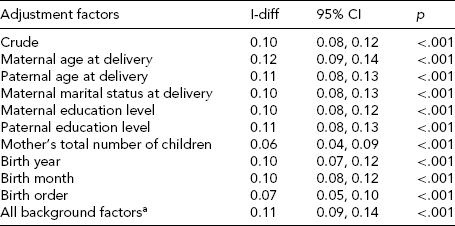
The number of persons in the analysis that included all background factors was 434,668. I-diff = difference in intelligence between singletons and twins, estimated by means of generalized estimating equations analysis; CI = confidence interval.
aMaternal and paternal age at delivery, maternal marital status at delivery, maternal and paternal education levels, mother's total number of children, birth year, birth month, and birth order.
When gestational age at birth was added to the model, the estimate for the singleton–twin difference in intelligence score decreased only slightly (Table 3). When birth weight or birth weight for gestational age was added to the model, the estimate decreased strongly. A supplementary GEE analysis showed that the interaction term ‘birth weight x twin status’ was not associated with the intelligence score (p = .61), after adjustment for birth weight, twin status, gestational age at birth, birth year, birth month, birth order, maternal and paternal age at delivery, maternal and paternal education levels, maternal marital status at delivery, and the mother's total number of children.
Difference in Intelligence Score (in Standard Deviations) Between Singletons and Twins After Adjustment for Gestational Age and Weight at Birth
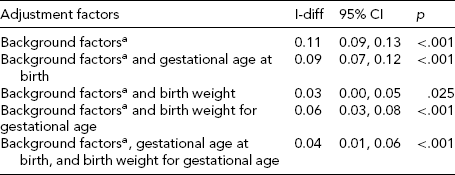
All analyses were restricted to the persons for whom data on background factors, birth weight, and gestational age at birth were available and who were born at 28–43 weeks of gestation (N = 407,899). I-diff = difference in intelligence between singletons and twins, estimated by means of generalized estimating equations analysis; CI = confidence interval.
aMaternal and paternal age at delivery, maternal marital status at delivery, maternal and paternal education levels, mother's total number of children, birth year, birth month, and birth order.
A GEE analysis of the twins showed no difference in intelligence score between those who were firstborn and those who were second-born in their pairs (0.0 SD; p = .75), after adjustment for birth year, birth month, birth order, maternal and paternal age at delivery, maternal and paternal education levels, maternal marital status at delivery, and the mother's total number of children.
Within-Family Difference Between Singletons and Twins in the Sibships
Table 4 shows the difference in intelligence scores between singletons and twins within the same families. The crude within-family difference was 16% (95% CI: 12–20 %) of a SD. After adjustment for birth year, birth month, birth order, maternal age at delivery, and maternal marital status at delivery, the within-family difference was 11% (95% CI: 6–16%) of a SD.
Within-Family Difference in Intelligence Score (in Standard Deviations) Between Singletons and Twins in the Sibships
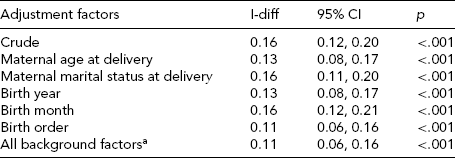
The number of persons in the analysis that included all background factors was 4,291. I-diff = difference in intelligence between singletons and twins, estimated by means of fixed effects regression analysis; CI = confidence interval.
aMaternal age at delivery, maternal marital status at delivery, birth year, birth month, and birth order.
When gestational age at birth was added to the model, the estimate increased slightly (Table 5). When birth weight or birth weight for gestational age was added to the model the estimate decreased substantially and did not remain significant.
Within-Family Difference in Intelligence Score (in Standard Deviations) Between Singletons and Twins in the Sibships after Adjustment for Gestational Age and Weight at Birth
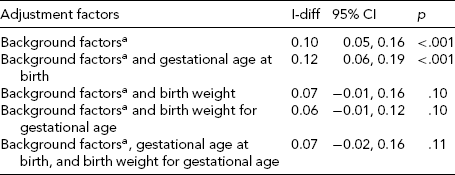
All analyses were restricted to the persons for whom data on background factors, birth weight, and gestational age at birth were available and who were born at 28–43 weeks of gestation (N = 4,076). I-diff = difference in intelligence between singletons and twins, estimated by means of fixed effects regression analysis; CI = confidence interval.
aMaternal age at delivery, maternal marital status at delivery, birth year, birth month, and birth order.
Discussion
In this register-based birth cohort study of Norwegian males, twins had lower intelligence scores at the time of military conscription compared with singletons. This difference was also seen when twins were compared with singletons within the same sibships. The difference in intelligence score was estimated as 11% of a SD, after adjustment for a series of potential confounders.
Strengths and Limitations
The study was based on a large, nation-wide birth cohort. Intelligence test scores were available for the great majority of the cohort. The intelligence testing of Norwegian conscripts is comprehensive, and the test scores are reliable and valid (Eriksen et al., Reference Eriksen, Sundet and Tambs2010; Sundet et al., Reference Sundet, Eriksen and Tambs2008). The group that was lost to follow-up may have included persons with mental handicaps. However, there was only a modest difference between twins and singletons in the loss to follow-up for reasons other than infant deaths (15.5% vs. 14.9%). The sample included only males, and the consequences of twin status could perhaps be different in females. However, earlier studies of the twin–singleton difference in intelligence indicate no such effect of gender (Voracek & Haubner, Reference Voracek and Haubner2008).
Unmeasured background factors may have confounded the results. However, the within-family differences are controlled for all unmeasured factors that are shared by all siblings in a sibship, including parental intelligence and parental body height. In addition, we adjusted for several background factors that may vary from one brother to another, such as birth year, birth month, birth order, and maternal age at delivery.
Exploring the mediating effects of birth weight and gestational age at birth is challenging. We used the same approach as Ronalds et al. (Reference Ronalds, De Stavola and Leon2005). Christensen et al. (Reference Christensen, Petersen, Skytthe, Herskind, McGue and Bingley2006) argued for another approach, underlining the importance of the relative position of twins within their own group with respect to birth weight.
Comparison With Earlier Research
In a recent meta-analysis (Voracek & Haubner, Reference Voracek and Haubner2008), the difference in intelligence scores between singletons and twins was estimated as 28% of a SD. That estimate is more than twice as high as ours. However, many of the samples that were included in the meta-analysis included twins who were born more than 50 years ago, and most of the persons in those samples were examined during childhood.
Differences in intelligence scores between singletons and twins within the same families were examined in three earlier studies (Posthuma et al., Reference Posthuma, De Geus, Bleichrodt and Boomsma2000; Ronalds et al., Reference Ronalds, De Stavola and Leon2005; Webbink et al., Reference Webbink, Posthuma, Boomsma, De Geus and Visscher2008). Ronalds and coworkers studied a population-based sample of boys and girls from Aberdeen, including 236 twins and their siblings (Ronalds, Reference Ronalds, De Stavola and Leon2005). Their estimate for the within-family difference in intelligence score between twins and singletons was one third of a SD at the age of 9 years — that is, threefold our estimate for young men. The children from Aberdeen were born between 1950 and 1956, which means that they were born 11–34 years before the men in our study. This fact together with the fact that Ronalds and coworkers examined childhood intelligence may perhaps explain why their estimate was higher than ours. The other two studies that compared twins and singletons within the same families were based on data on adult twins from the Netherlands Twin Register (Posthuma et al., Reference Posthuma, De Geus, Bleichrodt and Boomsma2000; Webbink et al., Reference Webbink, Posthuma, Boomsma, De Geus and Visscher2008). In the first of these studies, 260 twins were compared with 98 singletons (Posthuma et al., Reference Posthuma, De Geus, Bleichrodt and Boomsma2000), and in the other one, 589 twins were compared with 196 singletons (Webbink et al., Reference Webbink, Posthuma, Boomsma, De Geus and Visscher2008). The studies revealed no significant difference in intelligence score between twins and singletons. However, the Dutch twins and their siblings were examined at the age of 37 years. An intelligence difference at the age of 18–20 years, as the one we measured, may perhaps disappear after some years.
Comparisons between singletons and twins born to different mothers and brought up in different homes have been made in many studies (Voracek & Haubner, Reference Voracek and Haubner2008). In some of these studies, twins born during the last 50 years were examined (Calvin et al., Reference Calvin, Fernandes, Smith, Visscher and Deary2009; Christensen et al., Reference Christensen, Petersen, Skytthe, Herskind, McGue and Bingley2006; Sundet et al., Reference Sundet, Tambs, Harris, Magnus and Torjussen2005; Tsou et al., Reference Tsou, Tsou, Wu and Liu2008; Webbink et al., Reference Webbink, Posthuma, Boomsma, De Geus and Visscher2008). Christensen and coworkers studied 3,411 twins and 7,796 singletons born in Denmark during 1986–1988 (Christensen et al., Reference Christensen, Petersen, Skytthe, Herskind, McGue and Bingley2006). They found no difference between singletons and twins in academic achievement scores at the age of 15–16 years, perhaps because they examined a very recent cohort, born 2–19 years after the men in our study. However, academic achievement scores are not fully comparable with intelligence scores. Webbink and coworkers studied approximately 6,000 twins and 188,000 singletons who went to primary schools in The Netherlands during 1994–2003 (Webbink et al., Reference Webbink, Posthuma, Boomsma, De Geus and Visscher2008). At the age of 6 years, the academic achievement scores (language and arithmetic test scores) of the singletons were 16% and 17% of a SD higher than those of the twins. At the age of 12 years, however, no difference in academic achievement scores was seen, and the IQ-scores of the singletons were slightly lower than those of the twins. The Dutch schoolchildren were born about 3–20 years after the men in our study. In contrast to the present study, the Dutch study did not use a full-scale intelligence test, but academic achievement tests and an intelligence test that was only nonverbal. Further, the identification of twins in the Dutch study relied on matching by date of birth and surname. Tsou and coworkers studied 1,687 twins and 218,972 singletons who were born in Taiwan during 1983–1985, and who had been tested at the age of 18 years in college entrance examinations (Tsou et al., Reference Tsou, Tsou, Wu and Liu2008). The overall academic achievement scores of the Taiwanese twins were 5% of a SD lower than those of the singletons, after adjustment for birth weight, gestational age at birth, birth order, gender, and the parents’ age, education, and work status at the time of the delivery. Calvin and coworkers examined 178,599 pupils (mean age 11 years) attending English state schools in 2004 (Calvin et al., Reference Calvin, Fernandes, Smith, Visscher and Deary2009). They found that the general cognitive ability scores of the singletons were 1% of a SD higher than those of the twins. In contrast to the present study, the identification of twins in that study relied on matching by date of birth, surname, and school attended. Sundet and coworkers showed unadjusted intelligence scores for twins and singletons as part of their presentation of background data in a study of the relationship between body height and intelligence (Sundet et al., Reference Sundet, Tambs, Harris, Magnus and Torjussen2005). The twins in that study were members of two Norwegian Twin Registers, were intelligence tested at the time of military conscription, and represent a subgroup of the twin cohort examined in the present study. The crude intelligence scores of the singletons were 17% of a SD higher than those of dizygotic twins and 7% of a SD higher than those of monozygotic twins. However, no adjustment was made for background factors, and as the twins in that study had accepted membership of a twin register, they may represent a selected group.
Possible Explanations
Both the intrauterine environment and the postnatal environment may differ between twins and singletons (Muhlhausler et al., Reference Muhlhausler, Hancock, Bloomfield and Harding2011; Thorpe et al., Reference Thorpe, Golding, MacGillivray and Greenwood1991). The normal distribution of birth weight for twins is shifted to the lower side of the normal distribution for singletons (Muhlhausler et al., Reference Muhlhausler, Hancock, Bloomfield and Harding2011). This is partly due to the fact that twins are born after shorter pregnancies compared with singletons. In addition, the intrauterine growth trajectory for twins is different, resulting in a lower birth weight for gestational age compared with singletons. These tendencies for shorter gestational periods and weaker intrauterine growth may be seen as evolutionary adaptations, which, all in all, have been an advantage in twin pregnancies, ensuring the transmission of genes to later generations. Even so, these two adaptations could also have their costs, such as a reduced intrauterine growth of the brain. In the present study, the estimate for the singleton–twin difference in intelligence scores remained approximately the same when the gestational age at birth was entered in the statistical models. This may indicate that the first of the two mentioned adaptations, shorter pregnancy, does not affect the cognitive development of twins. On the other hand, when birth weight for gestational age (a function of the intrauterine growth rate) or birth weight in grams (a function of both pregnancy length and intrauterine growth rate) were entered in the statistical models, the estimates were strongly reduced. This may indicate that the twin–singleton difference in intelligence scores is partly attributed to difference in intrauterine growth. The fact that we found no significant difference between twins and singletons with respect to the effects of birth weight on intelligence score (the interaction term ‘birth weight x twin status’ was not significant), while the mean birth weight of twins was lower than that of singletons, also supports the view that intrauterine growth difference may explain some of the intelligence difference between singletons and twins. The twin–singleton difference in intelligence score did not seem to be attributed to the risk situation of the second-born twin during the birth.
Implications and Further Research
A difference of 11% of a SD corresponds to a difference of 1.65 points in a standard IQ-scale (mean = 100; SD = 15). Such a small difference will hardly have any implications for persons’ lives. In this sense, the results of our study are in line with the findings in recent cohorts from other countries in Northwestern Europe (Calvin et al., Reference Calvin, Fernandes, Smith, Visscher and Deary2009; Christensen et al., Reference Christensen, Petersen, Skytthe, Herskind, McGue and Bingley2006; Webbink et al., Reference Webbink, Posthuma, Boomsma, De Geus and Visscher2008) and from Taiwan (Tsou et al., Reference Tsou, Tsou, Wu and Liu2008). Further studies are needed to find out whether the situation is the same in other parts of the world.
Although the mean difference in intelligence score between singletons and twins is only 0.11 SD, the two populations may have substantially different proportions of individuals below a certain threshold at the lower tail of the distribution. When the distribution of the IQ score is shifted 0.11 SD to the left, one can, for example, expect that the prevalence of mental retardation (defined as an IQ score below −2 SD [70 points]) will increase from about 2.3% to about 2.9% — an increase of 26%. This means an increase of six persons defined as mentally retarded in a population of 1,000 persons. However, the effect of twin status on the risk of mental retardation was not examined in the present study.
Conclusions
Twins born in Norway during 1967–1984 had slightly lower intelligence in early adulthood compared with singletons.
Acknowledgments
The authors are indebted to the Norwegian Armed Forces, the Medical Birth Registry of Norway, and Statistics Norway for making the data used in this paper available to them.



