




Introduction
Anthropogenic greenhouse gas emissions are causing an unprecedented increase in the rate of sea-level rise (Intergovernmental Panel on Climate Change 2019). Depending on the success of efforts by the international community to limit greenhouse gas emissions in the coming decades, scientists predict that global sea levels will rise between 1 and 5m by 2100 (Dasgupta et al. Reference Dasgupta2007; Nicholls & Cazenave Reference Nicholls and Cazenave2010; Nicholls Reference Nicholls2011; Vousdoukas et al. Reference Vousdoukas2018). Higher sea levels will affect hundreds of millions of people living in coastal cities around the world; they will also have serious implications for the preservation of archaeological sites and ancient structures in these endangered coastal areas (Colette Reference Colette2007; Marzeion & Levermann Reference Marzeion and Levermann2014; Anderson et al. Reference Anderson2017). Damage to or destruction of such vulnerable archaeological sites not only diminishes humanity's shared cultural heritage but also significantly endangers the archaeological record of past coastal adaptations (see Erlandson Reference Erlandson2008, Reference Erlandson2012). As a first step in response to this threat, archaeologists have begun to assess the risk posed to coastal archaeological sites, but while recent studies have researched the implications in the USA, Australia and Europe, few assessments have examined the potential impact of sea-level rise on the coastal heritage of developing countries (e.g. Daire et al. Reference Daire2012; Westley & McNeary Reference Westley and McNeary2014; Reeder-Myers Reference Reeder-Myers2015; Knott et al. Reference Knott, Szabó, Ridges and Fullager2017; but see Feener et al. Reference Feener2021).
In this article, we present the first assessment of risk posed by rising sea levels to the cultural heritage of China, simultaneously the world's second largest economy and the world's largest developing country. China's coastline is extremely vulnerable to sea-level rise due to its low elevation, coastal geology and current level of socio-economic development (Nicholls & Cazenave Reference Nicholls and Cazenave2010; Kulp & Strauss Reference Kulp and Strauss2019). In addition, relative sea level along the country's coastline has been rising faster than the global mean, primarily due to groundwater-related subsidence. Between 1993 and 2016, China's average relative sea level increased at a mean annual rate of 3.2±1.1mm, compared with the global average of 2.8±0.3mm for the same period (Dangendorf et al. Reference Dangendorf2019; Qu et al. Reference Qu, Jevrejeva, Jackson and Moore2019). Moreover, the rate of increase has accelerated over the past four decades (State Oceanic Administration 2020). On a conservative estimate, by 2050, the 100-year coastal flood zone (the zone that can be inundated by a flood event that has a 1 per cent probability of being equated or exceeded in any given year) will extend to 98 300km2, or 1.02 per cent of China's total land area (Ding & Du Reference Ding and Du2016). Even though the Chinese government has taken a proactive stance towards dealing with sea-level rise (National Development and Reform Commission 2014), there are no official forecasts regarding the impact on China's coastal archaeological sites and cultural heritage (State Oceanic Administration 2020). Due to the acceleration of sea-level rise, a preliminary assessment of the risks to China's cultural heritage is now urgently required. The present study provides the first estimate of the potential implications of different sea-level rise scenarios for cultural heritage sites along China's coastline.
Regional background
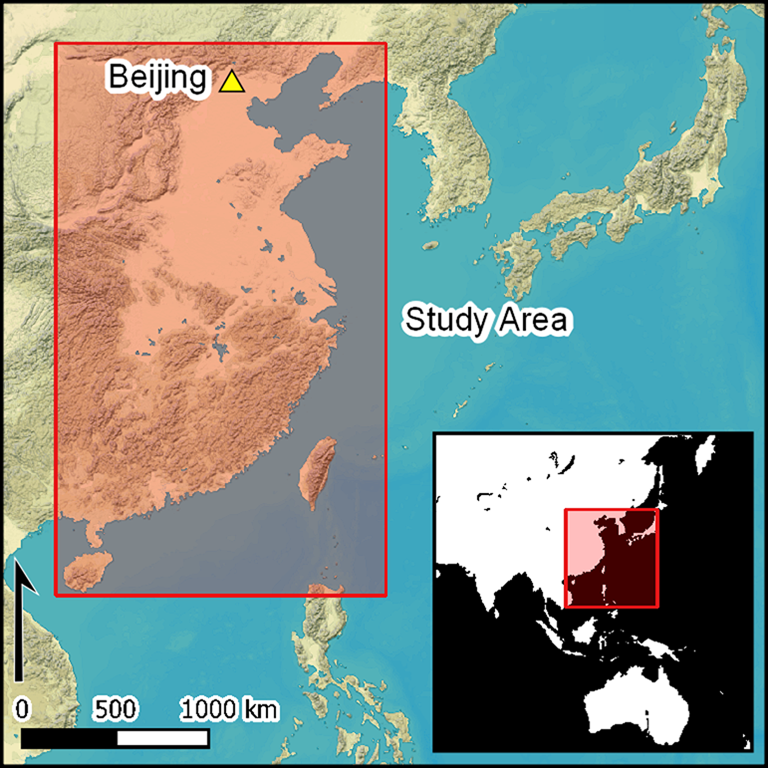
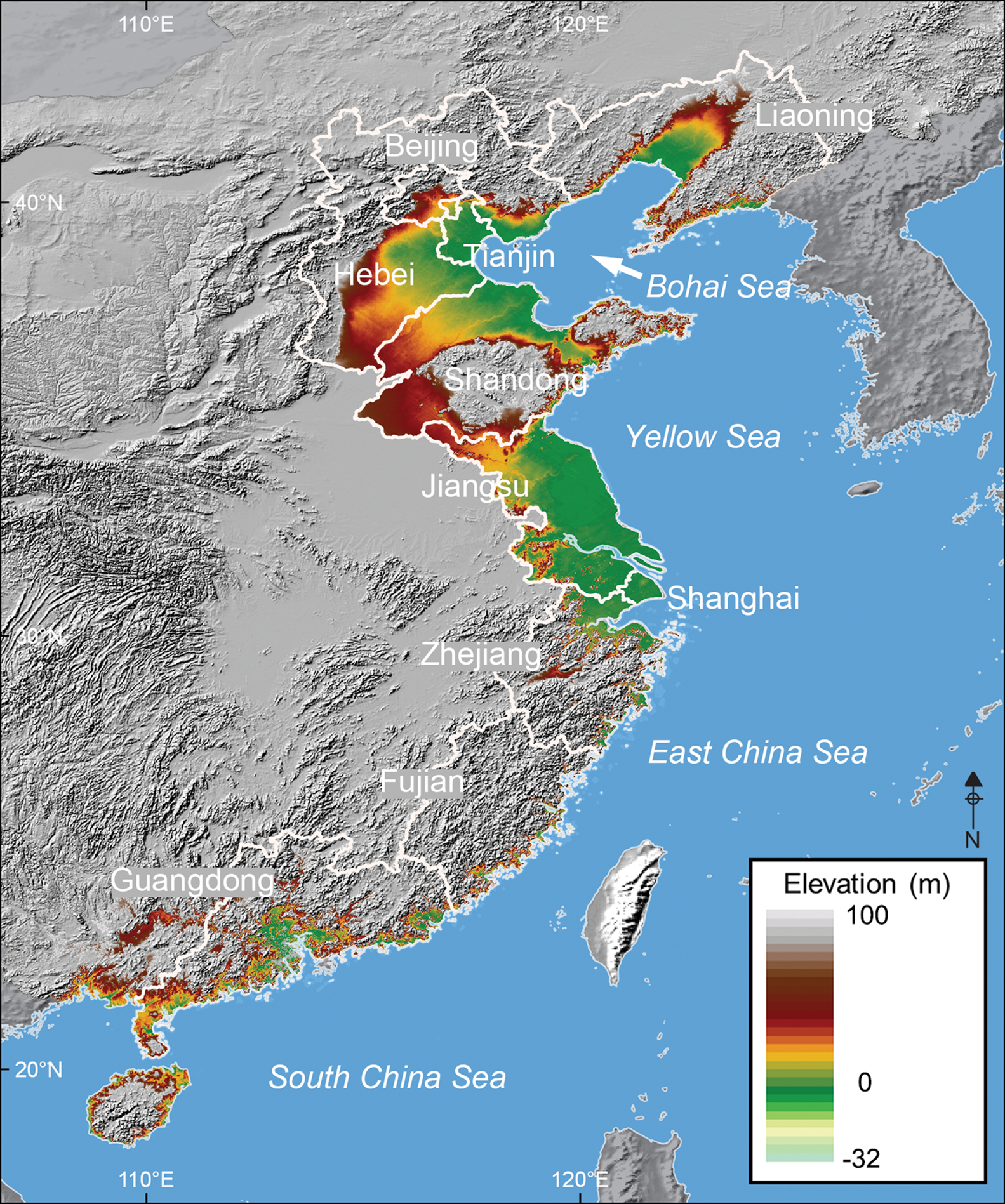
Researchers unfamiliar with the geography of China's coastline, its archaeological importance and the current findings of sea-level rise research, may be unaware of the threat of rising sea levels for this nation's cultural heritage. China's coastline, including both mainland and islands, extends to approximately 32 000km, making it the tenth longest in the world (Figure 1). The mainland coastline is approximately 18 400km in length, extending from the Yalu River on the border with North Korea in the north to the border with Vietnam in the south. Over 6000 islands make up the remaining 13 600km of coastline (Wang & Aubrey Reference Wang and Aubrey1987). Although water discharge and sediment from three major rivers—the Yellow, Yangtze and Pearl—have dominated the evolution of China's coastline, other factors, including climate and geology, also exert a considerable influence (Li et al. Reference Li, Fan, Deng and Korotaev2004). From north to south, China's coast can be divided into four regions: the Bohai Sea, the Yellow Sea, the East China Sea and the South China Sea. These regions span cold temperate, temperate, subtropical, and tropical climate zones, and monsoons and typhoons influence each zone to various degrees. The coastline's geological conditions also vary, ranging from the low-lying Quaternary detrital sediments in the north to the rocky crags and karst topography in the south.
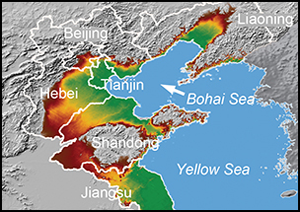
The ten Chinese coastal provinces and municipalities analysed in this study, and the digital elevation model of China's coastline (note the clear difference in low-lying areas between the north and the south) (figure by M. Storozum).
Such different geographies and geologies have created a rich and diverse coastal environment that nourished the development of ancient human societies. Recent discoveries show that Palaeolithic people settled in China's coastal areas approximately 60 000 years ago (Wang et al. Reference Wang, Zhou and Long2018). This long history of human habitation has left the region with a rich variety of locations of cultural importance, such as cave sites, shell middens, ports, seawalls, temples, beacon towers, forts, historic buildings and cities (Green Reference Green1997).
Although historically research on coastal areas has been neglected due to Chinese archaeology's bias toward the Central Plains (the ‘core’ cultural area of Chinese civilisation), the country's coastal archaeology has received greater scholarly attention over the past two decades. Archaeologists now use archaeobotanical data, architectural remains, material culture and textual records to challenge the assumption that early Chinese societies were isolated from outside influence. Recent research following Bellwood (Reference Bellwood1984) and Chang (Reference Chang1987), for example, has traced the origins of the Austronesian-speaking peoples who are now widely distributed on the islands from the eastern Pacific to the western Indian Ocean and along China's south-eastern coast (Jiao et al. Reference Jiao, Lin and Rolett2002). This work, along with that of many other researchers, has demonstrated that China's coastal areas were places of contact between different cultures and economies and a transit zone for peoples, goods and ideas on the historical—and potentially prehistoric—Maritime Silk Road (Mungello Reference Mungello2012; Wu Reference Wu and Wu2016; Wu & Rolett Reference Wu and Rolett2019; Chen et al. Reference Chen2020).
Sea-level rise, however, now endangers the archaeology of this culturally rich coastal zone. Over the past century, eustatic sea level has risen by at least 0.2m (Cazenave & Cozannet Reference Cazenave and Cozannet2014). Earth scientists have revealed that such a rapid increase is unprecedented in the past two millennia (Lambeck et al. Reference Lambeck and Church2010; Kemp et al. Reference Kemp2011) and observational evidence suggests that the rates continue to accelerate (Dangendorf et al. Reference Dangendorf2019). According to Nicholls and Cazenave (Reference Nicholls and Cazenave2010), the world faces a cumulative sea-level rise of at least 1m by 2100. The relatively conservative projection by the Intergovernmental Panel on Climate Change (2019) suggests a rise of 0.84m (0.61–1.10m) under RCP8.5 (high greenhouse gas emission scenario) and an even lower rise under other emissions scenarios. As Schwalm et al. (Reference Schwalm, Glendon and Duffy2020) have recently argued, however, RCP8.5 offers the best prediction for future total cumulative CO2 emissions up to 2100. If there are no decisive policy changes worldwide, an approximate 1m sea-level rise by 2100 is highly likely. Other researchers have proposed that, given the amount of uncertainty surrounding climate change projections, particularly for the second half of the twenty-first century, sea levels could rise by up to 2m (Lowe et al. Reference Lowe2020), or even 5m if both the Greenland and the western Antarctic ice sheets melt by 2100 (Dasgupta et al. Reference Dasgupta2007). Even the Intergovernmental Panel on Climate Change (2019) projection does not rule out the possibility of a 2m sea-level rise by the end of this century.
With the added problem of storm surges, temporary extreme sea levels may exceed even these higher projections. In many regions such as southern China (areas south of the Yangtze River) and certain areas of northern China (such as the Tianjin region), there are further factors that exacerbate the situation, such as natural and anthropogenic land subsidence, a deficit in sediment supply and wetland disturbance (State Oceanic Administration 2020). A recent Intergovernmental Panel on Climate Change (2019: 326) report points out that the rates of sea-level rise caused by anthropogenic land subsidence can exceed those of climate-induced rise by “an order of magnitude”. This cumulative knowledge, coupled with the projections of global mean rates of sea-level rise, lead us to believe that coastal cultural heritage sites located up to 1m above current sea levels will almost certainly be permanently or temporarily inundated by 2100, while those between 2 and 5m may be inundated under more extreme circumstances; the risks for those sites located between 1 and 2m above current sea level lie somewhere between these two scenarios.
Projections such as those by the Intergovernmental Panel on Climate Change (2019) indicate that rising sea levels are a serious threat to China's coastal cities and populations. Similarly, China's coastal cultural heritage is also at risk. Large archaeological sites and important cultural heritage assets that have historically received protection from the National Cultural Heritage Administrations will probably continue to enjoy financial support from the government to mitigate the impact of rising sea levels. Many smaller sites and those without adequate levels of funding for research or preservation, however, face either imminent destruction to make way for population resettlement, or more gradual destruction from rising sea levels or the associated effects of climate change, including increased cyclonic activity, storm surges and coastal erosion (Han et al. Reference Han, Hou and Wu1995; Li et al. Reference Li, Fan, Deng and Korotaev2004).
Materials and methods
The primary dataset used in this study derives from the Atlas of Chinese Cultural Relics (ACR), a series first published in 1989 by the State Council of Cultural Relics. Each volume contains a brief but consistent and standardised presentation of survey and excavation data of cultural heritage sites within an individual provincial administrative division of China (Wagner et al. Reference Wagner2013). At present, 27 volumes have been published, leaving only seven of the 34 provincial administrative divisions to be covered. Of these seven, five (Guangxi, Hainan, Taiwan, Hong Kong and Macao) are coastal provinces or special administrative regions and two (Guizhou and Jiangxi) are land-locked provinces relatively far from the ocean.
The data in the ACR derive predominantly from the Second National Survey of Cultural Relics, undertaken between 1981 and 1989. The results of the first such survey (1956–1959) are also occasionally referenced, and some volumes incorporate new data collected subsequent to the Second National Survey. The ACR groups sites into seven categories: settlements, cemeteries, ancient architecture, cave temples and sculptures, modern historic sites, modern representative (commemorative) architecture, and others (e.g. fossil reserves, old trees). The number of sites documented in each volume ranges from just over 1000 (Tianjin) to over 20 000 (Shanxi). Despite these seemingly large numbers, many, if not most, archaeological sites in China are not included. As the ACR relies on largely informal assessments of known sites rather than systematic pedestrian surveys intended to identify all features, many archaeological sites remain undocumented. Although the database is incomplete, it does enable researchers to assess potential areas of concern for cultural heritage preservation.
We extracted data from the 10 volumes of the ACR relevant to coastal cultural heritage, that is, those volumes covering the provinces and municipalities of Liaoning, Hebei, Beijing, Tianjin, Shandong, Jiangsu, Shanghai, Zhejiang, Fujian and Guangdong. The ACR includes temporal and cultural data from each site but no site coordinates, as GPS equipment was not available in the 1980s. Based on the maps and descriptions of site locations in the ACR, we manually located the sites using Google Earth and logged their coordinates. These data were then compiled into a table, along with archaeological information on periods of activity. While fully acknowledging the value of other categories of sites in the ACR, for present purposes we extracted only information about settlements and cemeteries, as archaeological sites are our main concern here. Our final dataset contains 43 000 entries and has a much wider timespan than the dataset compiled by Hosner et al. (Reference Hosner2016) from the same source. Whereas the latter focuses only on prehistoric sites, our database extends from the Palaeolithic to the era of the People's Republic of China (1949–present).
We used ArcGIS software to create a mosaic of 30m SRTM (Shuttle Radar Topographic Mission) images, with a buffer area of 200km inland from the coast, producing a Digital Elevation Model (DEM) of the entire coastal topography of China. We overlaid the site locations from our ACR dataset on the DEM and extracted the Z values or elevations, providing us with a list of archaeological sites located up to 1, 2 and 5m asl.
In addition to the ACR dataset, we used a new dataset that was compiled by the Third National Survey of Cultural Relics (TNS) for the Shanghai municipality between 2007 and 2011. Compared with the two previous national surveys, the third survey is more comprehensive and uses a broader definition of cultural heritage. The resulting dataset is more than triple the size of that produced for the same area by the Second National Survey. It also contains richer information for each site, including directly measured coordinates and elevations but, due to concern over looting, this new dataset has not been made publicly available. We use these newer data only for Shanghai, and refer to this subset as the TNS dataset. We contrast the different estimates based on the TNS and the ACR datasets to give a sense of the degree to which the latter underestimates the impact of sea-level rise.
Results
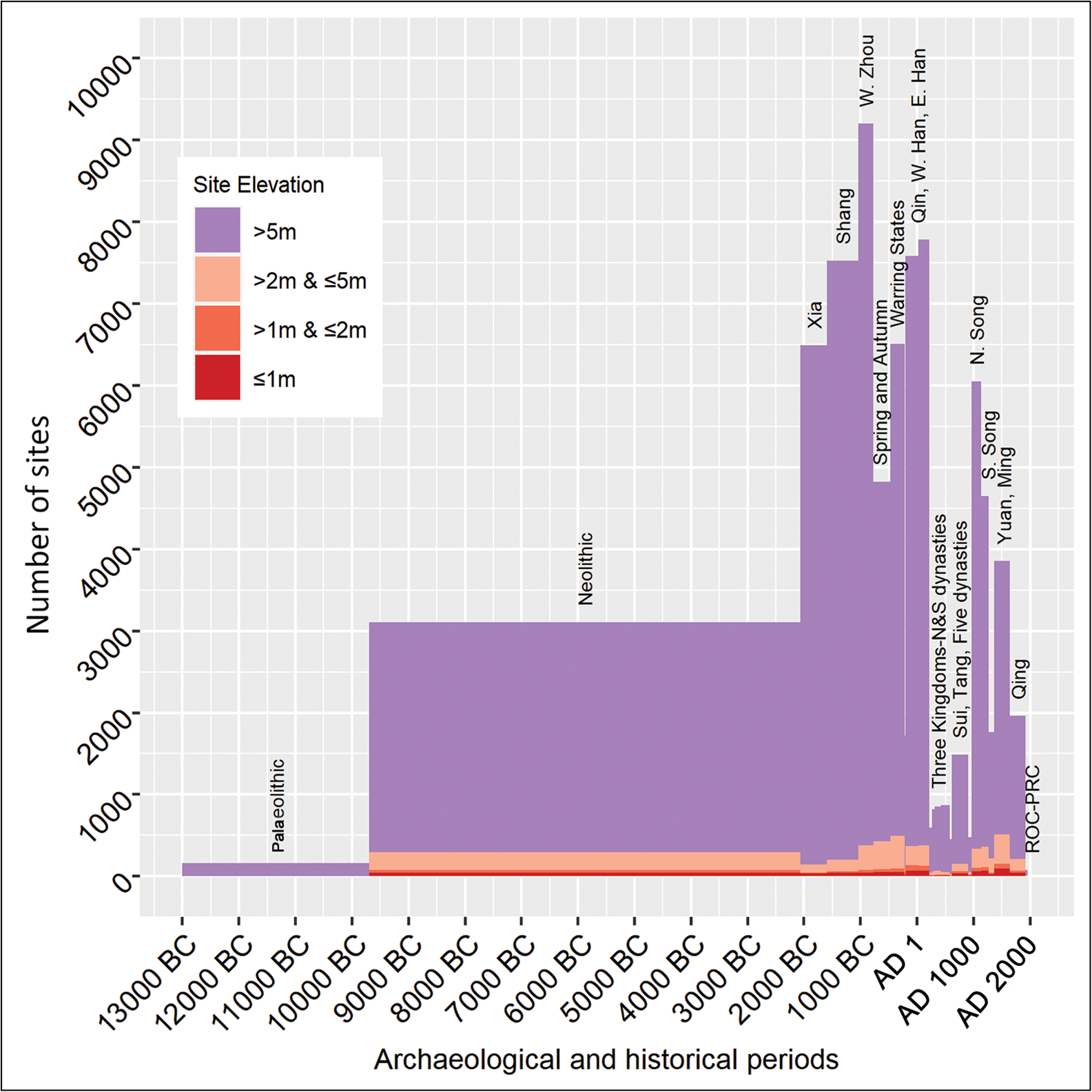
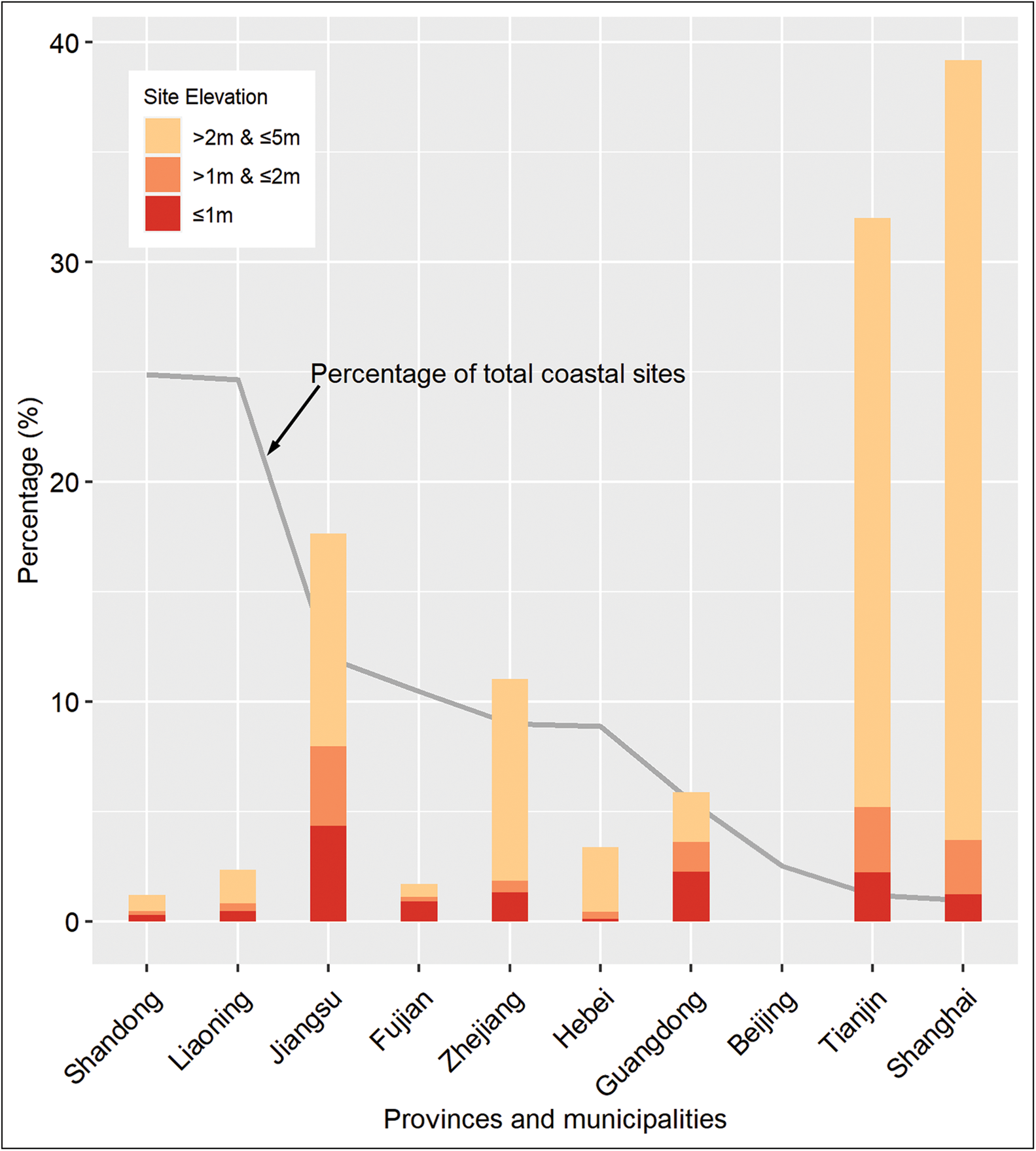
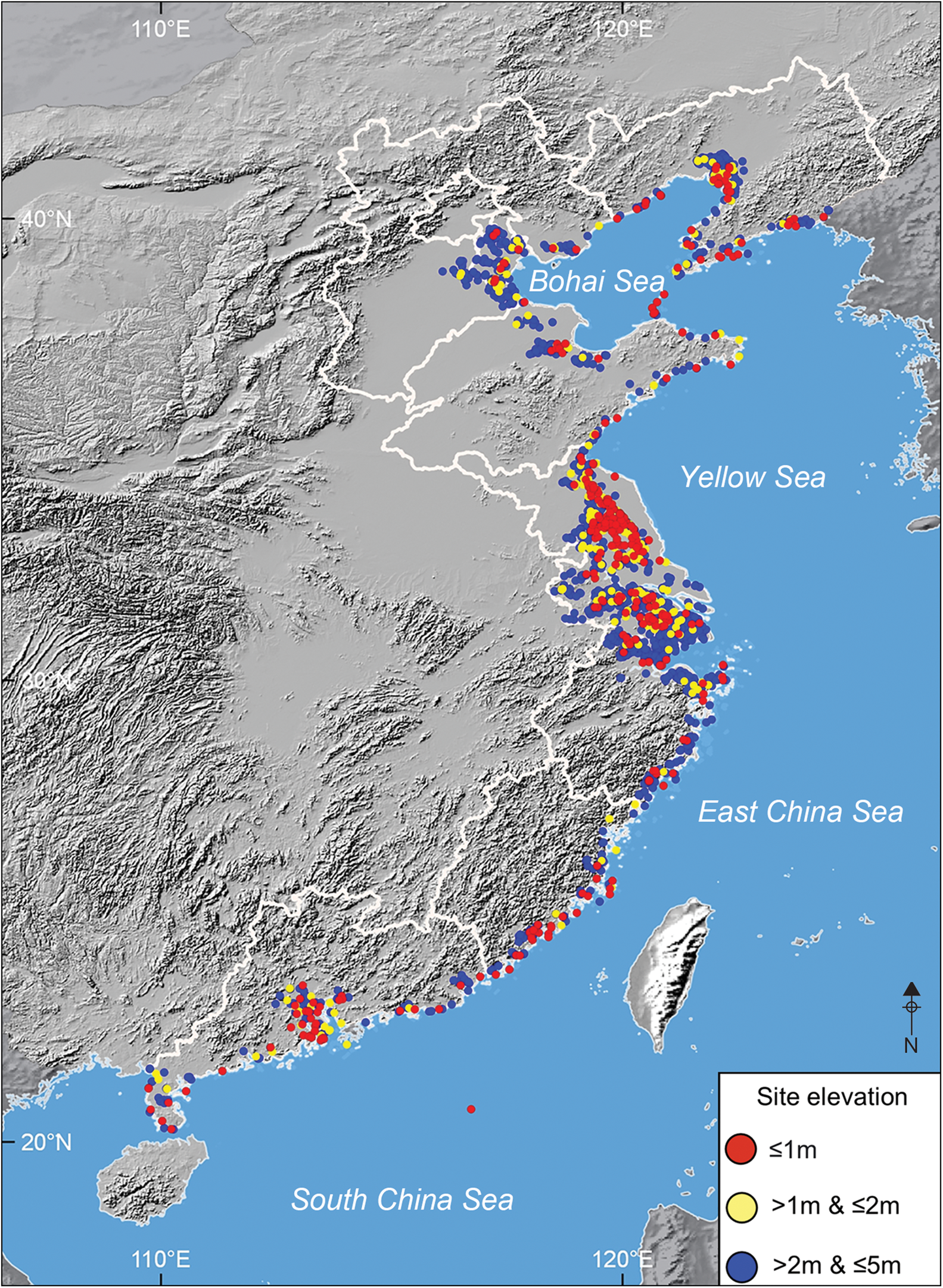
Our results are summarised in Table 1 and Figures 2–6. Using the ACR dataset, the number of archaeological sites affected by a 1 or 2m sea-level rise would be relatively small (Table 1), but this number becomes considerable when we extend the impact zone to 5m asl. Chronologically, the affected sites include examples from the Neolithic period to the modern era (Figure 2). There is no obvious pattern to suggest that sites dating to particular periods are especially vulnerable. The results also show that different sea-level rise scenarios disproportionally affect particular coastal provinces (Figure 3). Sites in Shanghai, Tianjin and Jiangsu are likely to be the most significantly affected, whereas those in Beijing and Shandong are least at risk. If we consider the number of sites in each province, the situation in Jiangsu appears to be particularly urgent, as it contains a large proportion of coastal sites and is the most vulnerable to a 1m rise in sea level.
Number of sites (n = 34 058) within 200km of China's coastline (ACR dataset).

Distribution of site elevations and chronology in the ACR dataset for 10 Chinese coastal provinces and municipalities (figure by Y. Li).
Relative percentage of sites endangered by sea-level rise in 10 Chinese coastal provinces and municipalities; ranked from left to right by the share of each province in the national total of coastal sites, according to the ACR (figure by Y. Li).
a) Comparison of different site categories included in the Atlas of Chinese Cultural Relics (ACR) and the Third National Survey of Cultural Relics (TNS) dataset for Shanghai; b) the difference in site elevations for the three datasets for Shanghai (figure by Y. Li).

Sites affected by 1m, 2m and 5m sea-level rise according to the Atlas of Chinese Cultural Relics (ACR) dataset (figure by M. Storozum).
Sites affected by 1m, 2m and 5m sea-level rise within the Shanghai area (Third National Survey of Cultural Relics (TNS) dataset) (figure by M. Storozum).
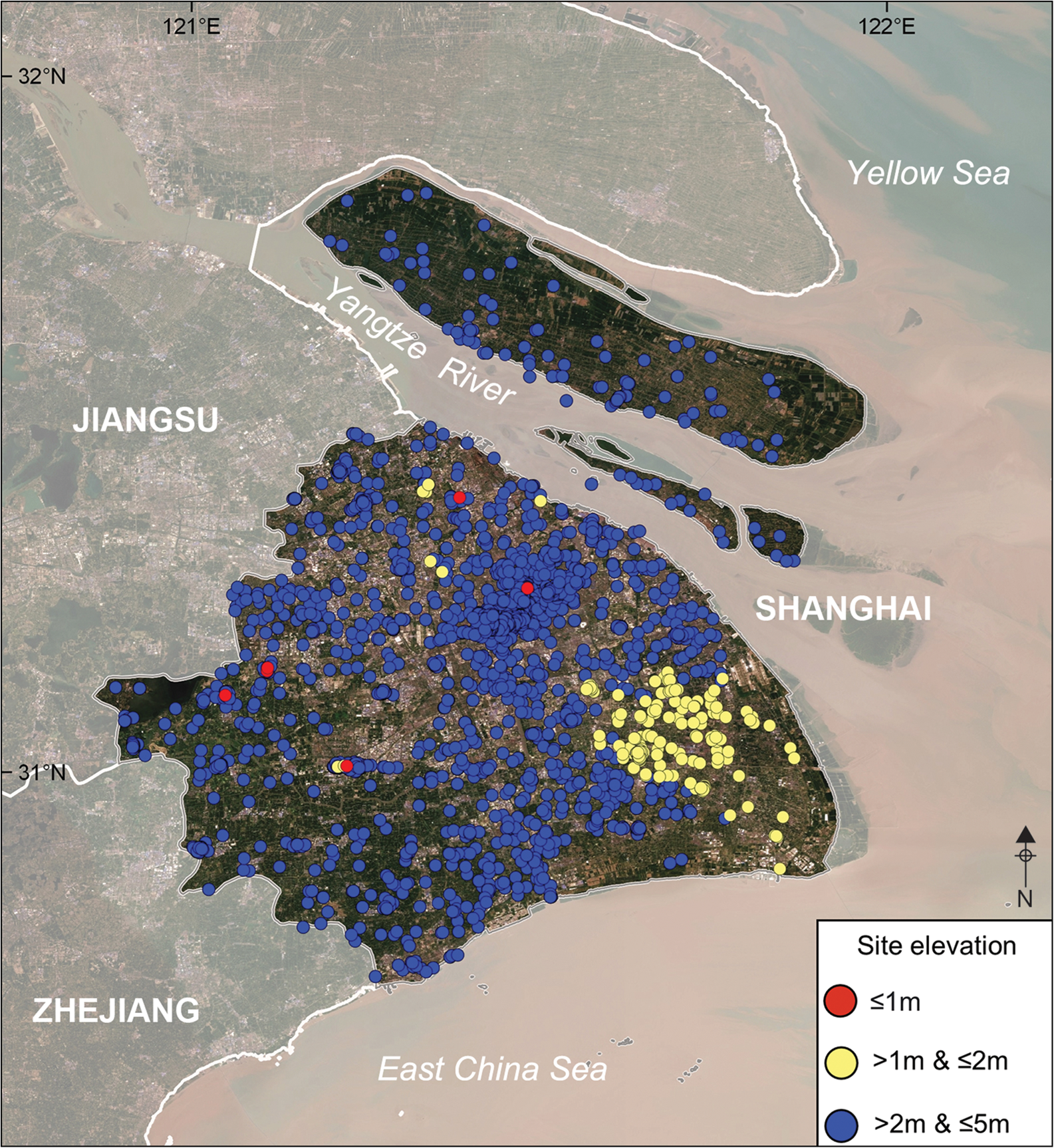
Comparing the results of the ACR and TNS datasets for Shanghai city clearly demonstrates that the latter reveals many more sites at risk of sea-level rise. Although the TNS documents fewer settlement and cemetery sites than the ACR (due to losses caused mainly by development), the dataset as a whole contains many more sites in other categories. The result shows that, whereas a 1–2m sea-level rise directly affects a minimal number of sites, a 5m sea-level rise would submerge the majority of Shanghai's 4000+ cultural heritage sites.
Discussion
At first glance, our results seem to suggest that sea-level rise will not have a significant impact on China's cultural heritage. Both the absolute numbers and the relative ratio of sites that would be endangered by a 1–2m rise are negligible if spread along China's vast coastline; this applies even to Shanghai, a low-lying city situated at the delta of the Yangtze River. Only a 5m sea-level rise is likely to raise real concerns, particularly for a few provinces and municipalities, including Shanghai, Tianjin, Jiangsu and Zhejiang. Even in such an extreme scenario, only 2254 sites are threatened—a relatively small number on a national scale. As a point of comparison, China lost over 40 000 registered cultural heritage sites between the 1980s and the 2010s, mostly due to economic development (Huo Reference Huo2012).
Nevertheless, we argue that the number of endangered coastal sites estimated in this article represents only an absolute minimum. The explanation is twofold. First, there is no doubt that we have severely underestimated the number of coastal sites in China. Using the same method as we have adopted here, Anderson et al. (Reference Anderson2017) found that in the south-eastern USA, over 30 000 sites will be affected by a 5m sea-level rise. Other than geography, a key factor that shapes the much smaller number of sites endangered along the entire Chinese coastline is the significant difference in research intensity. Anderson (Reference Anderson and McManamon2018) estimates the total number of archaeologists in the USA to have increased from approximately 20 000 in 2009 to around 24 000 by 2018. In contrast, He (Reference He2016) estimates that fewer than 3000 archaeologists were working in China at around the same time.
Disparities in the research efforts devoted to the study of the coastal areas of these two countries are equally noteworthy. Whereas the south-eastern USA has been subject to thorough archaeological investigations since the 1930s, China's coastal archaeology remains comparatively understudied. The Southeastern Archaeological Conference (focusing on the south-eastern region of the USA) now has over 1000 registered members (including students), while there are probably no more than a few hundred archaeologists in the entirety of China studying coastal archaeology, due to historical neglect of coastal regions. The situation several decades ago, when most of the data in the ACR were collected, was even worse. If we also consider the unsystematic nature of the national surveys, it is understandable that the ACR dataset contains only a small fraction of the actual number of China's coastal sites. In our study, we used an even smaller subset of this dataset, including only ancient settlements and cemeteries. Since the number of documented heritage sites more than doubled nationally with the Third National Survey, it is unsurprising that the actual number of documented sites in each province or municipality is now several times larger than those in the ACR dataset. The comparison of the ACR and the TNS datasets in Figure 4 shows that the number of coastal sites in Shanghai city would increase 13.6 times if we used the latter instead of the former—a powerful demonstration of the degree to which we have potentially underestimated the number of endangered sites by using the old and incomplete ACR dataset.
A second consideration is that we assumed only sites equal to or below the projected future sea levels would be affected, yet many additional factors can significantly aggravate and widen the impact of sea-level rise. Land subsidence, primarily caused by ground-water extraction in China and, to a lesser extent, by oil extraction and tectonic movements, can accelerate regional relative sea-level rise, amplifying the risks of global rises in sea level (Xue et al. Reference Xue2005). Between 1959 and 1999, for example, a large part of Tianjin and its suburbs sank 2.83m. In fact, the rates of land subsidence in many coastal areas of China are much faster than those of sea-level rise (Xue et al. Reference Xue2005; Ye et al. Reference Ye2016). Coastal erosion also accelerates with rising sea levels. In an extreme case, the Luan River delta was already retreating by 300m per year in the early 1990s, even before the rates of sea-level rise started to increase rapidly in the twenty-first century (Qian Reference Qian1994). The combination of sea-level rise and climate change will also increase the frequency and intensity of storm surges and heavy precipitation along China's coastline, potentially damaging coasts more than direct inundation (Fang et al. Reference Fang2020). High tides can also greatly exacerbate the adverse effects of sea-level rise (Kulp & Strauss Reference Kulp and Strauss2019).
Notably, rising sea levels will require the resettlement of one of the world's largest coastal populations to locations farther inland, potentially also endangering archaeological sites in these areas. Assuming China's coastal populations are equally impacted, 29–100 million people will need to resettle within China's interior by the end of this century, necessitating further massive investment in infrastructure and housing for these climate refugees (Kulp & Strauss Reference Kulp and Strauss2019). Increases in (re)development necessarily mean that more areas will need to be excavated, with more of the archaeological record destroyed in the process.
Taking all these factors into consideration, we are confident that our results present the absolute minimum numbers of endangered coastal archaeological sites in China. The actual loss of coastal cultural heritage is likely to be substantially greater and preventive measures must be taken. Improved archaeological reconnaissance and survey, multidisciplinary research and international outreach are all necessary to face the challenges of rising sea levels. China's community of archaeologists and heritage specialists must advocate for the research and preservation of coastal archaeological sites. The next survey of cultural relics, for example, might emphasise comprehensive coverage of coastal areas to record endangered archaeological sites along the coastline. Collaboration between multidisciplinary groups of scholars will also be necessary to formulate adequate policy measures that prioritise the preservation and research of coastal archaeological sites. Future models of sea-level rise should be combined with archaeological datasets to determine those areas most at risk from floods, storm surges and cyclonic activity. Moreover, international engagement with China's cultural heritage is necessary for integrating these studies into a larger global framework (Hambrecht & Rockman Reference Hambrecht and Rockman2017). Finally, discussions with stakeholders and engagement with the public at venues such as science and cultural museums will be fundamental to informing the public about the potential dangers posed to cultural heritage by sea-level rise.
Conclusion
This study provides the first estimate of the numbers of archaeological sites endangered by potential 1m, 2m and 5m sea-level rise along China's coastline. Using the ACR dataset, we estimate that the numbers of sites affected will be 370, 640 and 2254, respectively. The more comprehensive TNS dataset, however, suggests that 7, 223 and 4327 sites will be affected in the area of Shanghai city alone. It is therefore reasonable to assume that the numbers of endangered sites in other coastal provinces is probably 10 times greater than presented here. In addition, as our ACR dataset contains only known ancient settlements and cemeteries, and our method only focuses on sites that will be directly inundated by the rising sea levels, we believe that these results underestimate the number of sites that will be affected still further.
China's coastal cultural heritage requires long-term management and further research. The State Administration of Cultural Heritage and each province's division of cultural relics and archaeology will need to develop strategies to manage the increasing number of archaeological sites that are endangered by sea-level rise, coastal erosion, storm surges and population resettlement. Decisions made today will lay the foundations for the preservation—or lack thereof—of China's coastal heritage. Now is the time to act.
Acknowledgements
We are grateful to the two anonymous reviewers for their comments and constructive suggestions.
Funding statement
This research was funded by the National Social Science Foundation of China (19CKG019), the Fundamental Research Funds for the Central Universities, the National Natural Science Foundation of China (41771223) and the Shanghai Planning Office of Philosophy and Social Science (2019ELS006).


 Open access

