

1. Introduction and summary: the standard of review under factual uncertainty
In dealing with the Appellate Body Report in Australia–Apples (DS367),Footnote 1 we discuss what can be called ‘second generation’ issues of the Agreement on the Application of Sanitary and Phytosanitary Measures (henceforth the ‘SPS Agreement’). We will be less, or only indirectly, concerned with the material obligations spelled out in the SPS Agreement. Instead, our focus will be on the contestation of an SPS measure taken by a country, and, in particular, the process of judicial review by a dispute Panel or the Appellate Body (AB). More specifically, we are interested in the proper standard of review (SoR) of SPS measures, as it relates to the responding party's SPS risk assessment.Footnote 2
In addressing issues of the SoR, we discuss which aspects of the responding party's risk assessment should or should not be reviewed by a Panel or the AB in situations characterized by high levels of factual uncertainty, that is in the absence of complete and comprehensive scientific knowledge concerning the sanitary and phytosanitary risks of importation.
Every risk assessment is subject to some degree of uncertainty.Footnote 3 Scientific uncertainty notwithstanding, the domestic institution charged with performing a risk assessment (the risk assessor) has to find ways of dealing with such uncertainty and ultimately must come up with results. The Apples dispute seems a good object of study here, because Australia was faced with substantial factual uncertainty in the creation of its risk assessment. The issue that we wish to address in this article is to what extent the presence of higher levels of factual uncertainty should influence the level of scrutiny with which Panels may review Members' risk assessments under Articles 2.2, 5.1, and 5.2 of the SPS Agreement. Are dispute Panels and their appointed outside experts in a position to judge whether the risk assessor properly dealt with situations where scientific evidence is scant? Which aspects of Members' risk assessments, if any, should be considered ‘off limits’ for Panel review? We also discuss how high degrees of factual uncertainty affect a Panel's ability to assess less-trade-restrictive alternatives under Article 5.6 of the SPS Agreement, and what role should Panel-appointed scientific experts play in the SoR of this provision.
As we will argue, the AB in Australia–Apples has not provided Panels with sufficient guidance as to how they should review Members' attempts at overcoming factual uncertainty in connection with their risk assessments. In search of answers on what constitutes the proper SoR, we turn to work conducted in the disciplines of economics, decision analysis, and risk management. Literature in these fields has dealt extensively with the issue of assessing risks in the presence of massive factual uncertainty. We introduce a basic framework for decisionmaking under uncertainty. Based on this framework, we distinguish different types of uncertainty that exacerbate the assessment of risk. We find that, for theoretical and practical reasons, risk assessments necessarily involve judgment calls and subjective trade-offs on the part of the risk assessor. Based on the theoretical insights, we develop a series of recommendations as to what constitutes a proper SoR. We then discuss these theoretical findings in the context of the Australia–Apples AB Report and suggest concrete modifications to the SoR currently applied by Panels and the AB.
This paper is structured as follows. Section 2 provides a summary of the Apples case and the AB's findings. With a view to the later discussion of factual uncertainty, we place considerable emphasis on a detailed account of Australia's risk assessment, and how Australia dealt with overcoming areas of scientific uncertainty. Section 3 gives a nontechnical summary of the concept of SoR, and reviews the approach to SoR adopted by Panels and the AB in the five SPS disputes leading up to Australia–Apples. Footnote 4 Reflecting on the theoretical literature on risk management, Section 4 discusses how the presence of factual uncertainty should influence Panels' SoR. Based on this discussion, we examine the SoR as pronounced by the AB in Australia–Apples and propose some modifications. Section 5 concludes.
2. Summary of the case and Appellate Body findings
The Australia–Apples dispute concerned Australia's sanitary and phytosanitary measures against three types of contagious diseases affecting apple fruit. The consequences of infection can be substantial for fruit production and the entire native flora. Australia has in place very strict sanitary and phytosanitary rules to protect its territories from an infestation of fruit and vegetable diseases.Footnote 5
2.1 Factual background
The dispute between Australia and New Zealand over the importation of apples has a long history. New Zealand is an important producer and exporter of apples; so is the Australian state of Tasmania. Ever since the entry and outbreak of fire blightFootnote 6 in Auckland, New Zealand, in the early 1920s the Australian market has remained closed to New Zealand apples. In 1986, 1989, and 1995, New Zealand officially, yet unsuccessfully, requested permission to resume exportation to the Australian market. New Zealand's fourth request in February 1999 resulted in the initiation of an import risk analysis by the Australian Quarantine and Inspection Service (AQIS), certainly one of the most experienced and skilled authorities in the field of sanitary and phytosanitary investigation worldwide. Biosecurity Australia (back then a division of AQIS and now a separate agency) needed three attempts in the form of ‘draft’ risk assessments (in 2000, 2004, and 2005), to finally publish its Final Import Risk Analysis Report for Apples from New Zealand (IRA) in 2006 (Biosecurity Australia, 2006).
In its risk assessment, Biosecurity Australia determined the risk of entry, establishment, and spread of three apple-related diseases from imports of mature apple fruit from New Zealand: (i) fire blight;Footnote 7 (ii) apple leafcurling midge (ALCM), an insect whose larvae uniquely feed on apple leaves;Footnote 8 and European canker, a fungus that affects apple orchards. It is noted that the Australian continent, that is the Australian mainland and proximate islands including Tasmania, is free from any of these pests, while all three pests exist in New Zealand.
Biosecurity Australia characterized its approach to risk assessment as ‘semi-quantitative’.Footnote 9 For each pest, it combined a quantitative assessment of the likelihood of entry, establishment, and spread with a qualitative assessment of the likely associated potential biological and economic consequences. The combination of these assessments then yielded an overall determination of ‘unrestricted risk’, that is the risk of establishment and spread of the three pests associated with the importation of apples from New Zealand in the absence of any risk-management measures. Whenever the ‘unrestricted risk’ associated with a specific pest was deemed to exceed Australia's appropriate level of protection (ALOPFootnote 10), the agency evaluated and ultimately recommended the adoption of certain risk-management measures to mitigate the risk.
After having conducted the baseline case of ‘unrestricted risk’ and comparing it against Australia's ALOP, the IRA recommended a number of risk-management measures to the Director of Animal and Plant Quarantine. The Director subsequently determined that compliance with these ‘requirements’ was a precondition for the importation of apples from New Zealand. Sixteen of these requirements relating to the importation of apple fruit from New Zealand constituted the ‘measures at issue’ in this dispute.Footnote 11
These 16 measures were so strict, intrusive, and expensive for New Zealand apple farmers that the New Zealand Government did not consent to the required standard operating procedures needed to meet these requirements. This resulted in an effective import ban on New Zealand apples into Australia.
2.2 Panel proceedings and measures on appeal
In January 2008, a Panel was established. New Zealand claimed that the 16 measures at issue, both individually and as a whole, were inconsistent with Articles 2.2, 2.3, 5.1, 5.2, 5.5, 5.6, and 8, as well as Annex C(1)(a) to the SPS Agreement.Footnote 12 In particular, New Zealand alleged that the Australian measures: (i) are maintained without scientific evidence; (ii) are not based on a proper risk assessment; (iii) subject imported fruit from other countries to measures substantially less restrictive than those imposed on imports of New Zealand apples; and (iv) are more trade-restrictive than necessary to achieve Australia's appropriate level of protection.
Both parties agreed that Australia's risk assessment was the central element of the Apples dispute. The quality and results of Australia's IRA, as it relates to the three pests, was seen as the fundamental bone of contention by both litigating parties.Footnote 13 New Zealand claimed that the IRA ignores available scientific evidence; Australian border-inspection processes; relevant apple-production processes in New Zealand; relevant diseases or pests in New Zealand; and relevant climatic conditions in both New Zealand and Australia in violation of Article 5.2. Furthermore, New Zealand alleged that the delay of almost eight years between its initial request for the admission of New Zealand apples into Australia and the completion of Australia's approval procedures was ‘undue’ in the sense of Annex C(1)(a). Hardly surprising, Australia contested these claims.
During the proceedings, the Panel decided to seek expert advice, and consequently appointed seven experts: two in the area of fire blight; two for European canker; one for ALCM; and two for pest risk assessment in general, including the use of semi-quantitative methodologies.Footnote 14
After a number of quite substantial delays and a preliminary ruling on consistency of New Zealand's Panel request with Article 6.2 of the Understanding on Rules and Procedures Governing the Settlement of Disputes (DSU), the Panel Report was circulated to Members in August of 2010. The Panel found that:
• Australia's measures at issue regarding fire blight, European canker, and ALCM, as well as certain ‘general measures’,Footnote 15 were inconsistent with Articles 5.1 and 5.2 of the SPS Agreement. Footnote 16 By implication, these requirements were also inconsistent with Article 2.2 of the SPS Agreement.Footnote 17
• New Zealand failed to demonstrate that the measures at issue were inconsistent with Article 5.5 and, consequentially, also failed to demonstrate that these measures are inconsistent with Article 2.3.
• Australia's measures regarding three pests were inconsistent with Article 5.6.Footnote 18
• New Zealand's claim under Annex C(1)(a) and its consequential claim under Article 8 were outside of the Panel's terms of reference in this dispute.Footnote 19
On appeal, Australia accepted the Panel's findings with respect to European canker, but challenged practically any Panel finding adverse to it with respect to fire blight and ALCM. Relevant for this article, on appeal Australia raised that, in finding that the measures regarding fire blight and ALCM are inconsistent with Articles 5.1, 5.2, and, consequently, 2.2 of the SPS Agreement, the Panel misinterpreted and misapplied these provisions.Footnote 20 More specifically, Australia sought clarification from the AB on the following issues:
• whether, in evaluating Australia's IRA and the consistency of Australia's SPS measures with these provisions, the Panel applied an improper SoR;
• whether, in reviewing Australia's IRA and its use of expert judgment at several intermediate steps, the Panel required too high a standard of transparency and documentation and, thereby, erred in its assessment of the objectivity and coherence of the reasoning of the risk assessor; and
• whether the Panel erred in failing to assess the materiality of the faults it found with Australia's IRA, and in failing to determine whether any alleged flaws were so serious as to call into question the risk assessment as a whole.
With respect to Article 5.6, Australia asked the AB to find that the Panel inappropriately relied on its findings under Articles 5.1, 5.2, and 2.2 of the SPS Agreement in concluding that New Zealand's proposed alternative measures would achieve Australia's appropriate level of protection.
In its Report, the Appellate Body upheld the Panel's findings that Australia's measures regarding fire blight and ALCM, as well as the general measures relating to these pests, are inconsistent with Articles 5.1 and 5.2 of the SPS Agreement, and that, by implication, these measures are also inconsistent with Article 2.2. However, the AB reversed the Panel's reasoning underlying the finding that Australia's measures at issue are inconsistent with Article 5.6. Although Australia had not asked it to do so, the AB attempted to complete the legal analysis of New Zealand's claim under that provision. Eventually, the AB declared itself unable to complete the legal analysis.Footnote 21
Ultimately, the AB recommended that the Dispute Settlement Body request Australia to bring its WTO-inconsistent measures, as determined by the AB and in the Original Panel Report (as modified), into conformity with its obligations under the SPS Agreement.
The fact that it crushingly lost on appeal probably did not come as a great surprise for Australia. Whereas the first IRA had taken more than six years and several revisions to be completed, Australia's next attempt was completed in less than six months after the publication of the AB Report.Footnote 22 In its latest version of the draft report, AQIS concludes that:
when the New Zealand apple industry's standard commercial practices for production of export grade fruit are taken into account, the unrestricted risk for all three pests assessed [fire blight, ALCM, European canker] achieves Australia's appropriate level of protection (ALOP). Therefore, no additional quarantine measures are recommended, though New Zealand will need to ensure that the standard commercial practices detailed in this review are met for export consignments.Footnote 23
Given that Australia's new import requirements are much less rigid than the 16 measures at issue in the dispute, and partially reflect ideas that New Zealand itself had suggested as less-trade-restrictive alternatives,Footnote 24 it can be expected that the New Zealand Government will accede to Australia's novel requirements. Although Australia and New Zealand are still negotiating at the time of writing, commentators are confident that the parties will settle their dispute soon.Footnote 25
2.3 Australia's import risk assessment of unrestricted import of New Zealand apples
In this subsection, we review the IRA's structure, methodology, and conclusions, as well as the Panel's findings relating to the IRA.Footnote 26 The reason for introducing the methodology of the IRA in considerable detail is to demonstrate the substantial complexity of the task at hand, how Biosecurity Australia addressed the various aspects of factual uncertainty it faced,Footnote 27 and what the Panel had to say about the IRA's handling of such uncertainty upon its review of the IRA. This review will provide essential background for our discussion of Panels' standard of review in situations of factual uncertainty later on (Section 4).
Australia's approach to assessing the risks from the two pests at issue was quite complex. It consisted of two parts: the Pest Risk Assessment and the Pest Risk Management.
The Pest Risk Assessment discussed the risks of entry, establishment, and spread of fire blight and ALCM against an unmitigated benchmark scenario (‘unrestricted risk’).
The IRA's Pest Risk Assessment consisted of three major parts:
(i) a quantitative estimation of the probability of entry, establishment, and spread of mature infected apples imported from New Zealand;
(ii) a qualitative estimation of the biological, economic, social, and environmental effects of the entry, establishment, and spread of infected apples; and
(iii) a ‘semi-quantitative’Footnote 28 combination of the estimated probability of entry, establishment, and spread with the estimate of consequences.
The Pest Management Assessment succeeded the Pest Risk Assessment. It is described as the process of identifying, evaluating, and implementing several (combinations of) measures aimed at mitigating the risks of the pest, so as to achieve Australia's ALOP, whenever the ‘unrestricted risk’ exceeds Australia's ALOP. The IRA defined Australia's ALOP as ‘providing a high level of sanitary and phytosanitary protection aimed at reducing risk to a very low level, but not to zero’.Footnote 29 The Pest Risk Assessment followed the same methodological approach, just replacing the baseline situation of ‘unrestricted risk’ for (combinations of) risk-mitigation measures.Footnote 30
(i) The probability of entry, establishment, and spread
The IRA's assessment of the probability of entry, establishment, and spread consisted of three subparts: an estimation of (a) the probability of entry, that is the probability of the importation of infected apples; (b) the probability of establishment, that is the likelihood of propagation of the pest once an infected apple is imported; and (c) the probability of spread, that is the likelihood of dispersion of the pest in susceptible hosts. As a baseline scenario, the IRA limited itself to the importation of mature, symptomless apple fruit from New Zealand within 12 months.Footnote 31 The volume of imports was estimated to be between 50 and 400 million apples per year, with a most likely volume of 150 million apples.Footnote 32
The probability of entry was further divided into three partial probabilities: (1) the probability of importation (P imp), that is the probability of contamination of New Zealand apples (‘vectors’ or ‘carriers’); (2) the probability of proximity (P prox), that is the probability of contaminated apples getting sufficiently close, and thus exposed, to susceptible hosts (‘receivers’) in Australia; and (3) the probability of exposure (P exp), that is the probability of transfer or contamination of susceptible Australian fauna with fire blight.
To assess P imp, the IRA combined different importation steps with certain importation scenarios: it defined eight ways of how a New Zealand apple could be contaminated (infected or infested) during the harvesting and exportation process, and assigned a probability to each alternative.Footnote 33 These eight contamination probabilities were then recombined into ten scenarios, or ‘biological pathways’, in which an infested/infected New Zealand apple would reach Australia's shores after the quarantine.Footnote 34 Note that the estimation of P imp concerned contamination rates within New Zealand and thus contained data proprietary to New Zealand. The IRA used expert judgment to generate the probabilities for each importation scenario.Footnote 35 To derive P imp, the IRA summed all partial probabilities generated from the ten importation scenarios. The IRA estimated the overall probability of importation of apples infested with fire blight to be 3.9% of the total number of apples that would be imported from New Zealand.Footnote 36
Things get slightly more complicated with respect to P prox, the likelihood that a contaminated carrier (a mature New Zealand apple) comes sufficiently close to a susceptible host plant in Australia. The IRA defined five so-called ‘utility points’ (vectors), that is handlers and users of (contaminated) New Zealand apples,Footnote 37 and four ‘exposure groups’ (receivers), that is susceptible hosts that potentially could become infected.Footnote 38 Recombining utility points and exposure groups, the IRA assigned proximity probabilities for each of the 20 combinations. The IRA determined that for one of the 20 combinations P prox is 100% (i.e., certainty), while it defined probability intervals with maximum and minimum values for all the other 19 combinations.Footnote 39 It can be safely assumed that there was no pre-existing literature available on the probability of proximity between the unique ‘utility points’ and ‘exposure groups’ as described in the IRA. The IRA filled this scientific gap with expert judgment.
Finally, for the determination of P exp, the probability of actual contamination of Australian fauna with fire blight, the IRA came up with what it described as a ‘complex variable dependent on a number of factors, such as viability of the pest, survival mechanism of the pest, transfer mechanism(s) of the pest, host receptivity, and environmental factors’.Footnote 40 The IRA noted that a sequence of events needed to be completed for successful contamination of host plants, and analyzed key steps in such a sequence of events. Ultimately, the IRA, based on expert opinion, assigned to each of the 20 combinations an exposure value for an individual apple within a range of zero and one-millionth, using uniform distribution.Footnote 41
The probability of establishment, or likelihood of propagation of the pest, was derived by the IRA for each of the five ‘exposure groups’ from a comparative assessment of various factors, such as the availability of suitable hosts; alternate hosts and vectors in the pest risk-analysis area; suitability of the environment; cultural practices and control measures; and other characteristics of the pest relevant to the probability of establishment.Footnote 42 How exactly each criterion factored into the calculation of probability is not conveyed in the AB Report, but it cannot have been a straightforward task, given the extreme case-sensitivity of the single pathways determined in the IRA.
Next, the probability of spread, or likelihood of dispersion in susceptible hosts, was derived for each of the five exposure groups from a comparative assessment of various factors, including the suitability of the natural and/or managed environment for natural spread of the pest; presence of natural barriers; the potential for movement with commodities or conveyances; intended use of the commodity; potential vectors of the pest in the pest risk-analysis area; and potential natural enemies of the pest in the pest risk-analysis area.Footnote 43 Again, details of how the IRA got to the final probability for each exposure group is unclear. The IRA just remarked that it was following international guidelines for risk analysis and that each partial probability was described as a probability interval with uniform distribution.Footnote 44
To determine the overall estimate of the probability of entry, establishment, and spread, the IRA combined the partial probabilities of establishment and spread for each exposure group with the overall probability of importation, along with the estimated annual importation volume of 150 million apples in a computer program that performed a Monte Carlo simulation (a simulation model with random sampling of each subprobability, taking into account the probability range and form of distribution of each of these subprobabilities in the various steps). Assuming importation of 150 million apples per year, the IRA's estimation for the overall probability of entry, establishment, and spread was between 0.0087 and 0.18, with a median of 0.044, corresponding to a contamination risk with the qualitative descriptor of ‘very low’.Footnote 45
(ii) The assessment of consequences
Regarding consequences of establishment and spread of fire blight in Australia, the IRA discussed biological, economic, social, and environmental effects in two dimensions – direct and indirect effects.Footnote 46 The impact (magnitude) of the pest was considered at four levels: local, district, regional, and national effects. The IRA described the impact in qualitative terms, then used a correspondence table to convert those qualitative terms into ‘impact scores’ on an eight-step scale, ranging from ‘A’ (unlikely to be discernible) to ‘G’ (highly significant).Footnote 47 These individual impact scores were evaluated and combined, based on certain ‘decision rules’ set forth in the IRA, to arrive at an overall conclusion on the potential biological and economic consequences. The overall conclusion was expressed in qualitative terms on a six-step scale, ranging from ‘negligible’ to ‘high’.Footnote 48 In applying these decision rules, the IRA arrived at the outcome that the overall potential biological and economic consequences of fire blight were ‘high’.Footnote 49
(iii) Combining probabilities and consequences
Usually, risk is measured by the mathematical product of total effects (measured along a single dimension such as monetary costs or mortality) and overall probability of occurrence. In the case of New Zealand apples, the IRA instead chose a ‘semi-quantitative’ approach,Footnote 50 which expressed the risk in qualitative terms. To combine the IRA's quantitative estimate of the probability of entry, establishment, and spread of fire blight with its qualitative estimate of consequences, the IRA first devised a way of converting the numerical probability results into qualitative ratings.Footnote 51 Next, the IRA used a self-defined ‘risk estimation matrix’ to yield an overall qualitative determination of ‘unrestricted risk’ associated with fire blight if apples from New Zealand were imported to Australia for 12 months without any phytosanitary measures. This matrix is reproduced on the next page as Figure 1.
The matrix depicts two dimensions: the likelihood of entry, establishment, and spread of a pest, and the consequences that the entry, establishment, and spread entails. Different combinations of likelihoods/probabilities and consequences get assigned six grades of risk: negligible, very low, low, moderate, high, and extreme risk. Each dimension is broken down in qualitative terms on a six-step scale, ranging from ‘negligible’ to ‘high’. Since the overall probability of entry, establishment, and spread was considered to fall within the category of ‘very low’, and the impact score of the overall potential biological and economic consequences of fire blight was considered ‘high’, the IRA concluded, in accordance with the matrix, that the unrestricted risk of fire blight was ‘low’ (see boxed cell in Figure 1).Footnote 52
Risk estimation matrix used by IRA, and assessment result for fire blight

The outcome of ‘low’ risk exceeded Australia's ALOP.Footnote 53 This required Pest Risk Management action to mitigate the risk resulting from the importation of mature apples from New Zealand.
(iv) Pest Risk Management
The IRA used the same risk-assessment methodology as in its Pest Risk Assessment of unrestricted risk to compare different risk-mitigation alternatives, and to assess the effects of, and risk associated with, potential risk-management measures.Footnote 54 Since none of the individual options would sufficiently reduce risk, combinations of measures were examined and found to reduce the risk to ‘very low’ on the ‘risk estimation matrix’, and therewith within Australia's ALOP.Footnote 55 These combinations of measures formed the basis of AQIS's risk-management recommendations to the Director of Animal and Plant Quarantine, who then formulated certain ‘requirements’ for the importation of apples from New Zealand which ultimately constituted the ‘measures at issue’ in this dispute.
2.4 Factual uncertainty in Australia's risk assessment
Apart from facing a number of methodological issues, such as how to combine various types of consequences into a single result and how to combine qualitative probabilities with qualitative consequences,Footnote 56 Australia, in performing its risk assessment, was faced with a number of issues that have not been addressed previously in such detail in the literature.Footnote 57 Due to the unique circumstances of the task at hand (and owing to the particular way it tackled its task), the IRA had to deal with a series of ‘knowledge gaps’, or areas of factual uncertainty, that needed to be ‘bridged’.
The IRA bridged such areas of uncertainty by allowing for flexibility in the form of introducing confidence bands and event scenarios, and by involving expert opinion.Footnote 58 When assigning quantitative values to the likelihoods associated with the importation steps and the factors relating to proximity, exposure, establishment, and spread, the IRA rarely used point values (single numbers). More frequently, and whenever the IRA saw limited evidence or considered the underlying biological process to be naturally highly variable, it used probability intervals, or ranges.Footnote 59 According to the IRA, these ranges were based on scientific evidence and resources, as well as on the IRA expert judgment.Footnote 60 In most cases, the IRA, supported by its experts, selected the numerical endpoints of the intervals from a set of predefined quantitative ranges which it then converted into numerical values.Footnote 61 As to the probability distributions in connection with these probability intervals, the IRA selected one of three distribution types: uniform, triangular, and pert.Footnote 62 The IRA also considered two alternative scenarios regarding P prox, the probability of proximity, to allow for different weights regarding apple outlets in Australia.Footnote 63
2.5 Findings of the Panel regarding Australia's risk assessment
The Panel was not convinced by the quality of the IRA.Footnote 64 For the risk of fire blight from New Zealand apples, the Panel found that:Footnote 65
• With respect to the IRA's estimation of the probability of importation (P imp), for four out of eight ‘importation steps’, there was no sufficient support in the scientific evidence relied upon.Footnote 66
• With respect to the overall probability of exposure, establishment, and spread, a number of the assumptions and qualifications expressed in the IRA were not convincing, and the IRA had ‘not properly considered a number of factors that could have [had] a major impact on the assessment of this particular risk’.Footnote 67 This led to reasonable doubts about the evaluation made by the risk assessor.
• Concerning IRA expert involvement, the IRA resorted to expert judgment to estimate the quantitative probability of certain events, even where scientific evidence was available, without offering reasoned and adequate explanations for having done so.Footnote 68 In addition, the IRA failed to explain and document how it arrived at the expert judgment.Footnote 69
• Regarding the potential biological and economic consequences associated with fire blight, the IRA had a tendency to overstate the severity of the consequences of fire blight in certain aspects, particularly in respect of criteria concerning plant life or health, and domestic trade or industry.Footnote 70 In addition, the IRA did not adequately consider the existence of certain mitigating factors when assessing the effects of establishment and spread of the pests in Australia.Footnote 71
• The IRA contained certain technical flaws that magnified the risk assessed and, for that reason, too, did not constitute a proper risk assessment within the meaning of Article 5.1.Footnote 72
In sum, the Panel found that the reasoning articulated in the IRA did not rely on adequate scientific evidence and, accordingly, was not coherent and objective. Thus, the Panel concluded that the IRA did not constitute a proper risk assessment within the meaning of Articles 5.1 and Annex A(4) to the SPS Agreement, and consequently was inconsistent with Article 2.2.Footnote 73 The Panel also held that the flaws it had found in the IRA constituted a failure, under Article 5.2, to take adequately into account factors such as the available scientific evidence; the relevant processes and production methods in New Zealand and Australia; and the actual prevalence of fire blight and viable ALCM.Footnote 74
3. The standard of review in SPS disputes pre Australia–Apples
In this section, we briefly address the standard of review (‘SoR’) adopted by Panels and the AB in the five SPS disputes leading up to Australia–Apples. Footnote 75 The SoR is usually understood as the ‘degree of deference or discretion that the court accords to legislator or regulator’ or the ‘degree of intrusiveness or invasiveness into the legislator's or regulator's decision-making process’.Footnote 76 In the WTO context, the SoR is a mechanism for allocating the power between national governments and the international reviewing body (Panel or AB).Footnote 77
No WTO Agreement bar one (the Agreement on Implementation of Article VI of the General Agreement on Tariffs and Trade 1994, more commonly known as the ‘Antidumping Agreement’) contains a detailed provision on the applicable SoR. In consequence, it fell on the AB to identify the applicable standard for the SPS Agreement. In EC–Hormones, the AB established that Article 11 of the DSU ‘articulates with great succinctness but with sufficient clarity the appropriate standard of review for Panels in respect of both the ascertainment of facts and the legal characterization of such facts under the relevant agreements’.Footnote 78 Having determined Article 11 DSU applicable, the AB characterized the SoR as ‘neither a de novo review as such, nor “total deference”, but rather the “objective assessment of the facts”’.Footnote 79
This overly broad definition has left Panels with nothing much but an insipid middle ground between the two extremes of de novo review and total deference.Footnote 80 As a result, Panels and the AB have adopted strikingly different types of review over the years. In fact, the cases leading up to Australia–Apples arguably showed distinctive seesaw swings in the SoR between considerable deference and substantial intrusion by reviewing WTO bodies.Footnote 81
In the very first SPS case, EC–Hormones, the AB afforded a considerable degree of deference to WTO Members. Although it rejected a totally deferential SoR, such as that of Article 17.6(i) of the Antidumping Agreement, the AB recognized that Members were entitled to base their SPS measures on minority scientific opinions.Footnote 82 The AB also declared that Members are free to choose and adopt their own ALOP, and that this choice is not subject to any review. Moreover, the AB held that the connection between scientific evidence, risk assessment, and the SPS measure is merely a reasonable relationship which may be influenced by the character of risk.Footnote 83
While Hormones may be seen to have granted considerable deference to national authorities, the subsequent case law seems to have swung towards the other extreme, at least when it comes to the assessment of scientific data provided by the respondent Member to justify its SPS measures. In Japan–Agricultural Products II, the AB interpreted the term ‘sufficiency’ (used in Article 2.2 in the context ‘maintained without sufficient scientific evidence’) to require a ‘rational or objective relationship’ between the SPS measure and the scientific evidence.Footnote 84 In Japan–Apples, the Panel arguably substituted factual determinations of national authorities with its own, coming quite close to de novo review, when it determined that ‘as a matter of fact’, and based on ‘reliable’ evidence, it was unlikely that mature apple fruit would serve as a pathway for the entry, establishment, and spread of fire blight in Japan.Footnote 85 The AB upheld these findings and opined that Panels were not obliged to favor the respondent's approach to risk assessment and scientific evidence over the views of independent experts consulted by the Panel.Footnote 86 The compliance Panel in Japan–Apples (Article 21.5) arguably came close to a de novo review, when it rejected studies conducted by Japan, the subsequent modified risk assessment, and ultimately Japan's revised SPS measure. The Panel ruled that Japan's new measure was not based on ‘sufficient scientific evidence’, since the scientific studies reflected a result that had little practical basis under natural – as opposed to laboratory – conditions.Footnote 87 While the scientific value of the studies relied on by Japan may have been unscientific in nature, the Panel failed to draw an ascertainable line between a ‘valid minority opinion’ and a ‘flawed scientific study’ that lacks affirmation by scientific evidence.Footnote 88
The Panel Reports in EC–Biotech and US/Canada–Continued Suspension maintained the trend of Panels assessing the quality, persuasive force, and correctness of the national scientific determinations. The Panel in EC–Biotech conducted a detailed survey of scientific evidence put before it, and chose between competing scientific claims articulated by its appointed experts, preferring some opinions over others.Footnote 89 The Panel in US/Canada–Continued Suspension, in its review of factual evidence, opined that Panels enjoyed a wide discretion when making factual findings. The Panel stated that it was free to value some expert opinions over others, choosing those opinions that were ‘most specific in relation to the question at issue and … best supported by arguments and evidence’.Footnote 90
The Biotech and Continued Suspension Panels may have taken their discretion too far for the AB's taste. The AB report in the Continued Suspension case thus may be seen as a response by the AB to a too dramatic swing of the pendulum in the direction of intrusion into respondents' policymaking. In its report, the AB overturned the Panel on many important points. First and foremost, the AB recalled that it is the task of the particular WTO Member to perform the risk assessment while a Panel is only entitled to review it. Consequently, a Panel is only entitled to review the risk assessment, not to substitute its own scientific judgment for that of the risk assessor.Footnote 91 According to the AB, it is not for Panels to determine whether a risk assessment is correct but only ‘whether that risk assessment is supported by coherent reasoning and respectable scientific evidence and is, in this sense, objectively justifiable’.Footnote 92 More specifically, at paragraph 591 of its report, the AB developed a three-step test for Panels to assess respondents' risk assessments.
1 A Panel must identify the scientific basis underlying an SPS measure and verify that the scientific basis comes from a respected and qualified source. Although the scientific basis need not represent the majority view within the relevant scientific community, its views must nevertheless be considered legitimate science according to the standards of the relevant community.
2 A Panel then should assess whether the reasoning articulated on the basis of the scientific evidence is objective and coherent. In other words, a Panel should review whether the particular conclusions drawn by the Member assessing the risk find sufficient support in the scientific evidence relied upon.
3 Finally, a Panel should determine whether the results of the risk assessment sufficiently warrant the challenged SPS measures.Footnote 93
Regarding the involvement of Panel-appointed experts, the AB in Continued Suspension ensured that Panels first had to consider and respond to the risk assessment (and the underlying scientific evidence) presented by the responding Member before consulting outside experts.Footnote 94 Panel-appointed experts should be consulted to assess whether the scientific basis relied upon in the risk assessment came from a respected and qualified source and whether the reasoning articulated by the respondent was objective and coherent. The AB warned that the consultations with outside experts could not seek to test whether they would have performed the risk assessment in a different way as the WTO Member, but only to review such assessment as to its scientific value.Footnote 95
The approach taken by the AB in Continued Suspension was hailed by some commentators as reversion towards a less intrusive SoR, since the AB explicitly prohibited Panels from reviewing the correctness of evidence. Instead, it instructed Panels to concentrate on methodological issues in order to assess the epistemic value and coherence of scientific findings. Some authors interpreted the AB Report as a move to a fully deferential approach under which the main focus would be on the process of the risk assessment, rather than a substantive analysis of outcomes.Footnote 96 Other commentators did not go quite as far, but argued that this standard leaves WTO Members with a greater degree of discretion as to how to assess scientific data and what kind of inferences to draw on that basis.Footnote 97 Some authors remained skeptical whether the AB really resolved all the uncertainties as to the scale of deference to be granted to Members' risk assessments.Footnote 98
4. The standard of review in the presence of factual uncertainty
This section deals with issues arising from factual uncertainty, or situations where complete scientific evidence is unavailable. We are interested in the proper SoR and the role that Panel-appointed scientific experts (should) play in this process. To that end, we assess how factual uncertainty over probabilities of occurrence and/or economic, social, and biological consequences can, or should, affect the review of Members' risk assessments by WTO Panels and the AB. In particular, we raise and discuss two key questions:
• From a perspective of economic theory, should the SoR for risk assessments under Articles 5.1, 5.2, and 2.2 of the SPS Agreement be more deferential towards the enacting Member in situations that feature a relatively high degree of factual uncertainty? Which elements in a Member's risk assessment (if any) should be considered ‘off limits’ for review by Panels or the Appellate Body?
• From a perspective of economic theory, how do higher degrees of factual uncertainty affect a Panel's ability to assess less-trade-restrictive alternatives (LTRA) under Article 5.6 of the SPS Agreement, and what role should Panel-appointed scientific experts play in the SoR of this provision?
To address these questions, we proceed as follows. At the outset, we provide some theoretical background and introduce a basic framework for decisionmaking in situations of increased factual uncertainty, that is situations where scientific evidence is scant and ‘knowledge gaps’ abound. This is followed by a discussion of important practical and theoretical problems that risk assessors face when dealing with high levels of factual uncertainty. Depending on the nature and degree of the uncertainty, overcoming these obstacles not only requires technical skill, but also oftentimes necessitates subjective trade-offs and value judgments on the part of the risk assessor. Reflecting on the necessary subjectivity involved in conducting risk assessments in the presence of scientific uncertainty, we formulate a series of recommendations as to the proper SoR in such situations of knowledge gaps. We then discuss these theoretical findings in the context of the Australia–Apples AB Report and propose a modified SoR that better deals with Members' risk assessments conducted in situations of low scientific certainty.
4.1 Risk appraisal in the presence of ‘incertitude’ – a framework of analysis
The term ‘risk’ features prominently in the SPS Agreement, in the Panel Report, and in the AB Report. It thus seems worthwhile taking a closer look at the concepts of risk, risk assessment, and risk management. A useful point of departure is to see what the disciplines of economics, decision analysis, and risk management have contributed in this area.
The concept of risk in the broad sense is conventionally regarded to be comprised of two basic elements: (i) the probability of occurrence of a contingency, and (ii) the consequences this entails.Footnote 99 A well-established definition of ‘risk’ is a ‘condition under which it is possible both to define a comprehensive set of all possible outcomes (or effects), and to resolve a discrete set of probabilities (or a [probability] density function) across this array of outcomes’.Footnote 100
It is important to appreciate the limits of the concept of ‘risk’ (in the narrow sense), because neither the probability of occurrence of a contingency,Footnote 101 nor its consequences can always be predicted with complete certainty. Factoring in the existence and presence of factual uncertaintyFootnote 102 requires us to include other types of risk (in the broad sense), or ‘incertitude’, as we prefer to call it.Footnote 103 To that end, we introduce a simple framework for structuring the different types of ‘incertitude’.
4.1.1 A framework for analyzing different concepts of ‘incertitude’
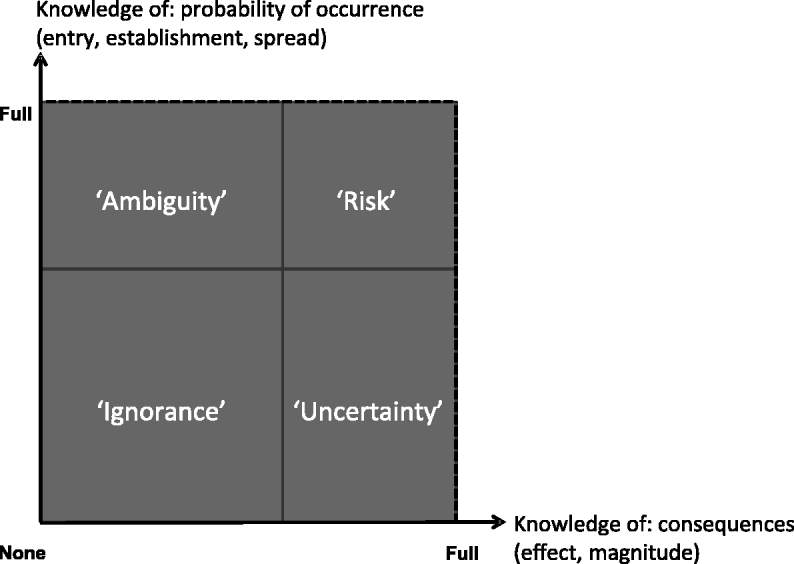
As mentioned, risk in the general sense is correctly defined along the dimensions of (i) consequences of a contingency, and (ii) of probability (or likelihood) of occurrence of that contingency. The dimension consequences is better understood as a function of the nature (form or type) of the outcome/effect,Footnote 104 and its magnitude (severity or impact). Following ESTO (1999), Figure 2 above spans a matrix over these two dimensions, and so allows for variable levels of factual certainty.
Concepts of ‘incertitude’ in risk management
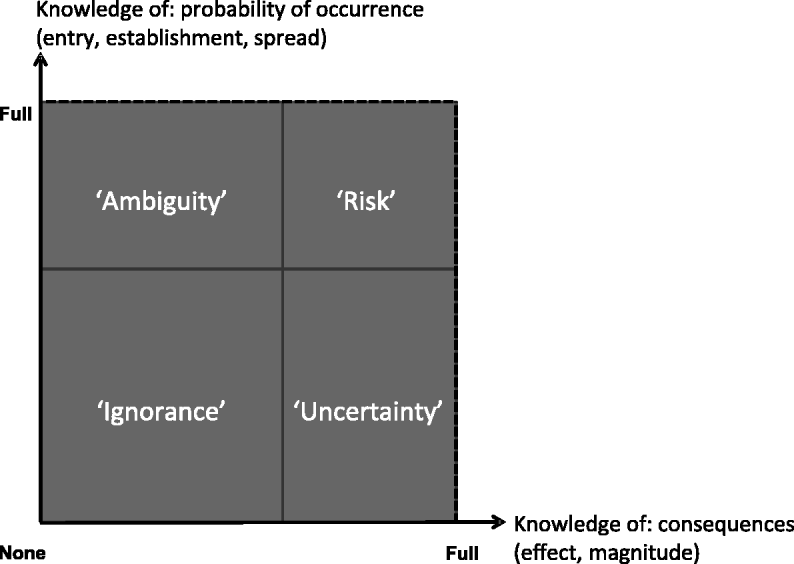
On the x-axis (the horizontal dimension), we plot knowledge of, or certainty about, consequences. The x-axis informs how well a comprehensive set of consequences can be circumscribed, that is how well the nature of outcomes, or effects, can be predicted, how precisely causal mechanisms can be defined, and how accurately magnitudes, or impacts, can be predicted. On the y-axis (vertical dimension), we depict knowledge of probability of occurrence, which in the SPS context usually means knowledge of probability of entry, establishment, and spread of pests, diseases, toxins, food stuffs, or contaminants.Footnote 105 This dimension effectively asks whether the likelihood with which a contingency is occurring can be characterized. The axes of Figure 2 have two conceptual endpoints, namely ‘None’ (no knowledge/total uncertainty) and ‘Full’ (full knowledge/complete certainty). In between these extremes lie various gradations of knowledge or certainty. We distinguish four archetypes of ‘incertitude’:
• In a situation where there exist credible grounds for the assignment of a discrete probability to each possible outcome within a well-defined set of outcomes, a risk assessor faces the paradigm condition of ‘risk’ (in the narrow sense).Footnote 106 Where it is possible to define in quantitative terms both a comprehensive set of all possible outcomes and the probabilities across this array of outcomes, unrestricted risk can easily be assessed, and various risk-management alternatives be compared.Footnote 107
• ‘Uncertainty’ (in the strict sense of the term) applies to situations, where there is confidence in the completeness of the defined set of outcomes, but where there is no or inexact theoretical or empirical basis for the assignment of probabilities to the individual outcomes.Footnote 108
• In circumstances where there not only exists no basis for assigning the probabilities (as under ‘uncertainty’), but where the definition of a complete set of outcomes, magnitudes, or causal mechanisms is also problematic, a condition termed ‘ignorance’ prevails. In a state of ‘ignorance’, it is always possible that outcomes occur, whose magnitudes are unknown, whose causal links to the contingency are incompletely understood, or whose general existence has never been anticipated in the first place.Footnote 109
• The final category concerns situations in which the definition of a comprehensive set of outcomes (including magnitude and causal mechanisms) is identifiable, but not calculable, yet where there is good indication of probabilities of occurrence. This category shall be termed ‘ambiguity’.Footnote 110
In sum, while ‘risk’, in the technical sense, deals with what may be termed ‘known knowns’, there are other important concepts of ‘incertitude’ in the real world, namely ‘uncertainty’ and ‘ambiguity’ (‘known unknowns’), and ‘ignorance’ (‘unknown unknowns’). As will be shown below, for the risk assessor charged with evaluating unrestricted risk and comparing different risk-management alternatives, the presence of factual uncertainty in the two dimensions, occurrence and consequences, poses a number of significant practical and theoretical problems.
4.1.2 Theoretical and practical problems of risk appraisal in the presence of ‘incertitude’
Whether they want it or not, risk assessors charged with examining sanitary and phytosanitary risk must find ways of dealing with all types of ‘incertitude’. Below, we will describe theoretical and practical problems faced by risk assessors and describe what aspects of uncertainty they can and cannot address.
(i) Theoretical and practical problems of risk appraisal in situations of complete knowledge (situations of ‘risk’)
We start with problems that occur in situations of complete (or sufficient) knowledge about outcomes and probabilities – the paradigm referred to above as ‘risk’. Even under such circumstances of relative factual certainty, the risk assessor has to struggle with two fundamental problems, namely (i) multidimensionality and (ii) incommensurability of the manifestations of different types of risk. These two problems lead to what has been termed ‘Arrovian uncertainty’,Footnote 111 the impossibility to definitively aggregate preferences and to rank alternatives in a pluralistic society.Footnote 112
The problem of multidimensionality becomes evident once it is acknowledged that there are different classes of outcomes, or risk factors, to be considered in situations of risk.Footnote 113 And within each broad class of effects, there are usually a multitude of relevant subgroups of hazards.Footnote 114 Moreover, effects can be assessed from the vantage point of various stakeholder groups – that of consumers, producers, using industries, pregnant women, the health-impaired, etc. – and at different levels of aggregation – local, regional, national, international.
Another aspect of multidimensionality relates to the different dimensions in which the magnitude of different classes/types of effects can be measured. The size of the impact of any one risk factor can be appraised in dimensions such as severity (e.g., number of deaths or injuries), immediacy (immediate or long-term effects), gravity (low probabilities of large impacts v. high probability of low impacts), reversibility (whether associated effects are reversible), controllability (whether effects can be controlled by affected parties), balance of burden (distributed v. centralized burden). These different dimensions along which magnitude can be measured cross-cut the different classes and types of individual effects, adding significant complexity to the appraisal of ‘incertitude’.
Notwithstanding the fact that, ideally, the set of outcomes should be as complete and comprehensive as possible, any risk assessor faced with a staggering multitude of risk factors, viewpoints, and dimensions naturally must make the decision as to which elements can reasonably be included, in order to keep the assessment manageable and controllable. In the real world, constraints on budgets, staff, information, computational resources, and response time, as well as a need for tractability make a comprehensive set of effects virtually impossible. Thus, it is ultimately a subjective decision of the risk assessor which classes and dimension of risk to include, and from whose viewpoint.
However, even if it were practically feasible to consider a complete or comprehensive set of outcomes, this still would pose another fundamental issue to the risk assessor, namely that of framing and prioritizing different (classes of) effects. For one, different risk classes have different metrics: whereas human health effects can be measured in terms of mortality, rate of infection, sick time, or other measures of human morbidity, economic effects are mostly measured in monetary terms. In addition, many classes of impact cannot even be measured in quantitative (cardinal) terms in the first place; they are irreducibly qualitative (nominal, or, at best, ordinal) in nature.Footnote 115
But even if some effort at quantification of qualitative effects is felt possible, the resulting values may nevertheless still be incommensurable in the sense that they cannot be reduced to a single measure of performance. Whenever types of effects cannot be converted into a single metric, it is practically impossible to objectively and definitively compare outcomes, because the relative priority attached to different types of effects is an inherently subjective value judgment.Footnote 116 Hence, for practical reasons, different outcomes are incommensurable if they cannot readily be collapsed into a single cardinal metric.
There is, however, a more fundamental problem exacerbating the assessment of risk. In a pluralistic society, it is also theoretically impossible to aggregate individual preferences in a rationally consistent fashion. As Kenneth Arrow demonstrated more than 40 years ago, there is no effective way to compare (i.e., aggregate in a single metric) utility across individuals or different groups in a society, even where social choices are addressed simply in ordinal (relative) terms.Footnote 117 As a result, whenever a collapse of outcomes into a single metric is not feasible, it is theoretically impossible to definitively aggregate preferences.
Even if it were possible to reduce all classes of effects in connection with a certain risk to a single metric (say, in monetary terms), it is still questionable whether members of a society could agree on the relative weight and ranking of different risk dimensions in which magnitude is measured, such as gravity, severity, immediacy, or fairness.Footnote 118
In sum, the problems of multidimensionality and incommensurability unavoidably give rise to Arrovian uncertainty, making a definite aggregation of preferences difficult, even impossible at times. Different individuals quite reasonably draw fundamentally different conclusions about the sanitary and phytosanitary risk of different risk-management options, because they have different – yet equally legitimate – perspectives. There is no single ‘objectively correct’ outcome of a risk analysis.Footnote 119
The practical implications of multidimensionality and incommensurability are significant degrees of variability in appraisal outcomes;Footnote 120 and ambiguity in ranking of alternatives.Footnote 121 According to ESTO (1999: 15), the manifest variability in results and the ambiguity in rankings expose a striking disjuncture between the precision with which single risk assessments report their results, and their accuracy. However, the fact that different studies often report vastly different appraisal outcomes need not be driven by any single factor, nor the degree of diligence with which risk analyses were conducted. Rather, differences in results across studies often are an outflow of different methodological set-ups, that is the inclusion of different classes of effects, of the adoption of different – but equally scientifically valid – assumptions, and of the ranking given to the multitude of different dimensions of risk.
(ii) Ways of dealing with Arrovian uncertainty
What lessons can be learned for the risk assessor who is tasked with drafting a risk analysis and who appreciates that Arrovian uncertainty is genuine to any risk assessment, no matter how reliable available scientific evidence may be?
First, the above discussion would counsel against a purely quantitative, unidimensional, and overly analytical approach to risk assessment. Exclusively probabilistic characterizations of risk often ignore many crucial respects, because they cannot capture the multifaceted nature of risk.Footnote 122
Second, it seems advisable not to sacrifice effects that are qualitative in nature, or that are difficult to compare, for those that are easily measurable, and vice versa.Footnote 123
Third, risk assessors should avoid conflation of incommensurable properties in appraisal. Using multiple metrics can allow risk assessors to appraise each individual aspect of performance using whatever seems the most appropriate yardstick.
Fourth, even those risk assessments that are ultimately purely quantitative in nature should be complemented with sufficient qualitative explanation. The findings of the risk assessment should be accompanied by a systematic exploration of the choices and trade-offs taken, exposing relationships between different assumptions, and the associated relative importance of different options.Footnote 124
(iii) Theoretical and practical problems of risk appraisal in situations of incomplete knowledge of outcomes and probabilities of occurrence (situations of ‘uncertainty’, ‘ambiguity’, and ‘ignorance’)
The challenges faced by a risk assessor struggling with problems in connection with Arrovian uncertainty seem formidable. However, things may get even more difficult once we factor in ‘Knightian uncertainty’, that is situations where knowledge of outcomes and probabilities is increasingly limited.Footnote 125
Situations of ‘uncertainty’
Let us first relax the assumption of complete (or sufficient) knowledge of probabilities of occurrence, leading to a situation that we termed ‘uncertainty’ above. High degrees of certainty about probabilities of occurrence are commonly found in self-contained formal rule-based systems (such as games of chance), highly repetitive situations affecting a multitude of subjects in long-term stable systems (such as life insurance), or generally in situations where the past is a good predictor for future events.Footnote 126
In contrast, knowledge of probabilities is imperfect whenever there are no similar past events under comparable circumstances to draw from situations, that is when situations are incompletely understood, open-ended, and dynamic. This is typically the case:
• when causality chains are long and complex;Footnote 127
• when the causal mechanism between a contingency and the occurrence of a hazard is incompletely understood;Footnote 128 or
• when the probability of harmful consequences is dependent on external conditions and circumstances.Footnote 129
The presence of a situation characterized by ‘uncertainty’ has two immediate implications. First, situations of ‘uncertainty’ cannot be tackled with standard probabilistic approaches. Whenever the risk assessor is unable to determine a valid theoretical or empirical basis for the assignment of probabilities, the remaining analytical toolbox is less well equipped, forcing the assessor to shift from purely probabilistic approaches to those that actually embrace uncertainty, such as Bayesian updating or sensitivity analysis.Footnote 130 These analytical tools are not less ‘scientific’, systematic, or rigorous; they are more robust in addressing the underlying uncertainty. However, this robustness comes at the cost of less precision in formulating results.
Second, whereas different risk-mitigation options under appraisal may still be broadly characterized,Footnote 131 it is difficult to rank them. An ordering of risk-mitigation alternatives, even in relative terms, is impossible without some knowledge of the relative likelihoods at which the different effects under consideration occur.
Situations of ‘ambiguity’
In situations of ‘ambiguity’, the set of outcomes cannot be conclusively defined, although there is (sufficient) knowledge concerning the probabilities of occurrence. This is typically the case in situations where the scope of possible effects is known, but their magnitude is uncertain or unknown. As with ‘uncertainty’, the analytical toolkit of probabilistic risk assessment is not effective in situations of ‘ambivalence’. The risk assessor, however, may apply fuzzy logicFootnote 132 or scenario analysis.Footnote 133 As with ‘uncertainty’, a ranking of outcomes is a challenging task in situations of ‘ambiguity’. Any attempt at ranking options requires some knowledge of the relative magnitude of the different effects under consideration. Where such ranking of magnitudes is not possible, a ranking of options cannot be completed, either.
Situations of ‘ignorance’
A state in which there exist neither grounds for the assignment of probabilities, nor a solid basis for the definition of a comprehensive set of outcomes is denoted as ‘ignorance’. It may occur in the form of ‘surprise contingencies’, that is in the form of effects whose very existence were previously unforeseen.Footnote 134 The analytical toolkit for risk appraisal in situations of unforeseen contingencies is virtually empty: no risk assessor can qualitatively or quantitatively assess hazards whose existence it previously was not privy to. This means that different risk-mitigation strategies cannot be meaningfully compared. All that risk assessors can do is to resort to measures of precaution.Footnote 135
Situations of ‘ignorance’, however, may also arise in circumstances where outcomes are identifiable, but inexplicable. Here, all effect classes are correctly predicted (there are no ‘surprise’ events), but there is no precise knowledge that these classes are consequences of the occurrence in question. There is uncertainty over the precise causal mechanism and thus the magnitude of such effects and their probability of occurrence.Footnote 136 Equally, where a risk assessor decides to take into consideration relevant additive, cumulative, and synergistic relationships between different effects, precise statements of magnitudes and likelihoods of occurrence are unlikely, again resulting in a state of ‘ignorance’.Footnote 137 Finally, ‘ignorance’ prevails whenever a risk assessor attempts to evaluate a variety of incommensurable effects and each type of effects defines a scale of possible states. In such instances, it is daunting, if not impossible, to characterize outcomes and likelihoods with any certainty.Footnote 138
Many sophisticated techniques of risk assessment fail – both in principle and in practice – to successfully tackle the condition of ‘ignorance’. To address situations of ‘ignorance’, risk assessors occasionally use matrix analyses and multicriteria techniques, although qualitative approaches oftentimes seem more apt to deal with the inherent uncertainties. As a matter of theory, a ranking of alternative risk-management options in situations of ‘ignorance’ is not feasible without basic knowledge of the relative likelihoods and magnitudes of the different effects under consideration.
(iv) Ways of dealing with Knightian uncertainty
What lessons can be drawn from this review of the literature on high degrees of factual uncertainty over outcomes and probabilities of occurrence?
First, regulators and policymakers are far more often confronted with situations of ‘ambivalence’, ‘uncertainty’, and ‘ignorance’ than one might expect. Indeed, in the realm of SPS the imponderables associated with GMO, cloning, endocrine disruptors, or BSE may be argued to render ‘ignorance’ and ‘uncertainty’ dominant conditions in the management of sanitary and phytosanitary risk and regulation.Footnote 139
Second, it is worth reemphasizing that situations of Arrovian uncertainty (as explained, uncertainty resulting from the problems of multidimensionality and incommensurability) are independent from, and additional to, those of Knightian uncertainty (uncertainty over outcomes and probabilities). This may require the risk assessor to address both types of uncertainty in the analysis of incertitude and different risk-management options.
Third, risk assessors should acknowledge that ‘incertitude’ is a much more multifaceted and complex phenomenon than that of ‘risk’ in the narrow sense. Importantly, risk assessors should refrain from shoving the square peg of a probabilistic risk assessment into the round hole of appraisal of ‘incertitude’. Given the manifest inapplicability of standard probabilistic techniques in the context of ‘uncertainty’, ‘ambiguity’, and ‘ignorance’, risk assessors should resist the intuitive appeal of the elegance and facility of probabilistic calculus which may produce precise, but ultimately worthless results.Footnote 140 Reductionism does not make the analysis more correct or more scientific. Instead, fourth, risk assessors ought to embrace the complexity of the situation at hand by acknowledging, characterizing, and articulating the kind of incertitude they are facing. They should then adapt their appraisal to the complexity of the situation at hand: analytical methods such as scenario analyses, sensitivity analyses, fuzzy logic, multivariate approaches, or qualitative appraisals are no less ‘scientific’ than utilizing probabilistic instruments, but potentially yield more robust results. Risk assessors also should acknowledge and address the subjectivity and variability ingrained in their choices by giving detailed account of the way they chose, framed, and prioritized their appraisal criteria. Though this places very demanding requirements on the process of appraisal, it ultimately makes the outcomes more tractable and transparent.
Fifth, risk assessors should invest in gathering more and higher-quality scientific evidence to help them overcome uncertainties and to further substantiate their assessments. However, recognizing that there are limits to what can be quantified and compared, risk assessors should also invest in new methodologies and research tools that help them better address inevitable factual uncertainties.
Finally, in some situations, however, factual uncertainty reaches a level, at which the risk assessor can no longer rely on a formal risk assessment.Footnote 141 When such a threshold point is reached and different risk-mitigation options no longer can be sensibly compared by means of qualitative or quantitative analysis, the risk assessor may resort to the adoption of precautionary measures.Footnote 142
Figure 3, on the next page, summarizes the different approaches to be considered by risk assessors when appraising different situations of ‘incertitude’. Evidently, the borders between the four archetypes are blurry and largely subjective. So are the analytical risk-assessment instruments, applied by each risk assessor:Footnote 143 depending on the contextual circumstances, its access to scientific information, level of sophistication, and attitude to risk, a risk assessor may choose what it deems to be the most appropriate risk-appraisal instrument. Alternatively, it may opt to take precautionary measures.
Ways of assessing different types of incertitude

4.1.3 Implications from the theoretical literature on ‘incertitude’ for reviewing bodies: recommendations regarding the proper SoR
As was shown in the previous subsection, the creation of a risk assessment can be a risky business. Our systematic analysis of these ‘risks of risk appraisals’ now enables us to formulate a series of recommendations for those external entities charged with reviewing the results of risk appraisals.Footnote 144
Again, we start with a discussion of Arrovian uncertainty, which may even occur in situations of complete knowledge of consequences and probabilities. This uncertainty, and the problems of multidimensionality and incommensurability of outcomes it entails, may lead to variable risk-appraisal results and to ambiguous ranking of risk-mitigation options. As explained, such variability often is an outflow of the inevitable subjectivity in the trade-offs that the risk assessor has to make in order to keep the analysis manageable. And it is this subjectivity that may end up driving the results. For practical and theoretical reasons, there is no one ‘right’ or ‘objectively best’ outcome of any risk appraisal. Hence, any reviewing body should exercise caution when assessing the results of a risk assessment. Instead of calling into question those elements of a risk assessment that are necessarily subjective, reviewing bodies should rather call on aspects of the risk assessment that are objectively verifiable.
Based on the economic theory reviewed above, an external reviewing body should refrain from challenging the risk assessor's choice concerning:
• the basic methodological set-up (e.g., whether to conduct a quantitative, semi-quantitative, or a qualitative assessment, or whether to conduct a scenario analysis instead of a purely probabilistic risk assessment);
• which basic classes and subcategories of effects it wishes to include in its assessment;
• from whose vantage point and at what level of aggregation effects should be measured;
• the level of detail with which it depicts chains of cause and effect and chains of probability of occurrence;
• the dimensions in which to measure the magnitude of risk;
• whether to include direct or indirect effects;
• whether to consider additive, cumulative, synergistic effects;
• how to prioritize and weigh different risk dimensions/factors;
• the choice of metric used for measuring certain effects; and
• how the risk assessor aggregates interpersonal utility across different individuals and groups of society.
All these basic, and at the same time necessarily subjective, elements should be considered ‘off limits’ for the reviewer. The reason lies in the fundamental subjectivity inherent in any risk appraisal. The risk assessor's choices and trade-offs reflect certain values, cultural and societal traits, a particular attitude to risk, budgetary or computational constraints, and/or historical factors. No external reviewer can rightfully claim that its own values, choices, and trade-offs would be more scientific, objective, or rational, as compared to the risk assessor's. Hence, the risk assessor's basic choices should not be subject to challenge by an uninvolved third party.
This, however, does not mean that a reviewing body is obliged to take the risk assessment for granted. Yet, instead of challenging the methodological set-up and the initial choices and trade-offs the risk assessor opted for, the reviewing body should focus on (i) the quality of the execution; (ii) the internal coherence; (iii) the scientific grounding; and (iv) the presentation of the risk assessment.
The reviewer should assess the execution and implementation of the risk analysis. The search for calculation errors and other operational glitches falls into this category. It is also appropriate for the reviewing body to examine the coherence of the adopted scheme. This includes an evaluation whether there are gaps and overlaps between different classes of effects that the risk assessor recognized for purposes of the analysis, or gaps and overlaps between different probability chains.Footnote 145 It also seems within the remit of the reviewer to examine whether there are any shifts in vantage points.Footnote 146 The reviewer should determine whether outcome scenarios or sensitivity tests are applied in a coherent fashion, or rather selectively, so as to influence outcomes of the appraisal.
Next, the reviewer should assess the scientific basis underlying the risk assessment, both with respect to the magnitude of effects included, and to the associated probabilities of occurrence.Footnote 147 As part of that task, the reviewer should also consider ‘missing factors’ and ‘hidden variables’ in the risk assessor's causality chains that may drive the outcomes. This may be done by consulting the scientific literature on whether the risk assessment at issue omits effects, magnitudes, and partial probabilities that have been described as important. Unless the risk assessor explains in detail why a certain factor was excluded from consideration, such omission should be held against the risk assessor.
Whenever the risk assessor attempted to ‘compress’ different outcome classes into a single metric, for example mortality rates into monetary costs, the reviewing body should scrutinize this process to see whether the conversion accords to scientific conventions.Footnote 148 In cases in which inherently qualitative (and ordinal) effects are included, a reviewing body may wish to check how the appraisal avoided a disproportionate emphasis on the more quantifiable (cardinal) aspects.Footnote 149
Fourth, a reviewing body should also pay close attention to the presentation of the risk assessment. As discussed above, the risk assessor's choice of effects and dimensions of risk are subjective by default. It should thus make efforts to explain in detail the rationale behind the basic choices taken, particularly with respect to the dimension of consequences, causality mechanisms, and probability chains assumed. A reviewer should feel free to scrutinize the risk assessment for transparency, tractability, and comprehensibility.
Thus far, we have drawn conclusions concerning external review in situations of Arrovian uncertainty. These conclusions are valid for every risk assessment, regardless of the level of factual uncertainty the risk assessor is facing. In a next step, we add the possibility of Knightian uncertainty and formulate additional recommendations for reviewing bodies.
In general, the greater the degree of factual uncertainty over probabilities and/or outcomes, the more difficult it is for a reviewing body to evaluate the ‘correctness’ of the risk assessment. One way of reacting to high levels of uncertainty for the reviewer is to conduct a de novo review.Footnote 150 Another route is to shift the energies from examining the substance of the assessment towards examining its process. If the reviewer opts for the latter approach, it should not concentrate on the question whether the risk assessment is correct, but whether it is correctly conducted.
As indicated, one issue of substance that should be deemed ‘off limits’ for review is the risk assessor's general decision to take precautionary measures, rather than performing a risk assessment at all.Footnote 151 This, however, is not to say that the reasons for this choice, once taken, are not subject to scrutiny by an external reviewer.Footnote 152
When faced with a risk assessment allegedly performed in the presence of high factual uncertainty, the reviewer, as an initial matter, should distinguish ‘real’ knowledge gaps from ‘fake’ gaps. Where the risk assessor claims factual uncertainty over certain consequences or probabilities, the reviewer should survey the literature to evaluate whether the alleged scientific gap really exists or maybe has been filled meanwhile.Footnote 153
To the extent alleged knowledge gaps are ‘real’ and have not hitherto been addressed by science, the risk assessor is forced to ‘bridge’ the existing gaps in knowledge. In so doing, the risk assessor may become a genuine generator of science, not just a user.Footnote 154 This process of filling scientific gaps should be required to satisfy the minimum requirements of ‘science’, that is ‘a process characterized by systematic, disciplined and objective enquiry and analysis, that is, a mode of studying and sorting out facts and opinions’.Footnote 155 In the presence of ‘real’ scientific gaps, the reviewing body should then assess whether the process of the risk assessment is sufficiently scientific in nature. It ought to ask whether the reasoning is coherent and adequately explained.Footnote 156 For instance, the reviewer may scrutinize the logic with which causal mechanisms and processes of probability chains are hypothesized and explained by the risk assessor. If these explanations are found to be coherent and sufficiently grounded in the scientific principles, evidence, and data, then the assessment deserves trust. On the other hand, if the reasoning is patchy, the assessment jumps to conclusions, or features ‘black boxes’ with opaque links between causes and effects, the credibility of the risk assessment suffers.
Whenever a reviewer is charged with evaluating the risk assessor's ranking of risk-mitigation alternatives, or with assessing alternatives previously not considered by the risk assessor, such alternatives can reasonably be examined only against the original methodology applied by the risk assessor. This is an important result. As shown above in the context of Arrovian uncertainty, different but equally scientific risk assessments may yield different rankings of risk-mitigation outcomes due to the inherent subjectivity of the exercise. In situations of high factual uncertainty, an objective ranking of alternatives is even more difficult to ascertain, since something that is not known with certainty cannot be ranked with certainty, either.Footnote 157 When charged with an assessment of the ranking of risk-mitigation options, an external reviewer should be cognizant of the inevitable subjectivity in connection with risk-management options. In practical terms, this means that the reviewer should evaluate risk-mitigation alternatives against the yardstick of the original framework intended and designed by the risk assessor.
4.2 Australia–Apples and the standard of review under factual uncertainty
We are now ready to return to the Australia–Apples case. While Australia considered the scientific evidence available to be sufficient to perform a risk assessment, it also claimed that the presence of ‘scientific uncertainty’ made the conclusion of the IRA particularly difficult.Footnote 158 The IRA is thus a good example of a risk appraisal performed in a situation characterized by high levels of factual uncertainty. In this subsection, we compare the AB's findings in the Australia–Apples dispute with the insights gathered from our theoretical discussion in Subsection 4.1 above. In particular, we discuss the AB's pronouncements on the applicable SoR under Articles 2.2, 5.1, 5.2, and 5.6 of the SPS Agreement and on the use of Panel-appointed experts, and assess whether this SoR allows Panels to adequately deal with situations characterized by high degrees of factual uncertainty.
(i) Evaluation of the Appellate Body's approach to the standard of review under Articles 2.2, 5.1, and 5.2 of the SPS Agreement
We are concerned in this paper with the AB's methodology regarding the SoR of Members' risk assessments, not with the conclusions reached by the AB in response to the litigating parties' appeals (we note that we largely agree with the AB's ultimate findings). After our survey of the risk-management literature, the AB's line of reasoning with respect to the SoR under Articles 2.2, 5.1, and 5.2 deserves some critical attention. Specifically, two issues warrant more detailed discussion. First, we believe that the AB's heavy reliance on the SoR, as formulated in US/Canada–Continued Suspension, is misplaced, because that test is unable to appropriately address situations of factual uncertainty, as present in the Apples dispute. Second, the current Continued Suspension SoR lacks concrete guidance to future Panels faced with reviewing risk assessments conducted in situations of high factual uncertainty.
In its appeal of Articles 2.2, 5.1, and 5.2, Australia questioned a number of aspects of the Panel's interpretation of the SoR of Australia's risk assessment, the IRA.Footnote 159 In particular, Australia claimed that (i) the Panel was in legal error by reviewing intermediate findings by the IRA (instead of focusing on the final outcome); (ii) due to the presence of considerable scientific uncertainty, the phrase ‘as appropriate to the circumstances' in Article 5.1 should have been interpreted such as to provide the IRA experts with substantial flexibility in the way Australia conducted the IRA; and (iii) the Panel should have examined expert opinion in the same way as it assessed scientific evidence in general: according to Australia's interpretation of the standard recognized in US/Canada–Continued Suspension, the Panel should have reviewed only whether expert judgment falls within a range ‘considered legitimate by the standards of the scientific community’.Footnote 160
The AB rejected all of Australia's appeals. It thereby based its argumentation on the three-step SoR it had articulated in US/Canada–Continued Suspension.Footnote 161 Acknowledging that ‘we have not been requested to decide whether the Panel properly assessed the underlying scientific basis that was used by the IRA to support its reasoning and conclusion’Footnote 162 (the first prong of Panels' review of a risk assessment), the AB set out to give a lengthy interpretation of the second prong of the Continued Suspension SoR. This second prong of review requires Panels to:
assess whether the reasoning articulated on the basis of the scientific evidence is objective and coherent. In other words, a panel should review whether the particular conclusions drawn by the Member assessing the risk find sufficient support in the scientific evidence relied upon.Footnote 163
Our first concern about the AB's reasoning relates to its excessive reliance on the SoR established in Continued Suspension. While it may apply satisfactorily to the risk assessment conducted in the presence of complete scientific certainty, the Continued Suspension test does not seem well suited to address circumstances of increased factual uncertainty. In particular, it fails in situations where the risk assessor falsely claims the existence of a knowledge gap (a ‘fake’ gap); and in those instances where the risk assessor creates genuine science, i.e. where expert opinion effectively substitutes scientific evidence (in a situation where there is a ‘real’ knowledge gap).
The context in Continued Suspension was one of factual certainty, because the link between the hormones at issue and the claimed effects was effectively established by the scientific studies the European Union relied upon.Footnote 164 Therefore, the first two steps of the Continued Suspension test were appropriate – in that very context: where there exists reputable (minority) scientific evidence to confirm the risk assessor's ultimate conclusions (first prong), the Panel must ensure that the conclusions contained in the scientific studies relied upon are not incoherent, or in conflict, with the conclusions drawn by the risk assessor (second prong).
Yet, in instances where factual uncertainty prevails, as was the case in Apples, there is by definition a disconnect between the available scientific evidence and the risk assessor's conclusions – in short, there are knowledge gaps in various parts of the analysis. To assess whether the risk assessor has properly addressed these knowledge gaps, that is whether the reasoning articulated in the risk assessment is objective and coherent, a Panel cannot be limited to review only the scientific evidence relied upon by the risk assessor, as the above quote prescribes. The Panel should also review the scientific evidence not relied upon by the risk assessor in order to evaluate whether the alleged knowledge gap is ‘real’ or ‘fake’.
No less than 12 times did the AB repeat the Continued Suspension language on ‘whether the conclusions find sufficient support in the scientific evidence relied upon’,Footnote 165 before it seems to have realized that its reliance on the Continued Suspension SoR was too confining, and ultimately an inappropriate guideline for Panels having to assess a risk assessment conducted in the presence of factual uncertainty. Hence, in paragraph 236, and again in paragraphs 240 and 241 of its Report, the AB, somewhat clandestinely, added a new facet to the SoR of Members' risk assessments, stating that:
if a risk assessor reaches certain conclusions based on its expert judgement, having determined that there is a certain degree of scientific uncertainty, this does not preclude a panel from assessing whether those conclusions are objective and coherent and have a sufficient basis in the available scientific evidence.Footnote 166
The discretion to review available scientific evidence much better suits Panels' needs in situations of factual uncertainty, since it allows them to determine ‘fake’ scientific gaps, that is where the responding Member falsely claimed the presence of scientific uncertainty.Footnote 167 However, the emphasis on ‘available scientific evidence’, directly taken from Article 5.2 of the SPS Agreement,Footnote 168 is clearly in conflict with the language on ‘scientific evidence relied upon’ used in Continued Suspension.
The Continued Suspension SoR is also unhelpful to address instances of ‘real’ knowledge gaps, that is where the risk assessor's expert judgment effectively helps bridge areas of true factual uncertainty by creating genuine scientific evidence. The AB stated that:
when the exercise of expert judgement forms an integral part of the risk assessor's analysis, then it should be subject to the same type of scrutiny by the panel as all other reasoning and conclusions in the risk analysis.Footnote 169
If by ‘the same type of scrutiny as all other reasoning and conclusions’ the AB means that the risk assessor's expert judgment should be a scientific process that is objective and coherent,Footnote 170 the above statement is correct. If, however, the AB takes ‘the same kind of scrutiny’ to mean that the expert judgment should ‘find sufficient support in the scientific evidence relied upon’, we do not find this statement helpful. Where ‘real’ gaps in knowledge exist, risk assessors may not necessarily ‘rely upon’ scientific evidence the way that the European Union did in Continued Suspension. Instead, the risk assessor may perform basic research and produce authentic science, thus furthering the frontier of scientific knowledge. In such circumstances, rather than checking the results against the evidence ‘relied upon’, a Panel ought to ask whether this original research satisfies the established standards of a scientific process. A Member's gap-filling exercise should not be denied the status of ‘science’, or ‘scientific evidence’, simply because the Panel fails to see a connection to the concrete scientific evidence ‘relied upon’. Where the risk assessor performs authentic and genuine science, its findings – if properly conducted – substitute scientific evidence, rather than relying upon it.Footnote 171
Our second concern about the AB's SoR as it pertains to Articles 5.1 and 5.2 is that it does not seem to provide a reliable roadmap to future Panels for the evaluation of risk assessments in the presence of factual uncertainty. On the one hand, the AB in Australia–Apples repeated its opinion originally pronounced in its reports in EC–Hormones and US/Canada–Continued Suspension that:
a panel's task is to review a WTO Member's risk assessment and not to substitute its own scientific judgement for that of the risk assessor. A panel should not, therefore, determine whether the risk assessment is correct, but rather ‘determine whether that risk assessment is supported by coherent reasoning and respectable scientific evidence and is, in this sense, objectively justifiable’.Footnote 172
At the same time, however, the AB seemingly rubber-stamped the Panel's complete ‘unpacking’ of the IRA. While stopping short of a de novo review, the Panel deemed it within its competence to review every relevant aspect of the IRA. The Panel's review included both substantive and procedural aspects, and comprised of an evaluation of the basic methodological set-up; fundamental assumptions and qualifications; omitted scientific evidence; probability intervals and density functions; various probability factors and impact scores; omitted classes of effects; missing justifications; documentation and transparency issues; etc.Footnote 173 The AB approved of the Panel's review of all these elements.
Hence, apart from the general prohibition for Panels to conduct their own risk assessments, we have difficulties finding any explicit language in the AB Report that would curb Panels’ power of review.Footnote 174 Yet, if no element of a Member's risk assessment is ‘off limits’ for review by the Panel, and every part of the analysis can be scrutinized, how does this not amount to a finding that the entire risk assessment is incorrect – something that the AB explicitly prohibited Panels from doing? We do not see this tension resolved in the AB Report in Apples. Explicit language is missing that would provide future Panels with guidelines and principles on which parts and elements of the risk assessment at issue cannot or should not be subject to Panel scrutiny.
To sum up, we are uncomfortable with the current SoR as it pertains to Members’ risk assessments in the presence of increased factual uncertainty. Based on these concerns, we propose a modification of the SoR of Articles 5.1 and 5.2 that applies to contexts of factual certainty and factual uncertainty alike.
The first question a Panel should address is: Does the responding Member invoke the presence of substantial factual uncertainty? If this is not the case, then we are in a situation of relative factual certainty. The three-prong SoR pronounced by the AB in its Report on Continued Suspension generally seems appropriate in such a case, with an important modification, however. In light of the discussion of the inevitable Arrovian uncertainty, Panels should be reminded to exercise caution reviewing the basic parameters of the risk analysis, that is the methodological set-up and structure, the choice of effect classes, vantage points, and risk dimensions and their relative weighing and ranking, and the choice of metric. Instead, Panels should focus on the quality of the execution, the internal coherence, the scientific grounding, and the presentation of the risk assessment.Footnote 175
If the responding Member claims to have conducted its risk analysis in the presence of considerable factual uncertainty (as Australia did), the Panel, in a next step, should determine whether the alleged scientific gaps are ‘real’ or ‘fake’. Together with its appointed experts, the Panel should evaluate whether the Member, in performing its risk assessment, ignored available scientific evidence, or whether the risk assessor was correct in claiming uncertainty. If Panel and external experts together conclude that the risk assessor substituted its own judgment for available scientific evidence (a ‘fake’ gap), then the reasoning of the risk assessor is not objective and coherent.
Where Panel and Panel-appointed experts determine the existence of a ‘real’ gap in scientific knowledge, the Panel should move on to a three-step process, in which it determines whether the risk assessment: (i) is sufficiently rooted in (‘based on’) scientific principles; (ii) satisfies the minimum requirements of ‘science’; (iii) warrants the SPS measure at issue.
Although, strictly speaking, step one is a natural element of any scientific process (step two), we separate the two for expositional purposes. The task of the Panel in step one is to assess whether there is a ‘rational and objective relationship’Footnote 176 between the risk assessment and the scientific principles relied on by the risk assessor. The reference to ‘scientific principles’, language contained in the text of Article 2.2,Footnote 177 constitutes broader language than the reference to ‘scientific evidence’, as used in Continued Suspension. This would allow the Panel to review situations in which the risk assessor performs genuine science that is not, or not yet, regarded as ‘existing scientific evidence’.
In step two, the Panel should ensure that the risk assessment satisfies all the criteria of a scientific process, despite the presence of factual uncertainty. In other words, the Panel should evaluate whether the process is systematic, disciplined, analytical, transparent, objective, and well-documented.Footnote 178 This would allow the Panel to evaluate whether the reasoning of the risk assessor is coherent and objective, as required by the AB in US/Canada–Continued Suspension.Footnote 179 Step three is the same as that under the current SoR.Footnote 180
Figure 4, on the next page, summarizes our proposal for a modified SoR of a Member's risk assessment. In our opinion, this SoR is fully compatible with the wording of Articles 2.2, 5.1, and 5.2 of the SPS Agreement. It constitutes moderate, but substantial, development of the SoR actually applied by the AB in Australia–Apples.
Suggestion for a modified standard of review under Articles 5.1 and 5.2

(ii) Evaluation of the Appellate Body's approach to the standard of review under Article 5.6 of the SPS Agreement
According to Article 5.6 of the SPS Agreement, Members shall ensure that their SPS measures are not more trade-restrictive than required to achieve their appropriate level of sanitary or phytosanitary protection. In Australia–Salmon, the AB pronounced a three-prong test to determine consistency with Article 5.6.Footnote 181 The Panel in Apples considered various alternative measures to limit the risk of fire blight and ALCM proposed by New Zealand as candidates for less-trade-restrictive alternatives (LTRAs). For fire blight, New Zealand's proposed LTRA was identical to the ‘unrestricted risk’ scenario assessed by the IRA. For ALCM, the LTRA was a slight modification of one risk-mitigation option initially considered by the IRA.Footnote 182 The Panel determined that both of New Zealand's LTRAs satisfied the three-pronged test under Article 5.6.
Australia's appeal was confined to the second prong of the Article 5.6 test, namely the Panel's findings that the LTRAs put forward by New Zealand achieve Australia's ALOP.Footnote 183 Particularly relevant here is Australia's claim that the Panel misinterpreted and misapplied Article 5.6. According to Australia, the Panel excessively relied on its findings under Article 5.1 on the inadequacy of Australia's IRA.Footnote 184
The AB, in assessing the Panel's approach, found no basis for the Panel's approach of linking Article 5.6 to Australia's risk assessment. The AB ruled that the obligations set out in Article 5.1 and Article 5.6 are distinct and legally independent of each other. It determined that the Panel was required to undertake its own analysis of the question of whether the LTRAs proposed by New Zealand would achieve Australia's ALOP, and that this analysis was wholly independent of Australia's IRA.Footnote 185 In particular, the AB found that when considering the risk associated with the proposed LTRAs neither New Zealand nor the Panel was obliged to adopt the same methodology or structure as that employed by Australia for the IRA.Footnote 186
The Panel had passed the question whether New Zealand's LTRAs could achieve Australia's ALOP onto the Panel-appointed experts. The AB reprimanded the Panel for having done so. The AB noted that it felt:
certain reservations about the Panel having done so, given that this was the ultimate question that the Panel was charged with answering pursuant to Article 5.6. Experts may assist a panel in assessing … potential alternative measures, but whether or not an alternative measure's level of risk achieves a Member's appropriate level of protection is a question of legal characterization … Answering this question is not a task that can be delegated to scientific experts.Footnote 187
While we agree with the AB's ultimate finding that the Panel's two-step process was not justified by the text of Article 5.6 of the SPS Agreement, we have two concerns about the AB's characterization of Panels’ SoR under Article 5.6.
First, we find the fact that the AB mandates a Panel to ‘assess, itself, whether the alternative measures … meet [the respondent's ALOP]’Footnote 188 difficult to square with its earlier statements that ‘a panel is not well suited to conduct scientific research and assessment itself and should not substitute its judgment for that of the risk assessor’.Footnote 189 Comparing a risk-mitigation alternative against a country's accepted level of risk is quite a technical task, which, by the AB's own admission, is ‘scientific in nature’ and ‘must be based on scientific principles’.Footnote 190 In fact, also by the AB's own admission, this task is not unlike conducting a risk assessment.Footnote 191 We thus do not see how a Panel could get around conducting such research – a task that it is ‘poorly suited’ to perform, according to the AB.Footnote 192
This apparent contradiction is exacerbated by the above-quoted statement, in which the AB explicitly prohibits the Panel's external experts from giving answers to the ultimate ‘legal’ question whether a proposed LTRA meets a respondent's ALOP.Footnote 193 If Panels lack the competence to deal with complex technical questions, but expert input is curbed, this seems like an odd place for Panels to be in. In situations of increased factual uncertainty, we believe that Panels should make more, not less, use of its outside experts.
Second, we are puzzled by the AB's finding that, when it comes to assessing LTRAs, neither complainants nor dispute Panels are in any way bound by the methodological framework, structure, and overall approach taken by the original risk assessor. Proposing an LTRA is tantamount to suggesting that this alternative has a higher rank than the respondent's acceptable risk threshold. In Subsection 4.1.2, we explained that due to the problems of multidimensionality and incommensurability (Arrovian uncertainty) and those of uncertainty of outcomes and probabilities (Knightian uncertainty), a ranking of risk-mitigation options is difficult, at times even impossible. Based on findings by the risk-management literature, we suggested that any ranking of alternatives, at the very least, should be assessed within the realm of the methodological framework utilized by the risk assessor.Footnote 194
For these theoretical reasons, we think that New Zealand was right in proposing as LTRAs two alternatives that Australia itself had previously discussed in its IRA. These alternatives could easily be assessed within the methodological framework of the IRA. We also believe that the Panel's intuition (though, as we have explained, not its execution) was correct, when it tied its evaluation of the LTRAs closely to the original IRA.
The AB seems to think that there is one ‘definitive’, or ‘objectively correct’ ordinal ranking of risk-mitigation alternatives, with some risk-mitigation options exceeding a country's ALOP, and others falling below, and that the complainant can simply prove that its LTRA exceeds the respondent's ALOP. However, the insights of the risk-management literature reviewed above militate against such a mechanistic, and ultimately facile, view. Due to the inherent subjectivity in every risk appraisal, and the necessary trade-offs to be performed by the risk assessor, no outside third party can claim to possess superior knowledge about which risk-mitigation alternatives are objectively ‘better’ than others.
We have doubts whether the drafters of the SPS Agreement intended to give the LTRA analysis of a third party (be it the complaining party or the Panel) precedence over the risk assessment of the country that originally imposed the SPS measure at issue. The AB may wish to rethink the SoR it proclaimed under Article 5.6 and should tie the complainant's prima facie case and the Panel's assessment of LTRAs closer to the methodology and structure of the respondent's initial risk assessment. The AB could do so by requesting the responding Member to rerun its risk assessment using the proposed LTRAs as risk-mitigation alternatives. This ‘new’ risk assessment should then be assessed according to the same SoR like the responding Member's original risk analysis.
5. Conclusion
In commenting on the Appellate Body Report in Australia–Apples, we discussed issues surrounding the standard of review of measures taken in situations that exhibit particularly high levels of factual or scientific uncertainty. In particular, we examined whether the SoR for risk assessments under Articles 5.1, 5.2, and 2.2 of the SPS Agreement should be more deferential towards the enacting Member which faces a relatively high degree of factual uncertainty, and which elements in the Member's risk assessment should be considered ‘off limits’ for review by Panels or the Appellate Body. We also assessed how higher degrees of factual uncertainty (should) affect a Panel's ability to assess less-trade-restrictive alternatives under Article 5.6 of the SPS Agreement.
Relying on findings from the disciplines of economics, decision analysis, and risk management, we introduced a basic framework for decisionmaking in conditions of uncertainty. We found that risk assessments performed in situations of scientific uncertainty necessarily contain subjective trade-offs on the part of the risk assessor. For theoretical and practical reasons, certain types of decisions taken by the risk assessor cannot – and therefore should not – be subject to external review.
Based on these theoretical insights, we evaluated the Appellate Body's review of Australia's risk assessment in the context of the Australia–Apples case, and suggested concrete modifications to the SoR currently applied by Panels and the AB.
With respect to the Appellate Body's standard of review under Articles 2.2, 5.1, and 5.2, we took issue with the AB's heavy reliance on the legal test it developed in US/Canada–Continued Suspension, because that test was developed to address situations of factual certainty, but is unable to appropriately address situations of factual uncertainty, as present in the Apples dispute. We concluded that the SoR as formulated in Continued Suspension lacks concrete guidance to future Panels when faced with the task of reviewing risk assessments conducted in situations of high factual uncertainty. We proposed certain modifications to the SoR of Articles 5.1 and 5.2 (and, consequently, also of Article 2.2) that are able to deal with contexts of factual certainty and factual uncertainty alike and is fully compatible with the wording of Articles 2.2, 5.1, and 5.2 of the SPS Agreement.
As regards the Appellate Body's review of less-trade-restrictive alternatives, we took issue with the AB's finding that neither complainants nor dispute Panels are in any way bound by the methodological framework originally chosen by the risk assessor. Our previous findings on decisionmaking in the presence of uncertainty suggested that any ranking of alternatives can only be meaningfully assessed within the realm of the methodological framework utilized by the risk assessor. Due to the inherent subjectivity in every risk appraisal, and the necessary trade-offs to be performed by the risk assessor, no outside third party can claim to possess superior knowledge about which risk-mitigation alternative is objectively ‘better’ than others. An external reviewer relying on its own methodology risks rejecting a ranking of alternatives that is conducted in a perfectly valid, precise, and scientific manner. Hence, we suggested that the AB may wish to rethink the SoR it proclaimed under Article 5.6 and should tie the complainant's prima facie case and the Panel's assessment of LTRAs closer to the methodology and structure of the respondent's initial risk assessment.