

In the 1930s the governments of Mexico and El Salvador proclaimed renewed political strength and national vitality. Both state-driven programs articulated separate nation-building projects, yet both revolved around the figure of the mestizo. The term mestizo, as many know, was derived from the seventeenth-century Spanish colonial caste designation for the progeny of a white European man and an indigenous woman. By the twentieth century, the term was rejuvenated and associated with acculturated Indians, detribalized peasants, and the mass politics of cacique populism, revolution, and state nationalism. Latin American mestizo nationalisms all rely on racial discourses of historical emergence and cultural progress, but they also have served statist power. Anti-Chinese politics was also a part of both nations’ revolutionary nationalisms and thus provides a chance to look at mestizo racial politics sideways by examining how and to what effect Orientalism had in these two very different contexts. This article asks what the differences between Mexican and El Salvadoran Orientalism can tell us about their respective mestizo nationalisms and the varying racial architectures of these modern Latin American states. Asian Americanists interested in Asian diasporas in Latin America have questioned the analytical methods of evaluating and comparing the divergent historical developments, multiple cultural expressions, and political techniques of this region’s Orientalist Sinophobia (Reference LeeLee 2005; Reference Parreñas, Siu, Parreñas and SiuParreñas and Siu 2007; Reference LoweLowe 2015). Studies of Hemispheric Orientalism, as termed by Erika Lee, are one way to analyze the Latin American racial state differently and thus expose the complicated but identifiable roles that racialized Asian difference plays in the cultural and structural features of mestizo hegemony.
Pioneered through studies of Afro-descended people in Latin America, the renaissance of mestizaje studies has had to reckon with mestizo identity as being defined by multiraciality, not just hybridity. The modern political identity of mestizaje has served to recognize the composite nature of the postcolony and the multiple nonwhite historical actors in its emergence. At the same time, mestizaje has served as a multiculturalist catch-all in which indigenous, ethnic, and racial difference is officially denied recognition (Reference HaleHale 2005). As other scholars have noted, Latin American blackness often serves as an ideological referent to a periodization in which colonial slavery is the only time/space in which racial blackness carried political significance (Reference BennettHerman 2009). Illustrating the community formation of Afro-descended peoples after slavery demonstrates the political life of racial difference amid an emergent mestizo political order, one which also worked to subordinate indigeneity. Sinophobia emanates from a different geohistorical formation and thus articulates an often overlooked dimension of the mestizaje conversation. The analytical value of an examination of Latin American Orientalism is not only that it illustrates how racialized Asianness took discursive and material form. It is also impactful because a study of racialized Latin American actors reveals how they differentially animate Orientalism on the basis of their subjective location within a stratified mestizo-dominant racial order. In other words, people use racial discourse for their own ends in ways that make sense to their local audiences and yet seek out different outcomes.
My recent book on the influence of anti-Chinese politics, or antichinismo, in the formation of Mexican mestizo national identity is a case study in the interracial dynamics of Latin American Orientalism (Reference ChangChang 2017). I argued that antichinismo predated mestizo nationalism in Mexico because it created political conditions for the mass incorporation of a diverse indigenous peasantry into institutions of state discipline. On the basis of this work, it would be wrong to assume that anti-Chinese politics in Mexico was merely borrowed from the United States or derived from exclusionary impulses from an embryonic mestizo nationalism prior to the 1910s. Showing the ways that antichinismo fostered peasant claims to citizenship as well as authorized the expansion of the administrative and political apparatus of the revolutionary government granted Mexican actors agency in the formation of their own racial state. The methods I use in Chino provide a road map for questioning how anti-Chinese politics plays out in other mestizo nationalisms. Did El Salvador follow the same path? Theories of anti-Asian transnational racial formations such as Arjun Appadurai’s Oriental “ideoscapes,” Adam McKeown’s “melancholy order,” or Erika Lee’s notion of “hemispheric Orientalism” all point to the need to contextualize individual cases and examine not just the statutory similarity of racist policies in different locations but an accounting of the state and popular forces that shape rule and consent under different racial hegemonies (Reference LeeLee 2005; Reference AppaduraiAppadurai 1996; Reference McKeownMcKeown 2008). In the investigation of mestizo identities, Charles Hale (Reference Hale1996, 34–61) warns, “Far from a homogeneous category, discourses that invoke mestizaje, hybridity and difference have a great diversity of political motivations, contents and consequences. It then becomes crucial to examine the varying material contexts of these new political interventions, and relate them systematically to the varying consequences that follow.” The indeterminate, fluid, and flexible nature of mestizo identifications make them plastic political signifiers; with multiple and synchronic expressions, they portend different, contradictory, and variegated realities. This article takes such realities seriously as a methodological challenge to conduct a cross-country comparison of the historical development of mestizo racial hegemonies and roles of anti-Chinese racism.
One Enemy, Different Wars: Antichinista Techniques of Mestizo State Power
Building on growing scholarly literatures about race, state formation, and Asian diasporas in the Americas, this article intervenes to emphasize the importance of different national contexts. For some, a call for specificity may lead to claims of incommensurability between national states. However, the unit of analysis in this comparative approach is not the constitutive institutions or political cultures but the techniques, discourses, and sociostructural position of antichinistas. In other words, the aim is to illuminate how different political actors in separate national contexts may identify the same racialized enemy, los chinos, yet fight completely different battles for legitimacy, authority, and, ultimately, power over the meaning of their own mestizo nationalisms. For instance, without a recurrent history of foreign intervention like that experienced in Mexico with the French invasion and US conquest in the nineteenth century, El Salvadorans did not commonly associate xenophobia with a national narrative of loss of sovereignty. In a way, Mexico’s popular political culture was more readily triggered by the spectacle of foreigners than that of El Salvador. From a different angle, both the Mexican and El Salvadoran states committed massacres of their indigenous populations in the name of state security. However, according to Mexican national mythologies, the state’s persecution of Yaquis and Mayans was part of the authoritarian Diaz dictatorship, a regime that revolutionaries, purportedly, dismantled. It was therefore not a part of revolutionary mestizo nationalism (Reference Guidotti-HernándezGuidotti-Hernández 2011). In El Salvador, in the infamous massacre of 1932 known as la matanza, an anticommunist and conservative military coup secured claim to a new constitutional government through the murder of tens of thousands of Mayan and Pipil peoples; this became a foundational wound on which the state built its mestizo nationalism. One common characteristic across both cases was that anti-Chinese racism was part of a transitional state ideology that aimed to mask the postcolonial criollo/ladino/blanco ruling classes with an all-encompassing and benevolent mestizo nationalism. Comparing anti-Chinese racisms illustrates that these campaigns mixed together different recipes for racial authority and the legitimacy of a new mestizo state using different means, with different cultural logics, and voiced from different sociostructural positions with different results. What makes anti-Chinese racism politically useful in mediating mestizo politics is that it is a figurative racial discourse and does not depend on the actual presence of Chinese people. Antichinismo thus possesses a specular quality, as a mirror, that projects and attaches to indigeneity in ways conditioned by each hegemonic racial state. Mexican and El Salvadoran antichinistas decried the same racial figure, but their respective audiences listened with different hopes, fears, aspirations, and associations. These differences can give us clues to better understand our shared past but also for the task of anti-racism work in Latin America and among US Latinos (Reference Moreno FigueroaMoreno 2010).Footnote 1
This article makes explicit a methodological approach that defines and assesses different antichinista campaigns. In El Salvador in the 1920s, anti-Chinese politics had gradually escalated and climaxed at the dawn of the 1930s. The growth of anti-Chinese politics in this small Central American republic paralleled the intense transformation of the El Salvadoran national state with the rise of an authoritarian regime that violently suppressed peasant rebellions and killed more than thirty thousand people in 1932. With the sequential development of anti-Chinese politics, indigenous rebellion, the rise of an authoritarian state, and the institutionalization of mestizo nationalism in El Salvador seemed to resemble the Mexican experience. The existing literature on El Salvador’s anti-Chinese campaigns, explored below, was ambivalent but suggested that, like Mexico, anti-Chinese racism was an instrument of collective identity formation. This article uses previously unexamined US State Department correspondence with El Salvadoran consul Harold D. Finley to show that anti-Chinese politics in El Salvador was demonstrably different from that with Mexico. For analytical clarity in this article, it may help to ask what makes a racist campaign successful or unsuccessful. In the comparison with Mexico and El Salvador, there may be numerous factors, but at least two are essential. First, the success of a campaign could be evaluated by the degree to which the targeted populations are harmed, disciplined, exploited or expelled. The second factor of success could evaluate the effectiveness of the campaigns to become popular or produce a populist effect, building consent for state rule. According to these measures antichinismo was quite successful in Mexico but was rather ineffective in El Salvador, until after la matanza.
In 1931, the governments of Mexico and El Salvador both issued anti-Chinese edicts that claimed the welfare and security of their respective nations as their sole function. In the first half of the twentieth century anti-Chinese politics intensified across the western hemisphere. Before this phase of escalation in the Americas, the United States was the first government to devise racial bans on the immigration and naturalization of Chinese people. The passage of the Page Act in 1876, which focused on classes of laborers, and the more severe Chinese Exclusion Act of 1882, which specified Chinese people as racially ineligible for citizenship through naturalization, became a hallmark feature of modern immigration policy. Nearly every republic in the Western hemisphere adopted anti-Chinese immigration policies by the mid-twentieth century. However, noting the reproduction of anti-Chinese legislation in other polities is an insufficient measure to evaluate the influence or severity of particular racial formations. This article sets out a different course.
Las Caras del Antichinismo
To provide a picture of the Mexican context, I will briefly describe the evolutionary path of antichinismo. Scholarship from the last ten years has vastly increased the historical knowledge of the Chinese presence in Mexico. Stemming from Evelyn Hu-DeHart’s seminal publications on the Chinese of Sonora (Reference Hu-DeHartHu-DeHart 1980, Reference Hu-DeHart1982), we have learned much from the work of Robert Chao Romero (Reference Romero2011), Grace Peña-Delgado (Reference Delgado2013), Julia Schiavone Camacho (Reference Camacho and María2012), Elliot Young (Reference Young2014), and Fredy Gonzalez (2017). Putting aside the fascinating transpacific colonial migrations as detailed by Tatiana Seijas (Reference Seijas2014), we now know that Chinese migrations to the Americas, including those to Mexico and El Salvador in the nineteenth century, were rooted in several synchronic developments. Young (Reference Young2014) has shown that from the Opium Wars to the harsh coolie trade in indentured laborers to the 1849 California Gold Rush, and from Latin American state-led programs for modernization to the enactment of racial immigration bans in the United States, Chinese emigrants were pushed and pulled east to the Americas, but also north and south in the search for a chance to make a life. Romero (Reference Romero2011) points out that the US-Mexico border became an important zone for inter-American Chinese transit by the mid-nineteenth century, drawing a wide array of Chinese migrants from merchants and laborers to sojourners and smugglers. Peña-Delgado’s (Reference Delgado2013) work shows that Chinese people made their lives in this contested space and shaped the cultural definitions of nationalism in the borderlands. Impressively, Schiavone Camacho (Reference Camacho and María2012) has traced the routes of mixed Chinese Mexican families from their deportation from Sonora and Sinaloa in the 1930s. While diasporic connections helped shape where Chinese people lived, I have shown that their distribution was also the design of Mexican policy that sought to insert Chinese migrants into the regional economies with the greatest setbacks from indigenous rebellions, namely the Yaqui in Sonora and the Mayans in Yucatan (Reference ChangChang 2017). In addition to the structural features that enable and shape the Chinese diaspora, the imagined racial figure of Chinese people also determined where they were sent, how they were treated, and, importantly, how they were expected to interact with the domestic population of settler communities and indigenous pueblos.
From 1880 to 1940, the racial figure of Chinese people underwent significant changes. In the first decades Mexicans imagined Chinese laborers as disposable coolies. As the country burst into revolt in 1910, anti-Chinese politics became intertwined with the articulation of a state-sponsored brand of racial nationalism centered on an abstract racial figure, the mestizo. The racial image of Chinese people was transformed in the Mexican imaginary. Tracing these changes identifies certain mechanisms of oppression of Chinese immigrants, but it also shows how such practices contributed to the revolutionary state’s efforts to dominate the broader social life of the country. In the last decade of the nineteenth century, diasporic Chinese men from different social classes began migrating to Mexico in the thousands each year. Responding to the national colonization policies of the Porfirio Diaz government, every month hundreds of poor workers disembarked at Mexico’s Pacific and Caribbean ports as contracted laborers to work on plantations, railroads, and mining operations, continuing the traffic in Chinese coolie labor. Officials hoped that the Chinese men would leave the country when the work was completed. The Mexican ruling class referred to these people as motores de sangre, or draft animals, which reflected their exploitation as subhuman, disposable labor. Many arrived in Mexico voluntarily; however, even after the turn of the century, when the abusive coolie system was closed, Mexico remained a destination for coerced and destitute Chinese men because of the demand for exploitable labor in Mexican national colonization policies and the intentionally gray legal terms of China-Mexico diplomacy. The perception that Chinese motores de sangre were necessary to Mexican modernization reflected a racialized image of the Chinese as a nonsettler population. It also reflected the criollo (Mexican-born Spaniards) ideology that stated that the majority Indian populations were unreliable agents of industrial capitalism or, worse, the key obstacle to national modernity. However, by the turn of the century, antichinistas (those who espoused antichinismo) began to advocate for Chinese expulsion in order to realize self-colonization, a plan to directly incorporate peasants and other indigenous republics into the central government’s modernization programs. In this period, anti-Chinese attitudes favored Indians as acceptable agents of capitalism, if not potentially patriotic citizens. This association would continue to develop and evolve for the next three decades (Reference ChangChang 2017).
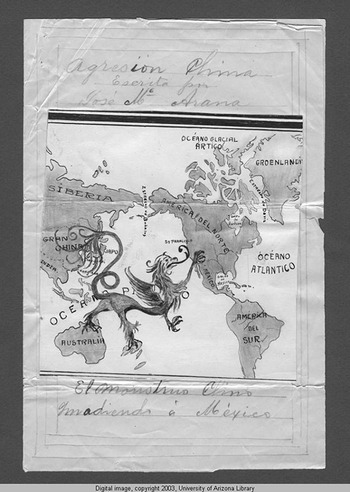
In 1910 a widespread rebellion led to the collapse of the Porfirian government and the reconstruction of a new revolutionary state. During the war for revolution, Chinese communities suffered numerous attacks, including massacre by armed revolutionaries, civilian stoning mobs, looting of stores, and a broad practice of harassment and humiliation. In the midst of these attacks, some Chinese people found allies, friends, and romantic interest in their Mexican neighbors. A potent symbol of the entanglement of antichinismo and revolutionary fervor is found in rebel leader Francisco “Pancho” Villa, who frequently ordered his troops to kill any Chinese people they encountered. Other foreigners suffered death at the hands of Villa’s soldiers; however, no other ethnic group in early twentieth-century Mexico received the same level of vicious and systematic violence. During the revolution, the racialized figure of the Chinese people shifted from motores de sangre to killable subjects of discontent. Revolutionary cries for peasants to close ranks as mestizos and support insurgency against the Diaz government were commonly heard together with “Down with the Chinese!” Women, farmers, soldiers, and politicians big and small gave life to these associations through their writings, speech, and deeds. Throughout this period, anti-Chinese vitriol was part and parcel of the mestizo rapture expressed by revolutionary leaders. The mestizo collective imagined by leaders was underwritten by the revolutionary call to attend to the good of the Indian. At the outset of the revolution, these calls were greeted with skepticism: “when politicians call for ‘the social good’ these are the signs of power” (Reference ArgudinArgudin 1912). By the 1920s a growing group of state legislators began to push mestizo racial nationalism through an anti-Chinese polemic. The images that antichinistas produced clearly illustrate the effort to incite animosity. As illustrated in Figure 1’s hand-drawn propaganda of “Chinese Aggression,” a winged monster straddles the Pacific from Asia and sinks its claw into northern Mexico. Images like this became important political resources for the revolution’s leaders. Plagued by rivalry, economic contraction, weak governance, and reluctant reforms, the revolutionary state struggled to govern and extinguish challenges to its professed sovereignty. Senators, congressmen, and presidents became architects of a national anti-Chinese organization called La Liga Mexicana Antichina (Mexican Anti-Chinese League). Their slogan, “United we will eliminate the Chinese from Mexico,” was used to advocate for a wide spectrum of policy reforms that used Chinese expulsion to facilitate the articulation of a national mestizo race and perform state benevolence (Reference EspinozaEspinoza 1931).
“Agresión China: El monstruo Chino invadiendo a México.” Folder 6, MS 09, Papers of José Maria Arana, 1904–1921, University of Arizona Library, Special Collections.

The interweaving of racial formations of Chinese immigrants with that of indigenous and other, de-Indianized peasants in Mexican culture reveals how ideas about the Chinese population contributed to the development of a racialized mestizo public good and helped shape what ethical, or truly revolutionary, governance looked like. Mexico’s Chinese people continued to experience violence, although their image changed from killable subjects to pernicious defilers in the 1930s. As a profane race, they were subjected to forced expropriations, discriminatory taxes, segregation, anti-miscegenation laws, mobs, riots, and state-led deportations, as well as popular expulsions, all for the purported good of women, children, and Indians. The gendered and sexualized image of the Chinese race from the 1920s to 1940 shaped local politics, infiltrated state legislatures, inspired numerous debates in the federal congress, and continuously occupied the concern of the most successful political party in modern history, the Partido Nacional Revolucionario (PNR) formed in 1929. The PNR later became the Partido Revolucionario Institucional (PRI) and held power until 2000.
The ideology of antichinismo both racialized the Chinese people and imagined new relationships among Mexican people. Other studies of Mexico’s anti-Chinese politics have established a solid foundation of research on the statutory content of discriminatory legislation and key moments of popular discontent. The approach used in this article expands on these works through an Asian Americanist critique that locates the inquiry in the larger context of the reconstruction of the revolutionary government with a theoretical framework of racial states. By following expressions of antichinismo from the streets to meeting halls, to legislatures and national party convention floors, I have shown the ways that anti-Chinese publics contributed to rewriting the relationship between the government and the governed (Reference ChangChang 2017).
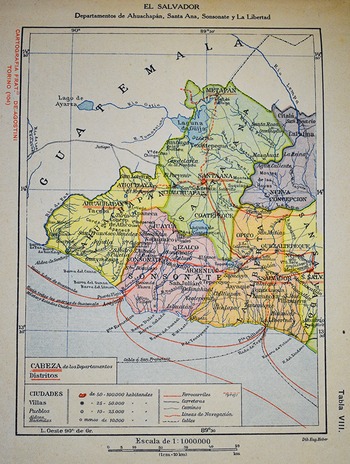
To some historians, El Salvador seemed to follow the same path as Mexico; however, attending to the motivations, context, and result of these racial projects shows that the similarities remain at the surface. El Salvador began counting its Chinese population in its first national census in 1881 (Reference LovemanLoveman 2014). Chinese migrants who settled in El Salvador were pressured by similar forces as those elaborated for co-ethnics in Mexico. However, one important difference was the coastwise orbit of circulation created by Chinese participation in the construction of the Panama Canal. Attraction to Panama brought other Central American republics into view for Chinese emigrants. While Chinese migrants in Panama were brought there by industry, those who found their way to the neighboring republics found small opportunities to fit into the urban commerce of ports and capitals as well as the agrarian plains and mountains. Figure 2 shows a 1929 map of the western districts of El Salvador along with major transportation routes.
“El Salvador, Departamentos de Ahuachapán, Santa Ana, Sonsonate, y La Libertad.” Pequeno atlas, el Istmo Centroamericano en general y El Salvador en particular (Nueva San Salvador, Librería Salesiana, 1929). Benson Rare Books Collection, Nettie Lee Benson Library and Archive, University of Texas, Austin.

The map’s depiction of the east-west corridor connecting Sonsonate, Armenia, Quezaltepeque, and San Salvador with the major ports of Acajutla and La Libertad illustrates the ways that infrastructure made certain parts of El Salvador more attractive to Chinese migrants. Making connections between the seas, countryside, and urban spaces, Chinese people settled predominantly in San Salvador as well as in the Mayan and Pipil pueblos of rural Sonsonate. Salvadorans never invited Chinese laborers on a large scale, and Chinese settled in such few numbers that they barely registered more than a few hundred for the entire country. Nevertheless, Salvadoran officials did not hesitate to denounce, block, and expunge this small immigrant population from the country.
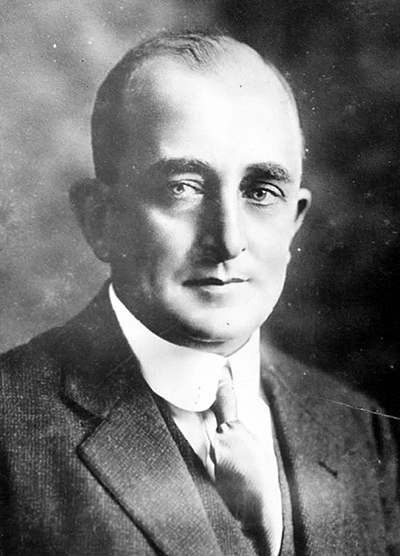
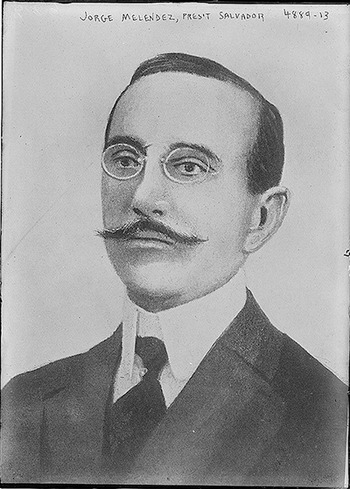
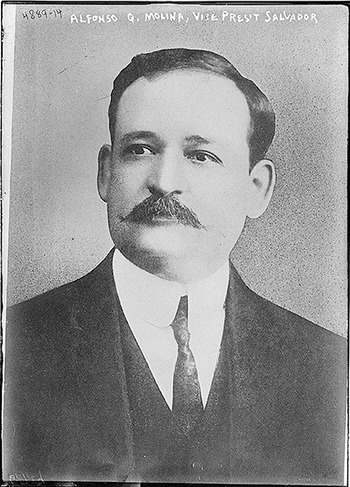
By 1897, the San Salvador congress passed immigration prohibitions that called the Chinese “pernicious foreigners,” a common term used among antichinistas in the Americas (Reference TilleyTilley 2005). After a decade-long period of political stability (1903–1913) and very little Chinese immigration, Jorge Meléndez (Figure 3) and Alfonso Quiñónez Molina (Figure 4) (1913–1927) came to power overseeing continued economic declines and growing popular discontent among the majority of indigenous pueblos. Their administrations passed a number of anti-Chinese measures. Immigration from China grew slightly during the 1910s, but in 1923 San Salvadoran newspapers began calling the alarm on the Chinese presence (Reference TilleyTilley 2005). In 1925 the Salvadoran Foreign Ministry restricted return visas to China for only one year discouraging reentry (Reference SuterSuter 2001, 52n29). The following year congress passed a Chinese head tax of one hundred colones to dissuade future immigration (Reference SuterSuter 2001, 36). Although the number of Chinese remained small, with the largest cluster of fewer than 130 in San Salvador, the 1926 National Labor Law called for 80 percent domestic employment in foreign-owned businesses, calling out tiendas chinos, Chinese stores, in particular (Reference SuterSuter 2001, 36). In 1929 the federal legislature passed an official ban on Chinese entry (Reference SuterSuter 2001), even as the bureau of national statistics reported a declining resident Chinese population (Reference LovemanLoveman 2014). Despite immigration restrictions and the new discriminatory regulations, El Salvador’s Chinese community remained relatively undisturbed, and it would seem that the audience for these restrictive measures was not other Salvadorans or the domestic Chinese population but the international community. Without a popular will or bureaucratic capacity to enforce these minor prejudicial charges, the small Chinese presence provided the thinnest of rationales for El Salvador to boast the most up-to-date racist qualifications of other modern, developed states. Whether the El Salvadoran state acted on these laws made little difference to officials; the point seems to be the statutory fact, at least until the 1930s.
“Jorge Meléndez, Pres’t. Salvador.” Bain News Service, publisher, June 7, 1919, George Grantham Bain Collection, Library of Congress Prints and Photographs Division, Washington, DC.

“Alphonso Q. Molina, Vice Pres’t Salvador.” Bain News Service, publisher, between ca. 1915 and ca. 1920, George Grantham Bain Collection, Library of Congress Prints and Photographs Division, Washington, DC.

In the late 1920s indigenous pueblos of the western departments began to organize themselves against local elites. They voiced greater criticisms of the lack of economic reforms and the need for land redistri bution, but they did not cite the Chinese as the problem. Yet, as the Meléndez-Quiñónez clique became increasingly unpopular and unable to maintain power, elite attitudes toward the Chinese worsened. High-ranking politicians and some Spanish-language newspapers became more aggressively antichino, but this was not reflected in other elements of El Salvadoran society. One of the reasons why antichinismo mobilized mass violent action in Mexico is because it permeated the culture, showing up in theater, songs, poems, literature, and editorials, not just in political speeches and congressional debate. In Mexico, antichinismo was the common referent in which revolutionary mestizo Mexicanness was framed and the new state was legitimized. Salvadorans were of a different mind. For example, El Nuevo Día, a Central American periodical published in San Salvador and circulated regionally to the literati, captured public concerns and published work from students, artists, scientists, and critics. The degree of antichinista saturation in Mexican media at the time suggested that a publication such as El Nuevo Día could provide a limited sense of the degree to which anti-Chinese discourse had permeated the cultural imaginary of the moment. An editorial in June 1930 entitled “Reform of Our Politics” called readers to embrace a political critique to guide effective societal transformation, saying, “We must change our rules.” The editorial went on:
Let us gather all of our youth and form principled parties, permanent parties, and idealist parties. Let’s study our social reality; understanding the national needs and the desire to remedy these, let’s make an inspiration for our civic struggles. Let’s abandon all of the politicians, the leaders and the caudillos. The appearance of false principles in their proclamations has been a danger everywhere. Example: Democracy has been preached and the people have not been allowed to vote. Equality: They preach equality before the Law and the poor criminal lives for years in the penitentiaries, while the rich criminal, the millionaire, walks in insolent immunity in casinos and official offices. Fraternity is preached to us and a shrinking ruling class exploits, before an indifferent State, the numerous classes of the enslaved.Footnote 2
At the height of antichinista rhetoric from official channels, the readers of El Nuevo Día found a politics of national renewal based on the distrust and removal of the very elites who led the charge against their few Chinese neighbors. Although El Nuevo Día is just one example, it provides a rich contrast to the historiography of twentieth-century antichinismo in El Salvador. More work can be done in this area to further explore voices from different locales and social standing.
The popular rejection of a corrupt regime signaled its waning grip on authority and undermined the legitimacy of the state’s racial claims. Officials would push on in hopes of winning populist appeal. Also in 1930, the administration passed an executive order revoking the Spanish names of Chinese immigrants, requiring them to use their birth names (Reference TilleyTilley 2005). Rejecting adopted Spanish names sent the message that national incorporation would be impossible for Chinese immigrants. Even as elites targeted the Chinese more intensely, their racism was not popularly adopted. In fact, many of these measures drove Chinese and indigenous communities together as they both were admonished by elites of the national state. The lower Quiñónez fell, the more harshly he disavowed the small Chinese community. While elites railed against the Chinese as the racial vector of national ruin, other Salvadorans mobilized an oppositional racial discourse. Even though antichinismo was not absorbed into popular culture, it did not mean that racial discourse or xenophobia was not present in the public sphere. San Salvadoran university students of the Grupo Renovación, led by Carlos Molina Arévalo, wrote in the column “Pen of the University Student” in El Nuevo Día in April 1929:
Our people are young, full of life and wealth, but we are a people unprepared to fight and that due to a lack of civic culture we constantly risk going directly to failure. Our race is new, perhaps the only new one in the whole world, a hybrid race, very complex—adding upon the color of Caucasia even the Mongolian and black. In them, our race is made unique, summoned in the course of time the development of one of the greatest civilizations.
But we are consuming ourselves with the vices brought from elsewhere, our youth live a life of dissipation and debauchery, they have nothing which can favor their racial improvement. Due to the lack of orientation, our generations are contaminated by vice. Stamped by the filthy crap of the filthiest diseases, and then in turn, those generations that come without an ideal, inevitably will be stamped by the foreigner, to become cannon fodder for the imperialist powers.Footnote 3
Arévalo drew from intellectual currents from across Latin America at the time, typically eugenic in nature, to compose a discourse of racial amalgamation. His idea discounted the racial prejudice against Africans and Asians, bucking the norm in the early twentieth century, while at the same time marking white imperialists as the true racial vector of national ruin. The student author called out alcoholism and the virtual enslavement of the workers and farmers as critical vices that held back what he termed Salvadoran racial improvement and, ultimately, led to conquest by US industrial capitalists. The writings of this San Salvadoran university student would soon be reflected in mass politics through the next election.
In 1931 El Salvador held an open election in which Arturo Araujo Fajardo (Figure 5) won the presidency on a wave of support for agrarian reform. During his brief administration, lasting only ten months, the anti-Chinese campaign seemed to flare up as newspapers intensified racist rhetoric against the Chinese. In contrast to the newspapers’ anti-Chinese alarm, on a separate occasion El Nuevo Día singled out intervention by the United States as the greatest foreign threat to democracy in Central America, citing the history of the Monroe Doctrine and a litany of now well-known examples from Haiti to Mexico.Footnote 4 The main newspapers’ anti-Chinese measures grew more and more out of touch with popular sentiments. Nevertheless, official discrimination intensified with the threats of punitive policies, expanded Chinese-only taxes, forced closure of businesses, and deportations if the Chinese community did not voluntarily exit the country (Reference TilleyTilley 2005). Salvadoran Chinese responded to these threats with tighter co-ethnic organizations, marrying indigenous women, and reaching out to the US State Department, as was common among Chinese across the Americas who experienced persecution (Reference TilleyTilley 2005). Araujo’s campaign advertised land redistribution, but once in office he had no intention of delivering on this policy (Reference ChingChing 2014). Any concern about the Chinese would be extinguished in the following months with the onset of open rebellion and the subsequent military coup by Araujo’s vice president, General Maximiliano Hernández Martínez.
Arturo Araujo Fajardo. Photograph ca. 1928, public domain.
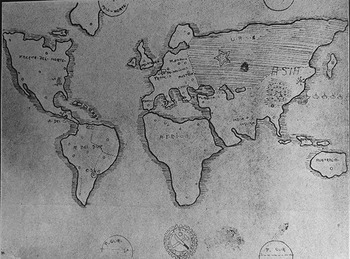
In July 1931 indigenous pueblos in the western departments of El Salvador began an open rebellion with the help of communist internationalists. They articulated a vision of a country without a capitalist ladino governing elite, not unlike the political reforms described in El Nuevo Día. The rebels had combined international communism with indigenous discontent, and expressed some nativism, but were more focused on overturning the caste system than expelling foreigners. The messages of communist agitators, such as Jose Feliciano Ama, that rebellion would deflate the ladino elite and elevate Indian concerns, was a popular call to join the uprising. In addition to providing material and organizing support to El Salvador’s rebels, the communists also created positive associations with Asia and China, as seen in Figure 6, a piece of peasant propaganda recovered in Jorge Schlesinger’s (Reference Schlesinger1946) Revolución comunista. In this hand-drawn map, El Salvador is placed in the context of a communist world in which allies in Asia provide support from across the Pacific, symbolized by a fleet of vessels crossing the Pacific Ocean. It’s nearly impossible to ascertain how indigenous peasants in El Salvador might have reacted to seeing such a map, However, what can be said is that they would not have drawn the conclusion that Chinese immigration represented a threat to their well-being as Mexican propaganda most certainly intended.
Map of the communist world. In Jorge Schlesinger, Revolución comunista (Reference SchlesingerGuatemala City: Union Tipográfica Castañeda, Avila, 1946).

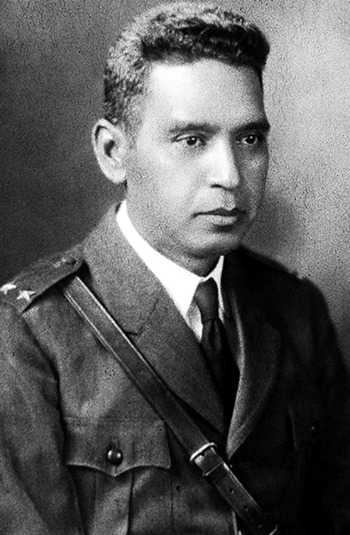
In the midst of this rebellion the US State Department pleaded with the Araujo administration to rescind its policies against the Chinese (Reference TilleyTilley 2005). US officials sought to remove the antagonism of the administration, advocating for the rights of Chinese people in the country and assisting in stabilizing the government. As the anti-Chinese campaign climaxed the small republic broke down when General Maximiliano Hernández Martínez (Figure 7) orchestrated a coup in December 1931 with an attack on the Presidential Palace.Footnote 5 Two months later in February 1932, a mass peasant uprising began that rejected Hernández Martínez’s authority and led to one of the worst atrocities in Central America, when military and paramilitary groups combed the countryside in search of communist rebels, killing anyone identified as an “Indian.” More than thirty thousand people were murdered by the state in this atrocity. After this period of violent anti-Indian repression, much of the government’s anti-Chinese campaign under Hernández Martínez did not continue. Despite the less aggressive nature of the government’s attitude toward Chinese immigrants, the military state revised the cultural identity of the nation as definitively mestizo. The construction of mestizo nationalism sought to erase indigeneity without having to eliminate Indians, the nation’s workforce. Erik Ching (Reference Ching2014) and Virginia Tilley (Reference Tilley2005) argue that despite the official disavowal of indigenous political claims, the military government supported Indian communities and provided great access to education and agricultural development. However, such benefits were designed to facilitate growth in the export-oriented agricultural economy. In El Salvador, it was only after the period of mass violence and state repression that anti-Chinese attitudes became popular. This sequence of development suggests that El Salvadoran antichinismo under the Hernández Martínez government became a common idiom as a means to negotiate the imposition of a mestizo identity by the military regime. In other words, El Salvadoran antichinismo functioned as a credential of mestizo identity after a prolonged episode of state-run terror at the dawn of the Hernández Martínez regime, one that would last until 1944.
General Maximiliano Hernández Martínez. Photograph prior to 1940, public domain.

What distinguishes El Salvador’s anti-Chinese movement is that the racism of lawmakers and political elites did not translate to popular grassroots participation as it did in Mexico. Even though El Salvador’s Chinese population remained very small, only growing to around three hundred in the 1920s, the racist campaign thrived on the specter of far greater numbers or the devastation that just a few were capable of. These messages did not take hold in the discontented countryside, at least until the mass violence of 1932. While antichinismo predates mestizo nationalism in both Mexico and El Salvador, it did so for different reasons.
Identifying the place of anti-Chinese politics within the architecture of structural racism demonstrates how important national context is for understanding the role of racism in the operation of state power. Jan Suter’s 2001 article explains the development and climax of anti-Chinese politics in El Salvador as a function of collective identity formation during a period of violent transformation. In her assessment, the main determinant was oppositional ethnic dissimilarity “that accounted for the differential treatment of [Chinese] immigrant groups by the Salvadoran society” (Reference SuterSuter 2001, 39). According to her analysis El Salvadoran anti-Chinese politics “was created and instrumentalized in order to propagate a ‘national project’ destined to redefine society in the transition from pre-state regional politics to national state society and politics in the setting of peripheral capitalism” (Reference SuterSuter 2001, 49). From the evidence discussed thus far, Suter’s characterization more closely reflected the hopes of some officials, but there is little evidence that it saturated public sentiment. While Suter sees a stronger similarity to the Mexican case in which antichinismo acted as an elite and popular catalyst to renegotiate rule and consent through state ideologies of mestizo nationalism, Virginia Tilley (Reference Tilley2005) argues differently. In Seeing Indians, Tilley describes anti-Chinese politics as an extension of a more profound anti-Indian ideology in El Salvador. She marks El Salvadoran anti-Chinese politics as an indication of the ways that racial ideology fundamentally structured ladino discourses of state authority and the common good. This article contends that when the state was weak, as in the Quiñónez and Araujo administrations, anti-Chinese politics had little popular resonance. However, when the state became extremely violent and anti-Indian, anti-Chinese politics surged with little official support. As the cultural logic of authority shifted and non-Indian identities became political preferences, then antichinismo became normalized. Tilley (Reference Tilley2005) did not see it as a constituent element of the rise of mestizo nationalism. Rather she echoed what other historians of Central America attest, that indigenous or mestizo identifications have less to do with shared language, culture, or traditions. Instead, political identities are shaped by the collective memory of specific forms of oppression and state violence (Reference Euraque, Gould and HaleEuraque, Gould, and Hale 2005). In other words, being antichino provided some protection from the worst effects of anti-Indian prejudice.
This comparison helps to make the point that antichinismo successfully spread to a popular level in Mexico because the revolutionary state sought to build popular consent for the new regime, whereas in El Salvador antichinismo took a back seat to armed coercion and raw violence as the marker of sovereign authority. This is not to argue that armed coercion and raw violence were not a part of the Mexican experience. Rather, the point is that El Salvadoran elites did not, nor could they hope to, rely on the effects of anti-Chinese racism to mediate mass political incorporation of the republic’s peasantry, as Mexico’s revolutionary leaders did. However, El Salvadorans did use antichinismo after the 1932 massacre to claim a nonindigenous mestizo position legible to authorities. These experiences indicate that antichinismo attaches to indigeneity in ways that foster consent to the racial state, but we should not expect those attachments to always appear and function in the same way.
Finley’s Correspondence
New evidence about the Araujo administration further discounts the populist appeal of El Salvador’s anti-Chinese campaigns in the 1920s. To deepen the analysis of the El Salvadoran case, the article now turns to the correspondence of the US consular representative to El Salvador, Harold D. Finley. Finley’s US State Department telegrams and reports are a staple for historians of la matanza, but scholars of El Salvador’s anti-Chinese campaigns have not fully analyzed his correspondence. Finley’s correspondence typically reported on economic conditions, changes in international trade, and local political conditions. His reports typically passed on insider information on trade partners, business dealings, and various political assessments from a range of actors. In the course of his fact-finding pursuits he made contact with a member of Araujo’s administration, Juan Novoa, a wealthy power broker who helped finance the president’s political campaign and directed many legislative agendas.
Finley reported to Washington, DC, that the racist campaigns against the Chinese were solely orchestrated by President Araujo’s secretary of the Interior, Juan Novoa. Novoa’s confidence in Finley gave him an unprecedented ear to the thoughts and desires of this powerful bureaucrat. According to Finley, Novoa personally authored several key anti-Chinese laws, from the head tax to fines on Chinese businesses, as well as threats of deportation. In addition, Novoa confessed to Finley that he alone had pressured the San Salvadoran newspaper Patria to intensify attention to anti-Chinese subjects.
As Consul Finley sought resolution to the anti-Chinese measures by mediating between the Chinese community and Novoa’s arm of the Araujo administration, he uncovered a pattern of blackmail. Finley reported that the Chinese community had resorted to making substantial bribes to El Salvadoran officials after legal recourse failed. In 1927 the Chinese community reportedly paid government officials ten thousand dollars to have immigration bans removed.Footnote 6 Then in 1931, the Chinese community paid more than thirty thousand dollars to Araujo’s campaign under Novoa’s direction to remove discriminatory fines and taxes and stop threats of mass deportation of Chinese residents.Footnote 7
Finley was so well-acquainted with Novoa that he further divulged the official’s personal economic interests in the anti-Chinese campaign. His efforts to shut down Chinese businesses were not to support woman-owned enterprises, as described in newspapers and legislation, but to drive local merchandise sales into fewer and fewer retail brokers to which Novoa had ties. Finley also reported on a conversation with Novoa in which he reasoned that the deportation of sixteen Salvadoran Chinese “should be enough to secure the compliance of the remaining Chinese to submit to the tax or leave voluntarily.” Novoa believed such actions would be read favorably by the public and would result in a wave of support. After this, Novoa planned to drop the issue altogether after receiving the money and good public image. These tactics show how out of touch Novoa was with the realities of El Salvador. While he brokered deals to extort the Chinese community and gain public favor, communist-agitated indigenous pueblos in Izalco and Sosonate had overrun local forces and controlled a significant portion of their provinces. In addition to Novoa’s myopia, he also failed to recognize that indigenous communist sympathizers held favorable views of China as a source of political inspiration.
Conclusion
By considering Finley’s correspondence, we gain an unprecedented view of the stimulus for El Salvador’s anti-Chinese campaigns. Juan Novoa’s capacity to dictate the government’s persecution of Chinese for personal gain is quite remarkable but ultimately demonstrates the profound failure of his path and the thin causal relationship between the anti-Chinese campaigns and the process of collective identity formation leading to mestizo nationalism in El Salvador. This comparison illustrates that antichinismo was varied. It also demonstrates how constructions of Asian racial difference across the Americas possess different political functions. Antichinismo in El Salvador was unsuccessful in garnering political benefits for elites because officials like Novoa assumed that peasant anger would be assuaged by the ouster of a small group of foreigners, but mass state violence changed that. The political transformation fostered by antichinismo in Mexico worked differently because anti-Chinese campaigns were tied to a decade-long movement to imagine mestizo nationalism through Chinese exclusion. Nevertheless, antichinismo persists in post-Martínez El Salvador in part because the anti-Chinese attitudes of everyday people signal a mestizo nationalist identity and thus a safeguard against anti-Indian discrimination.
Acknowledgements
I want to thank Allison Bigelow and Tom Klubock for their work and thoughts on convening this forum, and the reviewers, whose comments strengthened and inspired me to dig deeper. Also a special thanks to Kathy Lopez and Ashley Agbasoga for their reading of the article and insightful clarifying questions.


 Open access

