

Work on the radical left, covering topics such as European integration and democratic consolidation and democracy, has noted the importance of parties’ specificities and histories (Bosco Reference Bosco2001; Dunphy Reference Dunphy2004). Typologies emerging from the radical left literature have highlighted important ideological and organizational distinctions among different types of radical left parties (March Reference March2011). Yet, the question of whether such characteristics continue to matter as much in (economic) crisis environments has been given little attention. In this study we interrogate the societal mobilization strategies of the Greek (Greek Communist Party, or KKE, and Coalition of the Radical Left, or SYN/SYRIZA), Irish (Sinn Féin), Portuguese (Portuguese Communist Party, or PCP, and Bloco de Esquerda, or Bloco) and Spanish (Spanish Communist Party/United Left) radical left parties, during the post-2008 economic crisis. Utilizing the results of a survey of experts, carried out in early 2013, we explore for each party whether the way it approaches protest and linkage with social groups has changed during the economic crisis. Additionally, we ask whether radical left parties’ ideologies and organizational legacies affect their societal mobilization strategies at a time when the domestic environment has changed dramatically.
By doing so, we also seek to address a broader problem in scholarly investigations in party politics. The exploration of linkage, defined as parties’ relations to social groups, has made significant advances (for example Allern Reference Allern2010; Lawson Reference Lawson1980), including studies focusing on the left (for example, Tsakatika and Lisi Reference Tsakatika and Lisi2013). Much has been written about ‘critical eras’ characterized by large-scale social forces which may cause realignment in the party system (for example, Schofield et al. Reference Schofield, Miller and Martin2003), but very little work exists on parties’ efforts to connect with society during such eras.
Drawing on structural and agency-centred theories of party and group change, we derive two competing expectations on radical left parties’ societal responses to the crisis – continuity versus change. These approaches have divided scholars of democratic politics for decades along the lines of the agency–structure debate that exists in multiple strains of scholarly literature in political science (Hay Reference Hay1995). Environmental approaches suggest that parties respond to changing opportunity structure in a rational fashion that leaves little room for strictly ideological behaviour, and to which organizational legacies adjust. On the other hand, agency-centred approaches argue that partisan considerations, linkage strategies included, are above all the result of ideological traditions and organizational legacies.
Yet, in linkage studies the two perspectives have rarely been juxtaposed and assessed against each other. Part of the problem lies in case selection and part of it in method. Recent linkage research concentrating on single countries (Allern Reference Allern2010; Verge Reference Verge2012), many randomly selected countries where framing issues exist (Thomas Reference Thomas2001) or institutional arrangements between ideologically identical parties and one type of interest group (Allern et al. Reference Allern, Aylott and Christiansen2007) has not been able to ensure variability in the independent variables – ideology and organizational legacy – or have fallen short of accounting for the strategic moves of parties, instead comparing the types of links formed.
The study undertakes both of these tasks by building on the work that has been included in Tsakatika and Lisi’s edited volume (2013). In that volume, the editors, based on data regarding South European radical left parties during the past two decades, show that party-specific characteristics (ideology, electoral incentives and party competition, history and organizational trajectory) do matter. As they remark, ‘The factors that were identified . . . as explaining why (ideology, external events, electoral incentives and party competition) and how (history and organizational trajectory) radical left parties pursue participatory and environmental linkage go a long way towards explaining their responses over the crisis period’ (Tsakatika and Lisi Reference Tsakatika and Lisi2013: 14). An attempt is made to advance our understanding of the diversity in radical left party societal responses to the crisis by concentrating exclusively on parties’ internal characteristics – ideology and organizational legacy.
Partly to this end, the study uses a method and data that can frame the comparison more strictly and concentrate on the effort at mobilization, rather than its result. The analysis focuses on particular types of groups that were not considered in Tsakatika and Lisi’s edited volume, but can be theoretically thought to constitute potential mobilization targets during an economic crisis, such as pensioner groups, post-materialist/environmental groups and unemployed groups. It also follows the distinction between protest organization and participation in protests independent of whether they are organized by the party or not. The overall methodology allows for more detailed comparisons between the different parties on a range of issues. Societal mobilization is additionally considered in a more systematic fashion. For example, while Tsakatika and Lisi (Reference Tsakatika and Lisi2013) primarily considered democracy and anti-party movements in Spain, a cross-sectional investigation is undertaken here. Finally, the comparison is enlarged beyond Southern Europe.
The cases investigated are the main radical left parties in Southern Europe and Ireland. All six parties are positioned to the left of social democracy in their respective party systems and are protest or opposition parties. They share ideological and programmatic positions that differentiate them from other party families and participate in the European United Left/Nordic Green Left (GUE/NGL) group of the European Parliament (see March Reference March2011). Further, all six parties are long established and have consolidated organizational and ideological traditions, thus allowing us to juxtapose their pre-crisis societal mobilization strategies with those employed at times of crisis. Most importantly, although the domestic socioeconomic and political environment has been very similar in the four countries in question during the past few years, the ideology and organizational legacy of the six parties in question vary. This specific comparison is therefore well-suited for exploring the extent to which ideologically and organizationally different parties of the radical left have responded to momentous changes, in diverse or similar ways, and in this way provide a comparative examination of the significance of party-specific characteristics. Working with most-similar cases at the country level reduces the number of ‘disturbing variables’ to be kept under control (della Porta Reference Della Porta2010: 214).
Partly for this methodological reason, radical left parties that could have been included in the expert survey, based on the contextual rationale followed – the Socialist Party in Ireland and the Left-Green Alliance in Iceland – were excluded. The Left-Green Alliance entered government shortly after the crisis emerged (2009). As the government participation variable, which has been shown to matter greatly for radical left parties’ ideology and organization (see Bale and Dunphy Reference Bale and Dunphy2011; Olsen et al. Reference Olsen, Koβ and Hough2010), would not be controlled for, comparison with the other cases would have been problematic. Additionally, the Icelandic radical left party was excluded because the Icelandic crisis began earlier than those in Southern Europe and Ireland. Therefore, the timing of the survey would have been unsuitable in Iceland, because experts would have been required to stretch their memory in respect of the party’s strategy of societal mobilization before and during the crisis.
The Irish Socialist Party receives very little attention in the Irish party politics literature and the Irish press, and gathers a very small percentage of the vote. This would probably make it harder for experts to give informed answers to the detailed questions in the survey. In addition, between 2011 and 2013 the Socialist Party participated in the United Left Alliance, along with the People Before Profit Alliance. The latter two formations are new, with no established political or organizational trajectory, making the ‘continuity or change’ question that is the central signpost of this study impossible to settle credibly. Indeed, the various components of the United Left Alliance had been engaged in discussions on programmatic development and organizational practice throughout the alliance’s lifespan, which coincided with the crisis years in Ireland (Allen Reference Allen2013).
Overall, our contribution is two-fold. First, we consider in more detail than previously how radical left parties have tailored their societal mobilization strategies to the environment created by the crisis. The fact that there are still differences between the parties well into the crisis years may explain why as a family the radical left is fragmented and how difficult it can be for these parties to establish closer coordination between each other, subsequently challenging austerity more effectively.Footnote 1 Second, at a time when most phenomena are attributed to the crisis, our analysis shows that both ideology and organizational legacy throw considerable light on the observed variation among the six radical left parties’ societal responses to the crisis.
the Six Parties Studied and their Changed Domestic Environments
Socioeconomic and Political Changes in Greece, Ireland, Portugal and Spain
Mass anti-austerity protests swept the streets of Southern Europe and to a lesser extent also Ireland in the years after 2008. The source of ‘trouble’ has been economic in nature but its effects span both the domestic political arena and society. As a result of mounting government debt, real estate bubbles and irresponsible banking practices, governments and their international lenders implemented austere economic policies to minimize public expenses and increase competitiveness and productivity. Towards this end, a number of government measures, largely driven by the ‘Troika’ (the European Commission, International Monetary Fund and the European Central Bank) have been implemented among the four countries: eliminating or limiting subsidies, cutting or capping the wage bill, increasing consumption taxes on goods and services, reforming old-age pensions, rationalizing and/or further targeting social safety nets and reorganizing labour markets to render them more flexible (Ortiz and Cummings Reference Ortiz and Cummings2013).
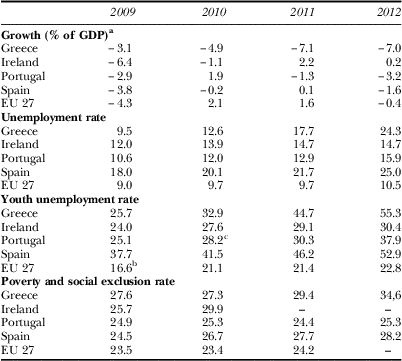
Table 1 shows the main economic conditions in Greece, Ireland, Portugal and Spain, focusing on some of the main determinants for social unrest: unemployment rate, youth unemployment, GDP growth, poverty and social exclusion (see ILO 2011). These indicators illustrate the dire condition of the four countries in absolute numbers but also compared with the EU averages.
Basic Economic Indicators in Greece, Ireland, Portugal, Spain, 2006–12 (in %)

Source: Eurostat (http://epp.eurostat.ec.europa.eu/portal/page/portal/eurostat/home).
Notes: aPercentage change on previous year.
b Malta is excluded.
c Estimate.
The perceived failure of traditional institutions to act as interested intermediaries seems to have been another general condition favouring the emergence of protest in Southern Europe and Ireland. This is evident from Table 2, which, on the basis of Eurobarometer data, illustrates both the rapid decline of political trust in Southern Europe and Ireland and the sharp and increasing differences in terms of political trust between these countries and the EU average. Largely because of the crisis, satisfaction with democracy has also consistently declined since 2009 in all four countries (Polavieja Reference Polavieja2012).
Political Trust in Southern Europe and Ireland (%)
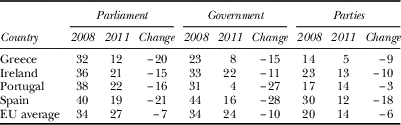
Source: Eurobarometer 70 and 76 (autumn waves).
In Greece, the three-decade-long bipolarism (approximately 85 per cent) collapsed and gave way to a fragmented party system (Vasilopoulou and Halkiopoulou Reference Vasilopoulou and Halkiopoulou2013). In Ireland, the ‘two party’ system was shaken in the elections of February 2011. Fianna Fáil, historically the largest party and main actor of the nationalist right, was wiped out of government and suffered a loss of 24 per cent (from 41 down to 17 per cent). The socialists were empowered significantly and so was Fine Gail (Little Reference Little2011).
In Portugal, the socialists paid the price for their latter years in government, losing almost half a million votes compared with the previous election result and dropping five percentage points. The main ‘winner’ of the crisis was the centre-right Social Democratic Party (PSD), which returned to government (Fernandes Reference Fernandes2011). In Spain, the socialists were the big losers of the 2011 elections. They collapsed in the face of voters identifying them with neoliberalism and welfare retrenchment, and lost support in all possible directions (Martín and Urquizu-Sancho Reference Martín and Urquizu-Sancho2012).
Overall, there are considerable similarities between the political arenas of the South European and Irish radical left parties. In all four countries the main centrist competitor of the radical left has been permeable. The six radical left parties are also faced with new challenger parties rejecting the existing system of governance, and large portions of the electorate abstaining from voting (Bosco and Verney Reference Bosco and Verney2012: 147–50).Footnote 2 Anti-austerity, anti-party and democracy movements can be found across all four countries, particularly in Spain and Greece (Bosco and Verney Reference Bosco and Verney2012; Tsakatika and Eleftheriou Reference Tsakatika and Eleftheriou2013). In Ireland, the analogous movements lag behind in momentum compared with those in the other countries and are mostly made up of anti-tax campaigns, labour unions and student and community groups. However, they do exist (Cox Reference Cox2012) and gathered momentum especially in 2010, when the crisis was at its peak in the country.
Radical Left Parties in Greece, Ireland, Portugal and Spain
All six radical left parties share a critical view of capitalism and neoliberalism, champion the fight against neoliberalism, austerity and the Troika and have not participated in government during the crisis years. However, there are still substantial differences between them in terms of party-specific characteristics, ideology and organizational legacy. The Greek Communist Party and Portuguese Communist Party are strictly anti-capitalist, orthodox communist parties, oriented towards a root-and-branch transformation of capitalism, critical of liberal democracy and rejectionist of the eurozone and the EU. Still, it should be noted that the Greek Communist Party has been classified as particularly orthodox, even compared with the Portuguese Communist Party, on various components of Marxist-Leninist ideology – for example, on teleology, the method for socialism and rhetoric on the EU (Keith and Charalambous Reference Keith and Charalambous2013). There are also differences between the two parties on post-materialist and environmental issues, with the Greeks having a clearly more materialist perspective (see also Benoit and Laver Reference Benoit and Laver2006: 262, 280). The Portuguese Communist Party has had Os Verdes under its effective control since the early 1980s, through the electoral coalition of the Coalition of Democratic Unity (CDU). In contrast, the Greek Communist Party rarely touches on the environment, or more generally post-materialism, during its election campaigns.
The Coalition of the Radical Left and Bloco encompass strong elements of the red-green left, have an ideological heritage with Eurocommunist influences and are more open to pan-European cooperation within the context of the EU and the eurozone. Overall, both parties focus more on anti-neoliberalism than on anti-capitalism, espouse new left themes and advocate ‘democratic socialism’ (March Reference March2011). The Spanish Communist Party (and the United Left coalition that it heads) is a reformed communist party which has a reformist policy agenda that includes much softer Euroscepticism than that of the Greek Communist Party and the Portuguese Communist Party and is closer to the ideological mould of Bloco and the Coalition of the Radical Left, in the sense of being more open to social movements, environmentalist, feminist and participatory democracy influences (Heilig Reference Heilig2009).
Perhaps the most different from all other parties is Sinn Féin. Initially focusing on Northern Ireland, it has gradually drifted towards a radical leftist bent and become more involved in institutional politics. Yet, since the party constitutes the main part of the Irish nationalist left with Irish unity high on its agenda, it has never been strictly anti-capitalist and uses anti-elite and anti-establishment rhetoric; it has been rightly categorized by the relevant literature as populist socialist (March Reference March2011).
Divergence between the six parties is also shown in their organizational legacy. The orthodox communists appear to be more similar than different; the Greek Communist Party and Portuguese Communist Party have a bureaucratic organization, with little real input to decision-making by ordinary members, routinized procedures, internal recruitment filters and strict career paths, and mass ancillary structures with large activist bases (Bosco Reference Bosco2001; Keith and Charalambous Reference Keith and Charalambous2013). However, Keith and Charalambous (Reference Keith and Charalambous2013) also find noticeable differences in terms of the two parties’ external relations and that the Greek Communist Party enforces more discipline on its members.
The Spanish Communist Party/United Left, Bloco and the Coalition of the Radical Left have more flexible, less routinized and bureaucratized organizations, designed to accommodate their ideologically diverse constituent groups.Footnote 3 They exhibit greater tolerance towards dissent, less strict membership recruitment processes and a low level of structural articulation. In all three cases there is also a higher likelihood that proposals and amendments at congresses from individuals or regional and local branches of the organization will have a good chance of being passed. Although maintaining diachronic links with certain groups, such as left-wing trade unions, they follow an approach to society whereby the party is not meant to guide social groups, but rather to learn from them (Tsakatika and Eleftheriou Reference Tsakatika and Eleftheriou2013: 11). Even in the case of the United Left, where the Spanish Communist Party is dominant, the latter’s ties to social groups softened or weakened significantly (Ramiro and Verge Reference Ramiro and Verge2013: 12). Similarly, the three parties’ youth organizations do not resemble the hierarchical relationship found in the cases of the Greek Communist Party and Portuguese Communist Party, whereby the party strictly controls and guides its youth. Indeed, the United Left has no established youth section; rather, each of its constituent parties maintains its own.
A major commonality between Bloco, the Coalition of the Radical Left and the Spanish Communist Party/United Left has been their response towards new social movements emerging from anti-globalization currents since the late 1990s, as well as towards other types from the 1980s. In addition, they all encouraged or launched environmental, peace, pro-immigrant and feminist movements. All three parties have organizations with features that characterize movement-like structures; indeed, the social movements were important in building Bloco and in consolidating the youth section of the Coalition of the Radical Left. Their designs are based on horizontal links between members and higher party bodies, and decentralized mechanisms of decision-making, whereby the practice of collectively articulating electoral manifestos is common (see Lisi Reference Lisi2013; Ramiro and Verge Reference Ramiro and Verge2013; Tsakatika and Eleftheriou Reference Tsakatika and Eleftheriou2013).
Sinn Féin is highly centralized, despite the fact that its organization is based on grassroots participation and campaigning and an active membership base mobilized at the community level. In O’Broin’s words (Reference O’Broin2009: 304), ‘Sinn Féin’s ideological and organizational history, and the experience of 70 years of state repression and 30 years of armed conflict have all combined to create an organization which is both highly centralized in its distribution of power and vertical in its structure of command’. Given that the party’s internal decision-making processes were, until recently, dominated by the Irish Republican Army (IRA), Sinn Féin resembles the centralist nature of many paramilitary organizations (see Frampton Reference Frampton2009). Various recent expulsions and resignations from the party have all complained about the lack of internal democracy.Footnote 4
However, what differentiates Sinn Féin from most other radical left parties is the absence of any substantive link with the labour movement. While some recent appeals to the trade unions have been made on behalf of the party, there has traditionally been no leadership overlap between the two and no possibility for the party to interfere in the unions’ affairs. An important characteristic of Irish trade unionism, which has affected Sinn Féin, is the very extensive collaboration between the state and trade unions, best exemplified by the Croke Park Agreement of 2010 (Allen Reference Allen2011). When Sinn Féin has tried to mobilize support from the trade union movement, it has been in the form of a nationalist appeal, focusing on the Republican spirit, rather than a unified workers’ front, and trying to channel energy into the IRA’s activities, rather than into a class solidarity struggle.
Theoretical Framework: Two Competing Perspectives
Discussions in the relevant literature advocate that party-specific characteristics are important for the nature of parties’ relations with society. Party ideology and organizational legacy are among the most widely cited factors, affecting parties’ relations with social groups (see Allern Reference Allern2010; Panebianco Reference Panebianco1988; Thomas Reference Thomas2001; Verge Reference Verge2012). But do they continue to be as central for parties if the domestic, socioeconomic and political environment changes considerably and new configurations emerge in society? Or do they become less significant amidst the changes that an economic crisis carries with it? Put differently, does partisan physiognomy retain its explanatory value for parties’ societal mobilization when the context is deeply upset?
This question revolves around the long-running debate on structure versus agency. Two competing perspectives can be typically put forward to answer it. Following structural (or environmental) approaches to party politics (see Levitsky Reference Levitsky2003: 9–12 for a review), rapid environmental changes, especially ones that blur group distinctions and erode collective interests and identities, bring about fluidity in social cleavages and therefore instability in social relations and party systems. The voters and supporters of the mainstream parties are then characterized by greater mobility. In turn, opposition or protest parties can recruit from wider fields by devising strategies that seek to exploit the new prospects that emerge (see Downs Reference Downs1957; Harmel and Janda Reference Harmel and Janda1982; Panebianco Reference Panebianco1988).
At times of change, radical left parties, like many other parties, have several new reasons to compromise their traditional ‘ways of doing things’ or to forge links with social groups not traditionally associated with them. The depth of the economic crisis, as well as the fruitful ground for anti-neoliberal discourse, can provide radical left parties with opportunities for recruiting more members and activists; transferring some of their programmatic positions to organized social groups; enhancing their potential for success at the next election; monitoring public opinion; drawing on more input for policy formulation; or the sanctioning and legitimizing of their policies (see Poguntke Reference Poguntke2006). In the context of delegitimized political systems, volatile electorates, weakened centrist parties, and social deprivation, the potential for such openings can be considerable for anti-austerity actors, untarnished by government participation. Parties can, however, choose to become more selective in their approach towards society in order to protect their organizational structures and their members’ attachments to the party from the chaos unleashed by the crisis, or to avoid the risk of diverse relations with society undermining their internal cohesion or diluting their identities.
When newly emerging prospects are similar across the arenas of different radical left parties, then the economic crisis can be expected to elicit similar patterns of societal mobilization across cases that differ in terms of their internal characteristics, either by encouraging the orthodox communists to diversify their linkage efforts and pursue more organizationally flexible societal mobilization strategies, or by making non-orthodox communists more cautious towards linkage and social protest, or both. The Greek Communist Party and the Portuguese Communist Party may then not differ so much from the Coalition of the Radical Left, the Spanish Communist Party and Bloco. At the same time, Sinn Féin may have found a way to work around the Irish historical realities that differentiate it from the rest of the radical left family. In light of the crisis’s impact on society, radical left parties’ ideologies and organizational legacies will not be an obstacle to the rational pursuit of a societal mobilization strategy that is different from the past.
On the other hand, agency-centred approaches downplay environmental factors and tend to highlight the significance of agents’ internal characteristics (Mahoney Reference Mahoney2001; see also Deschower Reference Deschower1992; Wilson Reference Wilson1994). Only in this way, the argument goes, can diverse outcomes in structurally similar contexts be explained. The premise of these approaches is that much will depend not simply on how the environment actually changes but also on how parties view such changes. This is indeed an important lesson from the accumulated knowledge of the literature on contentious politics and social movements, where a cultural perspective emphasizing ideologically structured action has gained considerable ground (Caniglia and Carmin Reference Caniglia and Carmin2005). Expectations for success or failure and more broadly perceptions of change and understandings of situations cannot but be filtered by actors’ own vital organs – ideology and organization – the same ones that are necessary to sustain the actor in life and drive its cognitive processes (see Dalton Reference Dalton1994; Zald Reference Zald2000). Without dropping the rationality assumption,Footnote 5 this perspective sees easy change underpinned by nothing more than utility maximization-driven behaviour as a fallacy.
If ideology and organizational legacy still maintain their weight, the potential for new conduits of societal mobilization that emerges from dramatic changes in a country’s domestic environment may not be perceived by parties as worth pursuing. Ideologies and organizational practices are, from this perspective, likely to endure through crisis periods, because compromising them would entail questioning the party’s very identity and in turn risking internal upset and embarking on a path that, being untried and untested, is anything but certain. Objectives such as electoral success, public opinion monitoring, policy formulation or the protection of the party body from outside forces will then be pursued within ideological and organizational limits. It is often difficult for actors to reverse the effects of choices at a previous time that are by now ideologically and organizationally entrenched. Evidence from the areas of party change and adaptation has indeed suggested that, in the face of environmental changes, parties adapt their ideologies or organizations primarily when their leaders or dominant coalitions change (see Müller Reference Müller1997; Wilson Reference Wilson1994).
Since this is not the case in the six radical left parties studied here, from an agency-centred perspective a reorientation of their societal mobilization strategies during the crisis would seem even more unlikely. More specifically, the parties in question can be expected to resort to different mobilization strategies in what concerns those matters on which they differ, in either ideological or organizational terms, or both. In this vein, differences are to be anticipated primarily between the Greek Communist Party and the Portuguese Communist Party on the one hand and the Coalition of the Radical Left, the Spanish Communist Party and Bloco on the other. These are likely to concern those aspects of radical left parties’ societal mobilization strategies that directly reflect their past divergences: relations with newly emerging social movements, anti-austerity groups and post-materialist/environmental organizations, centralization of linkage strategy and the nature of protest participation. The non-orthodox communists are probably more open to diverse social groups and protest participants, as well as less centralized formations. They do not seek satellites, have no organizations fully integrated into the party or driven by its leadership’s whims, and their new leftist ideological orientation is more congenial to ideological diversity and decentralization.
Secondarily, differences are expected to emerge between Sinn Féin and either or all of the above parties on links to trade unions. Still, we also expect differences between the Portuguese Communist Party and the Greek Communist Party which, as argued above, exhibit subtle distinctions. Drawing on Keith and Charalambous’s account (2013) of the Greek Communist Party’s greater ideological and structural rigidity vis-à-vis the Portuguese Communist Party, we believe that differences between the two parties can exist on issues related to the centralization of the party’s societal mobilization strategy and the nature of the social groups and sections of the electorate it targets.
At the same time, we can also expect that ideologically and organizationally diverse radical left parties will tailor their societal mobilization strategies during the crisis in a manner that reflects their ideological commonalities as competitors to pro-austerity orientations and invokes their protest-like outlook and limited access to the state apparatus. Therefore, they can be expected to mobilize in similar ways on issues, such as unemployment, links to right-wing trade unions, protest participation and overall linkage efforts compared with the past.
Data and Method: The Expert Survey
Logic and Description
Expert surveys are used by researchers of political parties when the object of scholarly inquiry is complex and, therefore, it is equally or more possible to find reliable information in experts’ judgements rather than in documentary sources. Events do leave traces but sometimes experts are more likely to be aware of events having happened, or observe the events as they are unfolding rather than primary researchers finding the traces. This is particularly so when experts are indigenous to the country in question and the relevant documentary sources are on many occasions verbal – that is, in the form of speeches, announcements or TV coverage – and do not exist in written format. An additional, perhaps the main, advantage of the expert survey is that it summarizes ‘the judgments of the consensus of experts on the matters at issue, and does so in a systematic way’ (Benoit and Laver Reference Benoit and Laver2006: 9). Expert surveys can accordingly provide data through which we can compare specific aspects of party organization across time and political context (Bolleyer et al. Reference Bolleyer, van Spanje and Wilson2012: 967), especially when the units of analysis concern mobilization strategies rather than fixed arrangements and are thus not readily measurable.
A number of scholars have conceptualized and employed the distinction between linkage closeness, the types of groups targeted and the types of links formed (for example, Allern Reference Allern2013, Reference Allern2010; Poguntke Reference Poguntke2006). Yet, the intensity of parties’ overall efforts to deal with each type of social group cannot be fruitfully compared across different contexts with different political cultures and ways of conducting social affairs, if not quantified. Allern (Reference Allern2013: 75) reports that ‘there is no general agreement on how to distinguish truly close from more distant relationships in organizational terms.’ This may be so because certain types of links that are considered close in one country have been historically absent in another. Put differently, the range of typically common initiatives between parties and interest groups often varies from country to country (Wilson Reference Wilson1990: 159).
Additionally, although noteworthy attempts have been made to distinguish between different classes of a party’s links or institutional arrangements with social groups (Allern Reference Allern2010, Reference Allern2013; Thomas Reference Thomas2001), there is still little by way of comparison between the efforts made and thus the strategies followed by different parties to embed themselves in civil society. Especially concerning social movements, where parties are limited in the type of inter-organizational links that they can seek with them (Poguntke Reference Poguntke2006: 401), studying degrees of closeness cannot be assumed to reflect the overall effort made by a party elite to reach out. This is particularly the case when the research focus is placed on a short time period, such as the three years following the onset of economic crisis in Southern Europe. It is plausible that parties may try hard but not achieve strong organizational linkage with certain social groups, in the same way that parties without ancillary youth organizations or trade unions, for example, may try as intensively to link and cooperate with them as those with ancillary structures. As only the result of linkage efforts is typically visible to the qualitative researcher, their intensity can be more fruitfully explored by turning to the information possessed by experts. An alternative method would be the distribution of questionnaires to party officials. However, although able to quantify the findings, this method is likely to contain bias. Party officials who are asked to report on effort rather than result may be tempted to beautify the overall image of their party, answer in terms of decisions taken but not yet implemented, or project their own ideological convictions.
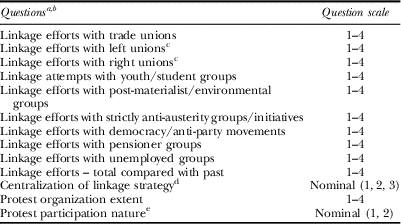
The central goal of the battery of questions used here was to identify the various ways in which the six parties under study have been mobilizing at the societal level and tried to link with social groups or engage in protest. Experts from each country were asked, inter alia, to identify the intensity of party linkage efforts with trade unions and other non-party organizations and movements, the organizational nature of deciding on linkage processes, the extent and nature of party involvement in anti-austerity protests, all with reference to the past three years (see Appendix, Table A1).
Ordinal scales (from 1 to 4) that captured extent were employed for most of the questions (the response options were explicitly labelled and ranged from ‘very intensively/frequently/willingly’ to ‘not at all’). Three of the questions used here sought to capture the centralization of linkage strategy and the nature of protest participation, operationalized as whether each party participated only in protests it organized or co-organized (these were ‘measured’ as nominal variables) (Appendix, Table A1). The questions were asked in English and the survey was sent via email using the Lime Service survey service platform (www.limeservice.com). All responses were anonymous.
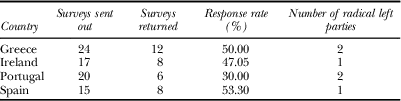
A short explanatory note accompanied all questions in order to try and ensure the same understanding of the question’s intention (Mumpower and Stewart Reference Mumpower and Stewart1996). The experts were selected through a review of the relevant literature and searches on university department websites. It was ensured that all experts had an excellent knowledge of the English language, as reflected in their CVs and/or publications in English. In the majority of cases, the experts contacted were also indigenous to the country in question. Response rates were satisfactory (see Appendix, Table A2), especially when compared with those of much shorter surveys.
Reliability of Experts’ Response Patterns
Although a research instrument may be designed and piloted carefully, it is very difficult to guarantee that each one of the respondents will respond to the questions with care, utilizing his/her full knowledge. Researchers often use appropriateness measurement indices (for example, Lamprianou Reference Lamprianou2013) to identify respondents whose response patterns indicate substantive evidence of low reliability (such as carelessness or guessing). Since the sample sizes in expert surveys are – by design – small, it would be difficult to use established psychometric methods such as person-fit statistics to identify experts with aberrant responses. For this study, we devised two customized measures of expert consistency in order to identify such experts.
First, we computed an ‘exact agreement’ index for each expert. For each pair of experts, we calculated the proportion of questions on which they gave exactly the same response. Then, for each expert, we computed the mean proportion of exact agreement across all experts. Then, we scaled these means using a mean of 0 and a standard deviation of 1 and plotted the results on a one-dimensional scatterplot, superimposing a boxplot for visual inspection.
We computed a second index which took into account the magnitude of the disagreement between the experts. For each pair of experts, we computed the mean absolute deviation of their responses to all the questions. Then, for each expert, we computed the mean of this index across all experts. Again, we scaled the means for all experts and plotted them for visual inspection as described above.
Combining the feedback from both indices, we decided that number 11 of the Coalition of the Radical Left and number 3 of the Greek Communist Party were consistently totally out of tune with the rest of the experts. After identifying these experts, we investigated their responses to the whole questionnaire by eye so that we could get a qualitative feel of their aberrance. Finally, we removed expert 11 from the case of the Coalition of the Radical Left and expert 3 from the case of the Greek Communist Party. No other experts demonstrated evidence of aberrant responses (a total of 50 experts remained in the analysis).
Beyond carelessness, however, there is also the issue of whether the experts gave responses to questions for which they did not have the relevant knowledge. Overall, the experts failed to give a response to 20 per cent of the total number of survey questions, so they did not systematically avoid the ‘don’t know/cannot tell’ response. This suggests that the respondents followed the instructions and most likely answered only those questions for which they felt that they were qualified to respond.
Reliability of Questions
After removing two experts with aberrant responses, we investigated the reliability of individual questions separately for each party. The assumption was that if the questions were well written and the experts understood them and responded carefully, then we would be able to measure only a small variability in their responses. We devised a Monte Carlo test to simulate the extreme hypothesis that the experts were answering the questions randomly. For the simulation, we took into account the probability of a missing response (i.e. don’t know/cannot tell) for each question. For example, for the Greek Communist Party responses, for each question, we simulated N random responses (N=the number of experts). Each response had M probability to be missing (M=the proportion of missing responses from the observed responses on this question). Then we estimated the standard deviation of the non-missing responses. This procedure was repeated 10,000 times, and we estimated the 95 per cent confidence intervals of the standard deviations. This was normally found to be in the range of [1.10–1.11]. In order to be a little bit more conservative, because we acknowledge that this was an extreme scenario of randomness, we decided that those questions with standard deviations larger than or equal to 1 would be treated as suspected for low reliability.
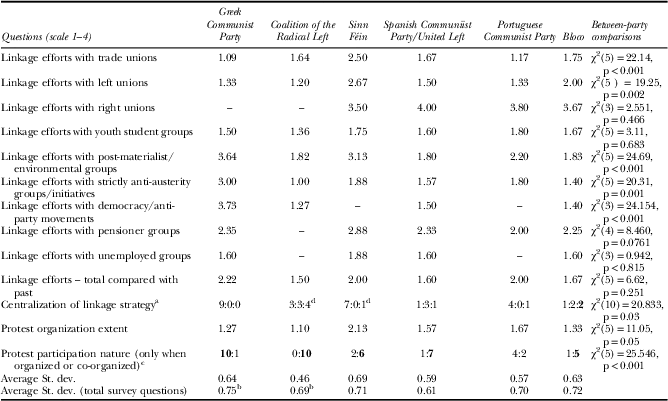
Finally, we visually inspected the actual responses per question, one by one, using our eyes as the screening instrument, searching for aberrant responses. In all cases of question removal, our ‘eye-ball test’ was in perfect agreement with the Monte Carlo method.Footnote 6 For some parties, a small number of questions were omitted from the analysis (see Table 3). This, inevitably, slightly limited the detail available for the empirical analysis; however, as shown below, it did not prevent us from addressing the main research questions.
Aggregated Responses per Question per Party and Between-Party Comparisons
Notes: - Question omitted for this party.
a Nominal scale (trichotomous). We present the number of counts per option.
b These St. dev. (=standard deviation) are those calculated before removing the extreme outlier from each party (see text).
c Nominal scale (dichotomous). We present the number of counts per option.
d These residuals are just marginally non-significant. The standardized residual (of the corresponding cell of the cross-tabulation) for the first category for the Coalition of the Radical Left was −1.85; for Sinn Féin it was 1.78. The residuals are large but non-significant. The overall chi-square tests were statistically significant.
Bold: Values of the corresponding standardized residuals that have been found to be statistically significant. These values do not denote pair-wise comparisons.
Analysis of the Data
To compare the aggregated responses between parties, we generated Table 3, which presents the mean rating per party per question. Although the experts responded on an ordinal scale, we present the mean rating (instead of the median) in order to assist those readers who may not be familiar with the use of medians. To compare the aggregated responses to each question between parties, we used the non-parametric Kruskal–Wallis test. For pair-wise comparisons, we used the nparcomp library (Konietschke Reference Konietschke2012) of the R package. For the nominal questions, we used chi-square tests.
We suggest caution when using inferential statistics on expert survey data because of the small sample sizes. It is often the case that the inferential statistics may not have enough power to drop the null hypothesis, thus leading to overly conservative results. In this study, statistics that are only marginally non-significant are presented as such, instead of simply saying that the results were non-significant.
Empirical Findings
Overall, there are statistically different responses between parties in regard to various questions. However, certain patterns of uniformity can be detected. First, the six parties exhibit no differences in what concerns the intensity of linkage efforts during the past three years, with youth/student groups. In spite of the fact that the Greek Communist Party and the Portuguese Communist Party have a more organized youth section, which is organically linked and directly controlled by the party, all radical left parties have tried to link with such groups to some extent (means from 1.36 to 1.80). In other words, linkage efforts with youth groups by parties such as the United Left, which has no established youth wing at the coalition level, or the Coalition of the Radical Left, which does not exert direct control over its youth organization, have not been limited due to the parties’ existing structure.
Secondly, the intensity of linkage efforts during the past three years with unemployed (means from 1.60 to 1.88) and pensioner groups (means from 2.00 to 2.88) is also largely the same across the six parties. Unemployed groups constitute a clearer target than pensioner groups, where the picture is nuanced, possibly reflecting the unorganized state of pensioner groups and, at the same time, the inability or unwillingness of parties to organize them.
Thirdly, parties exhibit more or less the same (lack of) linkage efforts during the past three years with trade unions traditionally associated with the right (means from 3.50 to 4.00). Such efforts have been consistently avoided by all parties included in the analysis, in spite of the ideological and organizational differences between them and, more specifically, irrespective of whether or not they are known to have already strong links with left-wing trade unions or not. Although the crisis has possibly meant an increase in common political interests between radical left parties and right-wing union members, all six parties have been unwilling to follow a ‘catch-all’ strategy in respect of the labour force. Essentially, all avoided the probable risk of internal tensions that such an opening could have on the party. But avoiding this risk was also fully in line with their core ideological position of supporting progressive forces with potential for confrontation with the state or government.
Fourthly, the overall intensity of linkage efforts during the past three years, compared with before the onset of the crisis (means from 1.50 to 2.22), is also similar across the various cases. Generally speaking, the extent to which the six parties have been trying to link organizationally and to cooperate with non-partisan organizations as a whole during the crisis has increased. Again, it appears to be the case that whether a party already had a group of affiliated organizations built around it (and even subjugated to its leadership’s demands) or not did not determine the degree of effort made to connect with society. Finally, all parties exhibit a similar extent of protest organization. Radical left parties are in a significant part of anti-austerity protests through the mobilization of their own people and resources (means from 1.10 to 2.13).
The above issues mostly concern questions that can be generally thought to constitute the societal extension of the ideological claims on which radical left parties are unified, as the representatives of the space to the left of social democracy, and the respective organizational traits of their value orientations. These include the importance of youth as a social group that is vulnerable to neoliberalism, the emphasis on unemployment and labour-related issues, a diametric opposition to the right and the historical significance of extra-parliamentary activity.
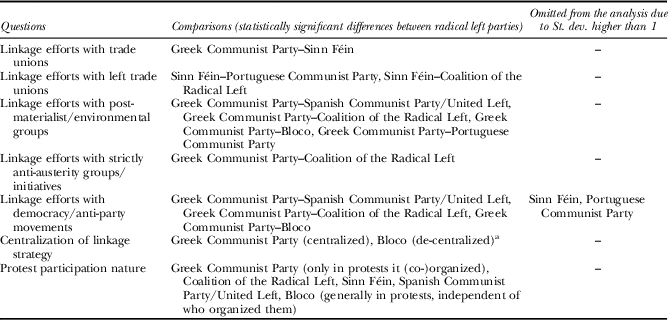
Table 4 presents the cases that have statistically significant differences between them per question. The most different party is the Greek Communist Party. It differs from Sinn Féin in terms of linkage efforts with trade unions in general and whether it only participates in protests organized or co-organized by itself. It differs from the Coalition of the Radical Left in terms of linkage efforts with democracy/anti-party groups, strictly anti-austerity groups and post-materialist/environmental groups, as well as whether it only participates in protests organized or co-organized by itself. It differs from the Spanish Communist Party/United Left in terms of linkage efforts with democracy/anti-party movements and post-materialist/environmental groups. It differs from Bloco in terms of linkage efforts with democracy/anti-party groups, post-materialist/environmental groups, as well as whether it only participates in protests organized or co-organized by itself. Finally it differs from the Portuguese Communist Party in terms of its linkage efforts with post-materialist/environmental groups; and from the general tendency of the other parties in terms of the centralization of linkage strategy and nature of protest participation. In other words, its observed frequencies for the first option of the relevant question are much larger than the expectations (the marginal sums).
Statistically Significant Differences between Radical Left Parties in Southern Europe and Ireland
Note: aThe cases of Coalition of the Radical Left (de-centralized) and Sinn Féin (centralized) are marginally insignificant.
Moreover, the Coalition of the Radical Left differs from Sinn Féin in terms of linkage efforts with left trade unions. The Spanish Communist Party/United Left is the only case where a statistically significant number of experts responded that linkage strategy is the outcome of bargaining between the central leadership and regional/local branches. The Portuguese Communist Party also differs from Sinn Féin in terms of linkage efforts with left trade unions, and Bloco differs only from the Greek Communist Party in the categories mentioned above. Sinn Féin is at variance with the Greek Communist Party, the Portuguese Communist Party and the Coalition of the Radical Left, as already outlined.
To a considerable extent the distinctions drawn at the beginning between the six radical left parties translate into differences here. Those cases between which the overall literature on radical left parties has been clearly demonstrating ideological and organizational divergence – the Greek Communist Party on the one side and the Spanish Communist Party/United Left, the Coalition of the Radical Left and Bloco on the other side – seem to stand on opposite sides on a number of questions. The case that maintains a somewhat special status within the radical left – Sinn Féin – also stands out on the items about trade unions and left-wing trade unions. Some of this party’s characteristics therefore continue to be at odds with both orthodox communist and non-orthodox communist radical left parties, illustrating Sinn Féin’s exceptionality. This is also implied by the fact that, on most items, it has no statistically significant differences with either one end represented by the Greek Communist Party, or the other, represented by the Coalition of the Radical Left, the Spanish Communist Party/United Left or Bloco. Additionally, Sinn Féin combines traits of both orthodox communist and non-communist radical left parties; it is the only party with a centralized linkage strategy but all at once seems to participate in protests organized by others. Here as well, continuity is the case, since this unorthodox combination echoes both the party’s highly centralized nature and its grassroots participation and mobilization at the community level.
Ideology may best explain the Greek Communist Party’s differences from the Spanish Communist Party/United Left, the Coalition of the Radical Left and Bloco in what concerns linkage efforts with democracy/anti-party movements, post-materialist/environmental groups, the centralization of its linkage strategy and the nature of its participation in protests. Notably, despite the varying intensity of the phenomenon of democracy/anti-party movements among Spain, Greece and Portugal, the Coalition of the Radical Left, the Spanish Communist Party and Bloco all appear to have made similarly strong efforts to connect with such groups, both by pursuing contact with them and by participating in various sorts of protests. This is also the case for post-materialist/environmental movements. In this way, these parties become even more accustomed to the lack of internal formalization and more dependent on unstable linkages, contingent on cycles of protests (Poguntke Reference Poguntke2002: 22). On the other hand, the Greek Communist Party continues to follow a strategy of avoiding alliances that might dilute the centrality of working-class individuals in its constituencies (Keith and Charalambous Reference Keith and Charalambous2013). Evidently, during the crisis, the party has not shifted focus from that section of society that it diachronically targeted.
The results concerning the centralization of linkage strategy are especially telling of the implications of organizational legacies and their relations to ideology. The emerging pattern (from Table 3) of the Greek Communist Party denotes centralization in deciding social allies and therefore suggests organizational continuity during the crisis years. Inoculating itself against reformist deviations has been a prime goal for the Greek communists, both before and during the crisis, and is hand in hand with the party’s organizational structure and practice. Ideological aversion to loosely structured social groups, which are likely to include politically apathetic, post-modern or insubordinate individuals, may have ensured organizational continuity, which in turn shielded the party from ‘untrue communists’. The linkage strategy of Bloco denotes mostly de-centralization and, along with the case of the Coalition of the Radical Left, which is only marginally insignificant, the tendency towards decentralization echoes both its multigroup composition and its ideological taste for pluralistic procedures. In addition, both of these parties are competing against highly unified and hierarchical orthodox communist parties, therefore their continuing tendency for decentralization can be thought to constitute an important differentiating feature of their profile. In contrast, the case of Sinn Féin, which is also marginally insignificant, remains centralized, in line with the IRA-influenced organizational tradition of the party.
Sinn Féin’s differences from the Greek Communist Party, the Portuguese Communist Party and the Coalition of the Radical Left where trade unions and left-wing trade unions are concerned can be best explained by the diachronic absence of linkage with such organizations in the case of the Irish radical left, and their domination by the state and government, in which Sinn Féin has never had a role to play. The degree of nationalism that Sinn Féin embraces may also be responsible for limited appeals to the unions. Making more effort to form ties with unions may have meant accepting the state’s interference in its programmatic positions on labour issues, or tampering with its nationalism. Overall, during the crisis period Sinn Féin’s relations with trade unions have not changed in terms of the attempt made by the party to reach out to the main labour federations. Changing circumstances seem to have not affected Sinn Féin’s strategy towards the unions, because of either ideology or organizational legacy, or both. All other parties, however, whether orthodox communist or not, appear to have made similar attempts to link with unions and left-wing trade unions in particular, independent of the result, which Tsakatika and Lisi (Reference Tsakatika and Lisi2013: 11) report as successful mostly in the case of the Greek Communist Party and Portuguese Communist Party, where ancillary organizations exist.
Finally, the Greek Communist Party’s difference from the Portuguese Communist Party concerning its linkage with post-materialist/environmental groups echoes those accounts that demonstrate subtle ideological distinctions between the two parties. The orthodox communist parties struggled to build links with society in comparison with other radical left parties, but they also portray differences that have so far been underplayed in the literature on South European radical left parties, and which continue into the crisis years. On this front the Portuguese Communist Party bears resemblance to parties such as the Spanish Communist Party/United Left and the Coalition of the Radical Left. This may be the reason why the Portuguese communists do not have statistically significant differences from either the Greek Communist Party or the Coalition of the Radical Left, the Spanish Communist Party and Bloco on a number of items.
Conclusions
In this study we interrogated the societal mobilization strategies of six radical left parties from countries severely affected by the crisis since 2009. Based on some of the results of an expert survey, our two-pronged goal was: to explore the extent to which ideologically and organizationally different parties of the radical left have responded to the crisis in diverse or similar ways; to identify the potential significance of party-specific variables (more specifically, ideology and party organization) among parties which have been mobilizing in similar socioeconomic and political environments, at a time of crisis.
Ideologically and organizationally different parties of the radical left have navigated the contemporary whirlpool of their crisis-ridden arenas in similar ways on those issues that unite them and reflect their differences from mainstream parties. By concentrating on societal mobilization efforts and not outcomes, our analysis reveals commonalities across the six parties – in respect of right-wing trade unions, youth, unemployed groups, pensioner groups, linkage efforts compared with the past, extent of protest organization – that have remained unmentioned in previous studies.
Beyond this point, however, differences between the six parties emerge which clearly show that party-specific characteristics are the main drivers of their more detailed societal mobilization strategy at times of crisis. On all questions that resonate with the ideological and organizational differences between orthodox communist parties on the one hand and reformed communist or democratic socialist, movement-like parties on the other – linkage efforts with austerity groups, linkage efforts with democracy and anti-party movements, linkage efforts with post-materialist/environmental groups, centralization of linkage strategy, protest participation nature – the Greek Communist Party stands out from the Coalition of the Radical Left, Bloco and the Spanish Communist Party/United Left. In this respect, our findings concur with Tsakatika and Lisi’s main arguments (2013). They further reflect the Greek Communist Party’s subtle yet real differences from the Portuguese Communist Party, as well as Sinn Féin’s singularity that transcends the orthodox communist/non-orthodox communist divide.
Taking it a step further, the six parties’ perceptions of the situations that confront them are heavily conditioned by party-specific characteristics that echo their diachronic differentiation from other actors within the same ‘family’, even when the domestic environment objectively changes to a great extent. Unlike Tsakatika and Lisi (Reference Tsakatika and Lisi2013), we argue that both ideology and organization can explain radical left parties’ societal mobilization strategies during the crisis. Ideological nuances require particular organizational structures, and these in turn sustain these nuances. In line with agency-centred perspectives, ideological and organizational path dependency remains unshaken by the extremity of outside conditions. Some of the parties may also have an office- or vote-seeking strategy that partly dictates their societal responses to the crisis, but this seems to be delimited by their ideology and organizational legacies.
The little change reported here since the crisis has wider implications for radical left parties’ potential to challenge neoliberal policymaking in a coordinated manner. Even in an era where the absence of old certainties gives new possibilities to radical left politicking, the radical left remains fragmented both nationally and internationally. The explanation of continuing radical left fragmentation in crisis-ridden arenas may be partly traced to radical left parties’ societal responses to the crisis. Common ground for convergences can be very hard to find, given that radical left parties pursue and undergo different socialization processes on the ground because of their ideological and organizational traditions. The participants and leaders of social movements, for example, tend to be modern and individualistic, whereas those of traditional social groups are more likely to allow themselves to be led by parties and be more materialistic or conservative (Poguntke Reference Poguntke2002: 22). Divergences among radical left parties in what concerns the groups they seek ties with, their participation in protests and the procedures followed in deciding their social partners during the crisis can bring about interaction with different sections of society, hence also different programmatic, cultural or organizational influences and priorities.
ACKNOWLEDGEMENTS
This paper was presented at the conference ‘The Radical Left and Crisis in the EU: From Marginality to the Mainstream?’, University of Edinburgh, 17 May 2013, and at the research seminars of the Department of Social and Political Science, University of Cyprus. The authors would like to thank the participants of these events, the two anonymous reviewers and the editors of the journal for their useful comments. Thanks also go to Richard Dunphy and Michael Holmes for discussions on the Irish left.
APPENDIX
Questions and Scales
Experts and Political Parties in the Expert Survey