

INTRODUCTION
By the end of the twentieth century, the Democratic Republic of Congo (DRC) had become the battleground for ‘Africa's first world war’ (Oxfam 2001), and the target of a renewed scramble for its vast mineral wealth.Footnote 1 It was against this backdrop that Britain and France committed themselves, at their December 1998 Saint-Malo summit, to set aside past rivalries and ‘harmonise their policies’ towards Africa (Saint-Malo Declaration 1998). At their Anglo-French summit in February 2001, the UK and France singled out the DRC and promised to ‘intensify their joint efforts to promote lasting peace’ in this war-torn country (Cahors Communiqué 2001).Footnote 2 Then, in November 2004, they identified the DRC as one of only two African states included in their Action Plan on Franco-British Development Cooperation, and pledged to ‘work together in support of country-owned poverty reduction strategies’ (Action Plan 2004).Footnote 3
While similar promises were repeated at subsequent summits, there was no attempt to spell out the terms of the intended cooperation. Was it simply to involve a process of ‘deconflictualisation’, where the UK and France avoid public quarrels and play down divergences in their overall policy priorities? Or was the aim to engage in ‘coincidental cooperation’, where London and Paris collaborate actively but do so only at times of crisis or when their goals converge ‘naturally’? Or was the idea to engage in ‘sustained and reciprocal cooperation’, where Britain and France work in partnership over a prolonged period, while aligning their policy objectives and instruments?
Surprisingly perhaps, given the potential importance of this initiative for Africa's Great Lakes Region and for Europe's Common Foreign and Security Policy (CFSP), no scholarly attention has been given to the question of UK-French bilateral cooperation or ‘bi-multi’ collaboration (where the UK and France work together to bring other donors on board) in the DRC. There has inevitably been some focus on European Union (EU) cooperation (Gegout Reference Gegout2005), particularly with reference to European Security and Defence Policy (ESDP) military and civilian missions (Chafer & Cumming Reference Chafer and Cumming2010; Keane Reference Keane, Spence and Fluri2006). However, there has been no recent analysis of British relations with the DRC, while studies of Franco-Congolese ties date back to the late 1990s and highlight competition between France and ‘Anglo-Saxon powers’, notably the United States (Huliaras Reference Huliaras1998). This article addresses these issues. It begins by examining the nature of, and interests underpinning, past Anglo-French rivalry in the Congo. Drawing on over 150 off-the-record interviews in Kinshasa and with officials and former officials in the British and French Foreign Ministries, European Commission (EC) and United Nations (UN), it looks for evidence over the last decade or so of any new institutional framework for UK-French dialogue, and any bilateral cooperation in the fields of peacebuilding and poverty reduction. It evaluates the extent of this collaboration using a typology (set out in Table 1 below) that distinguishes between three types or levels of cooperation, namely ‘deconflictualisation’, ‘coincidental cooperation’, and ‘sustained and reciprocal collaboration’.Footnote 4 It then identifies the pressures on the UK and France to engage in some degree of coordination. Next, it examines the constraints that prevented closer collaboration, including divergent interests, different foreign policy norms (that is, differences over how to achieve a broadly similar set of policy goals), institutional factors and resource constraints. It concludes by setting out the wider implications of Anglo-French cooperation and the limited prospects of closer future collaboration.
Before proceeding, it is important to sharpen our focus. First, this article concentrates on relations between UK and French officials and governing elites, rather than any linkages between non-state actors. Second, it focuses on cooperation specifically in the areas of peacebuilding and poverty reduction and does not, for reasons of space, explore related fields, such as justice reform.Footnote 5 Third, it does not assess the impact of Anglo-French cooperation in terms of policy outcomes. This would be difficult, given how influential other actors are in the DRC, notably China (the largest investor), Belgium (the ex-colonial power and main trading partner), the United States (the key regional peace-broker), South Africa and Angola (regional actors with a central role in security sector reform (SSR)), the EU (the largest source of aid), and MONUC (now MONUSCO: the UN's most expensive peacekeeping mission).Footnote 6 Finally, this study does not assume that Britain and France should necessarily work together in response to every challenge facing the DRC. Instead, it evaluates and explains the extent to which they did or, in many cases, did not do so in recent years. In assessing the level of cooperation observed, it focuses on the actual policy objectives being pursued and the behavioural norms, that is, the standard operating procedures, favoured delivery mechanisms and cultural preferences, which each country typically adopted in pursuit of those objectives. In practice, as we will see, it was often these differing norms, rather than explicitly opposed interests or policy goals, that pushed British and French approaches to intervention in the DRC in different directions.
RIVALRY IN THE FACE OF CHAOS
From colonial times to the early post-Cold War era, the UK and France pursued rival agendas and were driven by divergent interests in the Congo. The rivalry can best be understood with reference to three pivotal moments. The first came at the time of colonisation when Britain and France both had an interest in taking over all or part of the Congo. Having failed to secure paramountcy over the mouth of the river Congo, the UK signed a treaty with Portugal in 1884, backing the latter's claims in the region in exchange for exclusive navigation rights in the Congo Basin (Anstey Reference Anstey1962: 10–56). France was alarmed by this treaty which, had it not been rescinded, would have hampered its development of its neighbouring colony, present-day Congo-Brazzaville. The French were even more dismayed when, at the 1884–5 Berlin Congress, they were obliged to recognise claims by the Belgian King, Léopold II, to the vast territory known as the Congo Free State (Trefon Reference Trefon1989).
A resurgence in Anglo-French rivalry occurred in 1960, at the time of Belgium's ill-prepared decolonisation of the Belgian Congo (as it became known in 1908), when the UK and France saw an opportunity to pursue their rival interests, particularly in the mineral-rich Katanga province. This second flashpoint triggered an army mutiny, the secession of Katanga, the mounting of a UN operation, the assassination of the Congo's Marxist-leaning Prime Minister, Patrice Lumumba, and, in 1965, a coup by the French/Belgian/US-backed general Joseph-Désiré Mobutu. Amidst the chaos, the UK and France officially supported the UN aim of preserving Congolese territorial integrity. Yet behind the scenes, they were helping Katangese secessionists, albeit towards different ends. The British Foreign Minister, Lord Home, and backbenchers in the ruling Conservative government were sympathetic to the demands of UK-owned companies, such as Tanganyika Concessions, which were calling for Katanga's independence or its integration into the Central African Federation (CAF – a semi-independent entity grouping three former UK dependencies: present-day Zimbabwe, Zambia and Malawi) (Janes Reference Janes2000: 162–3). The French government actually supplied weapons and mercenaries to the rebels. Its aim was to block the integration of Katanga into the CAF, break up the Belgian Congo, and facilitate territorial gains by neighbouring Congo-Brazzaville under its pro-French leader, Abbé Youlou (Trefon Reference Trefon1989: 13–14).
The third flashpoint came in the mid 1990s, by which time Britain had become a relatively insignificant player in Zaïre (as the Congo was known from 1971 to 1997), whilst France had emerged as its leading military backer (EIU 1993: 37). After suspending development assistance in 1991, the French reverted three years later to a policy of unconditional support to President Mobutu, ostensibly in recognition of his backing for France's 1990–3 military intervention in Rwanda and his acceptance, in 1994, of over a million Rwandan refugees. In so doing, France put itself on a collision course with the UK and the USA, which wanted the kleptocratic Mobutu removed and supported, directly or indirectly, the 1996 military campaign by the Alliance des Forces Démocratiques pour la Libération du Congo-Zaire (AFDL – an alliance of Congolese Tutsis, Rwandans, Ugandans and Angolans, headed by Laurent Kabila). On 15 November 1996, the French backed, within the UN Security Council (UNSC), a proposed Canadian-led mission to repatriate Rwandan refugees. The intervention won cautious backing from the USA and the UK, which agreed to provide one battalion (IRIN 1996). Yet this support was withdrawn when, following an AFDL attack, 600,000 Rwandan refugees began returning home. The French government responded in January 1997 by covertly levying 300 mercenaries in a failed attempt to save Mobutu (Agir Ici-Survie 1997: 138). Then, on 13 March, France called for an EU military-humanitarian operation. However, this was blocked by the UK (The Guardian 20.3.97), prompting French officials to grumble that Mobutu's downfall was ‘all the work of the Defence Intelligence Agency … and MI6’ (The Times 11.3.99).
UK-French relations in Congo were traditionally marred by a number of factors. The first was ‘competitive clientelism’ (Youngs Reference Youngs2004: 306), that is, Britain and France's hard-nosed pursuit of their rival interests, coupled with their reluctance to tackle, individually or jointly, the Congo's poverty- and security-related challenges. The second was the different relative importance that the British and French attached to Zaïre. This was clearly reflected in the size of their aid programmes. Thus, between 1992 and 1997, the UK provided on average US$3.1 million and was only just one of the top ten donors, whereas France gave five times more aid (US$15.9 million a year), and was regularly one of Zaire/Congo's top three donors (see Table 2). The final constraint was the absence of forums for constructive Anglo-French dialogue. The UNSC and EU allowed for discussions but were used by the UK in 1996–7 to delay or block French-backed calls for international intervention in Zaïre. The Anglo-French summit was also potentially useful but, despite focusing on the Great Lakes in November 1996, failed to secure any Anglo-French consensus (Press Association 8.11.96).
SAINT-MALO AND BEYOND: TOWARDS A NEW INSTITUTIONAL FRAMEWORK?
At their 1998 Saint-Malo summit, the UK and France promised to break with past rivalry and ‘pursue close cooperation on the ground in Africa’ (Saint-Malo Declaration 1998). At subsequent summits, they made specific pledges to work together in the DRC to promote peace and reduce poverty.
Initially, these promises barely camouflaged a continuation, even a widening, of Anglo-French rivalry across the Great Lakes region. Indeed, Britain and France made only perfunctory efforts to deconflictualise their approaches in the early years following Saint-Malo. Thus, while the UK and French Foreign Ministers, Jack Straw and Hubert Védrine, undertook a joint visit to the Great Lakes in January 2001, the two men proved unable to paper over their differences, with Straw focusing solely on the need for the DRC to disarm Rwandan Hutu militias, while Védrine called on Rwanda and Uganda to withdraw their troops in tandem with the disarmament of Hutus (Financial Times 22.1.2002). Similarly, while London and Paris both adopted a common European line on the restoration of aid to the DRC in December 2001, they did so only after a dispute in which France and Belgium pushed for development assistance to be resumed immediately, whereas Britain and the EC sought to delay this decision until the Congolese had shown greater commitment to the peace negotiations. Within the UNSC, too, there were disagreements. Thus, while the British and French Permanent Representatives sought to elide their instructions ‘so that it didn't sound as if the UK was harder on Kinshasa and France harder on Kigali’ (ex-FCO official int., December 2008), they failed to conceal a row in November 1999 over the composition of MONUC, which included, in France's view, too prominent a role for British personnel for a mission in a French-speaking state (Gegout Reference Gegout2009: 234). Nor could they disguise divergences over the April 2001 and October 2002 reports by the UN Panel of Experts. The UK rejected the Panel's early findings which exposed illegal practices by UK mining companies and revealed the extent to which the Ugandan and Rwandan regimes, both close to the British government, were plundering Congolese mineral resources. The French by contrast had been the driving force behind the Panel, providing it with intelligence and ‘an unofficial mandate’ to criticise Rwanda and Uganda for ‘occupying the DRC not so much for security reasons as for economic reasons’ (Nest Reference Nest2006: 86).
This lack of cooperation has to be understood in context. The Rwandan genocide had created a faultline between the UK, which saw the Tutsi-led Rwandan Patriotic Front (RPF) as a force for good and the Hutu-based Forces Démocratiques de Libération du Rwanda (FDLR) as unambiguous genocidaires, and the French – or rather elements within the French system – who considered the RPF as illegitimate rebels and the FDLR as legitimate political actors (FCO int., June 2010). Subsequently, the outbreak of the second Congolese war in August 1998 widened the rift between Britain, which became a leading backer of the Rwandan government, both bilaterally and in Brussels, and France, which, after winning over Laurent Kabila in 1999, became the DRC's key Western supporter.Footnote 7 This situation was exacerbated by the unpredictability of President Laurent Kabila, who expelled the number two in the French embassy in December 1997 before throwing out six British diplomats on allegations of spying in March 1999 (The Guardian 13.3.99). Finally, the prospects for cooperation were further weakened by Britain's Secretary of State for International Development, Clare Short, who blindly provided budgetary assistance that was subsequently used to fund Rwandan and Ugandan war efforts in the Congo (Porteous Reference Porteous2008: 22–3).
It was not until the end of the ‘official’ conflict and the creation, in June 2003, of a Congolese Government of National Unity and Transition (henceforth the ‘transitional government’) that Britain and France opened meaningful channels for dialogue. Crucially, the UK, which had only three staff in its mission in 2003 (Hilary Benn, Hansard 7.3.2007: col. 465WH), began building up a large permanent Department for International Development (DFID) office, while France reopened the Agence Française de Développement (AFD) in 2003 after a closure lasting eleven years. Closer Anglo-French cooperation was also facilitated by the creation in 2004 of the International Committee for the Accompaniment of the Transition (henceforth the CIAT), a donor steering committee established to oversee the transition. Chaired by the UN, the CIAT included ambassadors from the UK, France, the USA, China, Russia, Belgium, Canada, South Africa, plus high-level representatives of the African Union (AU), EC and EU. Within the CIAT, the UK ‘worked together with the French in practice and in a close way’, and ‘dissent was never shown in public’ (MONUC int., May 2009). This closeness was facilitated by a rapport between UK and French ambassadors, Andy Sparkes and Georges Serre, and by the diversity of views within the CIAT, which made the British and French appear like-minded.
After the 2006 elections and the CIAT's disbandment, the UK and France helped establish new donor forums, such as the ‘Security Council Plus’ and the ‘P3 plus 2’. The former was an information-sharing session chaired by MONUC and involving the ambassadors of Security Council member states with a mission in Kinshasa, key African countries and representatives of the AU, EU and EC. The latter was more influential, comprising the UK, France and the US (‘the P3’), together with Belgium and South Africa, and meeting fortnightly at ambassadorial level. There were, in addition, P3 plus 2 meetings involving heads of development cooperation and political counsellors. Equally, there were regular talks between European Heads of Mission and Heads of Development Cooperation, as well gatherings of the Great Lakes Contact Group and of the ‘International Facilitation’, each of which included UK and French representatives.Footnote 8 In New York, too, there were shadow meetings of the P3 plus 2 and UK-French consultations on the UNSC over revisions to MONUC's mandate (French Foreign Ministry int., January 2009).
Alongside these gatherings, the UK and France established closer bilateral ties. By early 2008, the British and French defence attachés had forged good relations and were collaborating on the renovation of a junior staff college in Kinshasa, the reopening of an initial officer training school in Kitona, and the training of the Congolese infantry battalion for the African stand-by force.Footnote 9 By November 2008, the UK and French Foreign Ministers, David Miliband and Bernard Kouchner, had undertaken a joint visit to the Great Lakes. This trip was symbolically important as a show of unity but will mainly be remembered for the febrile speculation it generated over a possible European military intervention in eastern DRC. The visit was followed up in the spring when the French Foreign Ministry sent a delegation to London to discuss a paper on the DRC prepared by the FCO Strategy Unit. More recently, in September 2009, the French president, Nicolas Sarkozy, appointed Christian Conan as Great Lakes special representative, and one of Conan's first trips was to London, followed by another to Washington where he met UK and US officials (French Foreign Ministry int., June 2009).
It would, however, be wrong to overstate the capacity for such exchanges to bring about an alignment of UK and French policy goals or of the behavioural norms used in pursuit of those goals. The UK and France were certainly involved in a plethora of multilateral forums and made efforts to avoid public disagreements. Yet if the British and French were actually engaged in ‘sustained and reciprocal cooperation’, they might have been expected to share the burden of attending these meetings. It is also worth adding that some ‘bilateral’ Anglo-French exchanges within multilateral groupings only came about because the UK (as in the EU Working Group on Human Rights) or France (as in the EU Advisory and Assistance Mission (EUSEC), discussed later) happened to head a particular body. Significantly too, the UK preferred to work through the UN, where it was on a par with France as a permanent Security Council member, while the French, except on issues specific to the UN (e.g., MONUC's mandate), were more inclined to work through the EU and via ESDP missions.
Nor was there any concerted effort to formalise bilateral exchanges. Indeed, tentative plans in 2009 to establish a joint UK-French office in Goma, eastern DRC, seem to have been shelved.Footnote 10 The emphasis remained on ad hoc, informal and personal ties between officials and politicians who happened to ‘get on’. In practice this has led to two planned joint Foreign Ministerial visits to the DRC being cancelled in recent years, and the 2008 trip coming about coincidentally when Bernard Kouchner extended a last-minute invitation to his British counterpart (former UK Minister int., December 2009).
TOWARDS PARTNERSHIP IN PRACTICE?
Having shown that the UK and France opened channels for communication, we must now ask whether, particularly after the creation of the transitional government in 2003, they honoured their promises to intensify ‘joint efforts to promote peace’ and to ‘support … country-owned poverty strategies’. To answer this question, we must return to, and differentiate fully, the three categories of cooperation highlighted in our introduction and elucidated in more detail in Table 1.
Typology of levels of Anglo-French state cooperation
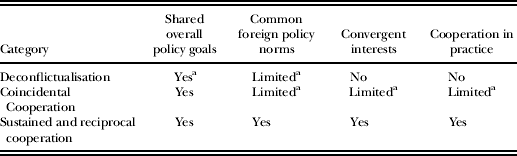
a The degree of commonality will largely depend upon the issue and timeframe involved.
The first is ‘deconflictualisation’. Here the UK and France share broadly similar policy goals and, either totally or partially (in the case of ‘semi-deconflictualisation’), set aside past rivalries, avoid unnecessary duplication and publicly play down differences in their agendas. In some instances, deconflictualisation can involve a degree of negotiation to ensure a reconciliation of positions, and it is often the prerequisite for other types of cooperation. At the same time, however, it does not mean that donors actively work together on specific projects or that they seek to align their interests or foreign policy norms. The second is ‘coincidental cooperation’, where Britain and France harmonise policy instruments and collaborate actively on policy issues and in the field, but do so only sporadically over the short term, and where policy goals and interests converge ‘naturally’. The third is ‘sustained and reciprocal cooperation’, where the countries work in partnership over a prolonged period, while also seeking to harmonise policy goals and instruments over the longer term. Needless to say, this typology has drawbacks. For a start, these categories cannot be entirely separated, and collaboration may more accurately be plotted anywhere on a continuum ranging from sustained collaboration through to active non-cooperation, where Britain and France's policy objectives and interests, as well as the steps they take to realise them, are actively opposed to each other. While active non-cooperation remains an option for the UK and France, this category is not included in our typology as it is, by definition, not a form of collaboration. Furthermore, the typology does not fully distinguish between implicit cooperation, where countries share the same objective or are members of the same forum but do not negotiate over their positions, and explicit coordination, where states consciously work together to pursue similar goals, promote synergies or establish common instruments. Finally it does not explicitly differentiate between bilateral and bi-multi cooperation, which often take place in parallel, leading in practice to a process best described as ‘messy multilateralism’ (Chafer Reference Chafer2011: 62). Even so, it will be argued, the categories delineated here offer useful indicators of the different degrees of coordination and help distinguish between areas of collaboration and non-cooperation.
Working together to secure a lasting peace
To begin with British and French efforts to promote peace, here the focus is on securing the democratic transition, peacekeeping missions, and reforms to the police and army.
Securing the democratic process
The British and French shared broadly the same policy goals on democratic reform, and thus managed to engage in active, if ‘coincidental’, cooperation to secure the DRC's democratic process. They worked together closely throughout the transition phase (2003–6), and in the crucial period immediately before and after the 2006 elections. They emerged as the leading contributors to the elections, with the UK providing over €50 million and France supplying a further €10 million, together with police officers and troops (French embassy Kinshasa, n.d.1). In 2004, the UK, through its DFID conflict adviser, and France, through its defence attaché, pushed jointly for an election security strategy. Britain and France took the lead, alongside the Congo's Interior Minister, in bringing in other partners and ensuring the establishment of a steering committee for election security (DFID int., May 2009). Subsequently, London and Paris worked together to approve missions aimed at securing the electoral process: EU Police (EUPOL)-Kinshasa in 2005 and EU Force (EUFOR)-DRC mission in 2006 (discussed later). Also in 2006, the UK funded a project aimed at training judges to handle electoral disputes and contracted out much of this activity to the Organisation Internationale de la Francophonie (DFID int., May 2009). British efforts to find a project partner were facilitated by the French aid mission, the Service de Coopération et d'Action Culturelle (SCAC).
Also ahead of the elections, in early 2006, the UK and France established an informal donor grouping for harmonising media capacity-building work, with France initially serving as co-chair and with Britain's ‘views being represented by France’ (DFID int., May 2009).Footnote 11 After the elections, they were among the donors pushing for a ‘governance compact’ designed to increase DRC government accountability (Hoebeke et al. Reference Hoebeke, Carette and Vlassenroot2007: 6).Footnote 12 Subsequently, in 2007, they created an informal civil society group, headed by the UK, France and the UN Development Programme (UNDP), to promote donor coordination of civil society programming.Footnote 13 Also in 2007, they set up a four-year ‘silent partnership’ (an innovative arrangement in which one donor provides the funding and another executes the project) to promote democratic governance and an independent media. DFID provided £10 million to this joint media project, Britain's largest in Africa, while the SCAC offered the office space and France Coopération Internationale (FCI), a French state-funded media body, supplied the expertise.
There were also, however, instances where the UK and France failed to cooperate. This non-cooperation came to the fore towards the end of the transitional period, when the British were pushing for political space to be created for an effective opposition, whereas the French, whose view won out thanks to Belgian backing, were essentially advocating unconditional support for Joseph Kabila as head of the transitional government and DRC president since his father's assassination in January 2001 (AFP 7.3.2006). There were, behind the scenes, other instances of non-cooperation or at best deconflictualisation, but these were camouflaged by the fact that the UK and France operated within the same multilateral forum. To illustrate, both Britain and France, in line with their commitments as members of the EU Working Group on Human Rights, signed up to a robust European policy on human rights and local democracy. Yet they did not do so as a result of any explicit exchanges or shared conviction. Thus, while the British government was generally – in the DRC if not in Rwanda – a stout defendant of human rights and, with a contribution of £30 million, a stalwart supporter of local elections, France was more equivocal. Indeed, while the French underscored their European credentials by subscribing to a common EU discourse on human rights, in practice they opted for a pragmatic, uncritical approach that gave priority to stability and the preservation of France's close links to the Congolese government.
Furthermore, while the ‘silent partnership’ outlined above was indeed an example of active cooperation, the media and governance project only came about ‘by accident’, as a result of a momentary coincidence of agendas (DFID int., October 2009). Thus, the UK was aiming to rationalise its staffing and seeking a donor (not necessarily the French) with the expertise to deliver its media programme, while the French coincidentally had the capacity (a permanent media attaché in its mission) but lacked the funding to mount a large-scale project. While this convergence of goals was enough to seal the deal, cooperation was initially stilted, as DFID sought reassurances that the FCI could deliver the project effectively and in a way consistent with DFID's standard operating procedures (DFID int., 2009). There was, moreover, no attempt to extend this partnership or replicate it in other sectors, even though DFID needed operators to implement its programmes, while cash-strapped French agencies were keen to offer their services.
Peacekeeping missions
Turning to peacekeeping missions, here too there was, after 2003, active though ‘coincidental’ cooperation. From June to September 2003, Britain and France participated in Operation Artemis, a European Security and Defence Policy (ESDP) military mission aimed at stabilising the humanitarian situation in Bunia (eastern DRC) when, following the withdrawal of Ugandan forces, fighting escalated and MONUC failed to cope. Artemis was the first EU mission to be launched independently of NATO and the first outside Europe. Despite continuing troop commitments in Iraq, the UK managed nonetheless to send one hundred engineers, who played a key role, resurfacing the runway at Bunia, thus enabling supplies to be flown in. Britain also pushed Rwanda to accept the EU force and persuaded Uganda to offer airport facilities at Entebbe (Bagayoko Reference Bagayoko2004: 103). France was ‘the driving political force’ and ‘framework nation’, providing the operational headquarters, the intelligence and 90% of the 1,400-strong force for this geographically limited operation (Gegout Reference Gegout2005: 438).
Although ground-breaking, Artemis only came about thanks to a timely convergence of British and French agendas on common security concerns in the Great Lakes and a shared interest in patching up differences on the international scene. The UK was alarmed at the possibility of genocide in the DRC, anxious to prove that London was still interested in developing a European defence capability, and keen to ‘paper over the cracks’ that the Iraq War had created within Europe (Olsen Reference Olsen2009: 251). France shared many of these concerns, and also ‘badly wanted a mission to show the EU was capable of acting alone, where NATO would not be involved’ (Gegout Reference Gegout2005: 437). The French were, moreover, desperate to ensure British participation, as the operation was in an inaccessible area close to the Rwandan border, and could bring French troops into contact with Congolese militias close to the Rwandan regime (Gegout Reference Gegout2009: 240).
The second mission was EUFOR-DRC (July–November 2006), which supported the UN in supervising the 2006 elections. While the British did not send combat troops, partly due to concerns about military overstretch, they did approve EUFOR within the European Political and Security Committee (PSC), as well as supporting it politically in a joint statement by UK and French Defence Ministers, John Reid and Michèle Alliot-Marie (AFP 6.3.2006). The French deployed, together with Germany, the largest number of troops for this mission, which involved 1,200 soldiers in and around Kinshasa plus 1,200 troops on-call in neighbouring Gabon. France also provided the force commander and press-ganged Germany into providing the operational headquarters.
As with Artemis, Anglo-French cooperation was coincidental, reflecting a convergence of agendas at the time of the operation. For London, the stability of the DRC was paramount: the UK was a significant contributor to SSR and the largest bilateral funder of the elections. For Paris, EUFOR was also about stability. But it was even more importantly a means of building EU military capacity, particularly in the context of the 2005 EU Strategy for Africa. Equally, it had ‘to do with French–German cohesion’, and with bolstering the ESDP's credibility after the rejection of the European Constitutional Treaty (IHT 12.6.2006).
Anglo-French collaboration on peacekeeping missions thus came about thanks to a convergence of agendas and a readiness, in the face of crisis, to temporarily align policy instruments. Cooperation, however, was not sustained, and was not driven by any overriding need to work together on crises in the DRC. The patchy nature of collaboration in the face of such crises was exposed in Bukavu (2004), Rutshuru (2005) and Sake (2006) when humanitarian missions could have been but were not mounted, ostensibly to avoid undermining MONUC. This was revealed in late 2008, when the dissident Tutsi general, Laurent Nkunda, looked like taking Goma. Initially, Bernard Kouchner mooted the possibility of an intervention, while the UK Foreign Secretary refused to rule this out (AFP 3.11.2008). Within days, however, Kouchner's enthusiasm had been curbed by President Sarkozy, and the UK, as one of two countries heading European battle groups, had dismissed the idea of military involvement, citing commitments in Iraq and Afghanistan.Footnote 14 In the end, the French, who held the EU presidency, abandoned the idea and lobbied, with the UK, for more troops for MONUC and a better deployment of existing forces.
Reforming the police
On police reform, the UK and France were able for the most part to deconflictualise their approaches. They began to limit duplication of effort when, in December 2003, they approved a DRC government request to help establish an Integrated Police Unit (IPU) to protect Congolese state institutions.Footnote 15 They took another step towards coordination when they backed the launch, in April 2005, of EUPOL-Kinshasa, a European civilian police mission to mentor IPU actions in Kinshasa during the transition. The UK and France provided complementary forms of support to EUPOL, with the British – who were short of French-speaking police officers – contributing mainly equipment and funding, and the French supplying over a third of the police contingent. The two countries backed extensions of EUPOL's mandate, as well as widening the remit of this body (renamed EUPOL-DRC in July 2007) to include security issues in eastern Congo. They also consistently supported EUPOL in negotiations with the Congolese government over future police reforms.
However, the limits to cooperation were revealed when, in January 2006, a European fact-finding mission observed that there was little donor coordination on policing, ‘with the French having trained a unit following its own chain-of-command and the South Africans, financed by the British, having trained police SWAT teams with another chain-of-command, different equipment and different communication systems’ (ESDP mission int., May 2009). There were clearly disagreements between the UK and France over how to achieve the desired goal of a peaceful, well-policed state, and differing behavioural norms were most apparent in this area. In this context, for example, it emerged during the elections that the British were planning, together with South Africa, a national system for police radio communication, while the French had set aside funding for different equipment and a radio transmission centre. This resulted in a stand-off that was eventually resolved in favour of the UK. Other divergences persisted beyond the elections. For example, the UK advocated ‘community policing’ by unarmed officers, while France remained more inclined towards riot control (ESDP mission int., May 2009). Significantly too, the UK urged EUPOL to follow the template laid down by the British in Sierra Leone, with the appointment of a single police Inspector-General and the provision of large-scale DFID funding. However, while such a solution was possible in a small ex-British colony, it was deemed unacceptable by the French, Belgians and Congolese to have a UK police officer assume such a key position in this huge francophone country (ESDP mission int., May 2009).
Restructuring the army
Britain and France only managed to ‘semi-deconflictualise’ their approaches towards army restructuring. They took their first major step towards coordination when they approved the deployment, in May 2005, of the EUSEC army reform mission. After that, the UK and France contributed to the common costs of this programme through the CFSP budget, supported moves towards weekly meetings, and approved extensions of EUSEC's mandate as well as some merging of the functions of EUSEC and EUPOL. London and Paris also managed to avoid replicating each other's activities within EUSEC, largely by drawing upon their own favoured policy instruments. Thus, the UK acted mainly in a funding capacity, regularly financing – out of the Africa Conflict Prevention Pool and the Whitehall Peacekeeping Budget – a handful of French-speaking staff within EUSEC,Footnote 16 and contributing heavily to the cost of its biometric schemes to identify Congolese soldiers and its chain-of-payments project to stop soldiers being defrauded of their salaries.Footnote 17 Meanwhile, France supplied the largest military and civilian contingent, as well as heading the mission, initially under General Pierre-Michel Joana then under General Jean-Paul Michel.Footnote 18
Yet, while the UK and France both aimed to promote a peaceful DRC, they failed to agree on the policy norms and instruments needed to secure this overarching objective. In particular, they failed to work to the same agenda on army reform. The UK for its part sought to ensure that EUSEC ‘acted more broadly’ and served as the main channel through which European donors engaged with SSR (MoD int., June 2009). For France, however, EUSEC should only have an ‘advisory function’ and should merely ‘coordinate the bilateral military assistance efforts of its member states’ (French Defence Ministry int., May 2009). These divergent visions persisted, partly because the DRC government undermined donor efforts at coordination on SSR and partly because the UK and France had rival perspectives on, and roughly equal influence over, questions of army reform and SSR more generally (Melmot 2009: 17). In effect, the UK saw its ‘impact devalued’ within EUSEC by its failure to contribute military personnel but was generally held in esteem by other donors on SSR. Conversely, the French enjoyed greater influence within EUSEC, thanks to their staff contributions and their role – alongside the Belgians – as the original proponents of this mission (Hoebeke et al. Reference Hoebeke, Carette and Vlassenroot2007: 27). Yet they were not at the forefront of donor thinking on SSR, and were widely thought to have remained ‘within their comfort zone’ in the DRC, taking ‘a fairly bilateral approach’ and focusing on hard military training and the integration of French officers within the Congolese army (ESDP mission int., May 2009.). Such an approach to army reform, alongside France's continued bilateral support for Congolese policing,Footnote 19 might, on the face of it, be viewed as an attempt to consolidate French influence over the levers of power in the DRC. The divergences with the UK over these reforms appeared, however, to stem less from conflicting interests and more from divergent behavioural norms relating to the kind of policing and army structuring (essentially the British versus the French model) that was most appropriate to the needs of the DRC.
Tackling poverty together
Turning to poverty reduction, here too the UK and France only semi-deconflictualised their approaches. In 2006, Britain and France began drafting, together with fifteen other donors, a Country Assistance Framework (CAF) for the DRC (World Bank 2008: 5). The CAF (2007–11) was a strategic tool for coordinating development programmes and reducing duplication. It enabled donors to claim to be adhering to the 2005 Paris Declaration on aid harmonisation, and even allowed the French government to assert, in its 2007–11 Partnership Framework Document with the DRC (Document Cadre Partenariat 2007: section 2.2.d), that France, Britain, Germany, Belgium, Holland and the EC constituted ‘a hard core’ of European donors working on key sectors identified within Congolese-led poverty programmes, notably the 2006 Poverty Reduction and Strategy Paper and the 2007 Programme d'Actions Prioritaires.
Nevertheless, while the UK and France shared a concern with poverty reduction in the DRC, they disagreed over how to achieve this goal. They shared their analyses and engaged in collective monitoring via the CAF, but did not undertake joint donor programmes. The CAF actually provided a cover behind which the UK persisted with policies, such as the payment of school and health-user fees, which were – in a country where corruption is rife – viewed as ‘naive’ by parts of the French administration (AFD int., May 2009). Nor did it discourage France from pumping aid into cultural projects, even though the developmental merit of such activities was questioned by DFID.Footnote 20 Significantly too, the CAF did not result in any direct bilateral cooperation between the UK and France. Thus, while the DFID and AFD exchanged information on water projects, and considered co-funding health and education programmes (AFD int., May 2009), they did not agree a common approach, even on issues, such as primary education and healthcare, where the wider UK and French aid administrations worked together constructively.
This lack of cooperation is all the more striking given that the UK and French Foreign Ministers began calling for joint projects in late 2008 (ESDP mission int., May 2009). It can be attributed to a number of factors, notably: the difference in weight between the DFID's spending capacity (with US$50–60 million to devote to primary education) and the AFD's budget (with a maximum of US$10 million); the issue of timing: the UK and French aid agencies were, by 2008, already engaged in separate projects that could not easily be stopped (DFID and AFD ints., May 2009); and the different relative priority that the UK and France attached to poverty reduction. For UK policy makers, poverty reduction was the central concern of all development work, and perceived as a technical problem susceptible to technocratic solutions. For French officials, by contrast, poverty was more of a political problem while poverty-related targets were considered arbitrary and unrealistic (French Foreign Ministry int., October 2009).
PRESSURES FOR GREATER COORDINATION
How then are we to account for the deconflictualisation of Anglo-French ties? The first driver pushing the UK and France to adopt a less conflictual stance and even to engage in some degree of collaboration was the election, in 1997, of Tony Blair's reformist and internationalist Labour government which led to the creation of DFID and to a commitment to tackling the Millennium Development Goals (MDGs), across francophone as well as anglophone Africa. In France, the initial catalyst was the election of Lionel Jospin's modernising socialist government. This resulted in a shift from unilateral to multilateral approaches towards African peacekeeping and development, and in a partial realignment of France's diplomatic and military efforts to its key commercial interests, many of which were in anglophone Africa.
Yet whilst these changes prepared the way for the 1998 Saint-Malo agreement promising collaboration on Africa, they did not automatically result in Anglo-French cooperation in the DRC. Three subsequent events ensured a less conflictual approach. The first was the end of the ‘official’ conflict and the emergence of a transitional government by mid 2003. In such a fraught security context, there was ‘simply no scope’ for rival external power to pursue ‘nasty little games’ or hard-nosed realist interests (EC int., May 2009). The second was the Iraq War, which began in March 2003. Although this engendered competition between the UK and France over the second UN Resolution, it also encouraged London and Paris to seek common ground elsewhere, notably in Africa, where they could ‘make friends again’ (Viscount Slim, Hansard 12.6.2003: col. 397). The war also fortuitously provoked the resignation of Clare Short, who had, through her friendship with Rwandan President Paul Kagame and Uganda's Yoweri Museveni, been a major obstacle to Anglo-French cooperation. The third event was the publication in October 2003 of the final and most authoritative UN Panel Report, which shamed the UK into adopting a less indulgent stance towards the Rwandan and Ugandan regimes, even if Rwanda continued to enjoy a comparatively easy ride,Footnote 21 as the muted UK reaction to a damning 2008 UN Group of Experts report revealed.Footnote 22
It was against this backdrop that the UK and France came to appreciate how deconflictualisation and more active collaboration could enable them better to pursue their broadly similar policy agendas in the DRC. By banding together particularly on military training and SSR, these two middle-sized powers with costly commitments in other troubled regions could make a more meaningful contribution to the near-apocalyptic crisis facing the DRC. By working together, they could garner a majority of the votes on the Security Council, not least since France was the lead country on the DRC and viewed cooperation with the UK as ‘the key’ to passing UNSC Resolutions (French Foreign Ministry int., January 2009). By aligning their positions in the EU, they could swing votes in the PSC, thereby securing approval for ESDP military missions and overcoming resistance from states such as Germany. Furthermore, by combining their efforts, the UK (as Rwanda's largest donor) and France (as the DRC's most stalwart backer) could help rein in Rwandan support for Tutsi rebels in the Congrès National pour la Défense du Peuple (CNDP), while also pressuring the Kabila government to do more to disarm the FDLR. Significantly too, Britain and France could, by presenting a more united front on Congolese sovereignty and Rwandan border security, limit the extent to which they were played off against each other by Congolese and Rwandan policy makers, who were expert at such manipulation (EU official int., Addis Ababa, April 2009). By working together, London and Paris could, moreover, better respond to the threats posed by the DRC, be they from illegal immigration or from regional destabilisation: four of the DRC's nine neighbours are former British colonies and two are ex-French.Footnote 23 Finally, by pooling their resources, the UK and France could disguise their relative decline in influence in Africa, and compensate for the fact that they were ultimately only two players in a country where dynamic new suitors included South Africa, Angola, India, Japan, the Middle East countries and above all China, whose proposed ‘resources for infrastructure’ loan was at one point as large as the DRC's national debt.Footnote 24
These pressures to adopt a better-coordinated approach struck a chord with UK and French policy makers, who perceived some degree of cooperation to be in the national interest and were, as signatories of the 2005 UN Resolution on Responsibility to Protect Populations, alarmed at the prospect of a genocide of the sort that occurred in neighbouring Rwanda. British policy makers were particularly receptive to lobbying by the All Party Parliamentary Group on the Great Lakes region, the UK Congo Forum and Oxfam. Such pressures were less prevalent on the French side,Footnote 25 although, particularly after the 2007 election of President Sarkozy, officials were anxious to shore up France's image throughout the Great Lakes – including in Rwanda where past animosities were now seen as an obstacle to be overcome (French Foreign Ministry int., September 2008).
CONSTRAINTS ON COOPERATION
Given the broad convergence of UK and French policy agendas, it might seem surprising that there was so little active and absolutely no ‘sustained’ Anglo-French cooperation in the DRC. The explanation appears to lie in perceived divergences in national interests, differing behavioural norms that pushed the pursuit of a common policy agenda along divergent paths, institutional obstacles, and resource constraints. To begin with divergent interests, while these should not be exaggerated, the UK and France attached a different relative priority to the DRC. For Britain, this populous central African country forms ‘one of the frontiers of development, where the battle to achieve the MDGs will be won or lost’ (Ivan Lewis, Hansard 6.11.2008: col. 395). For the French, by contrast, the importance of the DRC lay not in the MDGs but in its status as the second largest francophone country, with 15 million French speakers as well as a key role within La Francophonie (French Embassy Kinshasa, n.d.2), and as a neighbour of Rwanda, a country that had moved from the francophone to the anglophone sphere of influence, and had had an actively hostile relationship with Paris since 1994.
These divergent foreign policy priorities restricted collaboration and engendered suspicion between DFID officials, who were disappointed by France's low level of ‘development spending’ in the DRC (see Table 2) and wary that the French might try to ‘take credit for DFID money’ (former UK Minister int., December 2009), and French policy makers, who were suspicious of British motives for establishing such a large aid programme and mission in a francophone country.Footnote 26 This lack of trust reduced the scope for cooperation, even in areas where the UK and France could potentially compensate for each other's resource constraints (see below). This mutual suspicion was, moreover, compounded by divergent economic interests which, although marginal, could not be dismissed altogether. Thus, while the UK's exports made up only one per cent of the total market in 2004 and its diplomatic mission provided only ad hoc support to UK investors (Kisangani & Bobb Reference Kisangani and Bobb2010: 173), Britain did have mining interests in the DRC and, through the British-based company Tullow, a stake in offshore oilfields.Footnote 27 Similarly, although France currently had little direct investment, it was developing, through the French-based multinational Areva, a strong interest in uranium exploration. It also ranked as the third largest exporter to the DRC, had a sizeable trade surplus (€86 million in 2008), and actively supported French companies seeking to invest there (French Embassy Kinshasa, n.d.3).
Another brake on cooperation came from different behavioural norms: the UK and France promoted those procedures to which each was attached at a normative level, and was best equipped and resourced to provide. The UK's attachment to community policing, technocratic poverty reduction targets and fast-disbursing aid, all internationally recognised areas of British expertise, should be understood in this light. France's emphasis on riot control, hard military assistance and visible project work (all emblematic of French approaches to crises and overseas development) should equally be understood in these terms. The DFID's reluctance to channel assistance through the DRC authorities and its readiness to turn instead to international organisations and NGOs as aid operators was also relevant,Footnote 28 as was the French government's preference, wherever possible, for funnelling monies through its own development agencies (AFD int., May 2009).
Anglo-French coordination was further hampered by institutional constraints, the most important of which was the lack of any French equivalent to DFID, with its forty-strong mission, technocratic expertise and focus on institutional processes (DFID 2008: 7). The much smaller French aid mission, the SCAC, had a strong cultural focus, while the five-strong AFD agency retained a banking culture and a predilection for profitable investment projects. This institutional misalignment was compounded by different policy styles and internal divisions within the British and French administrations. The UK adopted a low-key, consultative policy style, aimed at deflecting DRC government suspicions of Britain's presence, while France assumed a high-profile stance, designed to signal support for the Kabila administration. A case in point was France's 2009 ‘Sarkozy Plan’, a unilateral initiative aimed at unlocking the dispute between Rwanda and the DRC over mineral resources and border security. Turning to internal divisions, these were subtle but important. Thus, while the British mission in Kinshasa won the Civil Service award for ‘joined-up government’ in 2008, divergences remained between, for example, DFID and the MoD over the proportion of the SSR budget allocated to defence (DFID 2008: 5). In France's case, divisions were evident between the Foreign Ministry and the Elysée, notably over the proposed intervention in the Kivus in 2008. Finally, coordination was held back by resource constraints – limitations on the capacity of the British and French states to secure the material and political support required to pursue their preferred policies. In this context, the UK found it easy to increase resources in the form of aid for developmental and humanitarian goals.Footnote 29 Thus, as can be seen from Table 2, UK governments rapidly increased official development assistance (ODA) to the DRC from US$13.1 million a year in 1998–2003 (a quarter of the OECD donor average) to $225.5 million in 2009 (almost five times the Development Assistance Committee (DAC) average). Over the same period, the UK – thanks to cross-party support for aid coupled with the backing of NGOs and the media – moved from being the DRC's sixth to its second largest donor.
Net ODA disbursements by the UK, France and the average DAC donor to the DRC (US$m)

a These figures are inflated by large one-off debt cancellations.
b The DAC or ‘donors’ club’ now includes twenty-three leading OECD donors.
Source: OECD, various years.
By contrast, France cut ODA from US$134.7 million in 2004 (two and a half times the DAC average) to $30.3 million in 2009 (less than two thirds of the OECD donor average). The French state equally slipped from being one of the Congo's top three donors to becoming its tenth largest in 2009. Its capacity to ratchet up long-term development aid was limited by membership of the 1997 European Stability Pact, internal government-wide spending cuts, and the fact that France was the leading contributor to the European Development Fund.
Conversely, the UK had problems galvanising support for ESDP missions, not least due to its lack of French-speaking and other military personnel, the need for parliamentary scrutiny of such missions and the fact that MONUC already had a Chapter VII mandate. By contrast, France found troop mobilisation easier thanks to the lack of parliamentary oversight over presidential decisions, the pre-positioning of 9,000 French soldiers in Africa, and the way that ESDP missions served France's aim of making Europe a credible autonomous military force.

This article has shown how the UK and France went some way towards burying the hatchet or at least sidelining past rivalries, particularly after 2003, when they adopted broadly similar policy agendas in response to the challenges facing the DRC. The two countries opened up new institutional channels for dialogue and even engaged in active, if coincidental, cooperation on ‘hard’ security-related matters, such as ESDP missions, as well as on the security dimensions of softer policy issues such as democracy promotion, especially at critical moments in the electoral cycle. In non-crisis situations, however, the UK and France at best managed to deconflictualise, and in some cases only semi-deconflictualise, their approaches. This lack of active cooperation was especially evident in ‘soft’ policy areas, such as poverty reduction and the civilian dimensions of SSR. Importantly too, they did not engage in any ‘sustained and reciprocal cooperation’ or, at least after 2003, in any active non-cooperation. The implication is that there was not enough at stake in the DRC for the British and French to fall out seriously, or devote too much energy to resolving issues that hampered collaboration, specifically divergent interests, differing behavioural norms, institutional obstacles and resource constraints.
Without wishing to detract from the significance of recent instances of active cooperation and indeed deconflictualisation (which can be a prerequisite for confidence-building and other forms of collaboration), it is fair to say that Anglo-French coordination was largely personality-driven, ‘insufficient’ and ‘more virtual than real’ (AFD int., May 2009). It was also far from exceptional, as the UK remained closest to the USA on regional security, to the Netherlands on army restructuring, and to South Africa on police reform, while the French collaborated most with Belgium on water, education and army training projects.
These findings beg two obvious questions. First, what are the wider implications of this relative lack of collaboration? It could perhaps be argued that, whether they worked together or separately, the UK and France were ‘bit players’ compared with the USA, China and the many multilateral organisations that poured resources into the DRC (ex-FCO official int., 2009). This is certainly the view of one informed commentator, Gérard Prunier (Reference Prunier2009: 269), who labelled the Straw – Védrine 2001 visit to the DRC ‘an obsolete display of great power diplomacy’. In reality, however, the UK and France have comparative advantages in the Great Lakes. When they work together, they can mobilise ESDP missions, unblock impasses between the DRC and Rwanda, and shape MONUC's mandate. Their combined influence is all the greater in a context where the US is reluctant to take the lead on SSR, China refuses to exert public pressure and, despite or perhaps because of the scale of the human tragedy, no other external power seems prepared to assume a leadership role.
Turning to our second question, what does the future hold for Anglo-French collaboration? Clearly there are grounds for thinking that the UK and France might engage in more sustained cooperation. For a start, the issue of Rwanda should prove less of an obstacle to collaboration, as London has begun to take seriously Rwanda's democratic shortcomings and Paris restored diplomatic relations with Kigali in November 2009. Furthermore, the UK and France have, by harmonising their stances on the Great Lakes, removed a potential obstacle to their exerting greater leverage over EU African policy. By collaborating in this region, the two countries might, moreover, help to shore up the ‘mould-breaking’ defence agreements signed by the new British Prime Minister, David Cameron, and French President Sarkozy in November 2010 (UK Minister int., November 2010). By working together at a time of global financial crisis, the two governments would, in addition, make savings through greater burden-sharing, a process that could be taken further as the role of the European External Action Service increases.
Ultimately, however, closer cooperation seems unlikely, not least with the election in May 2010 of a Conservative-dominated coalition government in the UK. Given the Conservative Party's anti-European credentials and its overt emphasis on British trade, it may struggle to find common ground with a French administration that has pinned its colours to the mast of European integration and is pushing its own commercial interests more aggressively across Africa. Given also the new Conservative-led government's track record of supporting the neo-liberal ‘reformist’ regime in Rwanda,Footnote 30 it is unlikely – in a year when fresh Congolese elections are due – to align itself to France's now-established policy of strong support for the Kabila government, which is widely seen as incompetent and corrupt. Nor is there any immediate prospect of the UK and French administrations moving towards a unified Anglo-French view of the threats posed by the CNDP and FDLR.Footnote 31 If then, as seems likely, the British and French governments remain unable to agree on a ‘common diagnosis’ of, and a ‘common solution’ to, the problems facing the DRC (French Foreign Ministry int., July 2009), they will continue to exert limited influence over the Congo and its neighbours. This will also further reduce any chance that this conflict-ridden country – the ‘troubled heart of Africa’ – might have of coming off life-support.



