


Improving the diet of children is a policy priority in the UK, given impetus by the concern over the growing prevalence of child obesity( Reference Craig and Mindell 1 – Reference Townsend, Bhatnagar and Wickramasinghe 5 ) which has been predicted to continue( Reference Stamatakis, Zaninotto and Falaschetti 6 ). Schools are a popular setting in which to promote healthy eating as they provide unparalleled access to children( Reference Story, Kaphingst and French 7 , Reference Nelson, Bradbury and Poulter 8 ) who spend more time in schools than in any other environment outside the home( Reference Story, Kaphingst and French 7 , Reference Ball, Timperio and Crawford 9 ). This has been recognised by policy makers within the UK through a consistent focus on the food served in schools, culminating in the School Food Report commissioned in 2012 by the UK Department of Education and published in 2013( Reference Dimbley and Vincent 10 ).
There is no consensus, however, on the impact of schools on the dietary choices of students, with a number of multilevel studies finding no significant school-level variance in student dietary choice once controlling for student-level characteristics( Reference Maes and Lievens 11 – Reference Van der Horst, Timperio and Crawford 14 ). These suggest that differences in student dietary choice between schools are due to the composition of the individuals who attend the schools and not the school approaches to food. A recent multilevel study that had access to a greater number of schools and students, however, did find a school effect in student dietary behaviour once controlling for a large number of individual-level characteristics( Reference Townsend, Murphy and Moore 15 ). Findings from the latter study suggest that students in schools that had more actions in place to promote healthy eating were more likely to eat fruit and vegetables( Reference Townsend, Murphy and Moore 15 ).
This finding provides support for the multifactorial whole-school approach to the promotion of healthy eating, developed in light of the failure of school-based healthy eating brief interventions, which often consisted solely of an educational component( Reference De Bourdeaudhuij, Van Cauwenberghe and Spittaels 16 ), to produce significant changes in behaviour( Reference Nelson, Bradbury and Poulter 8 , Reference Knai, Pomerleau and Lock 17 – Reference Thomas 19 ). A whole-school approach recognises healthy eating as a complex behaviour determined by influences at multiple levels. No single approach towards promoting a healthy diet is therefore likely to be successful on its own. A whole-school approach is implemented through the ‘settings’-based health-promoting school concept( Reference Dooris 20 ), which is developed from the application of a socio-ecological model to health, as advocated by the Ottawa Charter for Health Promotion( 21 ). Such multi-component interventions, based on a socio-ecological model, have been found to be effective in changing the dietary behaviour of students( Reference De Bourdeaudhuij, Van Cauwenberghe and Spittaels 16 ). A whole-school approach is one in which the health education curriculum is reinforced by other aspects of the school including policies, culture, environment, engagement with families and the wider community and availability of healthy foods such as fresh fruit and vegetables, promoting healthy dietary choice through multiple synergistic actions( Reference Townsend, Murphy and Moore 15 ). This approach has gained much support from policy makers, with all UK national governments recommending a whole-school approach to healthy eating( 22 – 26 ). Additionally the WHO recommends the use of whole-school multi-component interventions, which include teaching in the curriculum, parental involvement, supportive environments and a healthy food service( 27 ).
An important aspect of a while-school approach to healthy eating includes not only the food available within the school, but also the regulations and environment in which this food is available. Students can be discouraged from eating in school due to poor dining facilities, poor food, long queues and short lunch breaks( 28 , 29 ), leading them to purchase lunch from competing local outlets such as chip shops, fast-food vans, shops and restaurants( Reference Nelson, Bradbury and Poulter 8 , 30 , Reference Nicholas, Powell and Smith 31 ). Lunch arrangements in secondary schools in Wales follow those found throughout the UK. Meals are generally served as a canteen-style lunch service with a cash cafeteria service offered from one or more outlets, although students may bring food from home( 30 , Reference Harper, Wood and Mitchell 32 ). About 45 % of students use the school meal service, which is most commonly provided by the Local Education Authority’s in-house service, although some schools may use private contractors( 30 , Reference Harper, Wood and Mitchell 32 ). The next most popular option after a school lunch is for students to bring a packed lunch to school, with a small number of schools providing a packed lunch only option, although this is rare in secondary schools( Reference Townsend, Murphy and Moore 15 , Reference Harper, Wood and Mitchell 32 ). In addition to school meals and packed lunches, some students may buy a snack from school outlets including at morning break, some may leave during lunch break to buy food from outlets off the school grounds, while others return home for lunch, although this final option has been found to be less common( Reference Townsend, Murphy and Moore 15 ). The lunch break also doubles as an afternoon break and students are expected to return for lessons after this. In schools with short lunch breaks students are less likely to eat a school meal; instead they may take part in social activities, leave the school grounds to buy foods, buy lunch at morning break time or choose to bring in a packed lunch( 33 ). It has been found that few packed lunches meet the school meal standards, with only about half of them found to contain a serving of fruit, less than one-fifth containing a serving of vegetables, more than 80 % including a restricted snack, such as crisps or confectionery, and over 60 % containing a sweetened drink( Reference Evans, Greenwood and Thomas 34 ).
Although no papers were identified by the author that studied the impact of lunch-break length on student dietary choice, qualitative aspects of reports on school approaches to food suggest that the amount of time allowed for lunch does affect what students choose to eat( 30 , 33 ), with students in secondary schools with a lunch time of 45 min or less reporting to be less likely to eat a meal( 33 ), which has been shown to be associated with poorer food choices and lower levels of energy and nutrient intake at lunchtime( Reference Nicholas, Wood and Harper 35 ). Great variation has been found between schools in the UK in the length of time they allow for lunch( Reference Nelson, Bradbury and Poulter 8 , 33 ), with many schools in Wales introducing shorter lunch breaks, some as short as 30 min, under the motivation of improving student behaviour( 30 ). This is particularly concerning as data from the 2009/2010 Health Behaviour in School-aged Children (HBSC) study suggest that students in Wales eat less fruit than average for the forty-one countries sampled in the study and that school approaches are important in promoting healthy eating among this age group( Reference Currie, Zanotti and Morgan 36 ).
The current paper presents findings from a multilevel analysis of the length of lunch break and the dietary behaviour of students, adjusting for a number of student- and school-level confounding variables. These variables include those found at the individual level, to allow for differences in the composition of students within the schools to be controlled for, along with the school-level actions to promote healthy eating that have been found to be associated with dietary choice( Reference Townsend, Murphy and Moore 15 , Reference Townsend and Foster 37 ), such that the independent association between lunch-break length and student dietary choice can be studied.
Methods
Student-level data
Data on the dietary behaviour of secondary-school students aged 11–16 years and student-level confounding variables were collected through the Wales sample of the HBSC study( Reference Currie, Gabhainn and Godeau 38 ). Sampling and data collection protocol for the 2005/2006 HBSC followed that for the 2001/2002 survey( Reference Currie, Gabhainn and Godeau 38 , Reference Currie, Samdal and Boyce 39 ).
The student survey was administered between January and April 2006, as a self-completion in-school questionnaire to all sampled students attending school on the day of the survey; absent students were not followed up. All students were informed that participation was voluntary and provided with individual unmarked envelopes in which to seal their questionnaires.
Dependent variables
Two types of self-report dietary behaviour measure were used as dependent variables: (i) summary measures of the frequency of consumption of fruit and vegetables and unhealthy food items; and (ii) measures of whether or not three different foods were eaten at lunchtime.
For the frequency measures, students were asked: ‘How many times a week do you usually eat….?’ for fruit and vegetables and four different unhealthy food items (cola and other soft drinks; sweets and chocolate; crisps; chips). For each food item, there were seven possible responses (‘never’, ‘less than once a week’, ‘once a week’, ‘2–4 days a week’, ‘5–6 days a week’, ‘once a day every day’ and ‘every day more than once’). Each of the two summary measures was obtained by counting, for each student, whether fruit or vegetables (0–2) or the unhealthy (0–4) items were reported as consumed at least daily. The daily intake variables came from the selected ‘method of choice’ for the HBSC survey. This an FFQ that has been developed and validated to be used as the primary tool for collecting dietary information from participants in all HBSC countries( Reference Currie, Samdal and Boyce 39 ).
For the foods eaten at lunchtime, dichotomous variables were derived to indicate those students who agreed (1) or disagreed (0) that they ate the food for lunch. This was based on responses to questions which asked students to indicate their agreement with the statement: ‘I eat (food) for lunch’ asked for three food items (fruit; chips; sweets and chocolate) on a seven-point scale. Those indicating that they ‘agree very strongly’, ‘agree strongly’ or ‘agree slightly’ were coded as agreeing that they ate that food item for lunch. These questions were taken from a study on adolescent food choice( Reference Dennison and Shepherd 40 ). They were included in the present study to provide a measure of student lunch choices since it was hypothesised that lunch behaviour may be more strongly associated with school actions than food frequencies over the week.
Independent variables
In order that the association between lunch-break length and healthy dietary choice could be investigated while adjusting for the composition of students within the schools, a number of student-level independent variables identified in the literature and case studies and that have been included in previous analyses of these data( Reference Townsend, Murphy and Moore 15 , Reference Townsend and Foster 37 ) were controlled for in the final analyses.
School-level data
School-level data were collected through postal questionnaires sent to teachers within schools in which the HBSC study was carried out, alongside information provided by the Welsh Government.
These teacher questionnaires collected data on school approaches to healthy eating including: education about a healthy diet, healthy eating policy, healthy eating schemes, the provision of food and the food environment. The majority of school-level variables came from pre-coded close-ended questions that provided variable categories as responses( Reference Townsend, Murphy and Moore 15 , Reference Townsend and Foster 37 ).
Although a more recent HBSC survey has been completed( Reference Currie, Zanotti and Morgan 36 ), surveys were sent to school staff during the 2005/06 academic year, at the same time that the HBSC survey was being administered to students, so that a contemporary analysis of school and student data could be completed. Data collection from schools aimed to achieve two or more completed questionnaires from each school, allowing modal responses of teachers within the school to be used in the derivation of variables. Questionnaires were sent to eight teachers within each school. It was hoped to randomly select individual teachers from teacher lists; however, as only fourteen schools agreed to provide teacher lists this was not possible and in the remaining fifty-six schools contacts within the school distributed questionnaires. Instructions were provided for these contacts on how to select teachers to complete the survey. They were advised that this should include one member of the management team (head teacher/deputy head), the teacher responsible for the School Nutrition Action Group and the head of Personal, Social Education; these staff were identified as being the most appropriate to receive the questionnaire through discussions with the schools themselves. School Nutrition Action Groups are school-based alliances in which staff, pupils and caterers, often supported by health and education professionals, work together to increase the uptake of a healthier diet and ensure consistent messages from the curriculum and the food service. It was then advised that a random selection of five other teachers should receive the survey. However, in schools in which staff lists were not provided and contacts distributed surveys the author could not guarantee that this was truly random. No significant differences were found between schools in the number or types of staff returning questionnaires and the means by which the staff surveys were distributed.
Lunch-break length variable
A variable on the amount of time in minutes schools allow for lunch was derived from the teacher postal questionnaires. For the analysis the lunch-break length variable was standardised using 0–1 scaling. This was done by recalculating each data point by subtracting the shortest lunch-break length and dividing by the difference between the longest lunch-break length and the shortest. This means the range is now 0 to 1 rather than 25 min to 62·5 min. Although all data points were still included in the analysis, odds ratios were calculated that can be interpreted as the increase in odds of the outcome associated with being in the school with the longest lunch break compared with the odds of the outcome being in the school with the shortest lunch break, rather than for every 1-min increase in lunch-break length.
Independent variables
School-level variables were included in the analysis as they were characteristics identified in the literature or case studies that influence student dietary choice. Some variables were included as they were used in HBSC sampling. These variables included the healthy-eating-promoting actions schools had in place and fixed school characteristics that schools could not influence. Previous studies found a significant association between the number of these healthy-eating-promoting actions schools have in place and student dietary choice( Reference Townsend, Murphy and Moore 15 ) and studied the varying impact of these variables as part of a socio-ecological model on the promotion of healthy eating in schools( Reference Townsend and Foster 37 ). It was therefore important to control for these variables to allow for an independent association of lunch-break length to be studied, even though there was no significant association between the length of time schools allowed for lunch and the number of other healthy-eating-promoting actions they had in place.
Healthy-eating-promoting actions
All variables included as healthy-eating-promoting actions came from the teacher survey, except for information on school involvement in the Welsh Network of Healthy School Schemes (WNHSS) that was provided by the Welsh Government. The WNHSS encourages the development of health-promoting schools in Wales. Schools involved in health-promoting school networks have been found to make significant moves towards developing a whole-school approach to food and nutrition( Reference Bowker, Crosswaite and Hickman 41 ). Within the WNHSS, schools complete phases in which they implement a number of health-promoting actions. Although healthy eating promotion is not compulsory within the WNHSS many schools choose this as an area to improve, with funding made available for schools in the WNHSS to develop food and fitness projects in 2006( Reference Bell 42 ), after data collection for the present study had been completed. Once schools are adjudged to have completed one phase, through inspection by outside parties, they move on to the next( Reference Bowker and Tudor-Smith 43 ).
Fixed school characteristics
Fixed school characteristics were school-level factors that the school could not influence and were not healthy-eating-promoting actions. The Welsh Government provided information on three fixed school characteristics considered in the sampling framework of the HBSC survey: (i) school type (state (publicly funded); independent (fee paying)); (ii) number of students in the school in Years 7–11; and (iii) percentage of students eligible for free school meals. It was important to control for these characteristics as they were found to be associated with the number of actions schools had in place. Independent schools had more actions in place than state schools; an inverse relationship was found between the percentage of students in the school eligible for free school meals and the number of actions; while an inverted-U relationship was found with school size, with the smallest and largest schools having the most number of actions in place. The fourth fixed school characteristic, whether there was a shop close to the school from which students could buy food, came from the teacher survey, and was asked directly of staff.
Data analysis
Two-level random effects models were run in MlWin 2·1 for each dependent variable. These were logistic for the binary lunch variables and ordinal logistic for the frequency variables. From these models the association between length of school lunch break and each of the dependent variables was calculated while controlling for all school-level covariates and student-level covariates. This allows us to investigate the association between the amount of time allowed for lunch in school and the dietary choice of students while controlling for confounding factors at both the school and student level.
Any individual case with any variable missing was excluded before analysis so that results for each of these models could be comparable.
Results
In the final sample seventy schools completed the HBSC survey, with 7300 students completing the questionnaire. Information was not always available on pupil non-attendance on the day that fieldwork took place, meaning that pupil-level response rates have to be approximated. These are estimated to be over 70 % in most HBSC countries( Reference Roberts, Freeman and Samdal 44 ) while an estimated 9150 students in the original Welsh sample results in a response rate of close to 80 % for the present study. Only sixty-four schools completed two or more teacher questionnaires (total n 289, response rate =52 %) and thus school and student data from these schools only could be included in the analysis. This resulted in a final sample for the analysis of 6693 students in sixty-four schools in Wales. Data from all these schools were used in the final analyses although missing data on an individual level resulted in sample sizes of 4998 to 4858 used in the final regression models; this equated to 75·7 % to 72·6 % of students who completed surveys within these schools.
All schools that did not return two or more questionnaires were state schools. This resulted in 90 % of the state schools from the HBSC sample being retained for the analysis, equating to 26 % of the state schools in Wales. There were no significant differences between schools that did and did not return two or more questionnaires in terms of location, language medium of the school, number of students in the school or the proportion of students eligible for free school meals.
Dependent variables
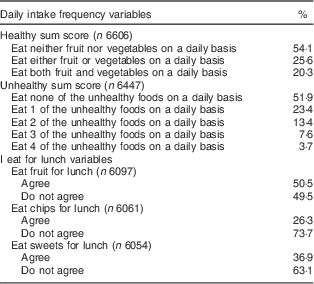
Of students, 54·1 % reported that they ate neither fruit nor vegetables on a daily basis and 20·3 % reported to eat both daily; 51·9 % of students reported that they ate none of the unhealthy foods on a daily basis while 3·7 % reported to eat all of them daily. About half (50·5 %) of the students agreed that they ate fruit for lunch, 26·3 % agreed that they ate chips and 36·9 % agreed that they ate sweets (Table 1).
Percentage of pupil responses for dependent variables; secondary schools in Wales that were part of the 2005/2006 Health Behaviour in School-aged Children (HBSC) study
Independent variables
Student-level variables
Table 2 displays the student-level independent variables included in the analysis, the value for each variable and the percentage of responses from students. All student-level variables were included in the final models.
Independent student-level variables against percentage of pupil responses; secondary schools in Wales that were part of the 2005/2006 Health Behaviour in School-aged Children (HBSC) study
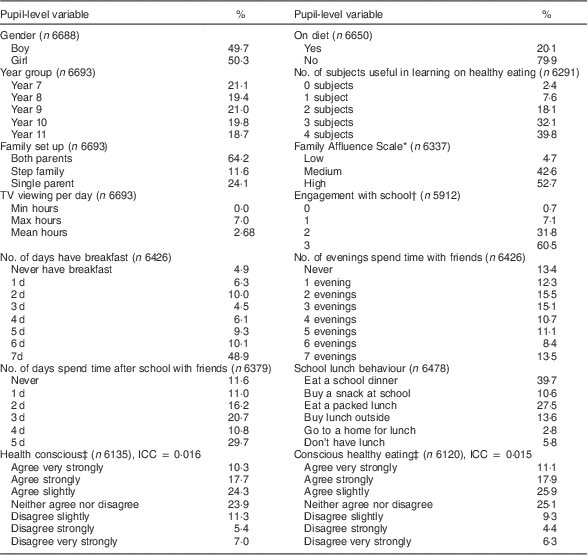
TV, television; ICC, intra-class correlation coefficient.
* Family Affluence Scale is a four-item composite score to judge individual socio-economic status.
† Engagement with school variable is a four-level composite variable derived from three questions in the HBSC questionnaire. The higher the score, the greater the engagement with school.
‡ Two questions on attitudes to healthy eating were included in the student survey. There was some concern that as school approaches may influence attitudes to healthy eating these would be school-level variables rather than student-level ones. Low ICC scores indicated that these were not school-level variables.
School-level variables
Table 3 displays the school-level independent variables included in the analysis. This includes the healthy-eating-promoting actions and the fixed school characteristics that were controlled for. Table 3 also displays the values for each variable and the modal responses from schools.
School-level variables against percentage of schools by modal response of staff; secondary schools in Wales that were part of the 2005/2006 Health Behaviour in School-aged Children (HBSC) study
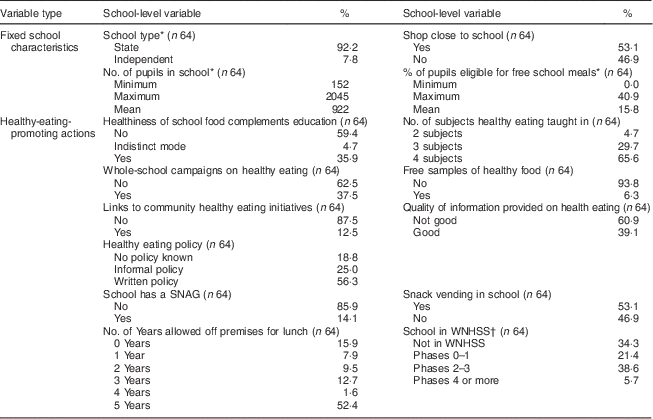
SNAG, School Nutrition Action Group; WNHSS, Welsh Network of Healthy School Schemes.
* School type, number of pupils on the school roll for Years 7–11 and percentage of pupils eligible for free school meals are fixed school characteristics that are not a part of a whole-school approach to healthy eating. These characteristics may impact on health behaviours and were used in the sampling frame for the HBSC study. Data concerning these were obtained from the Welsh Assembly Government. Shop close to the school from which pupils can buy food is also a fixed school characteristic that schools cannot influence. This was controlled for in the analysis, data for this variable came from the school staff postal surveys.
† All of the healthy-eating-promoting action variables used in calculating the number of actions variable came from the school staff postal survey except the variables on school activity in the WNHSS, which came from information supplied by the Welsh Assembly Government.
Multilevel analysis of length of lunch break
The mean lunch-break length for schools in our sample was 48·3 min, with a maximum of 62·5 min and a minimum of 25 min.
Cross-tabulations of dependent variables against schools stratified by mean lunch-break length indicated that in schools with a lunch break longer than the mean, a greater percentage of students reported to eat fruit for lunch and a lower percentage reported to eat chips and sweets, in comparison to schools with a lunch-break length shorter than the mean. Students in these schools also reported a higher mean score for fruit and vegetable daily intake and a lower mean for daily intake of the unhealthy foods (Table 4).
Dependent variables cross-tabulated against mean of school lunch-break length; secondary schools in Wales that were part of the 2005/2006 Health Behaviour in School-aged Children (HBSC) study

In final models, students in schools with a longer lunch break had significantly higher odds of eating fruit for lunch and fruit and vegetables on a daily basis than students in schools with a shorter lunch break. They also had significantly lower odds of eating unhealthy foods on a daily basis. Odds for students reporting to eat chips for lunch and sweets for lunch were not significantly associated with the length of lunch break in the school (Table 5).
Odds ratios with 95 % confidence intervals for dependent variables against length of lunch break from multilevel models controlling for student-level and school-level independent variables; secondary schools in Wales that were part of the 2005/2006 Health Behaviour in School-aged Children (HBSC) study

Discussion
Findings from the present study indicate that longer lunch breaks in schools were associated with greater odds of students agreeing that they ate fruit for lunch and reporting to eat fruit or vegetables on a daily basis. They also had lower odds of reporting to eat one of the unhealthy foods on a daily basis. By using multilevel modelling we were able to separate determinants operating at the individual level from those operating at the school level and to control for factors that may influence dietary choice.
The main weakness of the study is that most of the variables come from self-report questionnaires. Both sets of dependent variables were derived from self-reported questions in the HBSC student survey. The daily intake variables came from the selected ‘method of choice’ for the HBSC survey that has been validated( Reference Currie, Samdal and Boyce 39 ) while the lunch variables came from questions asking about the choice of specific foods for lunch( Reference Dennison and Shepherd 40 ). Although these lunch variables came from a paper published in 1995, leading to concerns of applicability to the reporting of current adolescent lunch behaviour, these were examined in case studies prior to the data collection. The student-level independent variables all came from the HBSC survey and were self-reported. Many of the school-level variables are crude, unvalidated measures which are dependent upon teacher responses and provide no measure of quality for these actions. For both student-level and school-level variables unless there is substantial variation across schools in reporting bias, this should not affect the estimated association in the models. The data for the present study are cross-sectional; as the study is not longitudinal no causality can be inferred, only a significant association derived.
Despite these limitations the HBSC study remains a large-scale survey providing nationally representative data from a large number of schools and pupils in Wales, with very limited data available elsewhere for studies of this nature. These findings agree with past qualitative studies( 28 – 30 , 33 ) that have found students were noticeably more likely to make unhealthy food choices in schools where the lunch break was shorter. These findings may also be a reflection of the types of food schools are able to provide and that students can consume in shorter lunch breaks. Many unhealthy foods are quick to produce and serve and have high profit margins, maximising service and profits in a short lunch break( 33 ). No study was found that had used multilevel modelling to investigate the association between length of lunch break and student dietary choice while controlling for confounders at the student and school levels. Previous studies that have used a multilevel approach to investigate the impact of school on the food choices students make have incorporated few school-level factors that targeted student dietary choice in their analyses. They either focused on a very small number of factors such as the availability of unhealthy snacks and drinks( Reference Maes and Lievens 11 , Reference Krolner, Due and Rasmussen 13 , Reference Van der Horst, Timperio and Crawford 14 ), the availability of healthy food( Reference Krolner, Due and Rasmussen 13 ), the distance from school to the nearest food store( Reference Van der Horst, Timperio and Crawford 14 ) and whether students were allowed to leave school grounds during lunch( Reference Maes and Lievens 11 ), or considered general school-level characteristics that are not directly related to dietary choice( Reference West, Sweeting and Leyland 12 ). However, a recent paper did find a significant association between the number of actions to promote healthy eating schools had in place and fruit and vegetable consumption by students( Reference Townsend, Murphy and Moore 15 ).
The significant associations found between the length of time schools allow for lunch and three of the dependent variables in the present study highlight lunch-break length as an area schools should consider in encouraging healthy eating. The findings suggest that shorter lunch breaks discourage the consumption of fruit and vegetables by students. This should encourage schools to retain longer lunch breaks where possible and support this with other actions from the whole-school approach to healthy eating. Although no significant result was obtained with dependent variables measuring students eating chips or sweets for lunch, these were foods commonly eaten both inside and outside school when the present study was completed. Since the conclusion of the study new nutritional guidelines have been introduced into schools in England( Reference School Food 45 ) and Wales( 30 ) which means these unhealthy foods should not be available to students on the school grounds. As students report that shorter breaks mean they are more likely to leave the school grounds to buy lunch( 28 – 30 , 33 ), these changes may support further the link between short lunch breaks and unhealthy dietary choice. Additionally, the healthiness of food available in the school was controlled for in analysis through a variable measuring the healthiness of school food as judged by staff along with variables on the presence of snack vending and the provision of free fruit. This should encourage policy makers to consider not just the food served in the school, but also the rules and regulations, along with the school environment, when considering dietary choice in the school. A follow-up investigation into the length of lunch break with these nutritional guidelines in place would benefit our understanding of the impact it has on student dietary choice.
School reasons for changing the length of lunch break and the impact of the amount of time schools allow for lunch on student lunch behaviour should be investigated further, such that schools can consider the impact on the dietary choice of students when reviewing the length of lunch break for other reasons. A longitudinal study including schools that change the length of lunch break would allow causality to be investigated. Future studies should also collect data from the caterers who can provide insight into the preparation and serving of foods over the lunch break.
The findings from the current paper indicate that schools should consider the impact lunch-break length has on student dietary choice as well as on other behaviours, and view it as an important component of a whole-school approach to health eating. A shortening of the amount of time allowed for lunch should be discouraged and policy makers and those involved in the provision of food should work with schools in maintaining lunch breaks of a length that allow pupils to make healthy choices and support the nutritional guidelines schools now follow.
Acknowledgements
Acknowledgements: The data in the present paper came from the author’s PhD work undertaken at Cardiff University that was supervised by Professor Laurence Moore, now Director of the Medical Research Council (MRC) Social and Public Health Sciences Unit, Glasgow, and Professor Simon Murphy of the Centre for the Development and Evaluation of Complex Interventions for Public Health Improvement (DECIPHer). HBSC is an international study carried out in collaboration with the WHO Regional Office for Europe. The International Coordinator of the study is C. Currie, University of Edinburgh, UK and the Data Bank Manager is O. Samdal, University of Bergen, Norway. Within Wales, the HBSC study is coordinated by the Health and Social Services team within the Social Research and Information Division of the Welsh Government, led by C. Roberts. For details, see http://www.hbsc.org. Financial support: This work was supported by the MRC, UK as part of the author’s PhD; the author’s current position at the University of Oxford is funded by the British Heart Foundation (BHF). The MRC and the BHF had no role in the design, analysis or writing of this article. Conflict of interest: None. Authorship: N.T. completed the data collection, analysis and writing of the paper. Ethics of human subject participation: Ethics approval was provided by the Cardiff University Social Science Research Ethics Committee before commencement of data collection.



