


More than 200 million children aged <5 years in low- and middle-income countries fail to reach their cognitive developmental milestones due to various biological and psychosocial factors (Walker et al., Reference Walker, Wachs, Gardner, Lozoff, Wasserman and Pollitt2007). These children become adults with physical and mental health challenges that are associated with increased risk of problem behavior, poor academic performance, and problems with interpersonal relationships. Individuals with neurobehavioral difficulties may also be at increased risk of non-communicable diseases, physical, psychological, and sexual abuse (Grantham-McGregor et al., Reference Grantham-McGregor, Cheung, Cueto, Glewwe, Richter and Strupp2007).
The incidence of multiple births is rising because of increased use of assisted reproductive technologies (Asztalos et al., Reference Asztalos, Barrett, Lacy and Luther2001; Hamilton et al., Reference Hamilton, Martin and Ventura2006). Multiple pregnancies have risen to account for about 3% of all births, yet they account for 15% of all perinatal mortality (Acosta-Rojas et al., Reference Acosta-Rojas, Becker, Munoz-Abellana, Ruiz, Carreras and Gratacos2007; Giuffre et al., Reference Giuffre, Piro and Corsello2012). Twins are pre-disposed to higher risk of mortality and morbidities (Bodeau-Livinec et al., Reference Bodeau-Livinec, Marchand-Martin, Zeitlin, Kaminski and Grp2010; Bodeau-Livinec et al., Reference Bodeau-Livinec, Zeitlin, Blondel, Arnaud, Fresson, Burguet and Grp2013; Pharoah, Reference Pharoah2005; Reference Pharoah2006).
Children born as twins have a greater likelihood of poor neurodevelopmental outcomes compared to singletons when birth weight and gestational age are not controlled for (Lorenz, Reference Lorenz2012). Previous studies have shown that there is a higher prevalence of delay in attainment of cognitive neurodevelopmental milestones among twins compared to singletons. This delay has been attributed to lower gestational age and birth weight of twins compared to singletons (Lorenz, Reference Lorenz2012; Ronalds et al., Reference Ronalds, De Stavola and Leon2005). There have been few studies of failure to achieve cognitive and neurodevelopmental milestones comparing twins and singleton children, and the results have been conflicting (Cooke, Reference Cooke2010; Eras et al., Reference Eras, Ozyurt, Kanmaz, Erdeve, Sakrucu, Oguz and Dilmen2013).
In addition to lower gestational age and birth weight, other factors that have been shown to contribute to the differences in attainment of neurodevelopmental milestones when comparing twins and singleton children include gender, birth order of twins (Gnanendran et al., Reference Gnanendran, Bajuk, Oei, Lui and Abdel-Latif2015; Smith et al., Reference Smith, Fleming and White2007; Wadhawan et al., Reference Wadhawan, Oh, Perritt, McDonald, Das, Poole and Higgins2009), congenital anomalies, socio-economic status of parents (Urquia et al., Reference Urquia, Frank, Glazier and Moineddin2007), maternal age at delivery, presence of twin-to-twin transfusion syndrome, birth by assisted conception, and whether the twins are mono- or di-chorionic (Luu & Vohr, Reference Luu and Vohr2009; Papiernik et al., Reference Papiernik, Zeitlin, Delmas, Blondel, Kunzel, Cuttini and Draper2010; Petit et al., Reference Petit, Cammu, Martens and Papiernik2011; Ronalds et al., Reference Ronalds, De Stavola and Leon2005; Shinwell et al., Reference Shinwell, Haklai and Eventov-Friedman2009; Zeitlin et al., Reference Zeitlin, El Ayoubi, Jarreau, Draper, Blondel, Kunzel and Papiernik2010).
The objective of this article was to systematically review the literature on neurodevelopmental outcomes of twins compared to singletons published between January 2011 and December 2017.
Methodology
Epidemiological studies of cognitive and neurodevelopmental outcomes of twins compared to singleton children were selected from PubMed (U.S. National Library of Medicine, Bethesda, MD, USA) and Web of Science databases using the following search terms: twin and singleton and neurodevelopmental; twin and singleton and cognitive; twin and singleton and intelligence; twin and singleton and mental development; twin and singleton and motor development; twin and singleton and educational development; twin and singleton and test score; twin and singleton and academic performance. The search was restricted to studies in humans that were published between January 2011 and December 2017 because a similar review had been conducted up to 2010 (Lorenz, Reference Lorenz2012).
We reviewed the abstracts of the identified documents and searched their references for additional articles. We created a protocol using the Preferred Reporting Items for Systematic Reviews and Meta-Analyses (Moher et al., Reference Moher, Liberati, Tetzlaff and Altman2009; Shamseer et al., Reference Shamseer, Moher, Clarke, Ghersi, Liberati, Petticrew and Stewart2015). We retrieved information about each study's location, type of study, follow-up period (for interventional studies), sample size, neurodevelopmental outcomes, age of the children in the study, recruitment strategy, methods of statistical analyses, confounding variables, and magnitude of difference (Tables 1 and 2). The selected articles were independently assessed by two authors (B.O. and A.S.), and any disagreement and discrepancies were resolved by discussion among authors. Articles retrieved from the two databases were entered into EndNote (EndNote X7, Thomas Reuter) where we removed duplicates. We excluded literature reviews, commentaries, and papers about study design (Figure 1 and Appendix). All included studies were written in English language.
Characteristics of Epidemiological Studies Investigating Neurodevelopmental Outcomes of Twins Compared With Singleton Children
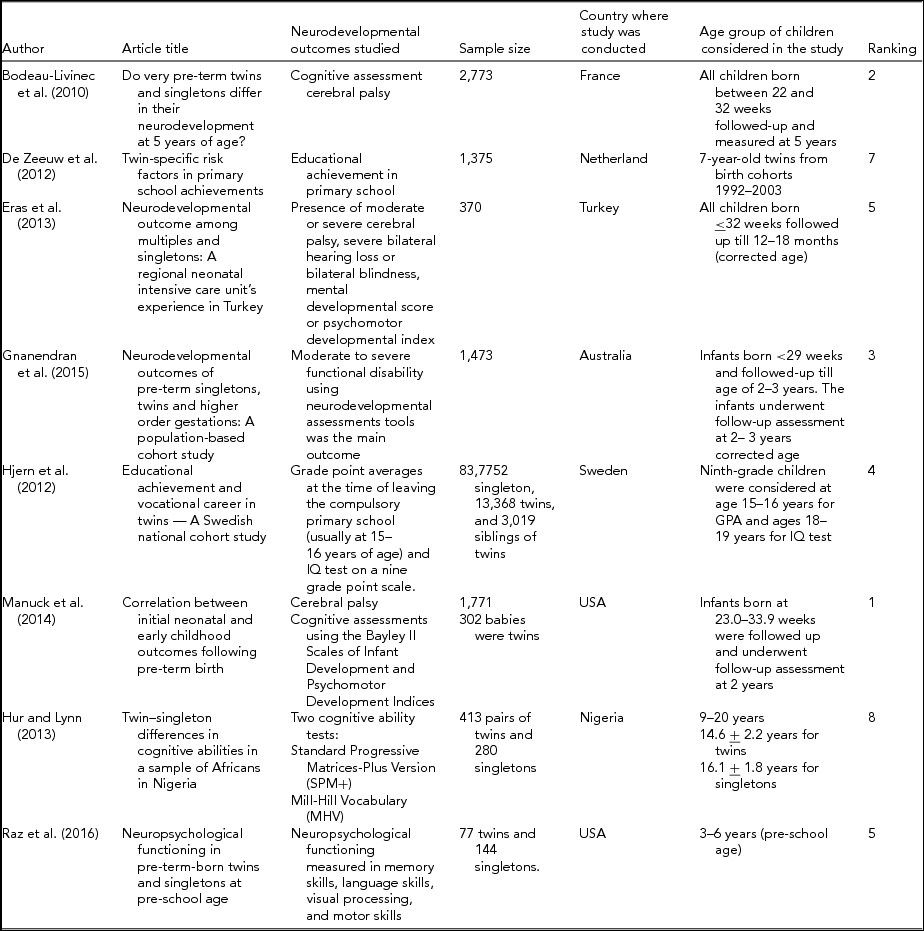
aRanking: Sample size = Lowest: 1, Highest: 8.
Study design = Cross-sectional: 1, Follow-up: 4, Randomized trial: 7.
Reliability and validity of instrument used: Educational only: 1, Standard only (e.g., Bayley): 4, Standard and Clinical (e.g., Bayley & CP Assessment): 7.
Number of variables adjusted for in the analysis: Lowest: 1, Highest 7.
Characteristics of Epidemiological Studies Investigating Neurodevelopmental Outcomes of Twins Compared With Singleton Children
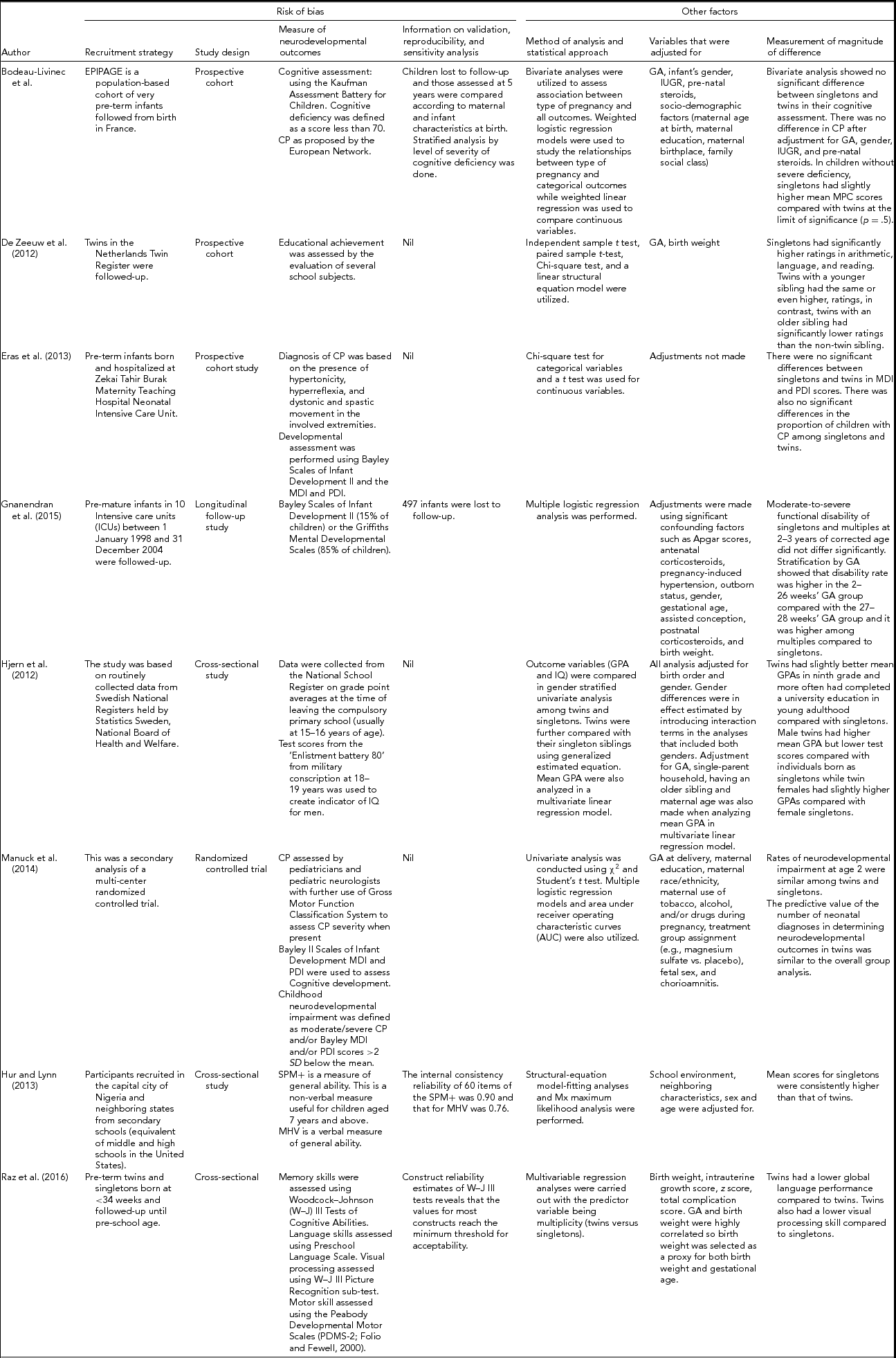
IUGR = intrauterine growth retardation, CP = cerebral palsy, GA = Gestational age, MDI = Mental Development Index, PDI = Psychomotor Development Index, AUC = area under receiver operating characteristic curve, SPM+ = Standard Progressive Matrices-plus, MHV = Mill-Hill vocabulary scale.
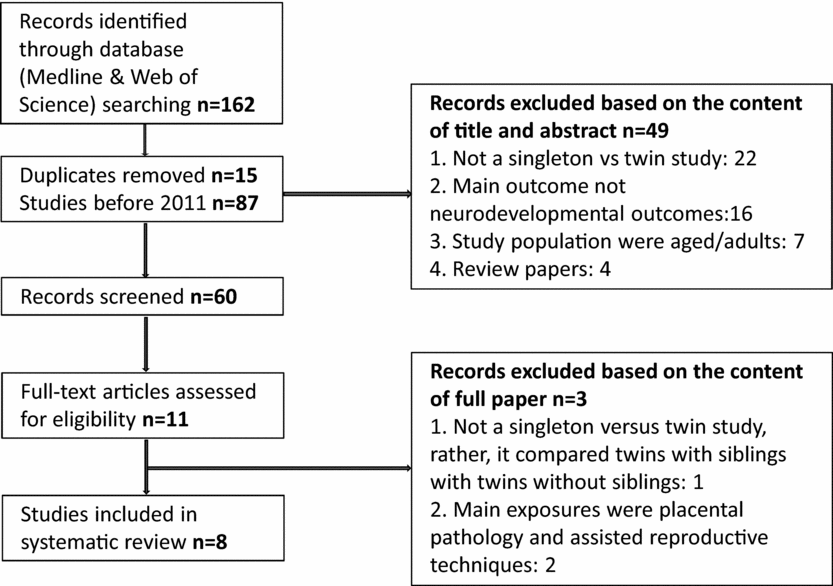
PRISMA flow diagram of search and manuscript review.
The top six studies utilized at least two different instruments to assess neurodevelopmental outcomes (Bodeau-Livinec et al., Reference Bodeau-Livinec, Zeitlin, Blondel, Arnaud, Fresson, Burguet and Grp2013; Eras et al., Reference Eras, Ozyurt, Kanmaz, Erdeve, Sakrucu, Oguz and Dilmen2013; Gnanendran et al., Reference Gnanendran, Bajuk, Oei, Lui and Abdel-Latif2015; Hjern et al., Reference Hjern, Ekeus, Rasmussen and Lindblad2012; Manuck et al., Reference Manuck, Sheng, Yoder and Varner2014; Raz et al., Reference Raz, Piercy, Heitzer, Peters, Newman, DeBastos and Batton2016). Manuck et al. (Reference Manuck, Sheng, Yoder and Varner2014) utilized the Bayley Scale of Infant Development (BSID) and Mental Development Index (MDI), and cerebral palsy was assessed by a pediatric neurologist (Manuck et al., Reference Manuck, Sheng, Yoder and Varner2014). Bodeau-Livinec et al. (Reference Bodeau-Livinec, Zeitlin, Blondel, Arnaud, Fresson, Burguet and Grp2013) utilized the Kaufmann Assessment Battery for Children for cognitive assessment, and cerebral palsy was also assessed, while Gnanendran et al. (Reference Gnanendran, Bajuk, Oei, Lui and Abdel-Latif2015) utilized the BSID and Griffiths Mental Development Scales. Hjern et al. (Reference Hjern, Ekeus, Rasmussen and Lindblad2012) utilized test scores from the ‘Enlistment Battery 80’, used for military conscription at 18–19 years of age to create an indicator of IQ and grade point averages from the national school register, while Eras et al. (Reference Eras, Ozyurt, Kanmaz, Erdeve, Sakrucu, Oguz and Dilmen2013) utilized the BSID, MDI, and Psychomotor Developmental Index (PDI).
Results
Our search yielded 162 abstracts (Figure 1) and of these, 15 were excluded because they were duplicates and 87 were excluded because they did not fall between 2011 and 2017, leaving 60 abstracts. Of the remaining 60 abstracts, we excluded 49 because they were not singleton versus twin studies (n = 22), the main outcome was not neurodevelopmental outcomes (n = 16), or study participants were adults (n = 7) or review articles (n = 4). We reviewed the remaining 11 full-text articles and excluded three because one was not a singleton versus twin study, and the main exposures were placental pathology and assisted reproductive techniques in two each.
We examined the remaining eight studies and four of them were prospective follow-up studies (Bodeau-Livinec et al., Reference Bodeau-Livinec, Zeitlin, Blondel, Arnaud, Fresson, Burguet and Grp2013; de Zeeuw et al., Reference de Zeeuw, van Beijsterveldt, de Geus and Boomsma2012; Eras et al., Reference Eras, Ozyurt, Kanmaz, Erdeve, Sakrucu, Oguz and Dilmen2013; Gnanendran et al., Reference Gnanendran, Bajuk, Oei, Lui and Abdel-Latif2015), three were cross-sectional studies (Hjern et al., Reference Hjern, Ekeus, Rasmussen and Lindblad2012; Hur & Lynn, Reference Hur and Lynn2013; Raz et al., Reference Raz, Piercy, Heitzer, Peters, Newman, DeBastos and Batton2016), while one was a randomized controlled trial (Manuck et al., Reference Manuck, Sheng, Yoder and Varner2014).
The eight studies were ranked based on four factors. The first factor was the sample size. The study with the lowest sample size was assigned a value of 1, while the study with highest sample size was assigned a value 8. The second factor that was used in the ranking was study design. Studies that were cross-sectional were scored 1, follow-up and prospective studies were scored 4, while an RCT was scored 8. Next, we scored the type of instrument used. If an educational instrument only was used, the study was scored 1; if standard instruments (e.g., Bayley scale) were used, the study was scored 4; and if standard instruments were combined with clinical assessments, the study was scored 8. The fourth factor used was the number of confounding variables adjusted for in the study. Each study was assigned a score based on the number of confounding variables in the analyses. The scores were added together and the seven studies were ranked from 1 to 8. (Table 3).
Ranking of Papers Based on Sample Size, Study Design, Instrument, and Adjusted Variables

Manuck et al. (Reference Manuck, Sheng, Yoder and Varner2014) was ranked first. In this study, secondary analysis of a multicenter randomized controlled trial of antenatal magnesium sulfate versus placebo administered to women at imminent risk for pre-mature delivery was done. Singletons and twins delivered at 23.0 to 33.9 weeks who survived to 2 years of age were assessed by trained physicians using the BSID and PDI. The outcomes measured were childhood diagnosis of moderate/severe cerebral palsy and/or Bayley scores >2 standard deviations below the mean. This study showed that rates of neurodevelopmental impairment at 2 years of age were similar among twins and singletons. The study by Bodeau-Livinec et al. (Reference Bodeau-Livinec, Zeitlin, Blondel, Arnaud, Fresson, Burguet and Grp2013) was ranked second. In this study, researchers examined the records of very pre-term live births occurring from 22 to 32 weeks of gestation in all maternity wards in nine French regions in 1997. They found that twins were more likely to have lower Mental Processing Composite scores (mean difference: –2.4 (95% CI [–4.8, 0.01]) at 5 years of age.
We ranked the Gnanendran et al. (Reference Gnanendran, Bajuk, Oei, Lui and Abdel-Latif2015) study third. The researchers conducted a population-based retrospective cohort study of the neurodevelopmental outcomes of multiple (twins, triplets, and quads) compared with singleton extremely pre-term infants who were younger than 29 weeks at gestation at a network of 10 neonatal intensive care units in Australia. They found that pre-mature infants from multiple gestation pregnancies had comparable neurodevelopmental outcomes to singletons. Hjern et al. (Reference Hjern, Ekeus, Rasmussen and Lindblad2012) ranked fourth in our study. In contrast to the three previous studies that were in pre-term children, this study was based on the national birth cohorts (1973–1981) in the Swedish Medical Birth Register; therefore, it contained children of all range of gestational ages. This study showed that Swedish male and female twins had slightly higher mean grade points in primary school compared with singletons, while male twins had slightly lower scores on IQ tests at military conscription at 18–19 years of age. The studies by Eras et al. (Reference Eras, Ozyurt, Kanmaz, Erdeve, Sakrucu, Oguz and Dilmen2013) and Raz et al. (Reference Raz, Piercy, Heitzer, Peters, Newman, DeBastos and Batton2016) were ranked 5th and 6th, respectively. Eras et al. conducted a prospective study of pre-term infants (≤32 weeks gestational age) and examined them for moderate or severe cerebral palsy, and severe bilateral hearing loss or bilateral blindness at 12 to 18 months of age They also used the MDI and PDI scores to determine neurodevelopment, but did not find significant differences between singletons and twins in MDI or PDI. In contrast, Raz et al., in a study of pre-term (<34 gestational weeks) twins and singletons who were evaluated at pre-school age, using standardized tests of memory, language, perceptual, and motor abilities, found that twins had a lower global language performance and lower visual processing skills compared with singletons.
Singletons had significantly higher academic ratings than twins in the other two studies (de Zeeuw et al., Reference de Zeeuw, van Beijsterveldt, de Geus and Boomsma2012; Hur & Lynn, Reference Hur and Lynn2013). de Zeeuw et al. (Reference de Zeeuw, van Beijsterveldt, de Geus and Boomsma2012) studied twins and their non-twin siblings registered with the Netherlands Twin Register and rated their proficiency in arithmetic, language, reading, physical education, and a national educational achievement test score (CITO). They found that twins had significantly lower ratings on arithmetic, reading, and language compared to singletons, but most of these effects could largely be explained by birth order within families. Hur and Lynn (Reference Hur and Lynn2013) studied cognitive abilities in twins and singletons aged between 9 and 20 years from over 45 public schools in Nigeria using Standard Progressive Matrices-Plus Version and the Mill-Hill Vocabulary Scale. They found that singletons did better than twins across all the tests. They speculated that these differences may be due to malnutrition, poor health, and the educational systems in Nigeria but did not clarify how these would have differential effects on twins.
Discussion
We identified eight articles published between 2011 and March 2017 that compared neurodevelopmental outcomes of twins and singletons. Of the eight articles, five showed that there was no significant difference in neurodevelopmental outcomes between twins and singletons (Bodeau-Livinec et al., Reference Bodeau-Livinec, Zeitlin, Blondel, Arnaud, Fresson, Burguet and Grp2013; Eras et al., Reference Eras, Ozyurt, Kanmaz, Erdeve, Sakrucu, Oguz and Dilmen2013; Gnanendran et al., Reference Gnanendran, Bajuk, Oei, Lui and Abdel-Latif2015; Hjern et al., Reference Hjern, Ekeus, Rasmussen and Lindblad2012; Manuck et al., Reference Manuck, Sheng, Yoder and Varner2014), while two showed that singletons had better academic outcomes than twins (de Zeeuw et al., Reference de Zeeuw, van Beijsterveldt, de Geus and Boomsma2012; Hur & Lynn, Reference Hur and Lynn2013). We did not conduct a meta-analysis because eight articles were too few and the studies used different study populations and instruments to measure neurodevelopmental outcomes. We restricted our studies to 2011–2017 because Lorenz had previously reviewed publications up to 2010 (Lorenz, Reference Lorenz2012).
Lorenz (Reference Lorenz2012) found that studies that did not adjust for gestational age and birth weight tended to report worse neurodevelopmental outcomes among twins compared to singletons. Two of the studies in this review adjusted for birth weight and gestational age (de Zeeuw et al., Reference de Zeeuw, van Beijsterveldt, de Geus and Boomsma2012; Gnanendran et al., Reference Gnanendran, Bajuk, Oei, Lui and Abdel-Latif2015). In one study of pre-term infants, there was no difference between twins and singletons in functional disability measured at 3 years of age (Gnanendran et al., Reference Gnanendran, Bajuk, Oei, Lui and Abdel-Latif2015). The other study, based on a twins’ cohort, found that singletons had significantly higher ratings in arithmetic, language, and reading measured at the age of 7 years (de Zeeuw et al., Reference de Zeeuw, van Beijsterveldt, de Geus and Boomsma2012). Two studies of pre-term singletons and twins adjusted for gestational age but not birth weight and did not find any difference in neurodevelopmental outcomes (Bodeau-Livinec et al., Reference Bodeau-Livinec, Marchand-Martin, Zeitlin, Kaminski and Grp2010; Manuck et al., Reference Manuck, Sheng, Yoder and Varner2014). Three studies did not adjust for gestational age or birth weight (Eras et al., Reference Eras, Ozyurt, Kanmaz, Erdeve, Sakrucu, Oguz and Dilmen2013; Hjern et al., Reference Hjern, Ekeus, Rasmussen and Lindblad2012; Hur & Lynn, Reference Hur and Lynn2013) and one showed no difference (Eras et al., Reference Eras, Ozyurt, Kanmaz, Erdeve, Sakrucu, Oguz and Dilmen2013), while two showed a better neurodevelopmental outcome among singletons (Hjern et al., Reference Hjern, Ekeus, Rasmussen and Lindblad2012; Hur & Lynn, Reference Hur and Lynn2013). Comparison of these results is challenging because of differences in the study population, study designs, number of covariates measured, and how neurobehavioral outcomes were measured. Studies with adequate power, better measurements of exposure, covariates, and neurodevelopmental outcomes are required in order to resolve these conflicting results.
In four of the studies reviewed, we found that measurement of twin–singleton neurodevelopmental outcomes between 1 and 5 years of age tended to show no differences compared to measurements done between age 7 to teenage years (Bodeau-Livinec et al., Reference Bodeau-Livinec, Zeitlin, Blondel, Arnaud, Fresson, Burguet and Grp2013; de Zeeuw et al., Reference de Zeeuw, van Beijsterveldt, de Geus and Boomsma2012; Eras et al., Reference Eras, Ozyurt, Kanmaz, Erdeve, Sakrucu, Oguz and Dilmen2013; Gnanendran et al., Reference Gnanendran, Bajuk, Oei, Lui and Abdel-Latif2015; Hjern et al., Reference Hjern, Ekeus, Rasmussen and Lindblad2012; Hur & Lynn, Reference Hur and Lynn2013; Manuck et al., Reference Manuck, Sheng, Yoder and Varner2014). This is contrary to expectation because previous studies suggest that the neurodevelopment of twins catches up with that of singletons over time and any differences found in early life tends to disappear as the children grow older (Bodeau-Livinec et al., Reference Bodeau-Livinec, Zeitlin, Blondel, Arnaud, Fresson, Burguet and Grp2013). This finding suggests that future studies of neurodevelopment of twins and singletons should extend for a longer period and use instruments appropriate for different ages.
Some of the studies in this review adjusted for important covariates, such as gestational age at delivery (Bodeau-Livinec et al., Reference Bodeau-Livinec, Marchand-Martin, Zeitlin, Kaminski and Grp2010; Gnanendran et al., Reference Gnanendran, Bajuk, Oei, Lui and Abdel-Latif2015; Hjern et al., Reference Hjern, Ekeus, Rasmussen and Lindblad2012), gender (Bodeau-Livinec et al., Reference Bodeau-Livinec, Marchand-Martin, Zeitlin, Kaminski and Grp2010; Gnanendran et al., Reference Gnanendran, Bajuk, Oei, Lui and Abdel-Latif2015; Hjern et al., Reference Hjern, Ekeus, Rasmussen and Lindblad2012; Manuck et al., Reference Manuck, Sheng, Yoder and Varner2014), intrauterine growth retardation (IUGR; Bodeau-Livinec et al., Reference Bodeau-Livinec, Zeitlin, Blondel, Arnaud, Fresson, Burguet and Grp2013), maternal socio-demographic factors (i.e., maternal age at birth, maternal education, maternal birthplace, and family social class; Bodeau-Livinec et al. (Reference Bodeau-Livinec, Zeitlin, Blondel, Arnaud, Fresson, Burguet and Grp2013), Hjern et al. (Reference Hjern, Ekeus, Rasmussen and Lindblad2012), and Manuck et al. (Reference Manuck, Sheng, Yoder and Varner2014)), Apgar score (Gnanendran et al., Reference Gnanendran, Bajuk, Oei, Lui and Abdel-Latif2015), pregnancy-induced hypertension (Gnanendran et al., Reference Gnanendran, Bajuk, Oei, Lui and Abdel-Latif2015), assisted conception (Gnanendran et al., Reference Gnanendran, Bajuk, Oei, Lui and Abdel-Latif2015), birth weight (Gnanendran et al., Reference Gnanendran, Bajuk, Oei, Lui and Abdel-Latif2015), having an older sibling (Hjern et al., Reference Hjern, Ekeus, Rasmussen and Lindblad2012), maternal tobacco use and chorioamnionitis (Manuck et al., Reference Manuck, Sheng, Yoder and Varner2014), others did not. Future studies should measure all covariates that may be associated with neurodevelopment and adjust for them.
The two studies that ranked lowest in our scores utilized educational attainment of children as an outcome variable (de Zeeuw et al., Reference de Zeeuw, van Beijsterveldt, de Geus and Boomsma2012; Hur & Lynn, Reference Hur and Lynn2013). They found higher levels of neurodevelopmental outcome among singletons compared to twins. The study by Hur and Lynn (Reference Hur and Lynn2013) was the only study conducted in a developing country, and it questioned whether findings of differences in neurodevelopment among singletons and twins seen in those countries today are a reflection of socio-economic development that is similar to that of developed countries many years ago. Twins in developed countries may be able to catch up in early childhood because of better medical services, a high-quality educational system, and good diet (Calvin et al., Reference Calvin, Fernandes, Smith, Visscher and Deary2009; Christensen et al., Reference Christensen, Petersen, Skytthe, Herskind, McGue and Bingley2006; Webbink et al., Reference Webbink, Posthuma, Boomsma, de Geus and Visscher2008). This is in line with the findings by Record et al. (Reference Record, McKeown and Edwards1970) that differences in cognitive development between singletons and twins are more likely due to postnatal factors.
Our study highlighted the paucity of research on neurodevelopmental outcomes of twins and singletons from developing countries where the burden of neurodevelopmental disorders is highest and twinning incidence is very high (Akinboro et al., Reference Akinboro, Azeez and Bakare2008; Grantham-McGregor et al., Reference Grantham-McGregor, Cheung, Cueto, Glewwe, Richter and Strupp2007; Igberase et al., Reference Igberase, Ebeigbe and Bock-Oruma2008; Mosuro et al., Reference Mosuro, Agyapong, Opoku-Fofie and Deen2001). It also showed the marked variations in study design, duration of follow-up, and covariate measurements that make interpretation of findings quite challenging (Bodeau-Livinec et al., Reference Bodeau-Livinec, Zeitlin, Blondel, Arnaud, Fresson, Burguet and Grp2013; de Zeeuw et al., Reference de Zeeuw, van Beijsterveldt, de Geus and Boomsma2012; Eras et al., Reference Eras, Ozyurt, Kanmaz, Erdeve, Sakrucu, Oguz and Dilmen2013; Gnanendran et al., Reference Gnanendran, Bajuk, Oei, Lui and Abdel-Latif2015). Future research in this area needs to adopt a more uniform way of assessing exposures, covariates, and neurodevelopmental outcomes among twins and singletons.
Acknowledgments
The project described was supported by the Training Program in Nigeria for Non-Communicable Diseases Research (TRAPING NCD) grant number FIC/NIH D43TW009106 from the Fogarty International Centre. The content is solely the responsibility of the authors and does not necessarily represent the official views of the Fogarty International Centre or the National Institutes of Health.
Conflict of Interest
The authors declare that they have no conflict of interest.



