

In 1972 Causa popular, ciencia popular (Reference Bonilla, Castillo, Borda and LibrerosBonilla et al. 1972) appeared on the shelves of Colombian bookstores. A small volume that fits neatly into your pocket, it looks like many of the paperbacks published by the Colombian left in the period. On its cover is a photo of an old man reading a sheaf of papers: he is Abel Tique, from Ortega, Tolima, which indigenous leader Manuel Quintín Lame had reconstituted as a self-governing landholding institution that ensured collective land rights for Native peoples. Lame’s 1939 treatise on indigenous rights was published by La Rosca de Investigación y Acción Social (henceforth, La Rosca), the same organization that brought out Causa popular (Reference Lame and CárdenasLame 1971 [1939]). The four authors of the slim volume are listed on the cover in alphabetical order: journalist/anthropologist Víctor Daniel Bonilla, sociologists Gonzalo Castillo and Orlando Fals Borda, and economist Augusto Libreros.
La Rosca—which means “in-group” in Colombian Spanish and a kind of circle or spiral in Catalán—was dedicated to promoting “militant research,” which ultimately became known as “action research” or “participatory action research” (henceforth, PAR). Largely but not entirely historical in focus, the approach combined activism with rigorous empirical research, with the aim of unearthing the forgotten history of popular struggles in order to re-signify them through activism. La Rosca’s members advocated a methodology called “recuperación crítica” (critical recuperation) that paid “special attention to those elements or institutions that have been useful in the past to confront the enemies of the exploited classes. Once those elements are determined, they are reactivated with the aim of using them in a similar manner in current class struggles” (Reference Bonilla, Castillo, Borda and LibrerosBonilla et al. 1972, 51–52).
La Rosca established study groups across Colombia between 1972 and 1975. Bonilla collaborated with the nascent Consejo Regional Indígena del Cauca (Regional Indigenous Council of Cauca, CRIC) to reintroduce into the Nasa communal memory the history of hereditary lords who acquired land titles in the eighteenth century. Castillo, working with Native communities in neighboring Tolima, edited and published Lame’s 1939 treatise, while Libreros worked in the shantytowns of the Pacific Coast and the Cauca Valley. Fals Borda, a US-trained sociologist with a PhD from the University of Florida and the founder of the Faculty of Sociology at the National University of Colombia, was already a major academic figure in Colombia and internationally, having produced significant works on highland peasant economies (Reference Fals BordaFals Borda 1955, Reference Fals Borda[1957] 1979), the violent persecution by political parties of popular sectors in Colombia in the 1950s (Reference Guzmán Campos, Borda and LunaGuzmán Campos, Fals Borda, and Umaña Luna [1962] 1980), a history of subversion in Colombia (Reference Fals Borda and SkilesFals Borda [1967] 1969), and a theoretical meditation on Latin American social science and political commitment (Reference Fals BordaFals Borda [1970] 1987). Born to a middle-class family in the coastal city of Barranquilla, Fals Borda returned to his roots, so to speak, when he began to collaborate with the Asociación Nacional de Usuarios Campesinos (National Association of Peasant Users, ANUC) on the Caribbean coast, accompanying peasant activists to occupations of haciendas and collecting oral and documentary histories of the land struggles of the past.
Rosca-inspired local collectives attracted young and aspiring researchers who arrived with minimal training in social investigation. In the Caribbean department of Córdoba, Fals was instrumental in the establishment of the Fundación del Caribe (henceforth, the Fundación), a group of activists and artists from Montería (Córdoba) and Sincelejo (Sucre). The western section of the Caribbean coast was a hotbed of political activity at the time, with peasants disappointed in the slow pace of agrarian reform beginning to organize radical alternatives to the state-sponsored peasant organization, ANUC, which had split into a pro-government association (ANUC-Línea Armenia) and an organization that employed direct action to achieve grassroots demands (ANUC-Línea Sincelejo) (Reference Rivera CusicanquiRivera Cusicanqui 1982; Reference ZamoscZamosc 1986b). In the course of their collaboration with ANUC-Línea Sincelejo (henceforth, ANUC), the Fundación produced a broad range of educational materials, including graphic histories, manuals for organizing grassroots workshops, history texts written in an accessible language, filmstrips, radio shows, and literary chronicles depicting some of the key moments of the peasant struggle (Reference Barrera and ManuelNegrete 2008; Reference Parra EscobarParra Escobar 1983). They also organized numerous workshops and training courses for ANUC leaders and the grass roots and provided the peasant occupiers of haciendas with legal resources. All of the materials and activities aimed “to retrieve and correct official or elitist history and reinterpret it according to class interests” (Reference Fals Borda, Reason and BradburyFals Borda 2001, 30).
La Rosca continued to function as a loose network of action researchers until the mid-1970s, when it was disbanded, partly because of the desertion of some members but also stemming from Fals’s ideological differences with the leadership of the peasant movement over the appropriateness of founding a peasant political party. At the time, ANUC itself was suffering internal divisions spurred by sectarian conflicts in the midst of a violent campaign of government repression (Reference Barrera and ManuelNegrete 2008; Reference Parra EscobarParra Escobar 1983; Reference RudqvistRudqvist 1986). Fals subsequently published a description of the methodology he employed in Córdoba, which came out simultaneously in English (in India) and in Spanish (in Colombia); he was aware that his approach would be of interest far beyond his home country and region (Reference Fals BordaFals Borda 1978b, Reference Fals Borda1985a, Reference Fals Borda1985b). After the end of his collaboration with ANUC, Fals continued to frequent the Caribbean coast, focusing in particular on the Magdalena Valley to the east of Córdoba, where he remained engaged in participatory research in Mompox (Bolívar) and its environs. Ultimately, Fals published his four-volume Historia doble de la Costa (Reference Fals BordaFals Borda 1979b, Reference Fals Borda1981, Reference Fals Borda1984, Reference Fals Borda1986), a historical narrative told from below and organized in an experimental format.
Scholars have actively debated whether PAR, the activist research methodology whose worldwide dissemination was in part inspired by Fals’s work on the Caribbean coast, could, in fact, be codified into a clear set of procedures. As Budd Hall, a Canadian researcher who came to know Fals in the second half of the 1970s, observes, participatory research is highly contextual and “is based on the epistemological assumption that knowledge is constructed socially and therefore that research approaches which allow for social, group or collective analysis of life experiences of power and knowledge are most appropriate” (Reference HallHall 1992, 20). For this reason, it is impossible to outline a universal PAR methodology, although some have attempted to do so for particular contexts (Reference de Schutter and Cendalesde Schutter 1985). Moreover, PAR has over the years been partially alienated from its radical roots by the appropriation of research techniques by multilateral aid agencies and governments, pilloried by Fals as “developmentalists, experts, academicians and entrepreneurs” (Reference Fals Borda, Reason and BradburyFals Borda 2001, 31).
Although a great deal has been written on the politics of Orlando Fals Borda’s work in Córdoba, and even more has been published on attempts by PAR groups to reimagine the methodology he employed in his collaboration with ANUC, there is almost nothing beyond summary accounts of how the work of Fals and the Fundación unfolded on the ground. Written by a literary scholar (Robles) studying Historia doble de la Costa and an anthropologist (Rappaport) unearthing the methodological procedures used from 1972 to 1975 in Córdoba, this essay uses Fals’s writings, personal papers, and the Fundación’s popular education materials to analyze what these pioneering scholar-activists accomplished in the scant three years they collaborated with ANUC, and to gauge their impact as a radical alternative to mainstream academic social science.
Alternatives to Latin American Studies/Alternatives to Academia
The case study we present here constitutes a microcosm of broader intellectual developments in Latin America in the late 1960s and 1970s. In response to a hardening of the effects of capitalist development, United States foreign policy, and the success of the Cuban Revolution, many prominent Latin American thinkers inspired by Marxism developed methodologies that fused activism with empirical research and effectively detached the locus of research from its traditional academic home. While many members of this intellectual vanguard continued to interact productively with northern academic institutions and to engage in dialogue with northern scholars, they self-consciously created innovative theoretical and methodological vehicles whose origins were in the global South (Reference RosemblattRosemblatt 2014).
While the work we examine here originated in Latin America, it would be a mistake to focus exclusively on the intellectual geopolitics of that continent. The thinkers and activists involved in this wave of theory creation were intimately linked to international networks dedicated to the propagation of alternative methodologies, joining conversations that extended from Chile, Colombia, and Brazil to Bangladesh, Canada, India, Tanzania, and the United States. Paulo Freire, whose conscientização methodology we highlight, was forced to leave Brazil by the military dictatorship and spent his exile in the United States, where he came into close contact with Myles Horton, the founder of the Highlander Center, a famous laboratory of activist research in Appalachia (Reference Horton, Freire, Bell, Gaventa and PetersHorton and Freire 1990). Fals Borda’s participatory approach to research was nourished after his experience in Córdoba by the contributions of Marja-Liisa Swantz and Budd Hall in Tanzania (Reference HallHall 1992; Reference Swantz, Hall, Gillette and TandonSwantz 1982), Francisco Vío Grossi in Chile (Reference Vío GrossiVío Grossi 1981), and Rajesh Tandon in India (Reference TandonTandon 1988), among many others who came together in 1977 at an international symposium on participatory research that Fals organized in Cartagena (Reference Fals BordaFals Borda 1978a).
The intellectual movements brewing in Latin America elaborated a critique of the positivist social science emanating from the global North, which, they argued, provided models that were not applicable to Latin America or other regions of the global South, and paid little attention to the structural obstacles faced by its inhabitants. However, they remained in critical conversation with academic Latin Americanists of both North and South, at the same time as they continually embraced distinct objectives, directed themselves at new audiences, and incorporated diverse theoretical and methodological frameworks. Insofar as they conceived of their work as an attempt to bridge the divide between popular sectors and academics, to some extent they might be thought of as operating parallel to the institutional structures of the academic world, although they simultaneously countered and participated in academic exchanges. Their approaches were not predicated on particular academic disciplines but instead incorporated anthropology, education, history, law, political science, and sociology. Because social science departments were relatively new to Latin American universities (Reference CatañoCataño 1986), scholars may have been more willing to experiment with an interdisciplinarity in which academic researchers and grassroots activists operated on an equal footing, transcending the geopolitical, disciplinary, and institutional borders that were recognized by most social scientists of the period. The products they created went beyond scholarly writings to experiment with other modes of exposition and were intended for use in movements promoting radical social change.
Perhaps the most renowned of these figures was Brazilian educator Paulo Freire, whose methodology of conscientização, or “critical consciousness,” elucidated in Pedagogy of the Oppressed (Reference Freire and RamosFreire [1970] 2005), sought to transform the political and social consciousness of working-class people through liberatory dialogue. In contrast to official literacy textbooks that trained adult learners with a series of generic texts organized according to the difficulty of their syllabic content, Freire advocated a program of grassroots research in which peasants and workers would learn to identify the relations of oppression under which they were forced to live and begin to formulate authentic and autonomous courses of action to transform the status quo; literacy meant much more than learning to decipher print. Similar endeavors seeking to promote horizontal relationships between researchers and the grass roots in the service of popular political action were also taking place in cinema, where Andean indigenous communities collaborated in the production of films reenacting their historical struggles (Reference Sanjinés and UkamaoSanjinés and Grupo Ukamao 1979) and in theater, where drama workshops introduced working-class urbanites and rural villagers to innovative and socially critical theatrical methodologies for analyzing society (Reference Boal, Charles and Leal McBrideBoal [1974] 1985). Other efforts at participatory interpretations of working-class and peasant realities took place in the Christian base communities that arose out of liberation theology (Reference Gutiérrez, Inda and EaglesonGutiérrez [1971] 2012). A new literary genre called testimonial literature appeared on Latin American bookshelves, establishing a communicative space in which a member of the oppressed class could present his or her personal story to an editor, who then shaped it for a broad readership (Reference AchugarAchugar 1992; Reference Rama, Aguirre, Enzensberger, Galich, Jitrik and HaydeeRama et al. 1995).
These activist proposals were echoed in the 1960s and 1970s by Latin American social scientists who proposed to decolonize their disciplines, rejecting the positivist and functionalist models that were fashionable in North America, adopting Marxism and dependency theory as a theoretical guide (Reference González CasanovaGonzález Casanova 1969), paying closer attention to social class, and forging relationships with organized popular sectors of society, particularly with indigenous communities and agrarian and urban workers (Reference StavenhagenStavenhagen 1971; Reference Warman, Nolasco, Bonfíl, Olivera and ValenciaWarman et al. 1970). To be sure, the work of these academics intersected on multiple levels with the figures we have already mentioned in adult education, liberation theology, and the arts. This constituted a wide-ranging, pervasive body of thought in Latin America.
Fals Borda was well aware of these developments. He was familiar with the work of the Grupo Ukamao well before embarking on his project in Córdoba (Reference Fals BordaFals Borda [1970] 1987, 114) and had read Freire’s Pedagogy in manuscript form (Reference Fals Borda, Reason and BradburyFals Borda 2001). He was linked into the network of progressive Latin American social scientists and categorically stated his preference for drawing on Latin American scholarship: “I believe, precisely, that what was attractive about our work was that we felt no need to appeal to any authority in the tradition called ‘the Western academy’ in order to achieve our approach to our own reality” (Reference Fals Borda and BrandãoFals Borda and Brandão 1986, 17).
During the years before and after the founding of La Rosca, members were in contact with many of the Colombian protagonists of the democratization of research. Freire’s writings were appropriated as guides for rethinking popular adult education in the marginal barrios of Bogotá, ultimately leading in the late 1970s to the creation of a Freirean pedagogical current spearheaded by Lola Cendales (Reference Ortega Valencia and CarrilloOrtega and Torres 2011) that explicitly engaged PAR (Reference de Schutter and Cendalesde Schutter 1985). The Centro de Investigación y Educación Popular (Center for Research and Popular Education, CINEP), a Jesuit research institute, sought opportunities to connect with popular classes, which they saw as revolutionary subjects with whom they could collaborate both intellectually and politically. CINEP worked closely with ANUC before Fals Borda arrived in Córdoba, amassing an extensive archive of oral testimonies of peasant struggle, and setting up projects in marginal barrios in Bogotá. CINEP researchers employed their own version of PAR, one of the many methodologies they used on these projects (Reference Archila and FernánArchila 2013, Reference Archila and Mauricio2015). Radical theater groups took root in Colombia’s major cities, a movement that a cosmopolitan intellectual like Fals could not have ignored (Reference Salazar and NataliaParra Salazar 2015). Fals Borda’s colleague at the National University of Colombia, the revolutionary Catholic priest Camilo Torres Restrepo, who exerted a profound influence on Fals, was a strong proponent of liberation theology and, at the end of his life, of armed struggle (Reference Torres RestrepoTorres Restrepo 1985). Fals was brought up Presbyterian and was deeply inspired by his pastor in Barranquilla, the Protestant liberation theologian Richard Shaull (Reference Shaull1967, Reference Shaull1968), who was an active participant in the World Council of Churches and was familiar with Freire’s writings (Reference Díaz and MarioDíaz Arévalo 2017; Reference Pereira FernándezPereira Fernández 2005).Footnote 1 Thus, it was no surprise that Fals, Castillo, and Libreros, all Presbyterians, sought out a left-leaning funding arm of the US Presbyterian Church to acquire support to found La Rosca (Reference Moreno and CeciliaMoreno Moreno 2017, chap. 4).
Fals Borda first laid out his reflections on the role of social science in Latin American society in Ciencia propia y colonialismo intelectual (Reference Fals BordaFals Borda [1970] 1987), questioning whether research models imported from the global North, such as positivist sociology, were applicable in Latin America, given that their empirical basis originated in the radically distinct societies of the developed world. Here, Fals articulates an early program for the radical transformation of social science, advocating the elimination of sharp distinctions between observers and the observed by creating a new research methodology that valued popular knowledge while defending empirical rigor. He brought these ideas to fruition in the 1970s on the Caribbean coast.
Making sense of the day-to-day research activities of the Fundación presents a tremendous challenge, given that so many of its major protagonists are dead. Fals and his associates published brief descriptions of their activities but never wrote at length about them, preferring to use them as anecdotal examples for constructing broader arguments (Reference Fals BordaFals Borda 1985a, Reference Fals Borda1985b; Reference Parra EscobarParra Escobar 1983). Furthermore, although Fals Borda was an inveterate note taker, he took few notes during debates over the collaborative strategies of the Fundación and ANUC. Thus, the rich resources available in Fals’s personal papers, stored at the Centro de Documentación Regional of the Banco de la República in Montería (CDRBR/M), provide only a partial picture of what kinds of decisions were made to create and implement the methodology of action research.Footnote 2 In the end, we must read between the lines of archival sources to flesh out the quotidian nature of these experiments in politically committed research.
Adult Education, Research, and Consciousness-Raising
One of the most fruitful entry points into the Fundación’s methodology is a series of four graphic narratives recounting peasant struggles in various communities of Córdoba and Sucre. Produced between 1972 and 1974, these comics were based on research conducted by Fals and Fundación members; they were drawn by Ulianov Chalarka, an artist from a working-class barrio of Montería, who earned his living painting portraits and saints’ images for local elites and was known for his caricatures of Montería eccentrics. The process of producing these graphic histories sheds considerable light on what Fals and the Fundación researchers understood participatory research to be and how it could achieve its political objectives. Although there is not space here to fully analyze the graphic histories, which is published elsewhere (Reference Rappaport, Moraña and ValenzuelaRappaport 2017, Reference Rappaport2018), we argue that they served as a key scenario in which adult education, research, and consciousness-raising came together through a process of critical recuperation of peasant memory.
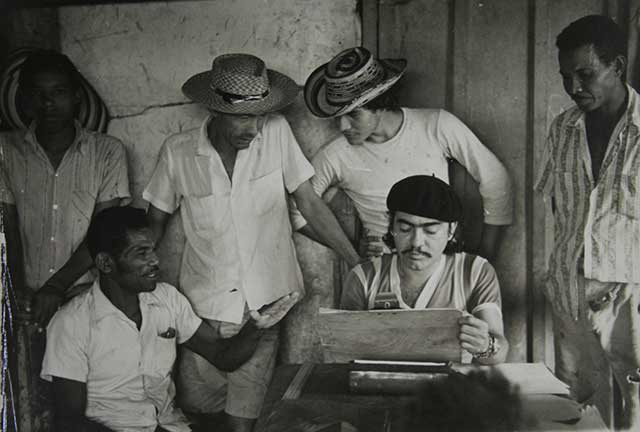
The four graphic histories—Lomagrande (1972), El Boche (1973), Tinajones (1973), and Felicita Campos (1974), republished in a single volume (Reference ChalarkaChalarka 1985)—were each fifteen to twenty pages in length and took approximately six months to prepare. Figure 1, a photo taken by Fals of Ulianov Chalarka working with a group of campesinos in San Onofre, Sucre, shows how the graphic histories were researched and composed by differently positioned actors engaged in a chain of conversations and collaborations (Reference Rappaport and NegreteRappaport and Negrete 2015). ANUC activists in dialogue with researchers from the Fundación set the research agenda, leading Fundación researchers and Fals Borda to comb local archives, interview elders who had been activists in the 1920s–1950s, and invite them to recount their memories at grassroots meetings. Chalarka took visual notes at these events and shared his sketches with the peasant audience, which offered constructive criticisms and supplemented the drawings with new information. A Fundación/ANUC committee laid out the graphic history, using Chalarka’s illustrations as a starting point and adding speech balloons and labels, only infrequently guided by scripts (CDRBR/M, 1787), unlike more standard comics practice, in which the script generally precedes the drawings. After ANUC approved the final version it was taken to peasant assemblies where rural activists read and discussed it, frequently in conversation with the narrators depicted in its pages, thus expanding the knowledge base introduced in the graphic histories.
Study group from Aguas Negras, San Onofre, with Ulianov Chalarka at center, 1973, CDRBR/M, Colección Fotográfica 1946. Courtesy of the Centro de Documentación Regional, Banco de la República, Montería.
As the graphic histories were being researched and composed, the organized peasants of Córdoba and Sucre were occupying scores of haciendas, making the region one of the most combative in the country (Reference Rivera CusicanquiRivera Cusicanqui 1982; Reference ZamoscZamosc 1986b). One of the most well documented of such mobilizations was the 1972 occupation of the haciendas La Antioqueña and Mundo Nuevo (west and southwest of Montería), in which Fals and the Fundación participated with a series of training seminars and provided legal assistance and accompaniment (Reference Fals BordaFals Borda 1986, chap. 8). As we demonstrate below, the Lomagrande comic supplied what was hoped would be a key support for the occupation.
In his evaluation of early action research, Leon Zamosc asks: “What justifies the presence and the work of a researcher among the people? Or said in another way: on what foundations does a researcher achieve the acceptance and collaboration of the researched?” (Reference Zamosc and BordaZamosc 1986a, 33). He responds that acceptance arises out of political collaboration, which is itself only possible when the researcher adjusts to people’s own perception of their situation, adapting to the actors’ ideology. This, for Zamosc, is “the essence of the work, because [the researchers’] contribution consists, precisely, in an attempt to modify existing representations by means of scientific knowledge” (Reference Zamosc and BordaZamosc 1986a, 34). In other words, Fals and the Fundación believed that their willingness to engage in activism enabled the multisited, multivoiced chain of conversations that shaped the composition of the graphic histories—a key chain of encounters punctuated by links in which researchers and community members cooperated in land occupations and engaged in the “critical recuperation” required to form viable community institutions on occupied lands. “Participation” must be comprehended, then, in all of its complexity: as a facet of the process of collecting information, constructing knowledge, thoughtfully and purposefully disseminating this knowledge, and providing the political grounds on which such research takes place.
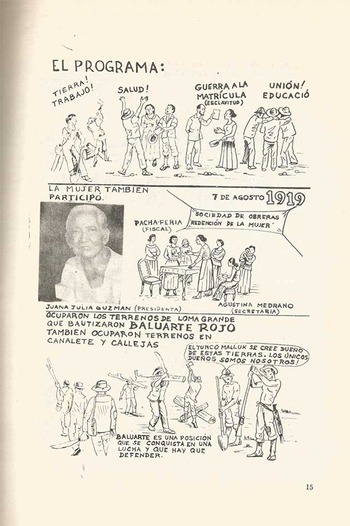
Lomagrande tells the story of the rise of socialist collectives from 1918 to 1927, when urban and rural workers in Colombia, as in other parts of the world, responded with intense radical activity to the capitalist developments that transformed their lives (Reference ArchilaArchila 1991, chap. 2). Workers’ organizations appeared in Montería in 1918 and 1919, spearheaded by Vicente Adamo, an Italian socialist, and Juana Julia Guzmán, a working-class woman of peasant origins. These associations provided basic social services to their membership and organized them against the matrícula or debt-peonage system. As Fals describes in the fourth volume of Historia doble, hundreds of peasant colonists who had acquired public lands in the previous decade now demanded legal title to the plots that large landowners increasingly encroached upon (Reference Fals BordaFals Borda 1986, chap. 5; Reference LeGrandLeGrand 1986, 113–114). Central to Adamo’s and Guzmán’s organizing project was the agglutination of peasant smallholders into “sociedades comerciales anónimas” (incorporated commercial societies), which Fals describes as cooperatives organized around socialist principles (Reference Fals BordaFals Borda 1986, chap. 5; Reference OcampoOcampo 2014, 284–286). One of these was Lomagrande, subsequently renamed Baluarte Rojo, or Red Bastion, which was established on public lands contested by local landlords. Fals and the Fundación researchers recorded Juana Julia Guzmán’s reminiscences of the battles over Lomagrande (CDRBR/M, 0866), which were then translated into the language of comics.
One of the fundamental objectives of the Fundación’s plan for critical recuperation in Córdoba was the resignification as an organizing tool of the institution of the baluarte, the socialist landholding collective established by costeño working-class activists in the 1920s. The institution was rebaptized as the “baluarte de autogestión campesina” (bastion of peasant self-determination), a space in which peasants could work communally and be educated politically (CDRBR/M, 0701, fols. 3857–3859). The occupied lands of La Antioqueña became the Baluarte Vicente Adamo, with subgroupings named after various protagonists from the Baluarte Rojo, including Juana Julia Guzmán. The revival of baluartes was ultimately unsuccessful because the peasants of La Antioqueña never fully understood their purpose, abandoning the idea a few years later (Reference ZamoscZamosc 1986b, 168–172). Nonetheless, the crafting of Lomagrande, the first of the graphic histories, furnished one of many scenarios for thinking through what a baluarte had been in the past and what it could potentially become as it was simultaneously being reintroduced in La Antioqueña.
Néstor Herrera, a Fundación researcher from Sincelejo who collaborated in the production of Felicita Campos, reflects on the purpose of researching the graphic histories, describing how Fals Borda initiated the conversation, placed the peasants in dialogue with the artist, and then disappeared into the background while the exchange unfolded. Then, “what we did was something like idealizing things, in order to make them a reality.”Footnote 3 Juana Julia Guzmán’s lived experience was “idealized” in the pages of Lomagrande as a series of iconic images.
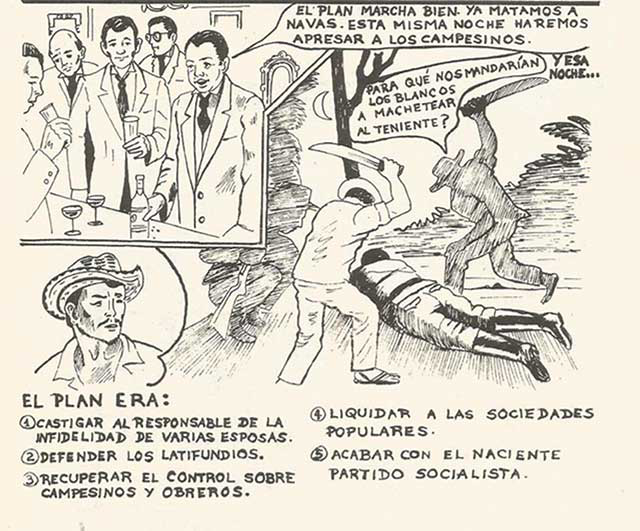
Figure 2 depicts a page from Lomagrande, portraying aspects of the everyday lives of members of the early twentieth-century peasant collectives founded by Adamo and Guzmán. The top and middle panels inform readers of the demands of these groups, noting that a separate workers’ society served the needs of peasant women and women of the urban working class; the middle panel includes a photo of an aged Juana Julia Guzmán next to a drawing of a meeting of the women’s society. We want to draw special attention to the bottom panel, which is introduced by a caption that synthesizes the essence of the historical moment: “They occupied the lands of Lomagrande, which was baptised BALUARTE ROJO, they also occupied lands in Canalete and Callejas.” An explanatory caption at the bottom provides a somewhat elliptical definition of a baluarte: “Baluarte is a position won in a struggle and it must be defended.” The three drawings that make up the panel depict the Baluarte Rojo in three simultaneous but unconnected moments, all of which depict agricultural labor, the defining feature of this agrarian community. The panel is probably a composite of the visual notes made by artist Ulianov Chalarka as he listened to Juana Julia Guzmán’s personal history. We can trace the process of compiling Chalarka’s sketches into comics panels if we pay attention to the errors of perspective that obscure the viewer’s appreciation of the different planes on which the characters stand, which suggests that the panels were laid out with only minimal corrections. Chalarka’s drawings of the Baluarte Rojo are generic representations that provide scant historical detail. In contrast, the other panels are based on historical documentation collected by the Fundación, including photos from Juana Julia Guzmán’s personal archive.
The concept of “baluarte” as articulated in Lomagrande, page 15. Courtesy of the Fundación del Sinú.

The purpose, we intuit, of this generic depiction of a baluarte, accompanied by the puzzling caption stating that “baluarte is a position won in a struggle and it must be defended,” is to place the past in the present, allowing peasant readers to imagine themselves as historical actors. This is underlined by the fact that a young narrator, ANUC activist Wilberto Rivero (Figure 3), appears on some of the pages of Lomagrande; he was not an eyewitness to the Baluarte Rojo but was well known in Córdoba in the 1970s. The images do not depict peasants from the 1920s but instead resemble ANUC occupiers of La Antioqueña in the 1970s. The graphic thus becomes a site for collective analysis and provides a direction for political action, effectively combining research, adult education, and political organizing into a single vehicle.
Narrator Wilberto Rivero in Lomagrande, page 19. Courtesy of the Fundación del Sinú.
The process leading up to the publication of Lomagrande involved a series of collaborations. If we listen to the audio recording of the Juana Julia Guzmán interview (CDRBR/M, Colección de Grabaciones, C/OFB/GM 11), we discover that the history of Lomagrande emerged out of a lively conversation among peasants—something that is not as clear in the transcription, which does not assign names to the speakers (CDRBR/M, 0866). It was Juana Julia Guzmán who initiated discussion about repurposing the baluarte for use in La Antioqueña (CDRBR/M, 0853, fol. 5112), a strategic move that was discussed at length by ANUC. The production of the graphic history was initiated in coordination with the occupation of La Antioqueña and Mundo Nuevo, its narrator was one of their leaders. The document passed, back and forth, between occupiers and the Fundación, the grass roots and Ulianov Chalarka, and the artist and the production team, forming a chain of conversations. However, if we limit ourselves to a textual analysis of the comic without paying heed to the process of its construction, that collaborative chain becomes invisible. Historia doble, however, provided Fals with the opportunity to write his participatory methodology directly into the structure of his text.
Historia doble de la Costa
Historia doble de la Costa, Fals Borda’s masterwork whose first volume was published at the end of the 1970s, is perhaps his most ambitious attempt at integrating the nitty-gritty of action research into the broad sweep of the history of coastal Colombia as narrated from below (Reference Fals BordaFals Borda 1979b, Reference Fals Borda1981, Reference Fals Borda1984, Reference Fals Borda1986). The four volumes of Historia doble are the culmination of a decade of implementation of PAR, first in Córdoba and Sucre, and later in Mompox. The work assumes a dual narrative structure divided into two channels: on the left-hand side, Channel A consists of narratives, anecdotes, and historical reconstructions based on oral, documentary, and published sources; Channel B, on the right, concentrates on theory, guiding concepts, the broader regional and national historical context, and the methodology that underlies Channel A.
While Historia doble’s style was controversial at the time—making for a challenging read that defied historiographical tenets, as some critics disparagingly observed (Reference BergquistBergquist 1990)—it hews closely to the rubric of PAR, where historical knowledge is generated out of dialogues between the grass roots and politically aligned external intellectuals, with research results converted into accessible formats to stimulate political action and consciousness of grassroots historical agency. That Fals explicitly organized the volumes to mirror PAR is clear from a 1988 interview in which he argues that the book’s structure “owes to the practical commitment [we had] with the peasant grassroots. … I combined two styles of messages, each one in its channel. One message is directed at the peasants, through description and narration; and a conceptual and theoretical message with the same [topical focus], but directed at intellectuals and academics. So, it wasn’t an inspiration, but a methodological decision, so that the grassroots would have access to the information that had been collected and so that they could understand it” (Reference Low and HerreraLow and Herrera 1988, 46; italic in original).
Fals Borda draws on the research of costeño intellectuals—both peasants and scholars—to derive some of his theoretical supports. He refers, for example, to folklorist Benjamín Puche’s analysis of costeño material culture, especially the communal process of producing the woven hat (sombrero vueltiao) typical of the coast, to crystallize the essence of the costeño communitarian ethos (CDRBR/M, 0459; Reference Puche VilladiegoPuche Villadiego 1984). Likewise, each volume of Historia doble personifies an aspect of costeño culture as a vehicle for the historical narrative of Channel A and the theoretical analysis of Channel B: an example is the “amphibious man” (hombre anfibio), which Fals employs as a way of explaining how marsh- and river-dwelling peasants have adapted to their physical environment. These personifications are adaptations of concepts voiced to him by peasants and other rural interlocutors; as such, they are akin to the work of the Fundación researchers who “idealize” what peasant narrators told them, converting stories into usable political tools. In short, this is not a typical ethnographic dialogue in which the researcher extracts information from an informant, nor is it the product of a research strategy through which an external expert imposes his worldview on peasants. Instead, Fals shows us a two-way conversation in which both parties are transformed by the exchange (Reference Lomeli and DileanRobles Lomeli, n.d.).
Far from being empty vessels, the peasants who speak in Channel A demand that external intellectuals adapt to peasant observations of their surroundings and everyday lives. Fals’s interlocutors on the ground set the tone of both channels. Historia doble does not allow for personal interpretations of the text; instead, readers are submerged into the storytellers’ epistemology. The storytellers of Channel A lay bare the contradictions of the theoretical arguments considered in Channel B, whether those be orthodox science and philosophy, theories of capitalism, or Fals Borda’s own notion of PAR and his attempts at historical reconstruction. One might say that through its insistence on recounting peasant lifeways and reproducing the voices of its peasant protagonists, Channel A determines or questions the theories expounded in Channel B. In one channel, peasants build an alternative science (ciencia popular) out of their narratives, while in the other channel this grassroots mode of inquiry lays a basis for revising the paradigms of positivist social science.
True to Fals’s methodology of privileging grassroots knowledge over what he called “academic science” without entirely abandoning the latter, the peasant narrative sets the rhythm for both channels; theoretical explanations offered in Channel B appear when they are needed to frame the experiences related in Channel A. For example, in volume 3 Fals interviews a woman named Carmen Cárcamo, who shares with him her knowledge of a miraculous Christ image in the town of San Benito Abad, Sucre, fashioned in late seventeenth-century Spain from dark African wood. Carmen tells the story of how the image, along with two other Christ images, arrived in the city of Mompox when three mysterious gentlemen carrying three boxes sought lodgings. That same night, they disappeared, leaving three Christ figures, one of which is now in San Benito Abad (Reference Fals BordaFals Borda 1984, 62A–63A). At this point in the volume, Channel B proposes a theory of religious syncretism as a tool for peasant resistance (Reference Fals Borda1984, 64B–66B). The juxtaposition generates the impression of a dialogue taking place in real time that reproduces Fals’s intellectual process, which emphasized spending time in communities and theorizing from a peasant subject position. As a result, it is as though, at once, Carmen Cárcamo recounted her memories and Fals revised his own historical interpretation in order to adapt it to her epistemological framework.
Similarly, Fals shares with peasants his analysis of the sources he used in his work, so that by countering accepted narratives they would begin to consciously assume their role as agents of history. In his interview with Carmen Cárcamo, he discloses highlights from a travel narrative by French entrepreneur Luis Striffler (Reference Striffler1920), who recounts his impressions of the region. Striffler refers to the Christ figure of San Benito Abad unfittingly, saying that it reminds him of an “indio barrigón” (a “pot-bellied Indian”) and adds that the statue must have been made locally, implying that it was not miraculous (Reference Fals BordaFals Borda 1984, 64A). In response, Cárcamo confronts Striffler, emphasizing that the Christ figure is neither “white” nor a “barrigón,” but is “moreno” (black) and, for this reason, the brown people of the region claim him as one of their own. Here, Fals takes suppositions from the historical record and confronts them with peasant readings of personal experience.
One might argue that Fals’s intepretations of Colombian historiography and of its numerous source materials as they are presented in Historia doble were inaccessible to the unschooled and largely illiterate peasantry of 1970s. In fact, the contents of Channel B drew on the textbooks produced by La Rosca based on the workshops they facilitated for the ANUC leadership (Reference Fals BordaFals Borda 1975, Reference Fals Borda1976). Stories in Channel A were reproduced in the graphic histories, as well as in Fals’s “Historia prohibida” column in Alternativa, the leftist weekly he founded with Gabriel García Márquez in the mid-1970s (CDRBR/M, 0294, 0529, 1465, 1467; cf. Reference AgudeloAgudelo 2007). That is to say, Historia doble is a kind of time-lapse conversation made up of numerous interviews, assemblies, workshops, educational materials, and political collaborations that were generated by the La Rosca-ANUC partnership and the relationships Fals established afterward. This collapsing of a decade of political organizing into four volumes of experimental prose produces a sometimes unruly and always multifaceted book. However, in all of its convoluted density, Historia doble replicates a pioneering research process that drew upon conventional ethnography (at the time, typically about indigenous people) and oral history, and turns these genres of academic writing on their heads. Fals’s analysis is not mediated by a single academic authority or a group of experts, as in conventional ethnography (Reference GuberGuber 2013) but, instead, by activities and educational materials produced collectively and in the service of political action.
In La Rosca’s practice, the stories of aged peasant narrators were converted into models for collective action. The dualism of Historia doble replicates this strategy in print. For this reason, Fals inserts himself into Channel A as a co-protagonist. In a number of passages in the first volume, Fals Borda and his companions participate in meetings at which local narrators share their stories in an effort to begin a political process of remapping the coast and granting more autonomy to the southwest territories of Mompox, Montería, and Sincelejo—far from the industrialized and cosmopolitan city of Barranquilla or the tourist meccas of Cartagena and Santa Marta (Reference Fals BordaFals Borda 1979b, part 1, chaps. 1A–2A; part 3). By representing himself in the scenario, Fals simultaneously describes the research process and foregrounds his peasant narrators as protagonists in the reactivation of popular memory. If Channel A were continuously narrated by Fals in the first person, the peasants’ crucial role in the process would have been downplayed. But without his presence in the narrative, the book would have taken on the quality of a conventional ethnography of the period. By writing himself into such meetings, Fals joins a chain of narratives that authorize him as one of many organic intellectuals working in the service of the costeño peasantry.
Fals engages on a rhetorical level in what he calls “imputación,” a method for filling in the gaps in information available to researchers so that they can understand broader ecological changes and give voice to the histories of the common people (Reference Fals BordaFals Borda 1981, 57B–58B; cf. Reference Lomeli and DileanRobles Lomeli 2015). This work of the imagination is something that authors of literary nonfiction, like Gabriel García Márquez (Reference García Márquez[1970] 2014), have always engaged in, but which is rarely attempted in academic writing. Like them, Fals does not make unbridled fabrications, but instead complements his historical materials by using his imagination to establish the settings in which events take place or the contexts in which he heard a particular story. Imputation is used variously in all four volumes, always in the service of his peasant interlocutors and as a means for constructing an alternative epistemological framework that displaces academic researchers as a reference group in favor of peasants as history makers, both in the sense of being authors and historical protagonists (Reference Fals BordaFals Borda 1986, 191B). A good example of Fals’s literary use of imputation is his staging in Historia doble of his interview with Carmen Cárcamo. His recounting of the interview takes place in the church where the Christ image is located, permitting him to describe the basilica in vivid detail and embellish it with references to costeño poets (Reference Fals BordaFals Borda 1984, 63A); in fact, the interview took place in her home (CDRBR/M, 1619).
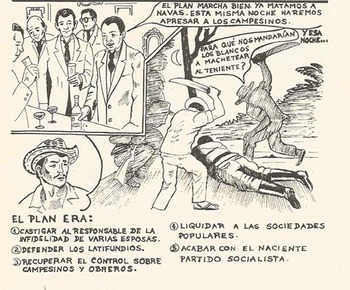
Notwithstanding the utility of imputation as a rhetorical device—and despite the fact that Fals never used the term during his association with ANUC—he argues in retrospect that imputation was a core component of the activist methodology that framed his collaborative research on the coast (Fals Borda 1985, 59). This work of the imagination is precisely what was articulated in the chain of activities that gave rise to the graphic histories. The artist, narrators, researchers, and peasant activists imagined themselves as engaged in the struggles of the past. They honed their visual imaginations to depict early twentieth-century peasants at work in the fields, languishing in the stocks, confronting landlords with machetes in hand. They also drew on their verbal repertoires to reproduce meetings between government authorities and peasant leaders, community members, and the activists who inspired them to action.
Conclusion
The methodologies developed by Orlando Fals Borda and his associates stand out in their radical interdisciplinarity, questioning of when and how research takes place, and insistence on breaking down the hierarchies that even today separate researchers from researched. Fals was not the only Latin American intellectual to confront the unequal distribution of knowledge and attempt to bridge the epistemological gap between the academy and the grass roots, nor was he a lone voice advocating a new kind of relevance for social science research. However, his work on the Caribbean coast provides us with an example that is notable for its breadth and depth: his disciplined commitment to collaborative research and public dissemination, the dizzying array of genres with which he experimented over the 1970s and 1980s, and his balanced appraisal of the work of La Rosca at both a theoretical and an empirical level.
What do the experiences of La Rosca, the Fundación del Caribe, and the writings of Orlando Fals Borda have to tell us today, with four decades separating us from the defiant and romanticized Latin America of the 1970s? The influence of Fals Borda’s interdisciplinary proposal for an activist social science can be felt across Latin America, as well as in the global North, particularly in human rights work and in popular education. It can be seen, for example, in the manual that the Centro de Memoria Histórica, Colombia’s quasi-governmental center for research into the recent conflict, published for use by community activists interested in documenting their experiences (Reference Riaño AlcaláRiaño Alcalá 2009). The manual leads community activists through a series of participatory exercises aimed at enhancing grassroots involvement in research. It proposes that researchers and community members collect “emblematic cases” to illustrate the logic behind the behavior of armed actors, something like the four emblematic cases that ANUC and the Fundación selected for their graphic histories. Fals Borda does not offer these activists a recipe but instead, a point of view that enables them to employ various research tools that accommodate to the needs of each locality. In fact, the Centro de Memoria Histórica borrows from but does not faithfully reproduce the Fundación’s techniques, instead building upon them by developing new activities—like the communal drawing of timelines of conflict that stimulate the visual memory of victims of violence. Some of these techniques derive from Riaño’s earlier experience working with youth in Medellín, where visual representations and music were employed as methods for stimulating memory (Reference Riaño AlcaláRiaño Alcalá 2006). Over time, human rights researchers have sought to deepen the participatory nature of PAR, so that eyewitnesses to violence begin to produce materials themselves, instead of depending on the skills of external researchers; the latter facilitate workshops and compose final reports, but the memory tools created by the community remain in the control of the grass roots.
If PAR enjoys broad impact in the Americas, it is particularly influential in popular education where, as in human rights work, it is often combined with other methods (Reference Park, Brydon-Miller, Hall, Jackson and FreirePark et al. 1993). One of the key methodologies that Latin American popular educators combine with PAR is a reflexive process called “systematization.” Like PAR, it is an incompletely defined set of collaborative procedures for collecting and analyzing research materials, both in their historical contexts and in the context of relationships, developed in the course of the project (Reference Torres CarrilloTorres Carrillo 2010). Reflexivity is central to systematization and to PAR because, if the grass roots and external intellectuals do not understand the dynamics of their collaborative exercise, the transfer of authority that these methodologies advocate cannot take place.
Reflexivity, in these instances, requires as much attention to the material and political conditions of the collaborative research endeavor as to the sentiments that arise in the course of such work, since the stories told by narrators arouse strong emotions, and because the goals of the grassroots organizations involved are articulated through sentiments related to land, family, and community. In an early reflection on methodology, members of La Rosca argued that objects of knowledge are intimately articulated with people’s feelings and desires.Footnote 4 Fals Borda would later articulate this interlocking idea of politics, research, and sentiment through his notion of the sentipensante, the “thinking-feeling” actor who was a protagonist of history (Reference Fals BordaFals Borda 2009).
Such ideas might cross borders with more facility than do methodological recipes. Uruguayan writer Eduardo Galeano appropriated the idea of the sentipensante as a foil to the educational system in his Libro de los abrazos: “Such wise doctors of Ethics and Morals are the fisherfolk of the Colombian coast, who invented the word sentipensante to define the language that tells the truth” (Reference GaleanoGaleano 1989, 89); the notion was subsequently absorbed into the Latinx pedagogical community (Reference RendónRendón 2009). Gloria Anzaldúa (Reference Anzaldúa1999) similarly proposes that the US Chicano movement engage in a kind of “spiritual activism” nourished not so much by a politics structured from the top down as by a grassroots historical consciousness through which the past is “re-membered,” or rearticulated in the present (Reference KeatingKeating 2008, 58; cf. Reference JoysmithJoysmith 2006). In a particular combination of Fals Borda, Freire, and Anzaldúa, participatory techniques centered on personal narratives have become central to some radical Chicano approaches to education among Latinx youths, as a way to build bridges to abandoned forms of knowledge, restore a dignity to the schooling experience, and create a new generation of activist-researchers (Reference Guajardo, Guajardo and CasaperaltaGuajardo, Guajardo, and Casaperalta 2008).
In a 1959 response to a controversial speech at the National University, Fals Borda wrote: “Many times the form in which a thinker or a researcher arrives at a conclusion is even more important than the conclusion itself, because the method is a tool and the result may be merely a utilitarian product” (Reference Fals Borda, Delgado and SandovalFals Borda, Delgado, and Parra Sandoval 2009, 47). Fals said this many years before he began to imagine action research. Yet, it provides us with an apposite conclusion to this article. The methodology pioneered by Fals Borda and the Fundación del Caribe is deeply embedded in the day-to-day workings of the research team and in the materials they produced for ANUC. Its form—to appropriate Fals’s word choice—is something that has to be teased out of a disparate set of oral, written, pictorial, and archival testimonies, not a recipe that can be itemized for future use. It is precisely its embeddedness in a series of systematically produced materials returned to the grass roots that forced us to read these sources “backwards,” so to speak, divining from their formats, expressions, and visual language the process by which they were fashioned. We would contend that it is this very flexibility, this possibility of adjusting and molding the central tenets of action research to the context of its application, which has permitted this methodology without a clear set of methods to be appropriated so widely in distinct circumstances. But in order to achieve this, those who have sought to use Fals Borda’s ideas have been forced to use their imaginations, as he and his colleagues did on the Caribbean coast.
Acknowledgements
Our studies of Orlando Fals Borda’s personal papers began in 2007, with trips by Joanne Rappaport funded by the Graduate School of Georgetown University and others by various Colombian institutions that invited her to teach or present papers. Jafte Robles began her work in 2014 in the context of a Georgetown seminar on Historia doble de la Costa; she has already begun her dissertation research in Fals’s personal archives. We thank the directors of the Centro de Documentación Regional “Orlando Fals Borda,” Banco de la República, Montería, and the Archivo Histórico de la Universidad Nacional de Colombia for the myriad ways in which they have collaborated in making their collections available to us. Thanks also to Allison Bigelow and Tom Klubock for inviting us to participate in the “Latin American Studies: Past, Present, Future” symposium, as well as for encouraging us to transform our presentation into a published article and providing coherent suggestions along the way. Without the collaboration of Víctor Negrete, we would not have been able to make sense of the work of the Fundación del Caribe. Various colleagues served as sounding boards over the past few years: Allison and Tom, Mauricio Archila Neira, Martha Cecilia García, David Gow, Pablo Guerra, Catherine LeGrand, Mónica Moreno, Alex Pereira, and José María Rojas Guerra are but a few of the many who have so graciously shared their time and their thoughts with us. We also acknowledge the valuable commentaries that the three anonymous reviewers for the Latin American Research Review shared with us, and hope that we have lived up to their expectations of where we could take this article.

 Open access

