Stahl Online is a one-stop shop, covering everything a mental health professional or teacher will ever need to know about neuropsychopharmacology. Comprehensive and regularly updated, Stahl Online provides full access to the entire current portfolio of books by Dr Stephen M. Stahl.
Stahl Online is a one-stop shop, covering everything a mental health professional or teacher will ever need to know about neuropsychopharmacology. Comprehensive and regularly updated, Stahl Online provides full access to the entire current portfolio of books by Dr Stephen M. Stahl.
To save content items to your account,
please confirm that you agree to abide by our usage policies.
If this is the first time you use this feature, you will be asked to authorise Cambridge Core to connect with your account.
Find out more about saving content to .
To save content items to your Kindle, first ensure no-reply@cambridge.org
is added to your Approved Personal Document E-mail List under your Personal Document Settings
on the Manage Your Content and Devices page of your Amazon account. Then enter the ‘name’ part
of your Kindle email address below.
Find out more about saving to your Kindle.
Note you can select to save to either the @free.kindle.com or @kindle.com variations.
‘@free.kindle.com’ emails are free but can only be saved to your device when it is connected to wi-fi.
‘@kindle.com’ emails can be delivered even when you are not connected to wi-fi, but note that service fees apply.
This unique book offers a methodical exploration of biological, social, and ethical topics on the treatment (or lack thereof) of psychotic brain disease. Part I provides an empirical engagement with neuroscience and covers the neurobiology and pharmacology of schizophrenia, providing the reader with a current understanding of the disease. Topic areas include anosognosia, community treatments, and early intervention. Part II looks at international policy approaches to schizophrenia featuring topics such as the policy, funding, and historical elements contributing to frequently misguided approaches to severe brain disease, and it explains why some societies won't/can't support human beings with psychotic disease. Part III focuses on neuroethics and asks: 'What is right?' through chapters discussing the concepts of consciousness and free will, as well as the principles of nonmaleficence, beneficence, autonomy, and justice. Collectively the comprehensive approach of this book allows the reader to gain a full understanding of the ethical and clinical complexities in treating schizophrenia.
This sixth volume in Stahl's Case Studies series presents a selection of clinical case studies in forensic psychopharmacology. Focusing on severe syndromes and clinical presentations found in the severely mentally ill who have become justice involved and/or required care in a state or forensic hospital facility, these cases illustrate questions that are routinely asked in psychiatric consultations. Following a consistent, user-friendly layout, each case features icons, tips and questions about diagnosis and management as it progresses over time, a pre-case self-assessment question, followed by the correct answers at the end of the case. Formatted in alignment with the American Board of Psychiatry and Neurology's maintenance of psychiatry specialty certification, cases address multifaceted issues in an understandable way. Covering a wide-ranging and representative selection of clinical scenarios, each case is followed through the complete clinical encounter, from start to resolution, acknowledging the complications, issues, decisions, twists and turns along the way.
For decades, psychiatry has focused on initiating treatment—which medication to prescribe, in what dose, and for how long. But what happens when treatment needs to stop? How a medication is stopped is just as important as how it is started, and abrupt discontinuation can lead to unnecessary suffering, relapse, and often preventable withdrawal symptoms. Based on the principles of the bestselling Stahl's Prescriber's Guide, this essential resource provides user-friendly guidance on deprescribing or switching psychotropic medications safely and effectively. 64 medications are presented in a consistent format to facilitate rapid access to deprescribing information. Divided into color coded sections, the book allows the reader to identify key details about when and why to deprescribe, the risks and mechanisms of withdrawal, tapering protocols, cross-titration strategies, and how to distinguish withdrawal symptoms from relapse. Evidence-based recommendations and expert clinical insights make this a must-have manual for all psychiatric prescribers.
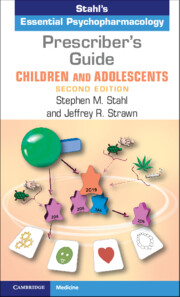
This extensively revised second edition provides a user-friendly step-by-step manual on the range of psychotropic medications prescribed for children and adolescents by clinicians and nurse practitioners. Boasting nearly double the medications of the first edition, it features new sections related to pharmacokinetics and pharmacogenetics in children and adolescents alongside algorithms for addressing frequently encountered disorders such as anxiety, depression, bipolar disorder, ADHD, and OCD. Based on the best-seller, Stahl's Prescriber's Guide, and using a full-color template-driven navigation system, it combines evidence-based data with clinically informed guidance to support prescribers in the field. Each drug is presented in the same classic design format with illustrated guidance on dosing, titration, and pharmacogenetics/metabolism. Color-coded sections distinguish clearly the information presented on therapeutics, safety and tolerability, dosing and use, what to expect, and the art of psychopharmacology, and are followed by updated and new key references. A must-have guide for all mental health professionals.