Refine listing
Actions for selected content:
577 results in 35-XX
Orbital stability of solitary wave solutions of the generalized Benjamin equation
- Part of
-
- Journal:
- Proceedings of the Royal Society of Edinburgh. Section A: Mathematics , First View
- Published online by Cambridge University Press:
- 10 December 2025, pp. 1-29
-
- Article
-
- You have access
- Open access
- HTML
- Export citation
-
In this paper, we study the existence and stability of solitary wave solutions for the generalized Benjamin equation in both the $L^2$-critical and $L^2$-supercritical cases by applying the variational methods and the non-homogeneous Gagliardo–Nirenberg inequality. Our main results generalize and complement the existing results in the literature.


Monotonicity of positive solutions to equations involving fractional p-Laplacian in coercive epigraph
- Part of
-
- Journal:
- Proceedings of the Edinburgh Mathematical Society , First View
- Published online by Cambridge University Press:
- 10 December 2025, pp. 1-13
-
- Article
-
- You have access
- HTML
- Export citation
-
In this paper, we are concerned with the following Dirichlet problems for nonlinear equations involving the fractional $p$-Laplacian:
 \begin{equation*}\begin{cases}(-\Delta)_p^\alpha u=f(x,u,\nabla u),\ \ u \gt 0,\ \ \text{in}\ \ E,\\\ \ \ \ \ \ u\equiv0, \ \ \ \ \ \ \ \ \ \ \ \ \ \ \ \ \ \ \ \text{in}\ \ \mathbb{R}^{n}\setminus E,\end{cases}\end{equation*}
where $E \subseteq \mathbb{R}^{n}$ is a coercive epigraph, i.e., there exists a continuous function $\phi: \, \mathbb{R}^{n-1} \rightarrow \mathbb{R}$ satisfying
 \begin{equation*}\lim_{|x'|\rightarrow+\infty}\phi(x')=+\infty,\end{equation*}
such that $E:=\{x=(x',x_{n}) \in \mathbb{R}^{n}|\,x_{n} \gt \phi(x')\}$, where $x':= (x_{1},...,x_{n-1}) \in \mathbb{R}^{n-1}$. Under some mild assumptions on the nonlinearity $f(x,u,\nabla u)$, we prove strict monotonicity of positive solutions to the above Dirichlet problems involving fractional $p$-Laplacian in coercive epigraph $E$.
$E$.


Linear damping estimates for periodic roll wave solutions of the inviscid Saint-Venant equations and related systems of hyperbolic balance laws
- Part of
-
- Journal:
- Journal of Nonlinear Waves / Volume 1 / 2025
- Published online by Cambridge University Press:
- 05 December 2025, e21
-
- Article
-
- You have access
- Open access
- HTML
- Export citation
-
Substantially extending previous results of the authors for smooth solutions in the viscous case, we develop linear damping estimates for periodic roll-wave solutions of the inviscid Saint-Venant equations and related systems of hyperbolic balance laws. Such damping estimates, consisting of $H^s$ energy estimates yielding exponential slaving of high-derivative to low-derivative norms, have served as crucial ingredients in nonlinear stability analyses of traveling waves in hyperbolic or partially parabolic systems, both in obtaining high-frequency resolvent estimates and in closing a nonlinear iteration for which available linearized stability estimates apparently lose regularity. Here, we establish for systems of size $n\leq 6$ a Lyapunov-type theorem stating that such energy estimates are available whenever strict high-frequency spectral stability holds; for dimensions $7$ and higher, there may be in general a gap between high-frequency spectral stability and existence of the type of energy estimate that we develop here. A key ingredient is a dimension-dependent linear algebraic lemma reminiscent of Lyapunov’s Lemma for ODE that is to our knowledge new.


On the Γ-limit of weighted fractional energies
- Part of
-
- Journal:
- Proceedings of the Royal Society of Edinburgh. Section A: Mathematics , First View
- Published online by Cambridge University Press:
- 01 December 2025, pp. 1-22
-
- Article
-
- You have access
- Open access
- HTML
- Export citation
-
Given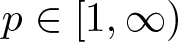 $p\in[1,\infty)$ and a bounded open set $\Omega\subset\mathbb{R}^d$ with Lipschitz boundary, we study the $\Gamma$-convergence of the weighted fractional seminorm
 \begin{equation*}[u]_{s,p,f}^p=\int_{\mathbb{R}^d} \int_{\mathbb{R}^d} \frac{|\tilde u(x)- \tilde u(y)|^p}{\|x-y\|^{d+sp}}\,f(x)\,f(y)\,\mathrm{d} x\,\mathrm{d} y,\end{equation*}
as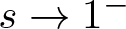 $s\to1^-$ for $u\in L^p(\Omega)$, where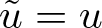 $\tilde u=u$ on $\Omega$ and $\tilde u=0$ on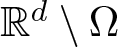 $\mathbb{R}^d\setminus\Omega$. Assuming that $(f_s)_{s\in(0,1)}\subset L^\infty(\mathbb{R}^d;[0,\infty))$ and $f\in\mathrm{Lip}_b(\mathbb{R}^d;(0,\infty))$ are such that $f_s\to f$ in $L^\infty(\mathbb{R}^d)$ as $s\to1^-$, we show that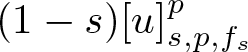 $(1-s)[u]_{s,p,f_s}^p$ $\Gamma$-converges to the Dirichlet $p$-energy weighted by $f^2$. In the case $p=2$, we also prove the convergence of the corresponding gradient flows.


Uniform convergence of adversarially robust classifiers
- Part of
-
- Journal:
- European Journal of Applied Mathematics , First View
- Published online by Cambridge University Press:
- 24 November 2025, pp. 1-29
-
- Article
-
- You have access
- Open access
- HTML
- Export citation
-
In recent years, there has been significant interest in the effect of different types of adversarial perturbations in data classification problems. Many of these models incorporate the adversarial power, which is an important parameter with an associated trade-off between accuracy and robustness. This work considers a general framework for adversarially perturbed classification problems, in a large data or population-level limit. In such a regime, we demonstrate that as adversarial strength goes to zero that optimal classifiers converge to the Bayes classifier in the Hausdorff distance. This significantly strengthens previous results, which generally focus on $L^1$-type convergence. The main argument relies upon direct geometric comparisons and is inspired by techniques from geometric measure theory.

Quantitative stability in fractional Hardy–Sobolev inequalities: the role of Euler–Lagrange equations
- Part of
-
- Journal:
- Proceedings of the Royal Society of Edinburgh. Section A: Mathematics , First View
- Published online by Cambridge University Press:
- 24 November 2025, pp. 1-39
-
- Article
- Export citation
-
This paper investigates sharp stability estimates for the fractional Hardy–Sobolev inequality:
 \begin{align*}\ \ \ \ \ \ \ \ \ \mu_{s,t}\left(\mathbb{R}^N\right) \left(\int_{\mathbb{R}^N} \frac{|u|^{2^*_s(t)}}{|x|^t} \,\mathrm{d}x \right)^{\frac{2}{2^*_s(t)}} \leq \int_{\mathbb{R}^N} \left|(-\Delta)^{\frac{s}{2}} u \right|^2 \,\mathrm{d}x, \quad \text{for all } u \in \dot{H}^s\left(\mathbb{R}^N\right)\end{align*}
where $s \in (0,1)$, $0 \lt t \lt 2s$, $N \gt 2s$ is an integer, and $2^*_s(t) = \frac{2(N-t)}{N-2s}$. Here, $\mu_{s,t}\left(\mathbb{R}^N\right)$ represents the best constant in the inequality. The primary focus is on the quantitative stability results of the above inequality and the corresponding Euler–Lagrange equation near a positive ground-state solution. Additionally, a qualitative stability result is established for the Euler–Lagrange equation, offering a thorough characterization of the Palais–Smale sequences for the associated energy functional. These results generalize the sharp quantitative stability results for the classical Sobolev inequality in $\mathbb{R}^N$, originally obtained by Bianchi and Egnell [J. Funct. Anal. 1991] as well as the corresponding critical exponent problem in $\mathbb{R}^N$, explored by Ciraolo, Figalli, and Maggi [Int. Math. Res. Not. 2017] in the framework of fractional calculus.


Normalized solutions for p-Laplacian equation with general nonlinearities on bounded domain
- Part of
-
- Journal:
- Proceedings of the Royal Society of Edinburgh. Section A: Mathematics , First View
- Published online by Cambridge University Press:
- 13 November 2025, pp. 1-31
-
- Article
- Export citation
-
We consider the existence, nonexistence and multiplicity of normalized solutions to the $p$-Laplacian equation on a bounded domain(0.1)
 \begin{equation}\left\{\begin{array}{ll}-\Delta_p u+\lambda |u|^{p-2}u=g(u),&\text{in }\Omega,\\\int_\Omega |u|^p=\rho, u=0&\text{on }\partial \Omega,\end{array}\right.\end{equation}
where $\Omega$ is a bounded domain, $p\geq 2$. Firstly, under suitable assumptions on $\rho$, if $g$ is at most mass-critical at infinity, we prove the existence of infinitely many solutions. Secondly, for $\rho$ large, if $g$ is mass-supercritical, we perform a blow-up analysis to show the nonexistence of finite Morse index solutions. At last, for $\rho$ suitably small, combining with the monotonicity argument, we obtain a multiplicity result. In particular, when $p=2$, we obtain the existence of infinitely many normalized solutions.


Nonlocal carrier’s double phase problem
- Part of
-
- Journal:
- Proceedings of the Royal Society of Edinburgh. Section A: Mathematics , First View
- Published online by Cambridge University Press:
- 13 November 2025, pp. 1-24
-
- Article
- Export citation
General rogue waves of infinite order: exact properties, asymptotic behaviour, and effective numerical computation
- Part of
-
- Journal:
- Journal of Nonlinear Waves / Volume 1 / 2025
- Published online by Cambridge University Press:
- 13 November 2025, e19
-
- Article
-
- You have access
- Open access
- HTML
- Export citation
-
This paper is devoted to a comprehensive analysis of a family of solutions of the focusing nonlinear Schrödinger equation called general rogue waves of infinite order. These solutions have recently been shown to describe various limit processes involving large-amplitude waves, and they have also appeared in some physical models not directly connected with nonlinear Schrödinger equations. We establish the following key property of these solutions: they are all in $L^2(\mathbb{R})$ with respect to the spatial variable but they exhibit anomalously slow temporal decay. In this paper, we define general rogue waves of infinite order, establish their basic exact and asymptotic properties, and provide computational tools for calculating them accurately.

On a Cahn–Hilliard equation for the growth and division of chemically active droplets modelling protocells
- Part of
-
- Journal:
- European Journal of Applied Mathematics , First View
- Published online by Cambridge University Press:
- 06 November 2025, pp. 1-31
-
- Article
-
- You have access
- Open access
- HTML
- Export citation
Liouville theorems for the static Schrodinger equations with van der Waals type potentials
- Part of
-
- Journal:
- Canadian Journal of Mathematics , First View
- Published online by Cambridge University Press:
- 05 November 2025, pp. 1-27
-
- Article
- Export citation
Non-degeneracy and local uniqueness of bubbling solutions for fractional almost critical problems
- Part of
-
- Journal:
- Proceedings of the Royal Society of Edinburgh. Section A: Mathematics , First View
- Published online by Cambridge University Press:
- 03 November 2025, pp. 1-45
-
- Article
- Export citation
-
This paper is concerned with the following problem involving almost critical growth
 \begin{equation*}\begin{cases}(-\Delta) ^su=|u|^{2_{s}^{*}-2-\varepsilon}u,& \text{in } \varOmega ,\\u=0,& \text{on } \Sigma ,\\\end{cases}\end{equation*}
where $2_{s}^{*}=\frac{2N}{N-2s}$, $s\in(\frac{1}{2},1)$, $N \gt 2s$, Ω is a bounded domain in $\mathbb{R}^N$, ɛ is a small parameter, and the boundary Σ is given in different ways according to the different definitions of the fractional Laplacian operator $(-\Delta)^{s}$. The operator $(-\Delta)^{s}$ is defined in two types: the spectral fractional Laplacian and the restricted fractional Laplacian. For the spectral case, Σ stands for $\partial \Omega$; for the restricted case, Σ is $\mathbb{R}^{N}\setminus \Omega$. Firstly, we provide a positive confirmation of the fractional Brezis–Peletier conjecture, that is, the above almost critical problem has a single bubbling solution concentrating around the non-degenerate critical point of the Robin function. Furthermore, the non-degeneracy andlocal uniqueness of this bubbling solution are established.


Concentration behavior of normalized ground states for mass critical Kirchhoff equations in bounded domains
- Part of
-
- Journal:
- Proceedings of the Royal Society of Edinburgh. Section A: Mathematics , First View
- Published online by Cambridge University Press:
- 03 November 2025, pp. 1-44
-
- Article
- Export citation
-
In present paper, we study the limit behavior of normalized ground states for the following mass critical Kirchhoff equation
where \begin{align*}\left\{\begin{array}{ll}-(a+b\int_{\Omega}|\nabla u|^2\mathrm{d}x)\Delta u+V(x)u=\mu u+\beta^*|u|^{\frac{8}{3}}u &\text{in}\ {\Omega}, \\[0.1cm]u=0&\text{on}\ {\partial\Omega}, \\[0.1cm]\int_{\Omega}|u|^2\mathrm{d}x=1, \\[0.1cm]\end{array}\right.\end{align*} $a\geq 0$, b > 0, the function V(x) is a trapping potential in a bounded domain $\Omega\subset\mathbb R^3$, $\beta^*:=\frac{b}{2}|Q|_2^{\frac{8}{3}}$ and Q is the unique positive radially symmetric solution of equation $-2\Delta u+\frac{1}{3}u-|u|^{\frac{8}{3}}u=0$ in $\mathbb R^3.$ We consider the existence of constraint minimizers for the associated energy functional involving the parameter a. The minimizer corresponds to the normalized ground state of above problem, and it exists if and only if a > 0. Moreover, when V(x) attains its flattest global minimum at an inner point or only at the boundary of Ω, we analyze the fine limit profiles of the minimizers as $a\searrow 0$, including mass concentration at an inner point or near the boundary of Ω. In particular, we further establish the local uniqueness of the minimizer if it is concentrated at a unique inner point.


DYNAMICS OF NONLOCAL KURAMOTO–SIVASHINSHY EQUATIONS WITH MULTIPLICATIVE WHITE NOISE
- Part of
-
- Journal:
- The ANZIAM Journal / Volume 67 / 2025
- Published online by Cambridge University Press:
- 23 October 2025, e34
-
- Article
-
- You have access
- HTML
- Export citation
Normalized multi-bump solutions of nonlinear Hartree equation with steep potential well
- Part of
-
- Journal:
- Proceedings of the Royal Society of Edinburgh. Section A: Mathematics , First View
- Published online by Cambridge University Press:
- 20 October 2025, pp. 1-37
-
- Article
- Export citation
-
In this paper, we study the existence of solutions to the following Hartree equation
 \begin{align*}\begin{cases}-\Delta u+\lambda V(x) u+\mu u=\left(\int_{\mathbb{R}^N}\frac{|u|^p}{|x-y|^{N-\alpha}}\right)|u|^{p-2}u,\ \text{in}\ \mathbb{R}^N,\\\int_{\mathbb{R}^N}|u|^2=\omega,\end{cases}\end{align*}
Where $N\geq 3$, $\omega,\lambda \gt 0$, $p\in \left(\frac{N+\alpha}{N}, \frac{N+\alpha}{N-2}\right)\setminus\left\{\frac{N+\alpha+2}{N}\right\}$ and µ will appear as a Lagrange multiplier. We assume that $0\leq V\in L^{\infty}_{loc}(\mathbb{R}^N)$ has a bottom $int V^{-1}(0)$ composed of $\ell_0$ $(\ell_{0}\geq1)$ connected components $\{\Omega_i\}_{i=1}^{\ell_0}$, where $int V^{-1}(0)$ is the interior of the zero set $V^{-1}(0)=\{x\in\mathbb{R}^N| V(x)=0\}$ of V. It is worth pointing out that the penalization technique is no longer applicable to the local sublinear case $p\in \left(\frac{N+\alpha}{N},2\right)$. Therefore, we develop a new variational method in which the two deformation flows are established that reflect the properties of the potential. Moreover, we find a critical point without introducing a penalization term and give the existence result for $p\in \left(\frac{N+\alpha}{N}, \frac{N+\alpha}{N-2}\right)\setminus\left\{\frac{N+\alpha+2}{N}\right\}$. When ω is fixed and satisfies $\omega^{\frac{-(p-1)}{-Np+N+\alpha+2}}$ sufficiently small, we construct a $\ell$-bump $(1\leq\ell\leq \ell_{0})$ positive normalization solution, which concentrates at $\ell$ prescribed components $\{\Omega_i\}^{\ell}_{i=1}$ for large λ. We also consider the asymptotic profile of the solutions as $\lambda\rightarrow\infty$ and $\omega^{\frac{-(p-1)}{-Np+N+\alpha+2}}\rightarrow 0$.


A k-Hessian equation with a power nonlinearity source and self-similarity
- Part of
-
- Journal:
- Proceedings of the Royal Society of Edinburgh. Section A: Mathematics , First View
- Published online by Cambridge University Press:
- 17 October 2025, pp. 1-25
-
- Article
- Export citation
-
We study existence and uniqueness of spherically symmetric solutions of
 \begin{equation*}S_k(D^2v)+\beta \xi\cdot\nabla v+\alpha v+\left\vert v\right\vert^{q-1}v=0\;\; \mbox{in}\;\; \mathbb{R}^n,\end{equation*}
where $\alpha,\beta$ are real parameters, $n \gt 2,\, q \gt k\geqslant 1$ and $S_k(D^2v)$ stands for the k-Hessian operator of v. Our results are based mainly on the analysis of an associated dynamical system and energy methods. We derive some properties of the solutions of the above equation for different ranges of the parameters α and β. In particular, we describe with precision its asymptotic behaviour at infinity. Further, according to the position of q with respect to the first critical exponent $\frac{(n+2)k}{n}$ and the Tso critical exponent $\frac{(n+2)k}{n-2k}$ we study the existence of three classes of solutions: crossing, slow decay or fast decay solutions. In particular, if k > 1 all the fast decay solutions have a compact support in $\mathbb{R}^n$. The results also apply to construct self-similar solutions of type I to a related nonlinear evolution equation. These are self-similar functions of the form $u(t,x)=t^{-\alpha}v(xt^{-\beta})$ with suitable α and β.


Impact of birth pulse and environment shift on population survival and propagation
- Part of
-
- Journal:
- Canadian Journal of Mathematics , First View
- Published online by Cambridge University Press:
- 17 October 2025, pp. 1-27
-
- Article
- Export citation
A remark on the long-time asymptotics of global-in-time solutions for semilinear parabolic equations in ${\mathbb {R}^N}$
- Part of
-
- Journal:
- Canadian Journal of Mathematics , First View
- Published online by Cambridge University Press:
- 10 October 2025, pp. 1-21
-
- Article
- Export citation
-
We consider the asymptotics of long-time behavior of a solution u of the semilinear parabolic problem $\partial _tu=\Delta u-u+u|u|^{p-2}$ in ${\mathbb {R}^N}\times (0,\infty )$, $u(0)=u_0\in H^1({\mathbb {R}^N})\cap L^\infty ({\mathbb {R}^N})$. Since the spatial domain on which the problem is posed is noncompact, we cannot expect the relative compactness of the solution orbit, e.g., in $H^1({\mathbb {R}^N})$ in general. In this article, we prove that the compactness of the orbit holds up to the ground state energy level, namely, if $\lim _{t\to \infty }I(u(t))\leq d_\infty $, where I is the energy functional associated with (P) and $d_\infty $ its ground state energy, then the orbit of $u(t)$ is compact in $H^1({\mathbb {R}^N})$. Our result includes the previous results in [4, 5].


Global smooth solutions and singularity formation for the relativistic Euler equations with radial symmetry
- Part of
-
- Journal:
- Canadian Journal of Mathematics , First View
- Published online by Cambridge University Press:
- 03 October 2025, pp. 1-32
-
- Article
- Export citation
Shrinking vs. expanding: the evolution of spatial support in degenerate Keller–Segel systems
- Part of
-
- Journal:
- Proceedings of the Royal Society of Edinburgh. Section A: Mathematics , First View
- Published online by Cambridge University Press:
- 30 September 2025, pp. 1-25
-
- Article
-
- You have access
- Open access
- HTML
- Export citation
-
We consider radially symmetric solutions of the degenerate Keller–Segel system
 \begin{align*}\begin{cases}\partial_t u=\nabla\cdot (u^{m-1}\nabla u - u\nabla v),\\0=\Delta v -\mu +u,\quad\mu =\frac{1}{|\Omega|}\int_\Omega u,\end{cases}\end{align*}
in balls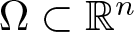 $\Omega\subset\mathbb R^n$, $n\ge 1$, where m > 1 is arbitrary. Our main result states that the initial evolution of the positivity set of u is essentially determined by the shape of the (nonnegative, radially symmetric, Hölder continuous) initial data u0 near the boundary of its support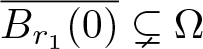 $\overline{B_{r_1}(0)}\subsetneq\Omega$: It shrinks for sufficiently flat and expands for sufficiently steep u0. More precisely, there exists an explicit constant $A_{\mathrm{crit}} \in (0, \infty)$ (depending only on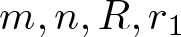 $m, n, R, r_1$ and $\int_\Omega u_0$) such that if $u_0(x)\le A(r_1-|x|)^\frac{1}{m-1}$ for all $|x|\in(r_0, r_1)$ and some $r_0\in(0,r_1)$ and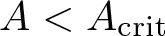 $A \lt A_{\mathrm{crit}}$ then there are T > 0 and ζ > 0 such that $\sup\{\, |x| \mid x \in \operatorname{supp} u(\cdot, t)\,\}\le r_1 -\zeta t$ for all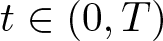 $t\in(0, T)$, while if $u_0(x)\ge A(r_1-|x|)^\frac{1}{m-1}$ for all $|x|\in(r_0, r_1)$ and some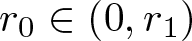 $r_0 \in (0, r_1)$ and $A \gt A_{\mathrm{crit}}$ then we can find T > 0 and ζ > 0 such that $\sup\{\, |x| \mid x \in \operatorname{supp} u(\cdot, t)\,\}\ge r_1 +\zeta t$ for all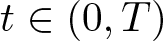 $t\in(0, T)$.