To save content items to your account,
please confirm that you agree to abide by our usage policies.
If this is the first time you use this feature, you will be asked to authorise Cambridge Core to connect with your account.
Find out more about saving content to .
To save content items to your Kindle, first ensure no-reply@cambridge.org
is added to your Approved Personal Document E-mail List under your Personal Document Settings
on the Manage Your Content and Devices page of your Amazon account. Then enter the ‘name’ part
of your Kindle email address below.
Find out more about saving to your Kindle.
Note you can select to save to either the @free.kindle.com or @kindle.com variations.
‘@free.kindle.com’ emails are free but can only be saved to your device when it is connected to wi-fi.
‘@kindle.com’ emails can be delivered even when you are not connected to wi-fi, but note that service fees apply.
Jesus of Nazareth was a first-century teacher, miracle worker, and messianic figure. His chief aim was to promote religious renewal among the Jewish people in anticipation of the kingdom of God, which he believed to be dawning in his ministry. His personal authority and vision of fundamental change won many sympathizers but also created fierce opposition.
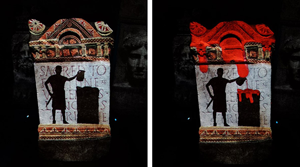
Time, place, and the rhythm of the seasons, essential constituents of ancient ritual, collaboratively shaped and channeled the experience of religious performance. Focusing on agricultural and civic time reckoning, this article investigates the orientations of the monuments at the extra-mural Sanctuary of the Thirteen Altars at Lavinium and their coordination with viticultural activities amid the shifting social and religious circumstances of the 6th and 5th c. BCE. The article will argue that the 6th- and 5th-c. altars were aligned in such a way as to face sunrise at a particular location on the horizon on two very particular days in the seasonal year. The altars at Lavinium, playing an important role in the emerging urban community's economic life, will be shown to be themselves a form of agentic seasonal timekeeping that closely determined the integration of local agricultural, religious, and economic practices.
This chapter begins by interrogating the ideal of authenticity as a paradigmatic modern response to the crisis of master narratives. It critically examines practices of narrative selfhood, and discusses the ways in which social roles offer scaffolds for the development of a self without fully constituting such a self. Role-playing – the inhabitation of social and narrative roles – is an outstanding example of the exercise of imagination, its double function of finding and making, and its for-the-most-part inherited, moulded, and largely habituated practice. The chapter concludes with a theological discussion of the ways our habitual imagination of selfhood can be broken open without pretence that we might be able to find a fully realized authentic self beneath our narrative and social roles.
In this article we explore the practical conditions of ritual practices of Hui and Uyghur Muslims in China. Ceaseless conflicts among different religious ideas and elements exist, but they are integrated into religious pluralism, which meets the needs of Muslims' daily practices. Furthermore, we probe the reasons for the resulting religious harmony through investigating the historical process of the formation of religious pluralism, and showing present ritual performances in which there is a hierarchically built ritual structure functioning to make religious integration possible, though different opinions regarding diverse religious elements occur elsewhere among Hui and Uyghur Muslims. Finally, the discussion supports the related assertion that rituals can be reliable and effective ways of understanding the sociological and psychological functions of religions, or religious beliefs, and other related socio-cultural realities.
This article examines Herman Bavinck's inclusion of the body in the image of God in comparison with the positions of Reformed orthodox theologians of the sixteenth and seventeenth centuries. It demonstrates that while it is uncommon for earlier figures to consider the body to be properly included within the image, Bavinck's position is not unprecedented and applies lines of reasoning consistent with the tradition's anthropological convictions. First, an embodied imago Dei is advanced by sources such as the Leiden Synopsis and Petrus van Mastricht. Second, the Reformed orthodox in general adhere to the conviction that human beings are a body–soul unity, and that the image of God includes the uprightness of the whole person, positions that lead to the body being related in some way to God's image. Therefore, while Bavinck's account of an embodied image is a unique contribution, it is nonetheless in continuity with the tradition he receives.
This article examines the theological and hermeneutical foundations and fault lines of Muslim modernism and traditionalism in South Asia. It does so through a close reading of a massively consequential but thus far unstudied debate on the normative sources and interpretive parameters of religion in colonial modernity between the scholars Sayyid Ahmad Khan (d. 1898) and Muhammad Qasim Nanautvi (d. 1877), founders of arguably the most prominent bastions of modernism and traditionalism in Muslim South Asia: the Aligarh Muslim University and the Deoband Madrasa, both established in the late nineteenth century.
Religious practice in the Roman world involved diverse rituals and knowledge. Scholarly studies of ancient religion increasingly emphasise the experiential aspects of these practices, highlighting multisensory and embodied approaches to material culture and the dynamic construction of religious experiences and identities. In contrast, museum displays typically frame religious material culture around its iconographic or epigraphic significance. The author analyses 23 UK museum displays to assess how religion in Roman Britain is presented and discusses how museums might use research on ‘lived ancient religion’ to offer more varied and engaging narratives of religious practices that challenge visitors’ perceptions of the period.
For young men in Cameroon, football has long been a paradigm of sociality through competitive spirit. In recent decades, however, the stakes of competitive football have been raised: the sport has also emerged as a strategy for young men to migrate abroad and earn a living. On and off the football fields, young men seek to grab limited opportunities to sign contracts with clubs abroad, but few succeed. However, the aspiring athletes rarely see themselves as autonomous individuals competing for a limited number of spots in football clubs. Rather, they attribute failure or success to questions of trust and mistrust: in competitive peers, in neighbours and kin, in Pentecostal Christianity, and in football as a source of livelihood. Competing for a place in a global football industry has led the footballers to mistrust potentially envious others, but also increasingly to put their faith in a Christian God and develop a confident orientation towards a future of success despite the odds. The nexus of football, religion and migration aspirations in Anglophone Cameroon reveals how trust retains a central, albeit ambiguous, place in high-stakes competitive environments, namely as a leap of faith and a confidence in engaging uncertainty. It complicates the idea of competition as a singular and neutral principle that obviates the need for trust, and refines anthropological theory that tacitly confines trust to interpersonal relationships.
This article offers a new interpretation of καθαρίζων πάντα τὰ βρώματα in Mark 7.19c. After reviewing and offering some nuance to an emerging non-antinomian interpretation of 7.15a/18b, I turn to Mark 7.19c and argue that the phrase καθαρίζων πάντα τὰ βρώματα should be understood as a part of Jesus' speech in 7.18–19. Jesus’ argument, I suggest, is that ritually defiled food cannot defile humans through ingestion because humans purify all foods from ritual impurity through digestion. This reasoning depends on a widespread Jewish view that excrement is impervious to ritual impurity: because all excrement is pure, the stomach acts as a purifying agent that purifies all food from ritual impurity. I proffer that the common translation of Mark 7.19c – ‘Thus he declared all foods clean’ (NRSV) – should therefore be abandoned.
This article examines the activities of Comunidades Cristianas Populares (Popular Christian Communities, CCPs) in marginalised neighbourhoods of Chile's capital, Santiago, during the Augusto Pinochet dictatorship. It traces how the CCPs emerged, thrived and then stopped, to showcase the uneasy co-existence between liberationist practices espoused by popular sectors and traditional ecclesiastical paradigms until their breaking point in 1990. In doing so, I argue that religious ritual is an important form of social protest against authoritarianism. Public processions exposed tensions between the Church and state, within the Church's diverse constituents, as well as between Christian community members and left-wing party militants. In the late 1980s, as the Church increasingly retreated from liberation theology, the dictatorship successfully co-opted social organisations and rendered religious rituals largely ineffective as a form of social protest.
This article examines the emergence, consolidation, and influence of the Cristianos por el Socialismo (CpS, or Christians for Socialism) movement as part of the overlapping political and religious transformations of the 1960s. The election of self-declared Marxist Salvador Allende in 1970 inspired a sector of the clergy to creatively converge the tenets of Marxism and Christianity. The notion of transcendence and the construction of a “New Man” appealed to the utopian aspects of both religious and Marxist thinking. The Chilean CpS had a Latin American impact, as evidenced by the First Latin American Encounter of Christians for Socialism in Santiago in 1972, and a transnational impact, as seen in the formation of the Ecumenical Association of Third World Theologians in 1976. The analysis of CpS and its influence within and outside of Chile reveals an often-overlooked component of the Chilean road to socialism: the work of Catholics in Marxist-Christian rapprochement.
It has been a teaching of the Catholic Church for many centuries that the fact that an act is immoral is not itself a sufficient reason for acts of that kind to be punishable under the law. Therefore, before American Catholics or their bishops actively support laws making abortion illegal and punishable, they must carefully examine such laws to determine whether they are consistent with the common good and thus morally justifiable. This article first turns to the three conditions that Thomas Aquinas offers in the Treatise on Law (Summa Theologica, I-II, QQ. 90-105) that a law must fulfill in order for it to be consistent with the common good. Serious reasons are identified for doubting that laws prohibiting and punishing abortion can fulfill Aquinas’s three conditions. There are also serious reasons based on Catholic teaching, i.e., that we are always obliged to follow our conscience, for concluding that, contrary to the common good, many conscientious persons would be mistakenly punished by such laws. For these reasons, the article proposes that American Catholics and their bishops should reexamine their support for laws punishing abortion and should consider instead actively opposing such laws.
This article argues that Queen Victoria's Proclamation of 1858, marking the transfer of power from the East India Company to the crown, ushered in a new era of colonial secularity. “Colonial secularity” refers to the myriad ways that normative distinctions between religion and not-religion emerged and proliferated in colonial contexts. The proclamation committed not to interfere in religion, but “religion” is circumscribed, reconceptualized largely as a matter of private conscience set against the purview of the state. As this article explores, it is according to this logic that the abolition of Islamic criminal law after the proclamation could register as noninterference in native religion. At the same time, Christian missionaries contested the proclamation's notions of neutrality to carve out a space in which they might operate.
This essay coins a term “Judeopessimism,” engaging questions of some of the contemporary writing on antisemitism and its claim to be historical in nature through the lens of critical race theory, specifically Afropessimism and its offshoots, which make claims of anti-Blackness as political ontology. Is some of this writing on antisemitism really making theological or political ontological claims of “eternal antisemitism” refracted in a less volatile historical narrative? How can critical race theory and its understanding of anti-Blackness help refine, clarify, and push the discussion on antisemitism to be more forthright about its underlying claims? I explore some examples of ontological antisemitism in the writings of Meir Kahane and Naftali Zvi Berlin who each in different ways offer ahistorical and even ontological views on antisemitism that are mostly shunned by contemporary writing on the subject and suggest that Afropessimism offers a helpful way to see beyond the historical veil of how antisemitism is understood today.
In October 2022 the Church of England commissioned an examination of the impact of the debate on same-sex blessing and same-sex marriage within other Anglican Churches. The examination involved a literature search, an original survey among key informers and a general internet search. This paper draws on the general internet search to contrast the impacts in New Zealand and Australia. Drawing on Jungian psychological type theory, this analysis employs the contrasting decision-making functions of feeling (concerned with subjective interpersonal values) and thinking (concerned with objective logical analysis). The data suggest that the feeling approach dominant in New Zealand, which prioritized offering space and time for those of differing opinions to meet together, reported more positive outcomes than the thinking approach dominant in Australia, which gave greater priority to adversarial debate.
In the aftermath of World War II, eugenics and the pseudoscientific base used to justify its practices are generally understood to have phased off the scene. If, however, eugenics never actually disappeared but has been persistent, and in turn becomes one of the best explanations for mass incarceration today, what role did Christianity—especially Evangelicalism—play in this unprecedented moment of imprisonment? Building on legal scholarship identifying the significant role of eugenic philosophy that manifests in penal policy and ongoing phenomena into the early twenty-first century, this article examines key figures in the backdrop of eugenics’ particular early developments, and leading figures—namely, Billy Graham and Prison Fellowship’s Chuck Colson—whose ministries operated in close proximity to the prison during the latter twentieth century and especially over the past fifty years as incarceration rates skyrocketed. After examining several important theological tenets reflected within Evangelicalism that are compatible with eugenic logic, a critical approach is developed drawing from more robust theological considerations that if appropriated earlier might have found evangelicals resisting the mass incarceration building efforts rather than supporting them.
This paper introduces Phenomenological Thomism by accomplishing the three tasks Thomas Aquinas sets for every prooemium. First, to promote goodwill (beniuolus), it shows how fruitful Phenomenological Thomism promises to be by arguing that it unites the strengths of two complementary alternatives to the modern starting point. Second, to make teachable (docilis), it delineates the principal vectors of phenomenological engagement, including philosophy of nature, philosophical anthropology, ethics, epistemology, metaphysics, philosophical theology, and revealed theology. Third, to arouse attention (attentus), it focuses on the theme of manifestation to highlight the challenge of bringing the two traditions together. In this way, the prooemium encourages the further development of Phenomenological Thomism as a research program involving countless scholars and an infinity of tasks.
Affiliation with different religions can have different effects on practitioners’ trust in state institutions and in social actors. Based on a survey of 3,740 residents in Hong Kong in 2021, we examine the relationship between religious affiliation and believers’ trust in the political authorities in Beijing and Hong Kong and in civil actors in the city. We find that affiliation with traditional Chinese religions and Eastern religions has a positive and significant effect on believers’ trust in the political authorities, whereas belief in Western religions does not have such an effect. Affiliation with Western religions, however, has a stronger positive and significant effect on interpersonal trust and on tolerance for unconventional behaviour. These findings shed light on the interaction between the government and religious groups in Hong Kong after 1997.
This paper explains the nature of sacred text and the process of canonization in the Yārsān religion. To this end, we first show how three formative ideas—i.e., the history of divine manifestation, the angelology of scribing, and the scripture of Qabālah—played a major role in the emergence of canonization and sacred text in the Yārsān religion. We then turn to the parallel, heterogeneous processes of canonization in the Yārsān community, showing that factors such as the community's rhizomatic structure, idea of infinite divine manifestation, continuous process of producing holy texts, and the heterogeneous nature of its oral tradition hindered the emergence of an ultimate canon in the Yārsān community. Additionally, the sacred Yārsān texts, as the outputs of canonization procedures, are divided into three categories: narrative, testimony, and ritual. Finally, following scrutiny of the linguistic nature of Gorāni koine, the paper attempts to clarify the relationship between different types of religious texts and the formative idea of Qabālah as the archetypal sacred text in the Yārsān religion.
Taking Ktunaxa Nation v. British Columbia as a focal point, the author argues that the legal framing of Indigenous sacred land claims in terms of religious freedom carries significant costs. It impels courts to bracket consideration of sovereignty and territorial rights, while positioning Indigenous worldviews as nonrational rather than as dynamic intellectual traditions and ways of life that are respectably different from those embodied in settler systems of law. Genuinely fair adjudication of such claims requires not religious exemptions from general laws but recognition of the sui generis rights of Indigenous nations in relation to lands they never ceded (acknowledging historical injustice); deep differences between dominant European settler and Indigenous cultures (acknowledging that settler law is also cultural); and the validity of Indigenous environmental philosophies (acknowledging that they are no less rational than Western ones).